

This spring, I’m excited to launch a new graduate course at George Washington University, Creating Sustainable Museums. Designed for those new to the topic, the course combines theory with practice to explore how museums can address sustainability through financial stability, social equity and access, and environmental responsibility.
At the heart of the course are three core texts that introduce students to sustainability’s principles, history, and practical applications. We begin with Jeremy Caradonna’s Sustainability: A History, a compelling exploration of sustainability’s roots in the 18th-century deforestation crises and the consumer revolution. Caradonna introduces key figures like John Muir and Gifford Pinchot and influential movements such as the Club of Rome. He also explains foundational terms like lifecycle analysis, greenwashing, carbon footprints, and B Corporations. By tracing sustainability’s evolution, the book helps students understand that this is not just a modern buzzword but a framework deeply embedded in our history and practices (although it becomes very dense in the second half of the 20th century).
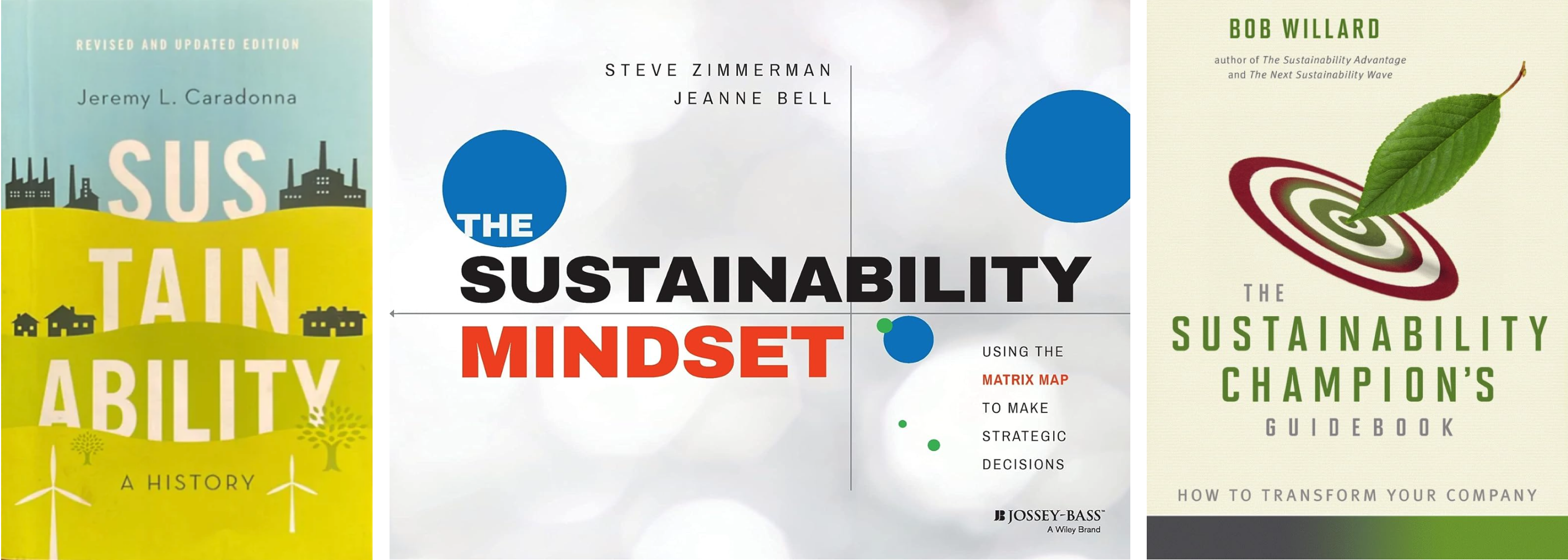
To bridge theory and action, we’ll dive into The Sustainability Mindset by Steve Zimmerman and Jeanne Bell, which provides nonprofit organizations with tools like the “matrix map” to integrate mission impact and financial viability. The Sustainability Champion’s Guidebook by Bob Willard, aimed at businesses, complements this with strategies for implementing change—highly adaptable for museums tackling sustainability or other initiatives.
Beyond the classroom, the course includes field trips to four museums in Washington, DC, each demonstrating sustainability in unique ways: the GW Museum, Tudor Place, Smithsonian’s National Zoo, and the National Gallery of Art. These visits provide invaluable insights into the challenges and opportunities museums face in making sustainability a reality.
The course culminates in a capstone project where students draft an abridged Inspire! grant application to the Institute of Museum and Library Services. This hands-on exercise synthesizes what they’ve learned, preparing them to tackle real-world sustainability challenges and develop critical professional skills.
By combining historical context, practical tools, and real-world application, Creating Sustainable Museums aims to equip students with the knowledge and skills to make meaningful contributions to the field. For museum professionals, the texts and approaches we’re exploring may also offer fresh insights and strategies for your own work.
I’ll be sharing updates and reflections from the course throughout the semester here on the blog. If you’re working on sustainability in your institution, I’d love to hear about your experiences—let’s keep the conversation going!
 Engaging Places