
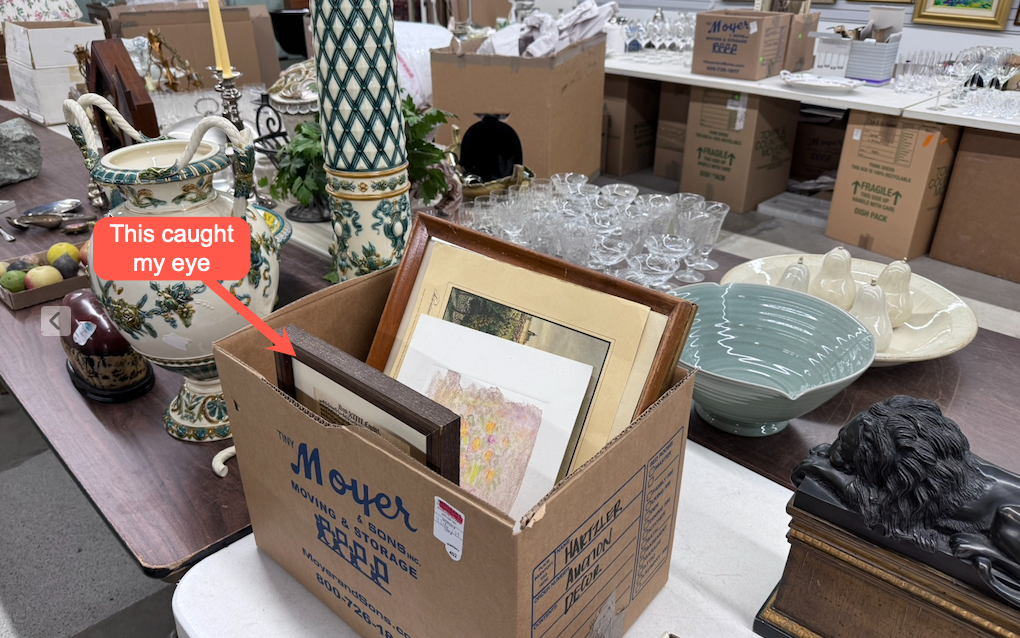
I bought the box for $30.
It was a brown cardboard box at a local auction filled with framed prints and miscellaneous ephemera. The sort of lot you bid on partly out of curiosity and partly because, if you’re lucky, you might discover something interesting. I did—it was a framed page from a 500-year-old German book.
As a historian, I enjoy reading. But more than that, I love books as objects. Their design, typography, and material presence give me tremendous joy. I got the bug in college in a federal work-study position in the rare books and special collections department of the library, where I learned how much evidence a single page can hold: paper quality, typeface, layout, illustration style, and wear patterns can all reveal a story before you even understand the words.
This page immediately caught my attention.
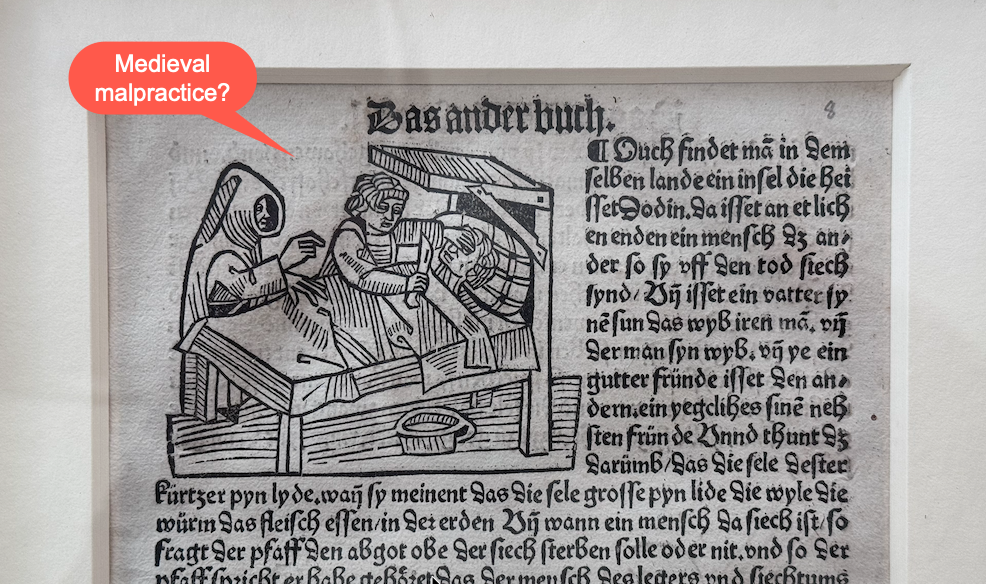
The typeface was Gothic, clearly German, probably around 1500. But the illustrations were strange. Instead of familiar late-medieval imagery (saints, cities, plants, kings) one woodcut showed a man lying in bed while another pressed a knife to his neck. Another showed a dining table with people seated around a severed head on a platter. Huh?
It was unmistakably early printed material, but not religious, political, or medical.
In other words: a cool mystery.
The Old Way to Solve the Puzzle
I studied German, and even in early New High German I could pick out fragments. Words like Das Ander Buch and Das XIII Capitel confirmed the structure but revealed little. Place names suggested possibilities, but without a searchable transcription they were essentially useless clues — the classic rare-book needle-in-a-haystack problem.
The traditional next steps were obvious:
- Contact rare-book colleagues
- Consult librarians at major research institutions
- Compare typefaces and illustrations manually
- Pull early printed travel literature and hope for a match
In other words, a delightful research process — but one that could take weeks or months and might still fail.
The New Way
Instead, I uploaded an image into ChatGPT and asked a simple question: can you read this?
Within moments it:
- Transcribed the early German text: Auch finde man in demselben lande ein insel die heisst Sodin.
- Converted it into modern German: Auch findet man in demselben Land eine Insel, die heißt Sodin.
- Translated it into English: In that same land one also finds an island called Sodin.
- Identified the work as a German edition of the travels of John Mandeville
- Dated the printing to around 1500
- Explained the popularity of the narrative across two centuries
Then, almost casually, it offered to write a museum label.
So I asked for several:
- An art historian’s interpretation: This illustrated book page belongs to one of the most widely read travel narratives of late medieval Europe. The Travels of Sir John Mandeville claimed to describe lands beyond the known world, especially Asia and the Indian Ocean. Although presented as eyewitness reportage, the text combined classical geography, crusader lore, missionary accounts, and imagination.
- A material culture perspective: Before reading its story, this object communicates through its materials. The sheet is made from linen rag pulp, the standard European paper of the early print era. Its durability explains why individual leaves could survive, circulate, and later be framed as collectible artifacts. Slight impressions around the letters and image reveal the pressure of a hand-operated press: inked metal type and a carved wooden block were printed together in a single pull.
- A version for children: About 500 years ago, people in Europe loved reading adventure books about distant lands. This page comes from one of the most famous ones. It told stories about strange places, amazing creatures, and unfamiliar customs. The picture shows a made-up funeral ritual. The book says people in a faraway land believed they were helping a sick person’s soul go to heaven quickly. Today we know the author never visited many of these places — he mixed real information with imagination and rumors.
At that moment I had a professional reflex many museum people are now experiencing:
Will AI make curators obsolete?
Not Replacement — Repositioning
AI did not replace expertise in this case. It changed the starting point.
Previously, most of my effort would have been spent identifying the object. Now identification took minutes, allowing interpretation to begin immediately.
The real shift is not deskilling — it is front-loading access.
For centuries, expertise in archives partly depended on overcoming barriers: language, handwriting, rarity, and time. AI lowers those barriers dramatically. Anyone can now read texts once limited to specialists.
That sounds threatening — until you realize what it enables.
Historians and curators can move faster toward meaning instead of spending disproportionate effort on transcription and preliminary identification. The bottleneck shifts from decoding to understanding.
A Familiar Historical Pattern
This moment echoes an earlier information revolution: William Tyndale’s English translation of the Bible in 1525. The controversy was as much about access as it was about translation quality.
- Who gets to read?
- Who gets to interpret?
- Who gets to decide meaning?
Every expansion of access destabilizes authority — but it also expands scholarship.
The Script Problem in the Classroom
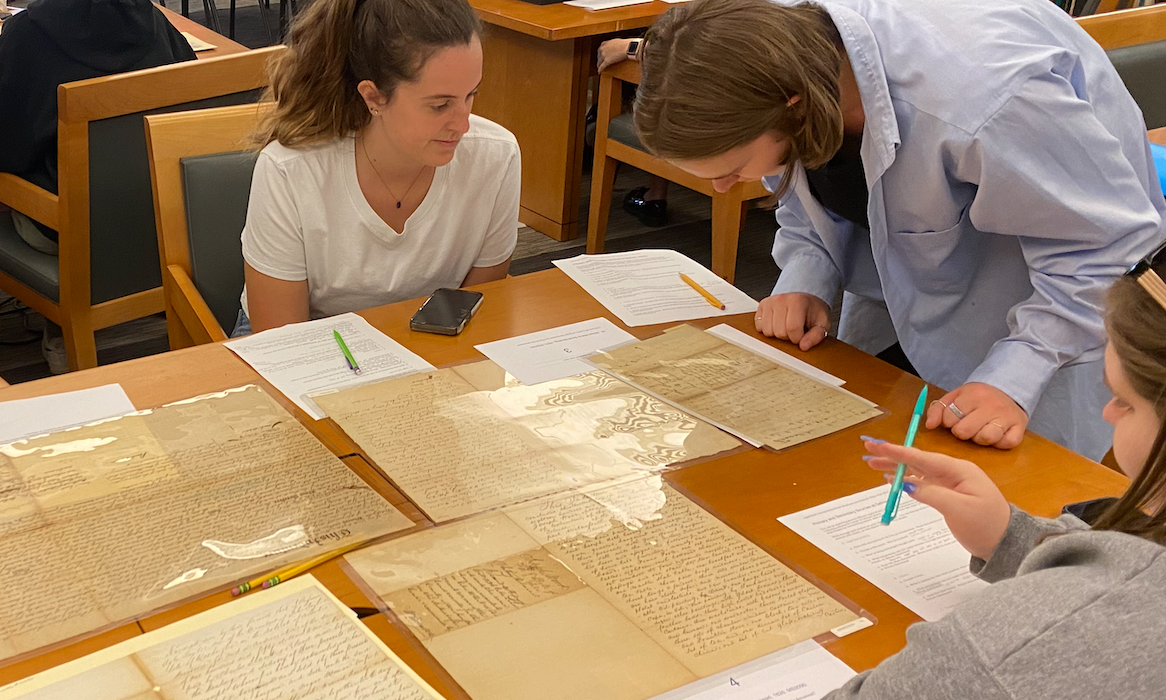
I saw this recently with my graduate students. During a visit to special collections, I asked them to read probate inventories and invoices from the eighteenth and nineteenth centuries — carefully chosen for legibility.
They stared at the pages.
“We can’t read them.”
They weren’t unwilling. They literally could not read cursive handwriting. Many students educated after the early 2000s were never taught script. Entire categories of primary sources are effectively inaccessible to them.
AI changes that immediately.
What took paleographic training can now begin with assisted transcription. Students can engage historical interpretation instead of stopping at the threshold of legibility.
What This Means for Museums
Artificial intelligence will undoubtedly reshape museum work. Some tasks will disappear; others will expand. The danger is not automation itself — it is misunderstanding where expertise actually resides.
Curatorial authority has never truly come from transcription or translation.
It comes from judgment:
- selecting significance
- framing interpretation
- understanding context
- asking meaningful questions
AI accelerates the mechanical parts of research. It does not supply historical reasoning.
In fact, easier access may increase the need for curatorial thinking. When everyone can read the document, interpretation becomes more important, not less.
The Real Question
The debate should not be framed as optimism versus fear.
Like past technologies—printing, photography, digitization, spreadsheets—AI will rearrange professional practice. We do not yet know which models will dominate or how workflows will stabilize.
But my $30 box clarified something important:
Artificial intelligence does not end expertise. It shifts where expertise begins.
And for museums, that may be less a threat than an invitation — to spend less time describing what something is and more time explaining why it matters.

