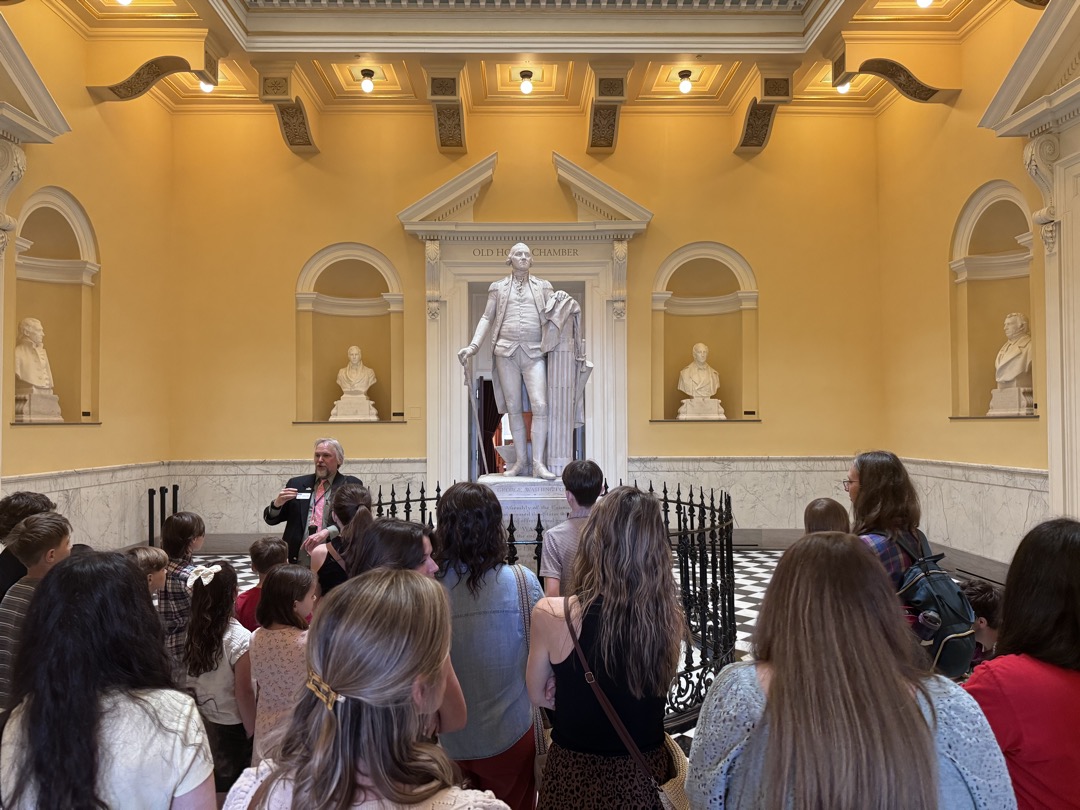
When I agreed to conduct a Museum Assessment Program (MAP) review for the Virginia State Capitol, I knew it would be an unusual assignment. MAP is designed for museums—institutions with clear missions centered on collections, exhibitions, and interpretation. The Capitol, however, is not a museum. It is the active seat of the General Assembly of Virginia. That distinction matters.
At the Capitol, the “museum function” is secondary—sometimes tertiary—to the work of governance. I’ve completed several MAP assessments but only choose those that relate to my expertise and interests—and the unusual environment engaged me immediately and made me wonder what would happen. Tours, exhibitions, and school programs operate within an environment defined by legislative sessions, security protocols, and shifting public access. I suspected that some museum standards wouldn’t apply. Others—especially those related to education and interpretation—would, but required adaptation. What I discovered is that the most useful part of my visit wasn’t evaluating against museum standards—it was a workshop.
As part of MAP, I facilitated a session to develop guiding principles for the visitor experience (called Education and Interpretation in MAP). Think of them as a set of best practices—but ones developed by the staff themselves, grounded in real situations rather than imposed from outside. Rather than start with abstract values (e.g., diversity, education, creativity) or a series of broad questions (e.g., why does the museum exist? what is the museum’s educational vision?), I used scenarios—real situations staff face every day.
For example:
- A visitor asks a politically charged question about a current issue being debated by the legislature. Do you engage, redirect, or defer?
- An exhibition panel is accurate but dense, and visitors are skipping it. Do you simplify or keep the detail?
- A student group becomes highly engaged during a mock legislative session—but drifts off-topic. Do you rein it in or let it continue? (BTW, their Chamber Presentations are among the best interpretive experiences I’ve encountered in my career.)
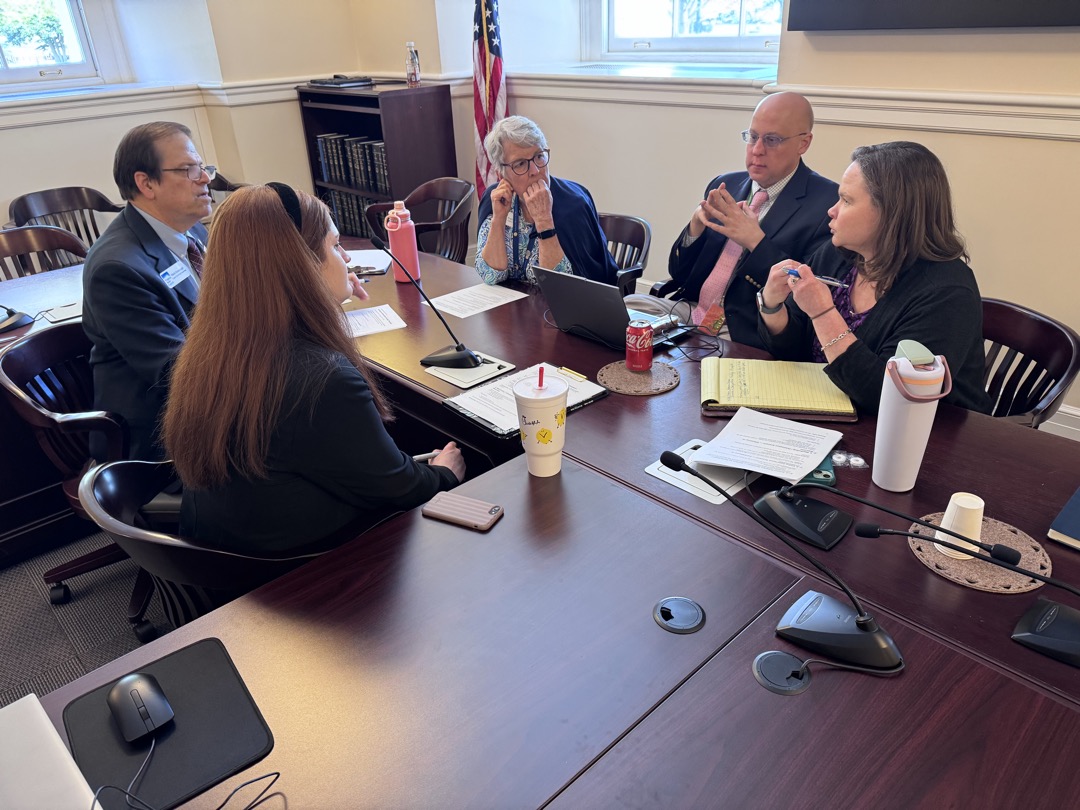
I divided staff into small groups, gave them different scenarios, and asked them to decide what they would do—and why. After 15 minutes, we reported out, alternating between groups. People challenged each other, refined their thinking, and, importantly, made their assumptions visible. What emerged wasn’t consensus. It was clarity.
Staff consistently emphasized a few core ideas:
- Acknowledge difficult topics, but remain non-partisan
- Focus on the legislative process, not political outcomes
- Let visitors engage at different levels
- Use questions as entry points to understanding
- Model civic behavior through the experience
After the session, I used GPT to help organize these into a draft set of principles, then refined them against my notes. The result wasn’t final—staff still need to review and adopt them—but it was grounded in practice, not theory.
That’s the takeaway.
In a place like a state capitol—where interpretation is not the primary mission—standards alone aren’t enough. Staff need a shared framework for making decisions in real time, especially when navigating neutrality, relevance, and public expectations.
The workshop provided that framework. And it’s a method that can be adopted by museums and historic sites. Any organization dealing with complex topics, diverse audiences, or competing priorities could use scenarios like these to surface values and turn them into practical guidance.
Sometimes the most effective interpretive strategy isn’t a new exhibit. It’s helping staff decide what to do next.
If you’re exploring ways to strengthen your visitor experience or develop guiding principles, this is a method worth trying. And if you’d like a partner in that work, Engaging Places would be glad to help.

