
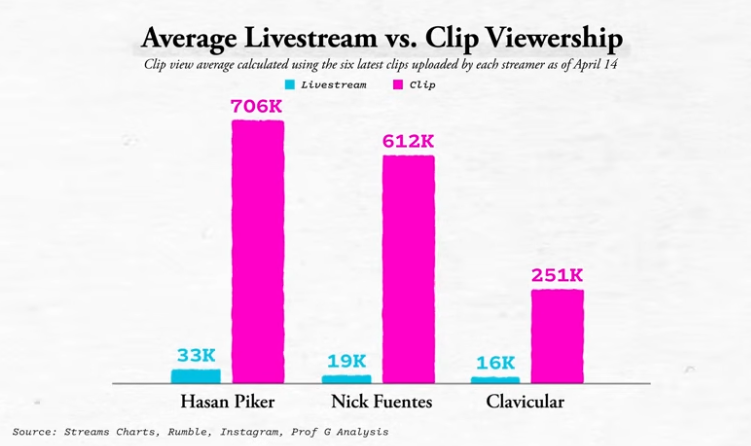
I was recently listening to a podcast from The Atlantic—“The Clip Economy is Eating Everything”—where Charlie Wartsall interviews business writer Ed Elson about the rise of short-form video. Their argument is straightforward: the dominant unit of media is no longer the article, the podcast, or even the YouTube video. It’s the clip.
That stuck with me and I’m uncomfortable.
Much of what rises to the top in this “clip economy” is not especially thoughtful or constructive. And yet, it’s how many people are now consuming information—not through television, books, newspapers, museums, or even longer-form digital content, but through YouTube Shorts, Instagram, and TikTok. Whether we like it or not, this is the environment our audiences are living in.
While I’ve been producing content for this blog for more than fifteen years, a few years ago I began producing YouTube videos. Based on research on the attention span of viewers, I aimed for a six-minute length but yikes, those take me days to produce. I don’t do it frequently so editing is slow, narration has to be re-recorded when I inevitably trip over a sentence, and assembling images into something coherent takes real effort.
So I decided to experiment.
Inspired by the podcast, I started creating YouTube Shorts—simple, one-minute videos based on the historic sites and house museums I visit. To my surprise, they’re much faster and easier to produce than I expected (I’m using Camtasia, but Canva and Adobe Express offer templates and more). The first one took three hours but now they’re taking 30 minutes, so the reward of completion comes must faster. Secondly, the number of views is already reaching more viewers than my six-minute videos. More importantly, they serve a purpose that feels increasingly important in our field.
I think it’s incumbent on everyone who cares about their work in media to…recognize that if they’re not watching you, they’re watching Nick Fuentes, they’re watching Hasan Piker, they’re watching Clavicular. They’re watching all of these guys. If you don’t get yourself out there on these social-media platforms, that’s who’s gonna fill the void. — Ed Elson
You’re probably already aware of a persistent problem in our field: siloing. Most of us don’t have the time to visit other museums, exhibitions, or programs, even though we benefit from seeing what others are doing. These short videos offer a quick introduction to what’s happening across the country—their stories, their interpretive approaches, and their visitor experience. It’s not deep analysis, but it’s enough to spark ideas or raise awareness.
Second, they create a low-barrier entry point for potential visitors. Many people simply don’t know about smaller museums and historic sites. A one-minute video can introduce a place, suggest what there is to see or do, and—ideally—encourage someone to learn more or plan a visit.
So far, I’ve completed eight videos. They’re all about a minute long, and I’m still experimenting—with content, captioning, and music. At this stage, they’re primarily image-based, designed to convey a sense of the visitor experience rather than deliver detailed interpretation. I’m avoiding narration because that’s where I trip up the most. Here are some examples:
- Contemporary Japanese Baskets at the Gamble House (based on a previous blog post)
- On the Road: Truth and History at the VMFA (exhibition on depictions of George Washington by Titus Kaphar and Junius Brutus Stearns at the Virginia Museum of Fine Arts)
- On the Road: Barnes Foundation 2025 (general introduction to the permanent exhibition)
I may also experiment with a series aimed more directly at museum professionals, focusing on interpretation and management of historic sites and house museums. That feels like a natural extension of this format. My initial attempt on outcome-based interpretation required numerous retakes of my narration—soooo frustrating!
Of course, this isn’t a revenue strategy and they’re never going to go viral. The field is too small for that. If a video reaches a few thousand people, I’ll consider it a success. The goal isn’t scale—it’s awareness and education.
The tension, of course, is real. Can serious subjects survive in a one-minute format? Does the clip economy flatten nuance in ways that work against what we do? Maybe. But it also presents an opportunity.
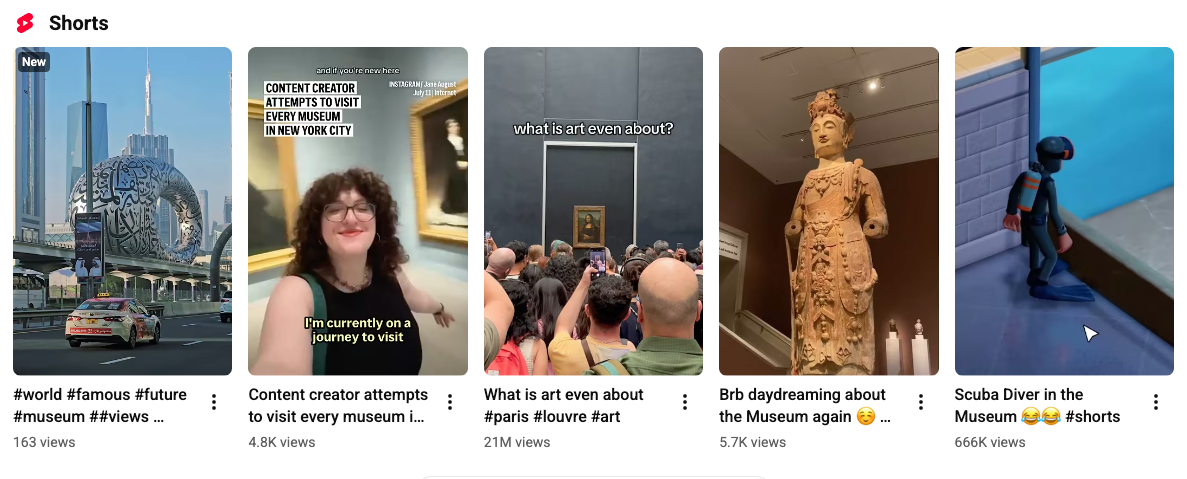
If short-form video is where attention is going, then we have a choice: ignore it, critique it—or experiment with it. What I’ve noticed so far is that most YouTube Shorts about museums are created by visitors, not by the institutions themselves. That’s a missed opportunity. At the very least, I’d encourage museums and historic sites to try making a few—to ensure their voices, perspectives, and expertise are part of what people see. If more of us contribute thoughtfully, we can begin to shape the content that defines these platforms, rather than simply reacting to it.

