
Over the past year, the National Gallery of Art has begun experimenting with how it presents art in the West Building—the museum’s original home, long known for its restrained elegance and traditional installations. While the building remains largely unchanged since it opened in the 1940s, these recent “interventions” offer a glimpse into how the museum is rethinking its interpretive and design strategies as it prepares for a broader transformation.
In a previous post, I discussed the National Gallery’s process of reimagining its West Building. Now we’re seeing that process move from discussion to experimentation. Here are three interventions currently on view, each testing new ways to engage visitors and reframe the collection:
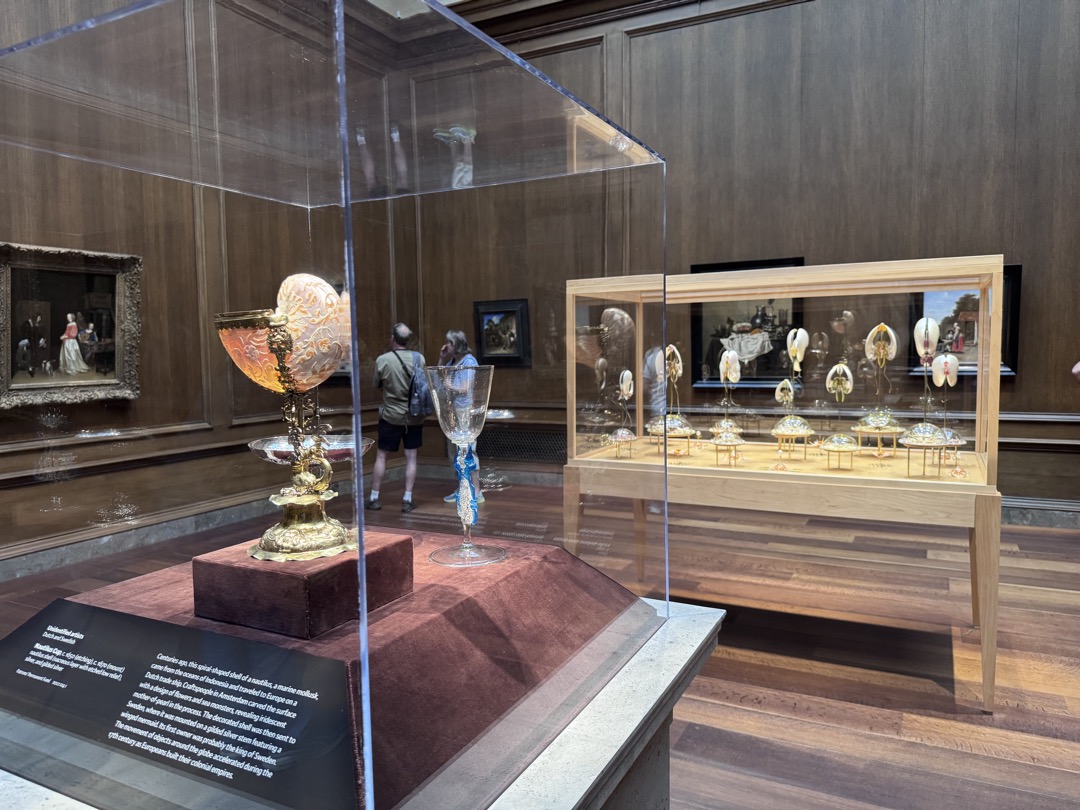


1. Nature and Objects in Dutch Landscapes
In the 17th-century Dutch landscape paintings gallery, two display cases offer a fresh angle on how nature shapes artistic imagination. One features three European decorative objects—a silver footed bowl, an elaborate stemmed glass, and a nautilus shell mounted on a gilt stand—designed to echo the forms and themes found in nearby paintings. The other case introduces a striking contemporary counterpart: Small Crafts on Sisyphean Seas by Dario Robleto, a mixed-media work combining natural materials like seashells, coral, urchin spines, and nautilus shells. These subtle interventions ask visitors to consider how objects, both functional and fantastic, reflect the human impulse to capture the natural world.


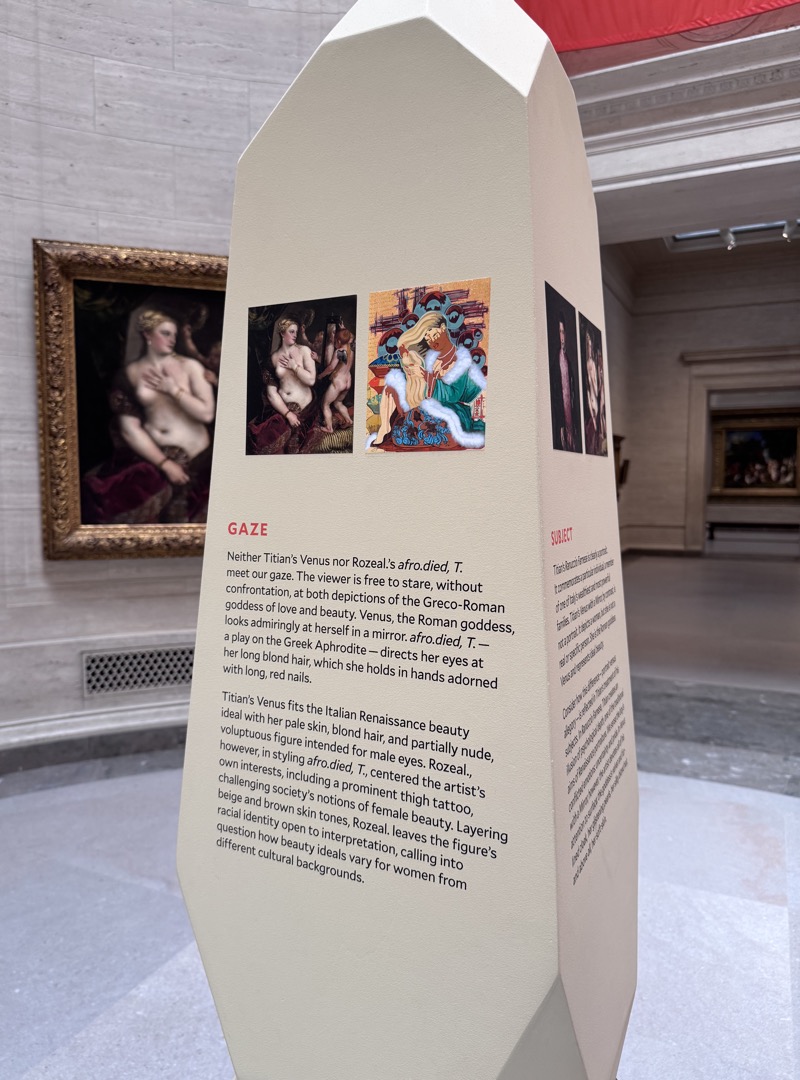

2. “Back and Forth”: Rozeal, Titian, Cézanne, and More
A small circular gallery hosts Back and Forth, a focused installation that encourages comparison and slow looking. Four paintings—by Rozeal, Cézanne, and two by Titian—hang on individual walls. At the center stands an interpretive pedestal with four thematic prompts: space, subject, gaze, and transformation. Each face of the pedestal links two of the works through a short text and guiding questions, inviting visitors to “move back and forth” between them to discover visual and conceptual relationships. This interpretive strategy—concise, physical, and dialogic—models how simple design can encourage complex thinking.
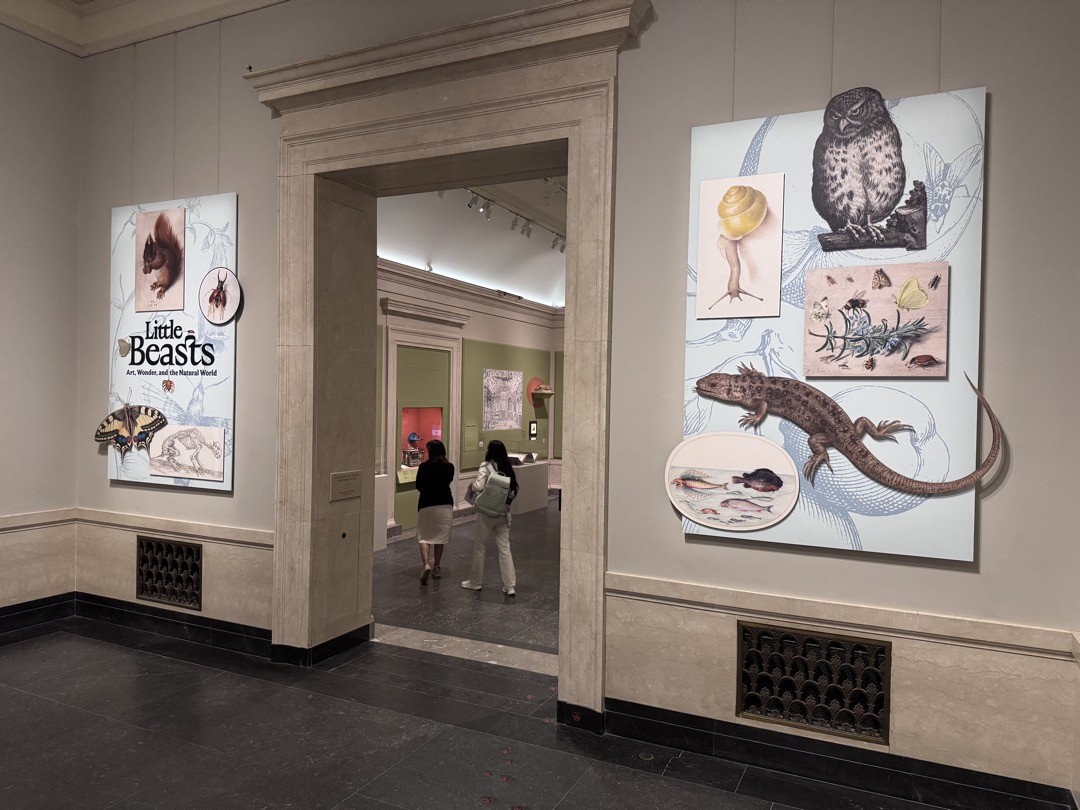
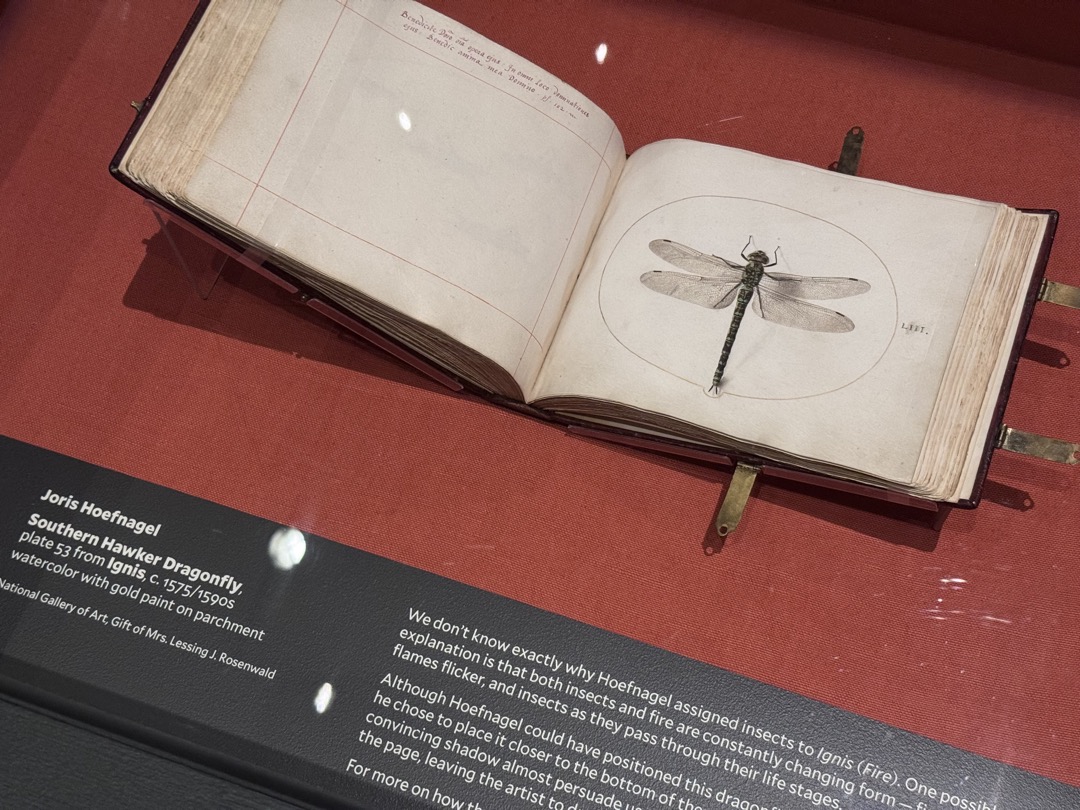
3. “Little Beasts”: Art, Wonder, and the Natural World
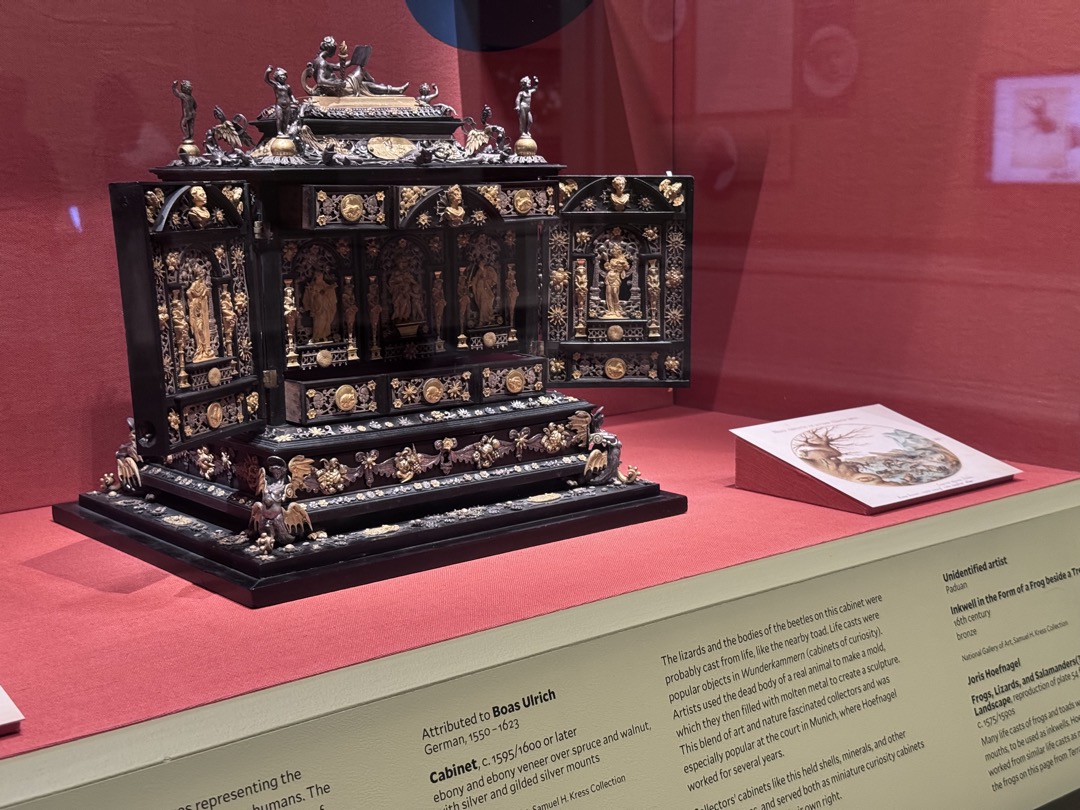
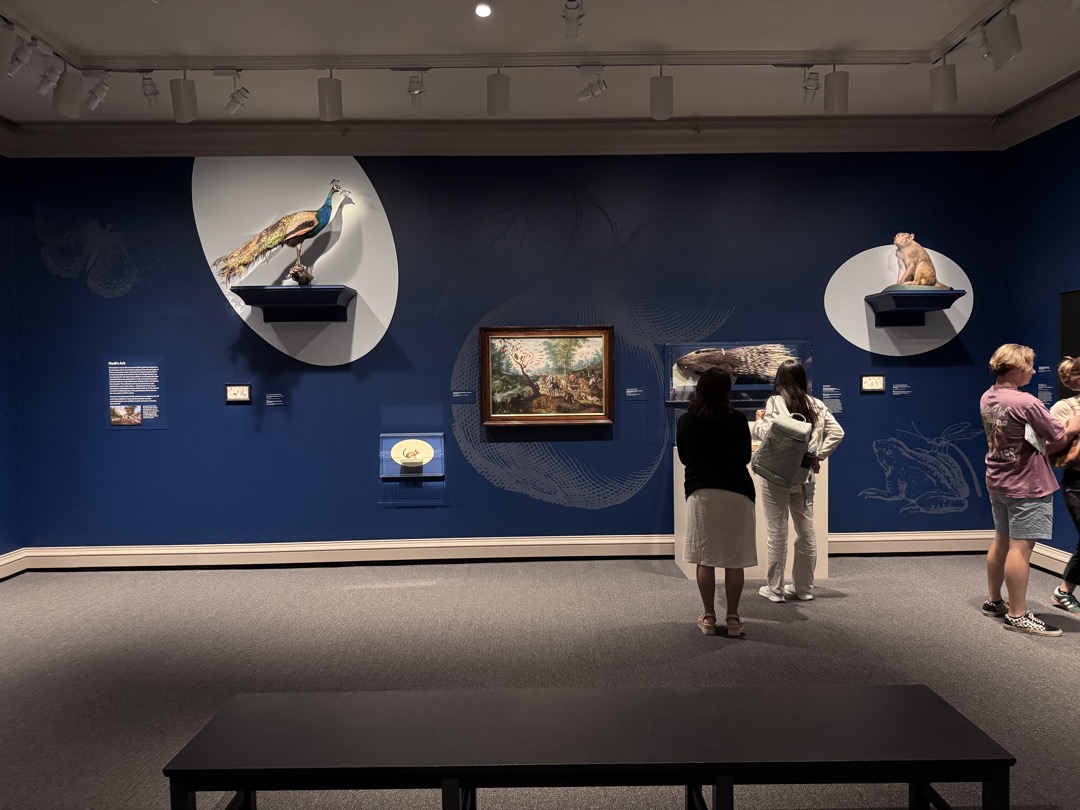
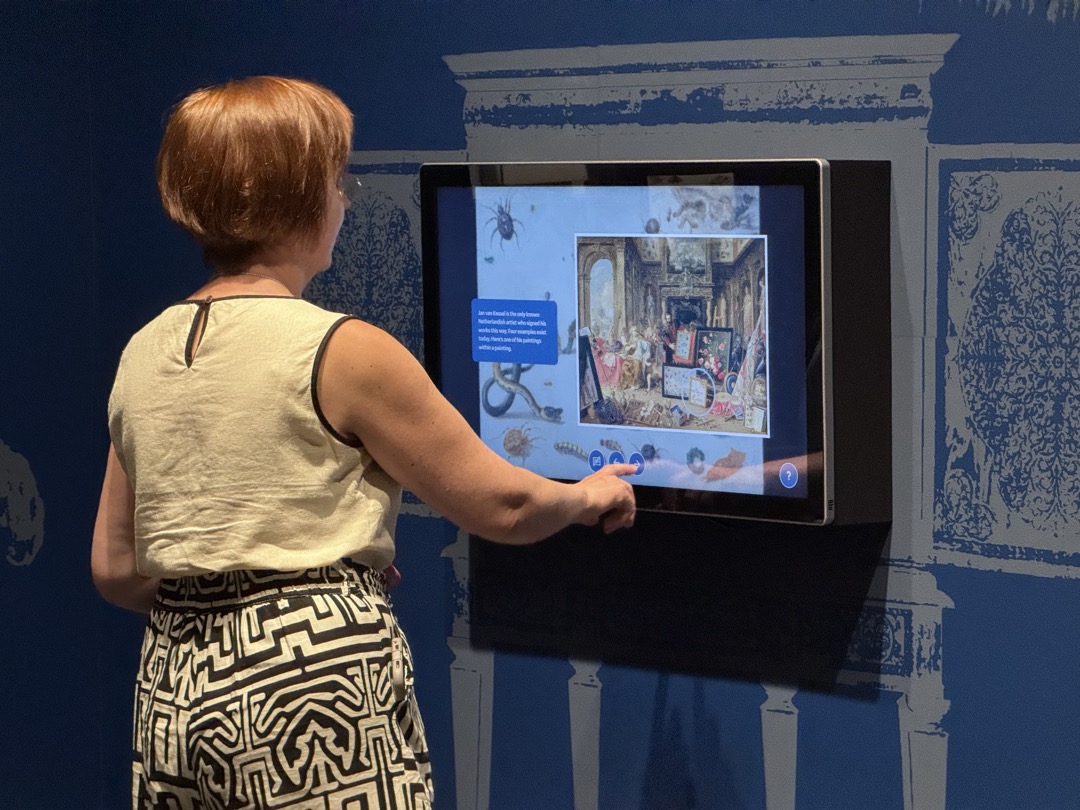
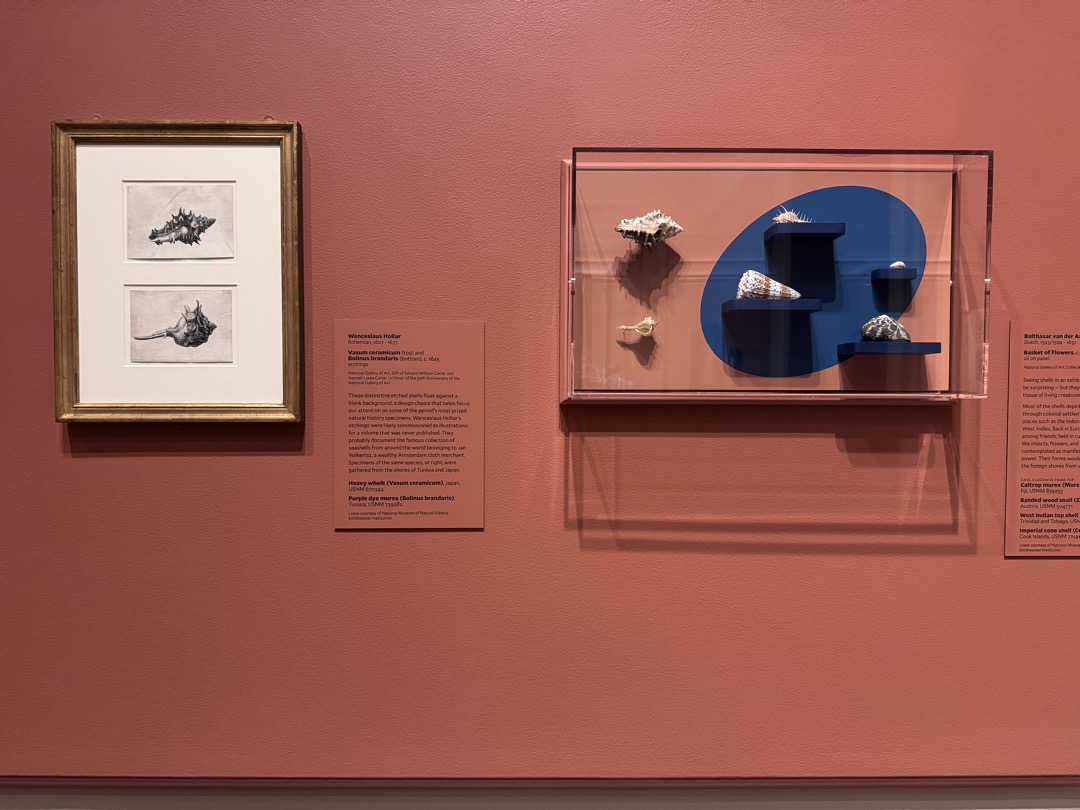
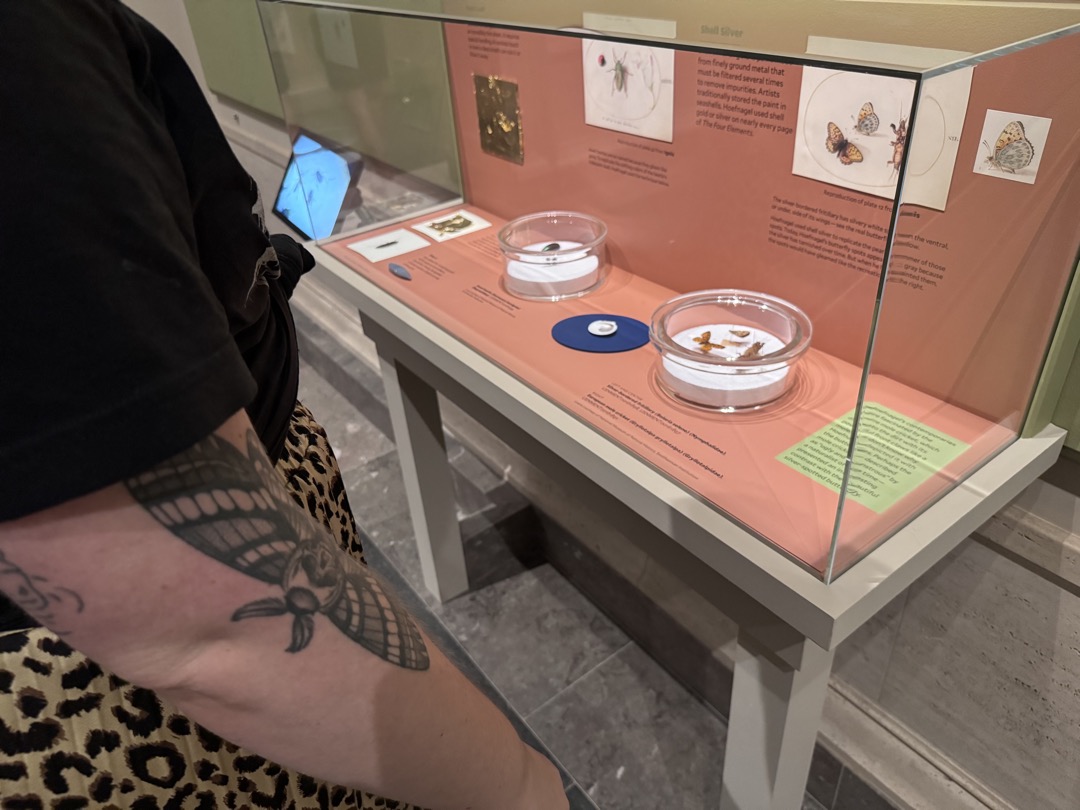
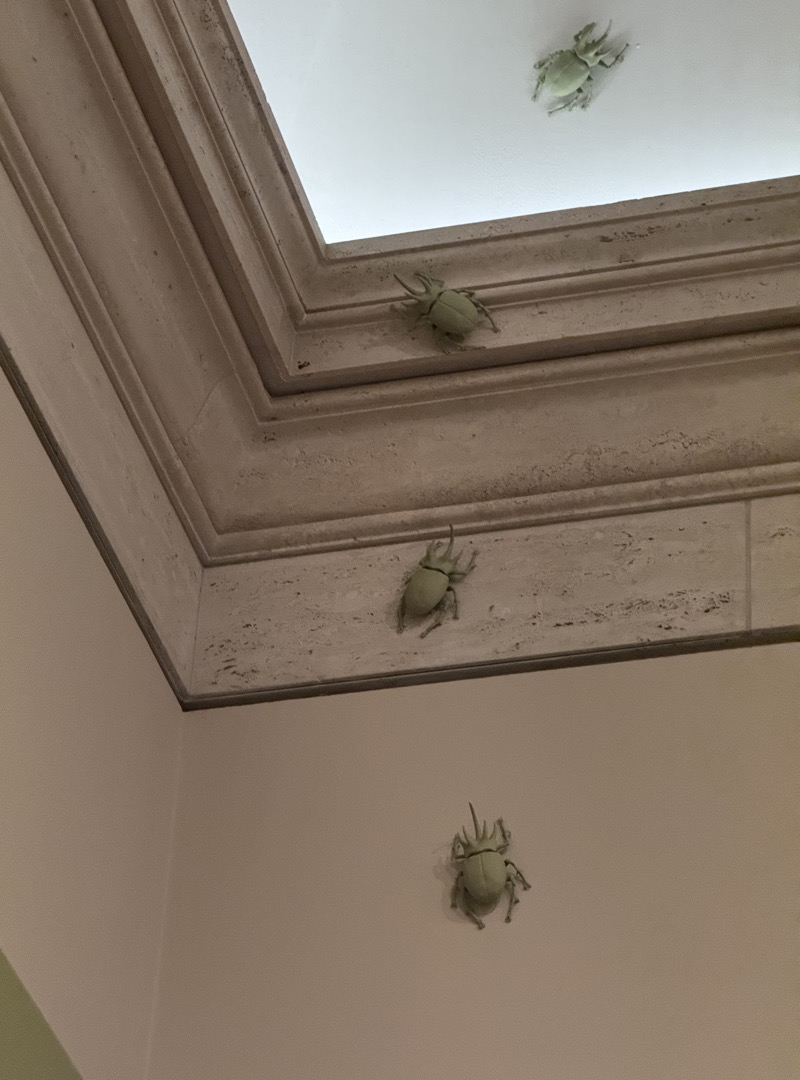
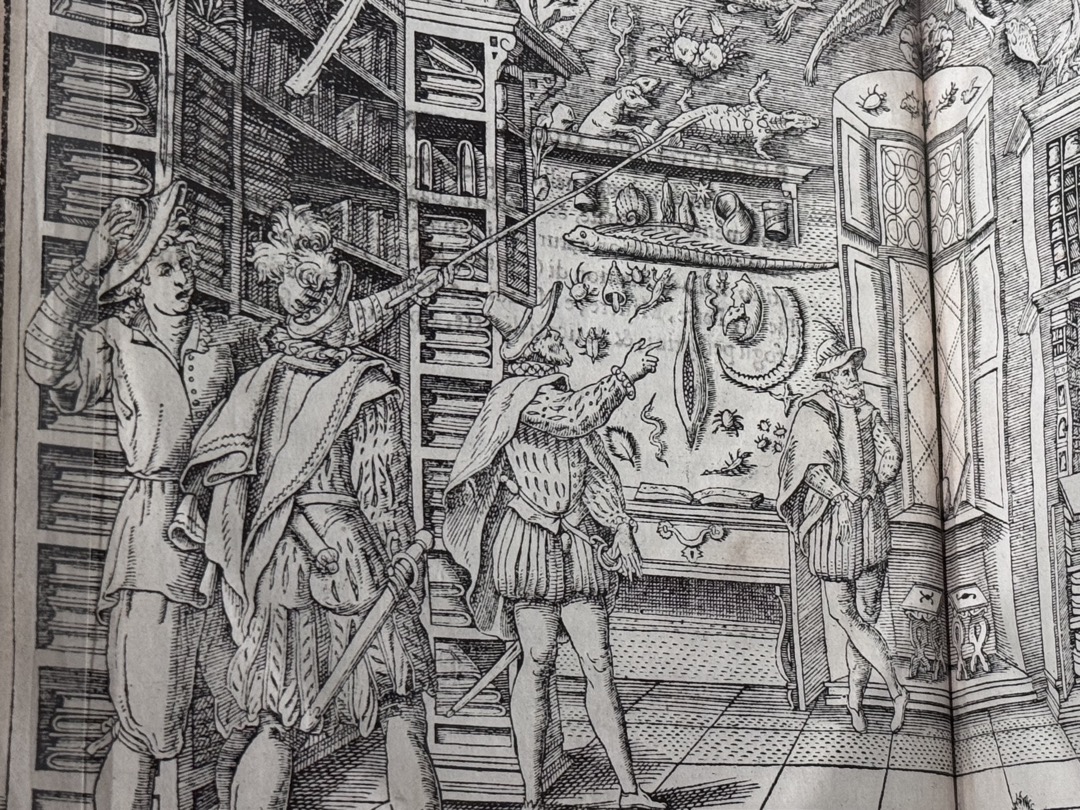
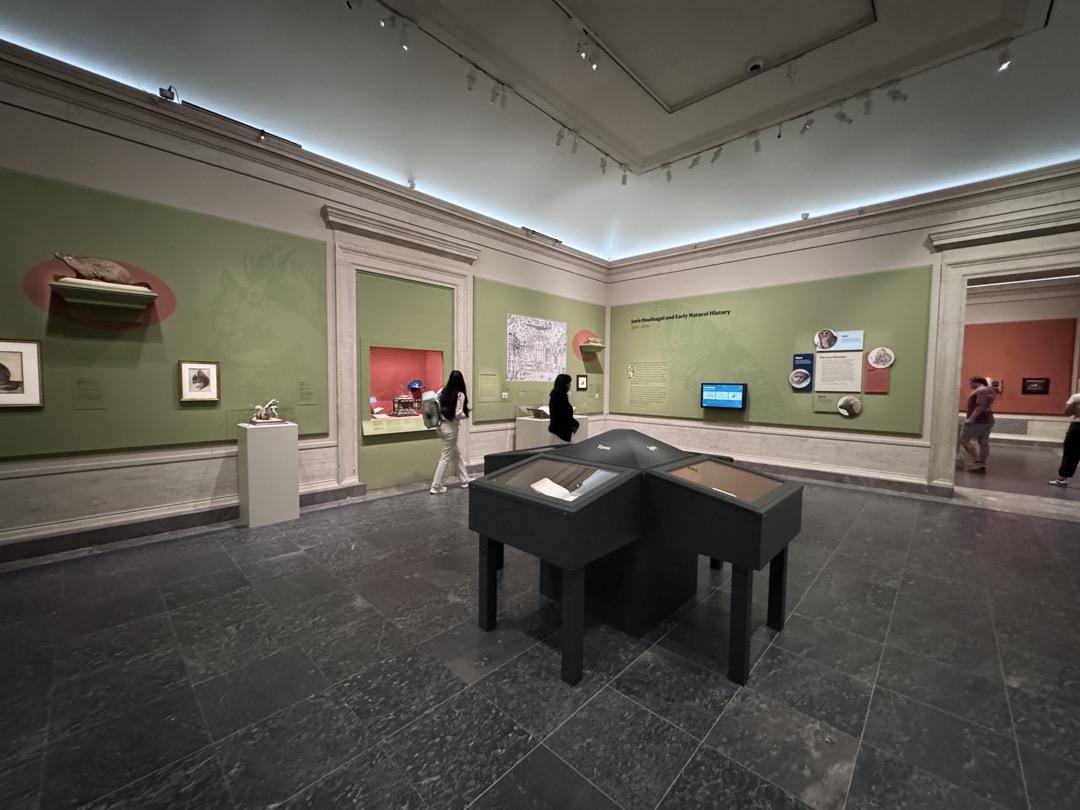
The most ambitious intervention is Little Beasts, a four-room exhibition centered on Joris Hoefnagel’s 16th-century illustrated albums of insects, birds, fish, and animals. Museum professionals will first be struck by the bold wall colors, but then you’ll notice that the layout breaks with the usual “eye-level” hang, paintings are joined by animals, beetles crawl up the corners, and yes, there are ovals used as graphic elements. Real specimens borrowed from the nearby National Museum of Natural History allow visitors to compare the illustrations with the real thing. Interpretive elements blend analog and digital: videos explore the scientific and artistic context of the era. The final room includes a new video by Dario Robleto, drawing links between past and present through the lens of conservation.
These are major shifts for the National Gallery of Art, an institution long known for its traditional presentation style and often compared with the Metropolitan Museum of Art and the Museum of Fine Arts, Boston. While the interpretive strategies on display here—object juxtapositions, thematic comparisons, cross-disciplinary exhibitions, and interactive media—are familiar to many museum professionals, their appearance at the NGA signals an important institutional transition.
Whether these interventions are prototypes for a future reinstallation or simply explorations in visitor engagement, they are worth watching. For museum colleagues, they offer both inspiration and insight into how even the most traditional institutions can evolve by experimenting—carefully, thoughtfully, and visibly—with new ways of seeing.
 Engaging Places
So interesting. Thank you!
LikeLike