
Last week, Ken Turino and I conducted two “Reimagining House Museums” workshops in Mesquite (near Dallas) and Houston. These sessions sparked meaningful conversations about the future of house museums, but the inspiration didn’t stop there. We used our free time to visit several nearby museums, each offering unique approaches that left us thinking about how museums can better serve their audiences. Here are some standout ideas we discovered:
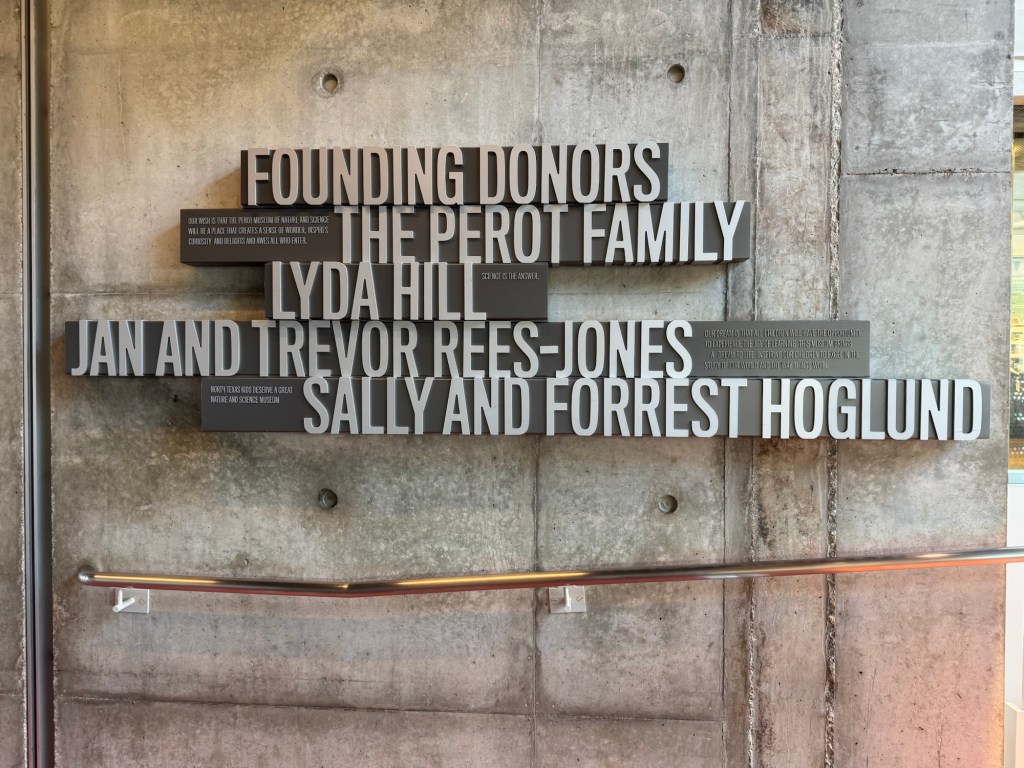
1. Personalizing Donor Recognition and Wayfinding at the Perot Museum of Science and Nature
The Perot Museum caught our attention with its donor wall, which didn’t just list names but included statements of intent from the donors. This added a personal touch, connecting visitors with the motivations behind the support. Another smart detail: wayfinding signage that directed visitors to “more cool exhibits.” This casual yet engaging language was both clear and inviting, proving that small touches can make a big impact.
2. Multilingual Accessibility and Visitor Engagement at the Dallas Museum of Art
The Dallas Museum of Art excelled at using “from the curator” labels, which explained the curators’ intentions for exhibitions. These insights added depth without overwhelming visitors. Similarly, their use of bilingual text was frequent yet thoughtfully designed, avoiding the cluttered feel that can sometimes accompany multilingual displays. Another standout feature was their visitor guidelines, prominently displayed on walls and even in elevators, making them accessible and friendly. Lastly, questions placed on the floor of a temporary exhibition encouraged visitors to actively engage with the art, fostering a sense of curiosity and reflection.

3. Immersive Contexts at the Houston Museum of Natural Sciences
At the Houston Museum of Natural Sciences, exhibitions were designed as environmental spaces that provided context and excitement. For example, the dinosaur skeletons weren’t just displayed—they were treated as artworks, dramatically lit with colored lights and shadows to create a sense of wonder. This approach underscored the importance of atmosphere in shaping visitor experiences.

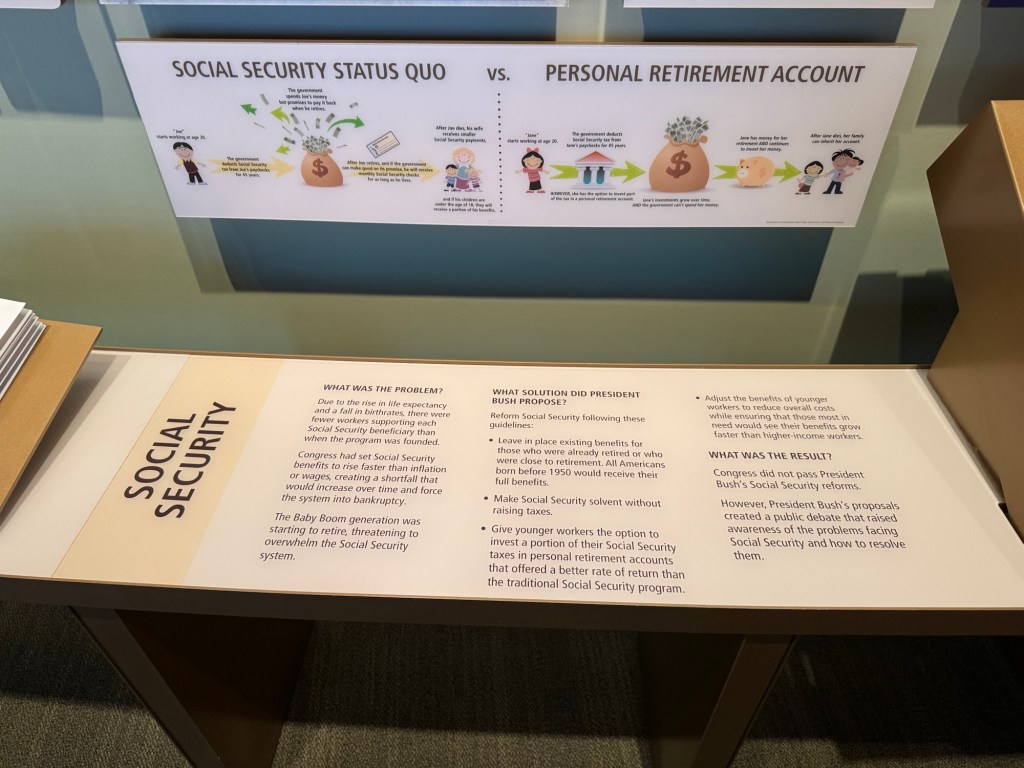
4. Reflecting on Leadership at the George W. Bush Presidential Library
The George W. Bush Presidential Library impressed us with its thoughtful examination of major issues from the Bush administration, including why certain proposals failed. This honest approach to leadership and decision-making encouraged deeper reflection, showing how museums can tackle complex topics in ways that resonate with visitors.
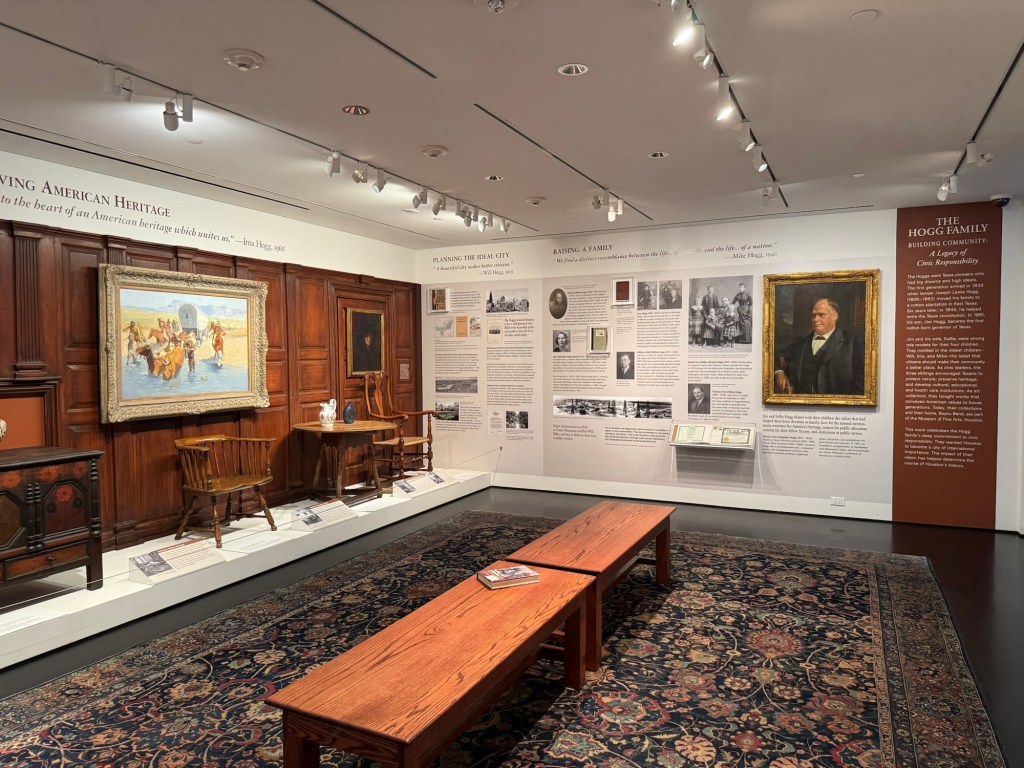
5. A Strong Introduction at Bayou Bend
At the Bayou Bend Collection and Museum, the visitor center featured a well-designed introductory exhibition that provided an overview of the Hogg family, their collecting interests, and their vision for the community. This thoughtful context set the stage for a more meaningful experience of the house and grounds, proving that a strong introduction can significantly enhance visitors’ understanding and engagement.
Takeaways
Each of these museums demonstrated creative ways to connect with audiences, from small details like engaging signage to big-picture storytelling approaches. Whether you’re rethinking visitor guidelines, curating immersive environments, or designing introductory exhibitions, these examples show how thoughtful choices can elevate the visitor experience.
What ideas have you discovered on your recent museum visits? Let’s continue to share and learn from one another as we reimagine the possibilities for museums of all kinds.
 Engaging Places