
Historic sites and house museums have long relied on storytelling and visual appeal to captivate their audiences. Drawing inspiration from Walt Disney’s “weenie” and Alfred Hitchcock’s “MacGuffin” offers creative ways to enhance visitor experiences.
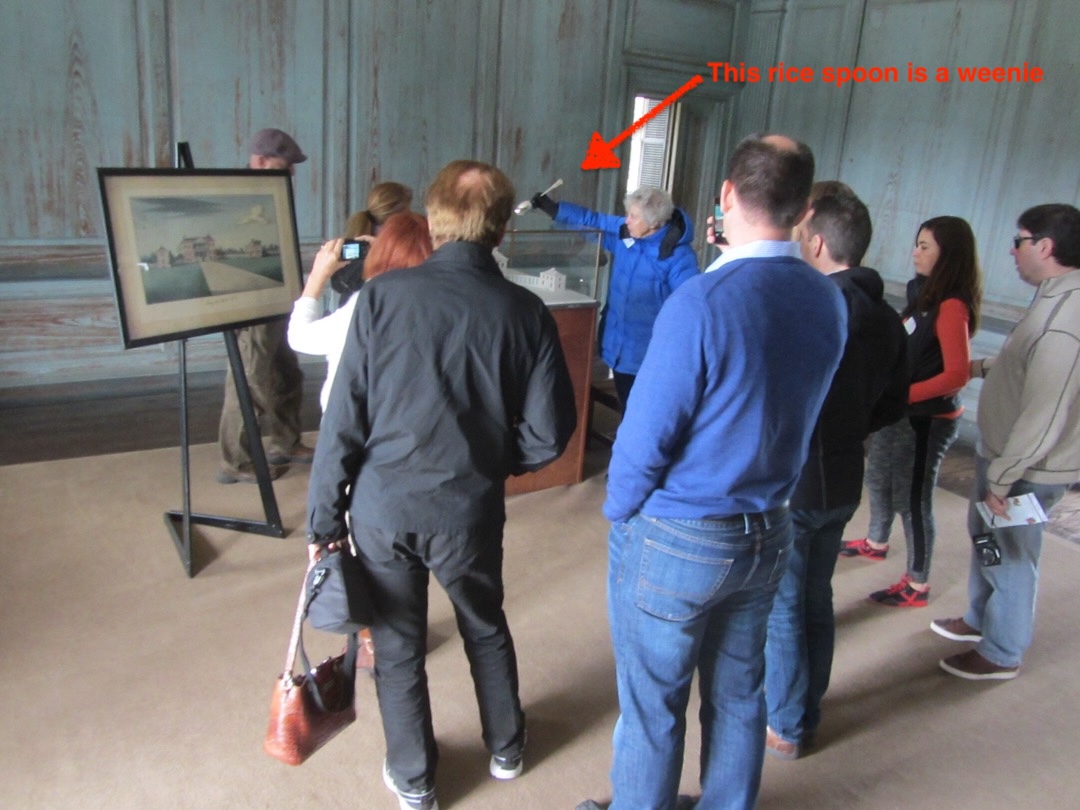
Disney’s “weenie” is a visual lure—a grand staircase, a striking artifact, or a distinctive monument such as Cinderella’s Castle—that draws attention and guides visitors through a space. It can be something small as well. At Drayton Hall, for instance, the guide uses a rice spoon (a large silver serving spoon historically linked to the region) as a pointer throughout the tour. The spoon is a weenie, pulling visitors into a closer examination of the house’s architecture and at the end of the tour, becomes a premium for visitors who become members that day.
Hitchcock’s “MacGuffin,” on the other hand, drives the narrative. It’s the letter that unlocks the secrets of a family’s past or the seemingly mundane object that sparks a larger story. I’ve seen several house museums use a historic newspaper to connect news, people, places, and advertising to provide an intriguing narrative. The best MacGuffins motivate visitors to explore, ask questions, and connect emotionally—a technique I’ve seen done incredibly well by experienced educators at art and natural history museums.
Combining these concepts creates a dynamic experience. Imagine a grand portrait (weenie) in a historic home that invites visitors to admire it, while the tour reveals it’s tied to a thrilling event (MacGuffin) that shaped the community’s history.
By strategically incorporating weenies and MacGuffins, historic sites can guide visitors visually while immersing them in compelling narratives, making their visit both engaging and memorable. How might you use these techniques at your site?
 Engaging Places