
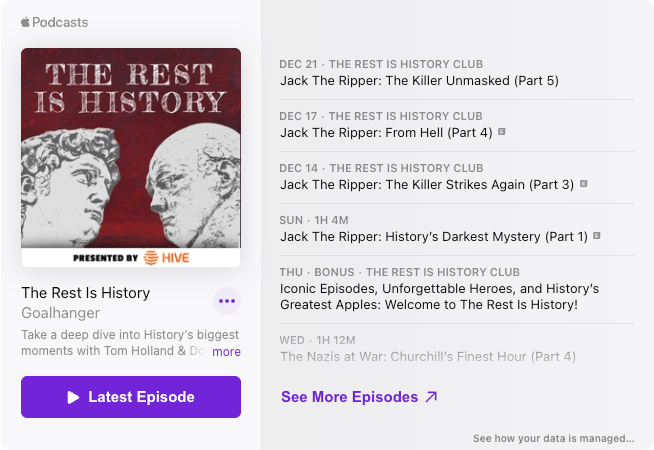
Apple Podcasts recently named The Rest is History its Podcast of the Year, and in a December 4 interview on In Conversation from Apple News, hosts Dominic Sandbrook and Tom Holland reflected on why history is resonating so strongly today. Sandbrook argues that despite assumptions, young people are deeply interested in the past—provided it is presented through compelling stories and vivid characters. Academic historians, he suggests, sometimes struggle to reach broad audiences because they avoid narrative. For Sandbrook, stories of the Second World War, Greek myth, the Trojan War, and Rome endure because they are foundational to human identity.
Holland adds that today’s students confront unprecedented content pressures, but unlike earlier generations, they are no longer limited to school as the sole venue for learning. The internet has created a lifelong landscape for historical discovery—“an enormous seam of gold,” as he describes it.
Their recognition is encouraging for museums and historic sites, which have long demonstrated that history becomes meaningful when it connects to human experience. Yet the podcast’s success also presents competitive pressure: if digital storytellers set the bar for engagement, museums cannot rely on authority alone.
Podcasts and digital media compete for attention, but they also model narrative techniques museums can adapt—story arcs, character focus, thematic depth. Museums hold assets podcasters do not: authentic places, objects, and in-person experiences that create emotional resonance and trust. The threat is complacency; the opportunity is reinvention.

Next Steps for Museums and Nonprofits:
- Double down on narrative interpretation that moves beyond names and dates to meaning and human complexity.
- Leverage digital extensions—podcasts, videos, or story-driven social content—to complement onsite experiences.
- Strengthen accuracy and nuance, ensuring that relevance never compromises rigor.
- Use interest in popular history as an entry point for deeper engagement, dialogue, and community connection.
The Rest is History reminds us: audiences are ready for ambitious, meaningful storytelling. Museums must continue to meet that appetite with clarity and courage.
 Engaging Places