
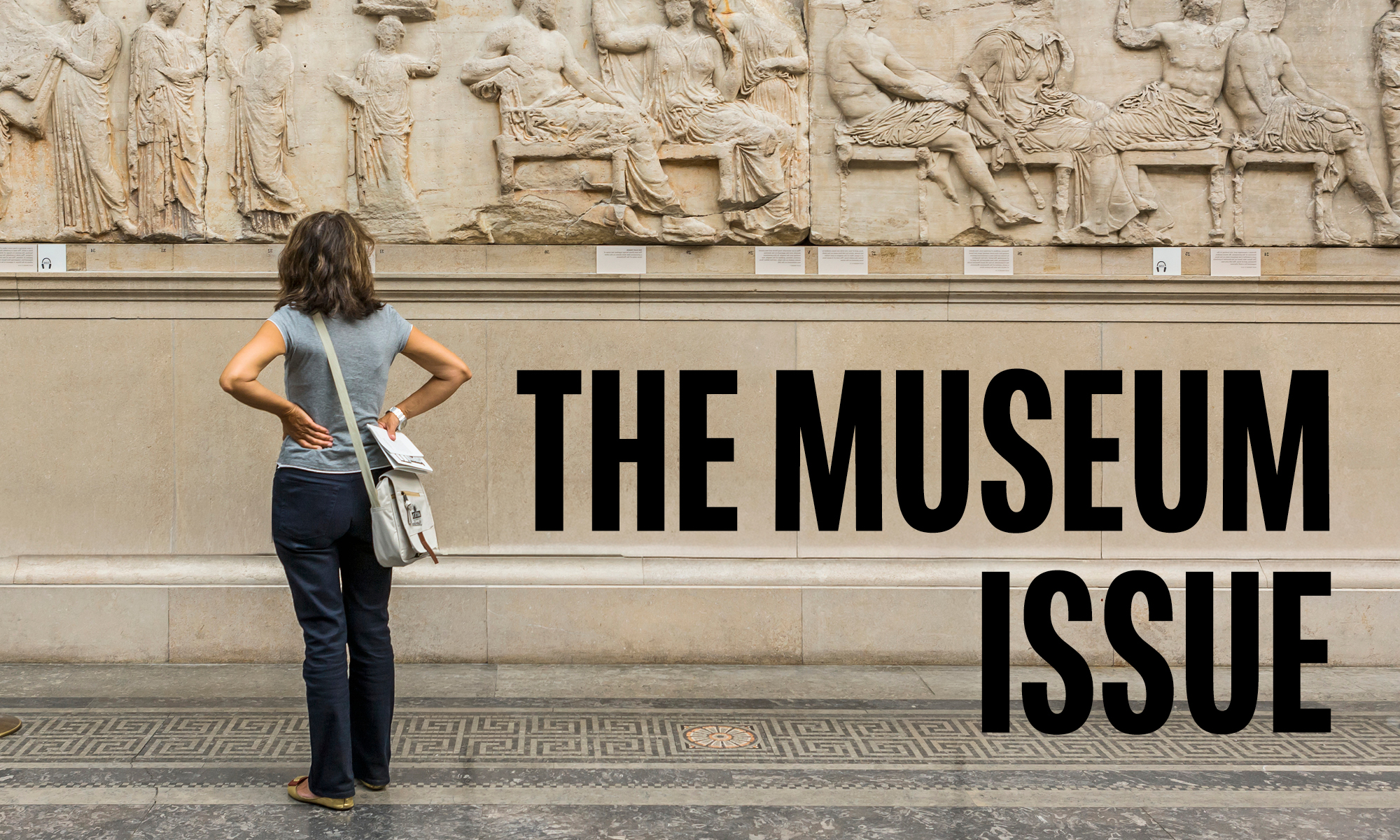
One of the most important roles museums play is sharing scholarship with the public—and it’s also one of the hardest. We are often asked to interpret complex events that unfolded over decades and involved many people, and in the process we rely on shorthand that makes sense to other scholars but not always to our visitors. Words like contextualize, agency, material culture, or periodization can quickly create distance rather than connection. Too often, we respond by simply “simplifying” academic work, when what we really need is something more ambitious: a distinct, rigorous form of interpretation designed specifically for public audiences.
In “How to Do Public Writing,” Jeffrey R. Wilson—director of the Harvard Law School Writing Center—offers a timely corrective: public writing is not scholarship “lite,” but a different craft altogether, one that requires clarity, narrative discipline, and deep respect for audience. Wilson is also the editor-in-chief of the new open-access journal Public Humanities, published by Cambridge University Press, and is currently developing a special museum issue—making his insights especially relevant for those of us working in museums and historic sites.
Wilson defines public writing as scholarship for people outside the academy—what he memorably calls “the folks we grew up with.” His premise is simple but urgent: as humanities education has declined and public trust in expertise has eroded, the responsibility for interpretation has shifted. Museums, libraries, and cultural organizations are now among the primary places where people learn how to make meaning from history, culture, and evidence. In this sense, public writing and museum interpretation are performing the same civic function.
What makes Wilson’s argument especially relevant to museums is his insistence that public writing begins with strong research, not instead of it. This mirrors the tension many institutions face when trying to balance scholarly rigor with accessibility. Clear, engaging writing is not easier—it is harder. It requires distillation, intentional design, and the courage to decide what matters most.
Don’t make the mistake of thinking that public writing is easier than academic writing. Successfully conveying an important idea in 800 words to an audience that has no specialized training is much more difficult than having 9,000 words for colleagues who hold the same PhD as you.
Wilson’s most practical contribution is his emphasis on storytelling rather than argumentation. He advises writers to stop trying to “prove” something and instead invite readers into a narrative shaped by evidence, conflict, and human stakes. This is a familiar lesson for interpreters: visitors do not connect to facts; they connect to stories about people that help them see themselves in the past and present. Whether in a exhibition, a guided tour, a StoryMap, or a blog post, meaning emerges through narrative structure, not exhaustive detail.
His suggested structure—the 20–70–10 model for introductions, bodies, and conclusions—translates easily to exhibitions, tours, presentations, and articles. The opening should quickly establish relevance, the middle should develop a clear story arc, and the ending should return to the big idea and why it matters now. In museum terms, this is a reminder that the interpretive “hook” must come early and that conclusions should not simply stop but resolve.
Equally important is what Wilson tells writers to avoid: jargon, literature reviews, meta-discourse, and overlong explanations. These are the same traps that plague exhibitions and tours—texts written for curators rather than visitors, designed to demonstrate knowledge rather than provoke insight. Public interpretation, like public writing, requires letting go of what we know in order to focus on what our audiences need.
Perhaps most compelling is Wilson’s framing of public writing as an ethical act. Sharing knowledge beyond professional circles is not self-promotion; it is public service. For museums and nonprofit organizations, this reinforces a core truth: communication is not an add-on to mission—it is mission. Every label, web page, tour, program, and lesson plan is an opportunity to help people understand the world and their place within it.
Public writing is not adjacent to interpretation—it is interpretation, whether on the page, on site, or in the public square. Yet this is a skill rarely taught in universities, and many museum professionals are left to learn it through trial and error. Wilson’s article offers a much-needed guide, combining a clear rationale for public writing with practical strategies for publishing and thoughtful examples that model the very approach he advocates.
 Engaging Places