Category Archives: Corcoran School of the Arts and Design

What Emerging Museum Managers Are Learning—and Why It Matters to the Field

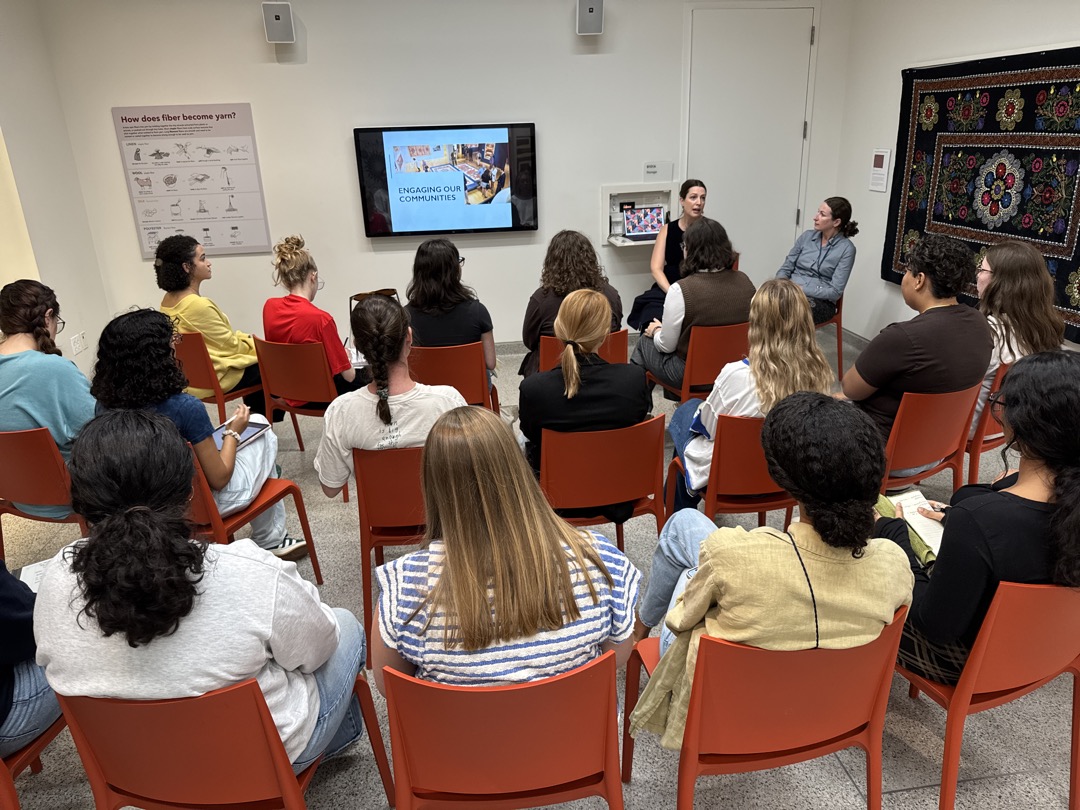
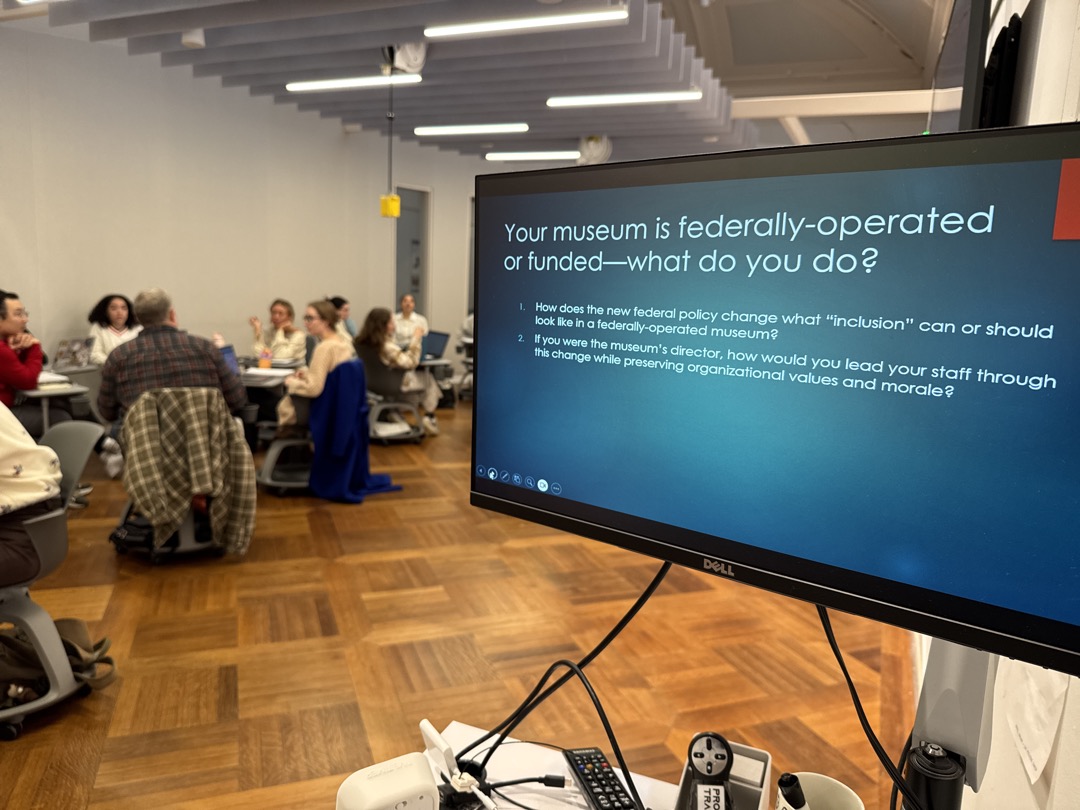
Discussing current management issues in museums.

Graduate students recently finishing an introductory course in museum management with me at George Washington University offered useful insights to the field. Their end-of-semester reflections reveal where emerging professionals are gaining traction, where they’re still uncertain, and what this means for museums and nonprofits navigating an increasingly complex landscape.

What’s clicking

A clear shift is underway in how new professionals understand museums. Rather than seeing them as a set of departments or activities, students are beginning to read museums as systems: mission, governance, finances, staffing, and programs working together—or, sometimes, at cross-purposes. Core documents like budgets, Form 990s, strategic plans, and bylaws are no longer viewed as bureaucratic paperwork, but as evidence of priorities, capacity, and risk.

Equally important, many students are learning that management is less about finding the “right” answer and more about making defensible decisions with imperfect information. That realization—often uncomfortable—is a sign of professional formation. They are also becoming more fluent in professional communication: writing memos for decision-makers, structuring findings, and using standards as tools rather than checklists.

Where the strain shows

The productive strain is familiar to anyone who has worked in museums. Students struggled most when ideals collided with constraints—especially around finances, staffing, and governance. They felt the tension between mission-driven aspirations and organizational realities. That’s not a weakness; it’s the work.

Continue reading

New Vision, Old Masterpieces: Transformation Ahead at the National Gallery of Art

The National Gallery of Art in Washington, DC has quietly launched an ambitious reimagining of its original West Building, a structure completed in the early 1940s and long known for its grand architecture and displays of masterpieces. For generations, galleries have been organized by geography and time period, with paintings neatly arranged on walls in a format familiar—and comforting—to many visitors. But as expectations change and audiences diversify, the NGA is reconsidering what a national art museum can and should be in the 21st century.

Project Goals: From Comfort to Connection

The West Building Reimagining Project is driven by a compelling vision: to make visible the profound links between art and our shared humanity. The project seeks to move beyond static displays and conventional categorizations to create exhibitions that are more resonant, inviting, and engaging—especially for multi-generational families and first-time visitors. The team aims to evoke a broader range of responses, from curiosity to awe, while incorporating a wider variety of objects and histories than traditionally seen in the West Building.

Listening, Learning, and Prototyping

The project began in earnest in 2023 with a series of listening sessions involving both staff and visitors. One key insight quickly emerged: diversity—of objects, perspectives, and people—matters. Since then, the Gallery has taken a human-centered design approach, engaging more than 100 participants across departments and partnering with faculty from the Corcoran School of Art at George Washington University (including me!).

Subcommittees were formed in 2024 to tackle specific challenges, and in 2025 the focus has shifted to testing experimental display strategies. These prototypes will be refined throughout the year, with recommendations to the NGA’s president and CEO slated for 2026. The process is intentionally iterative, emphasizing learning and responsiveness over rigid outcomes.

A Workshop on the Social Role of Art

Continue reading