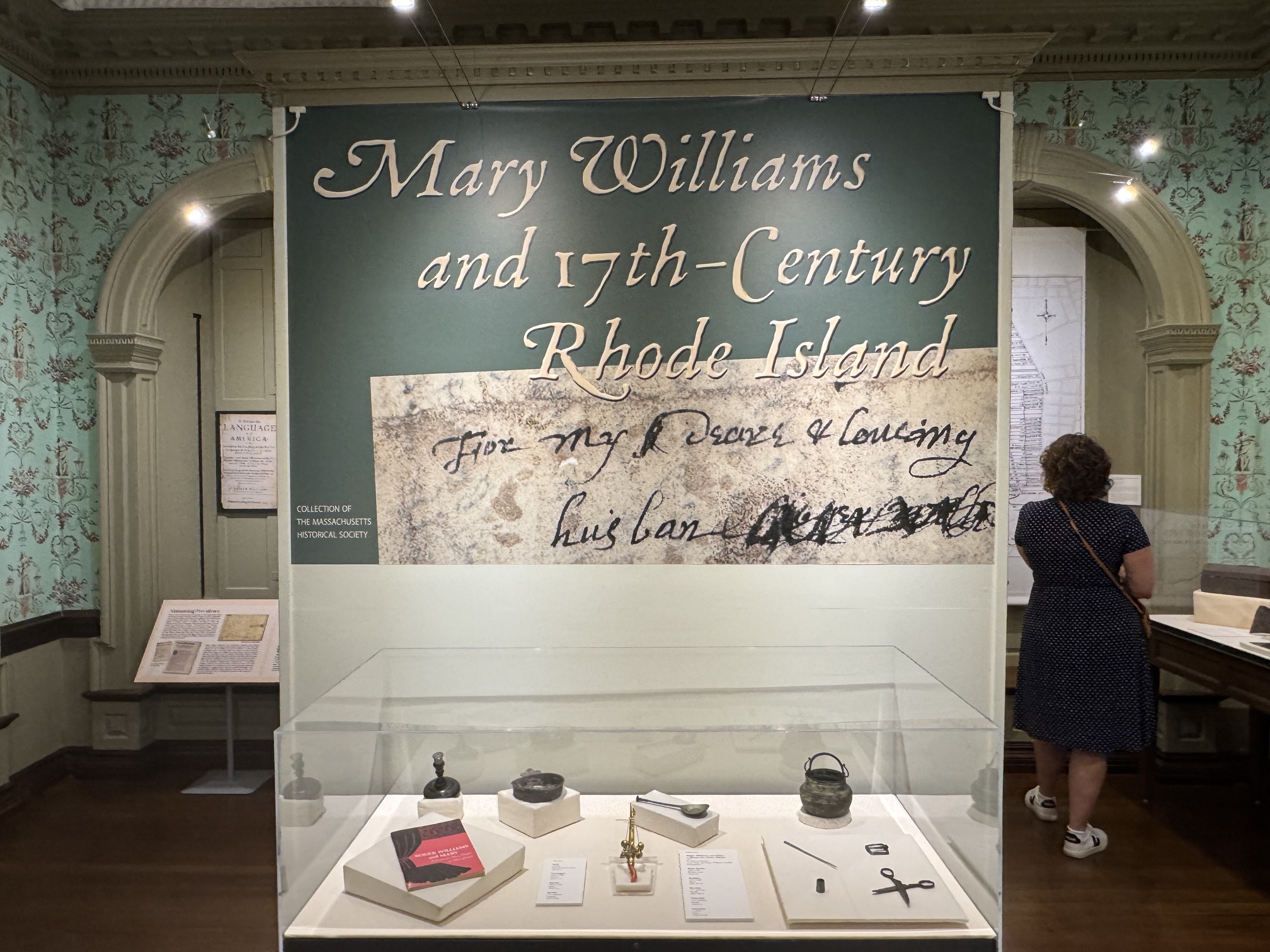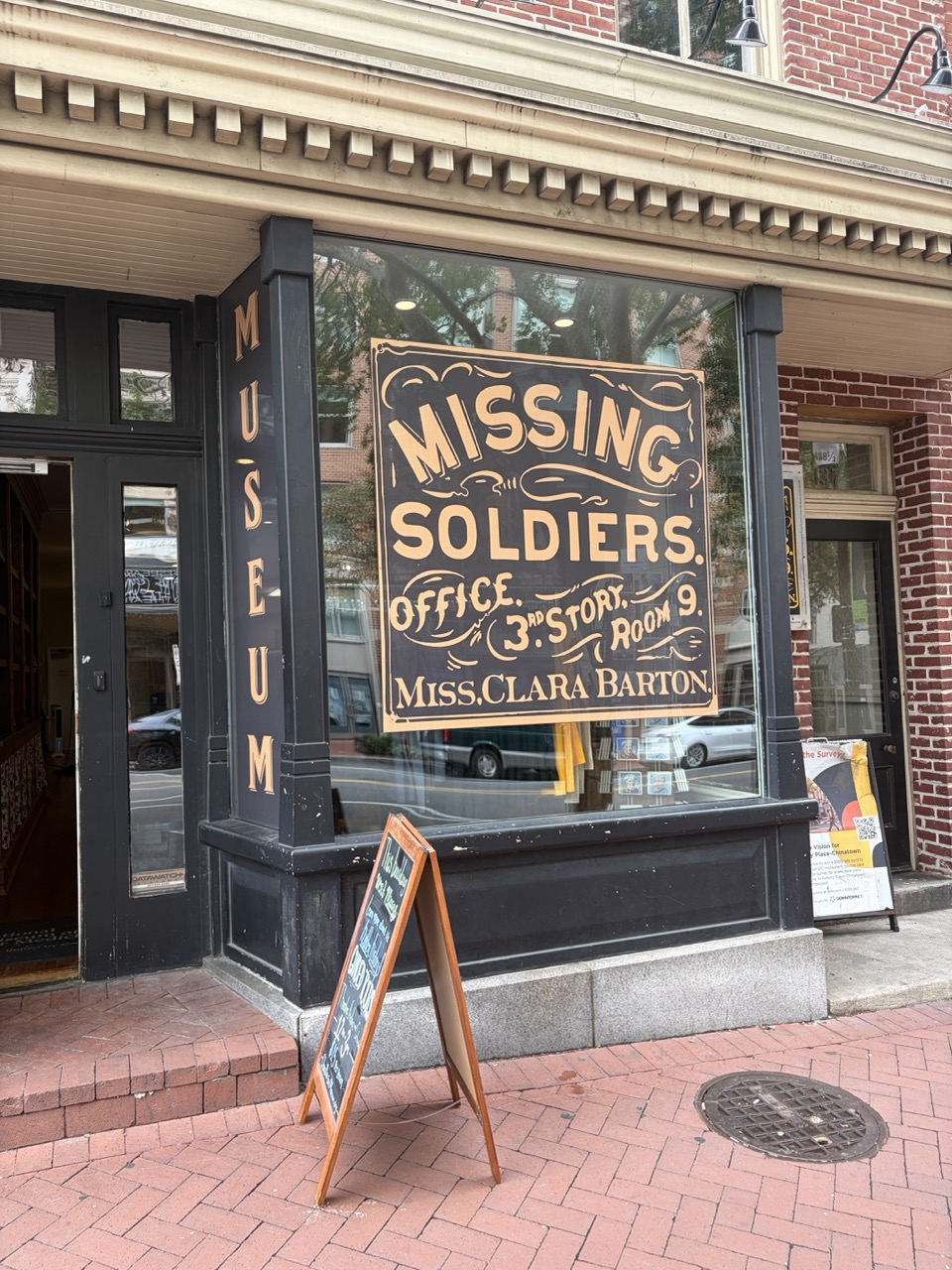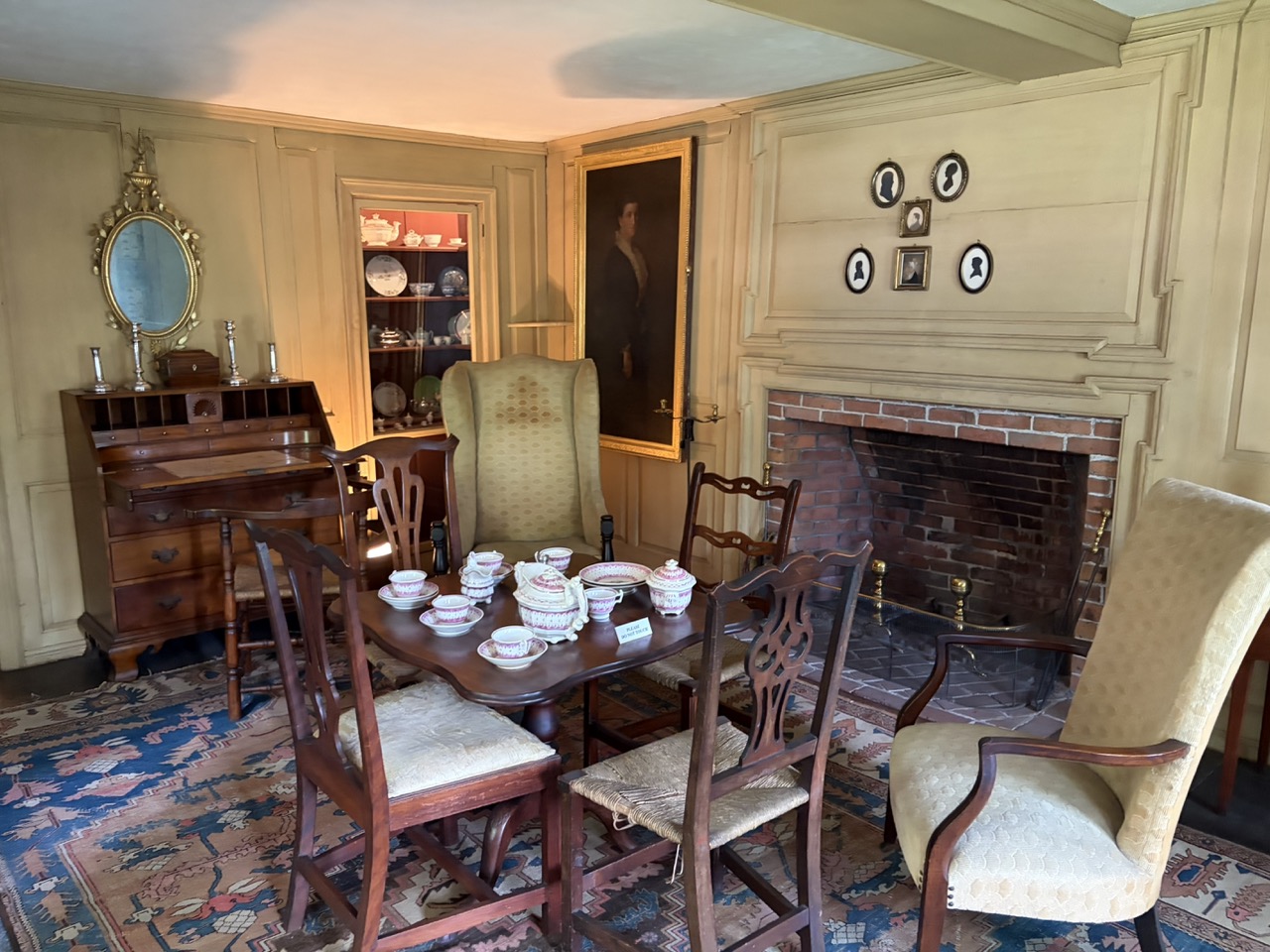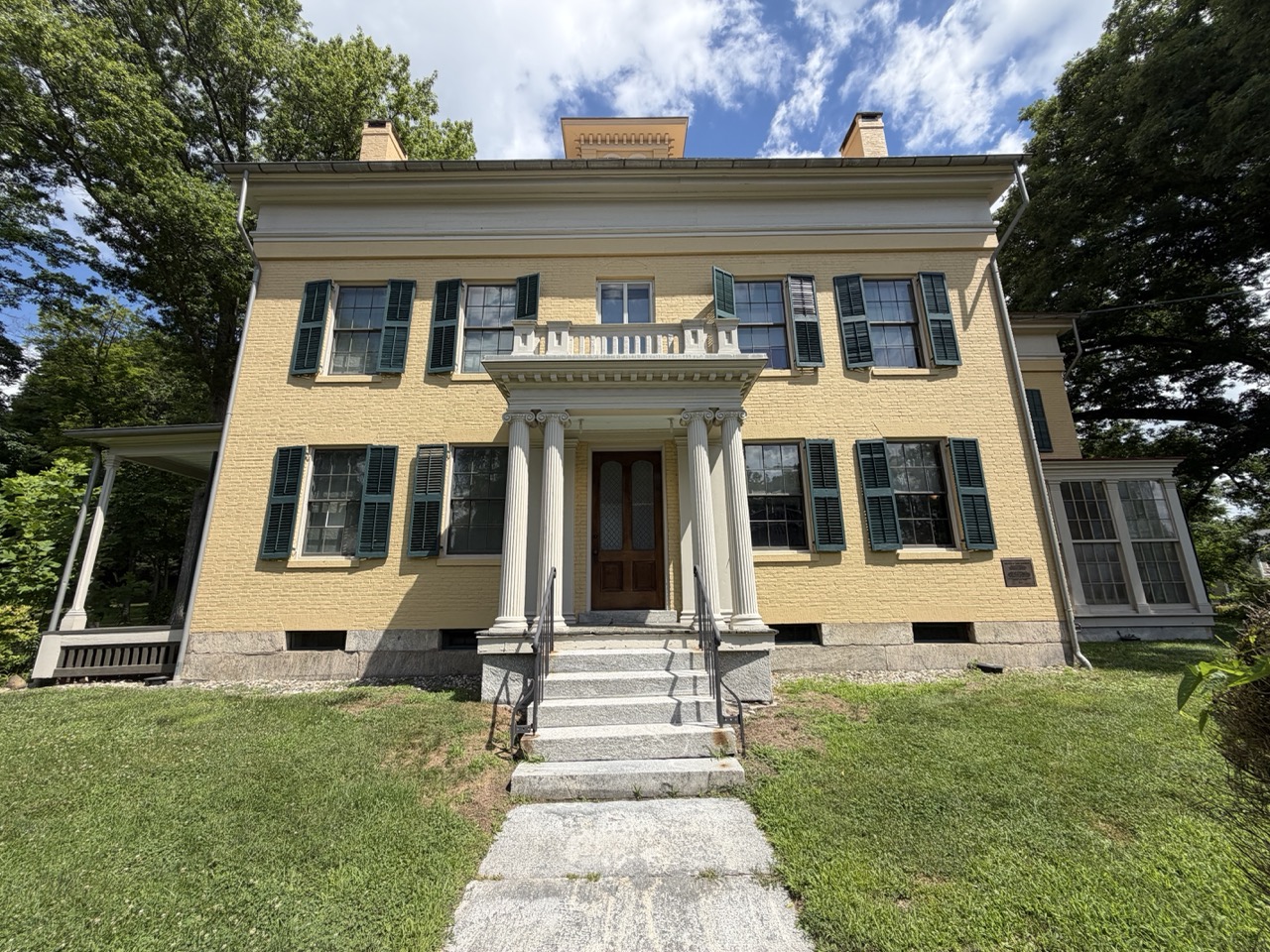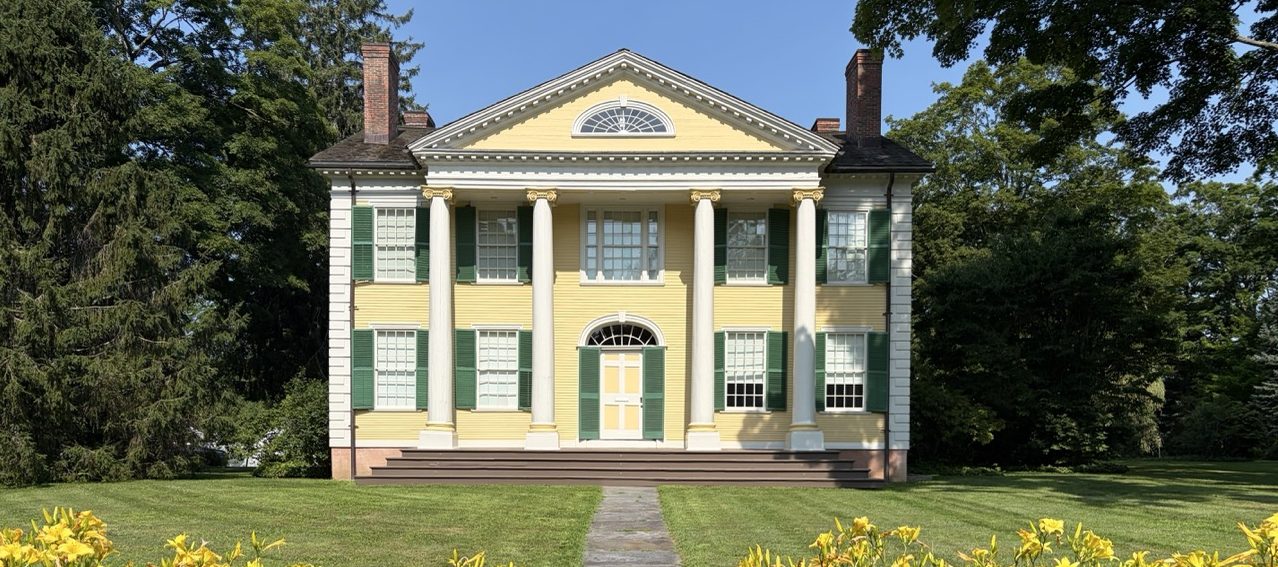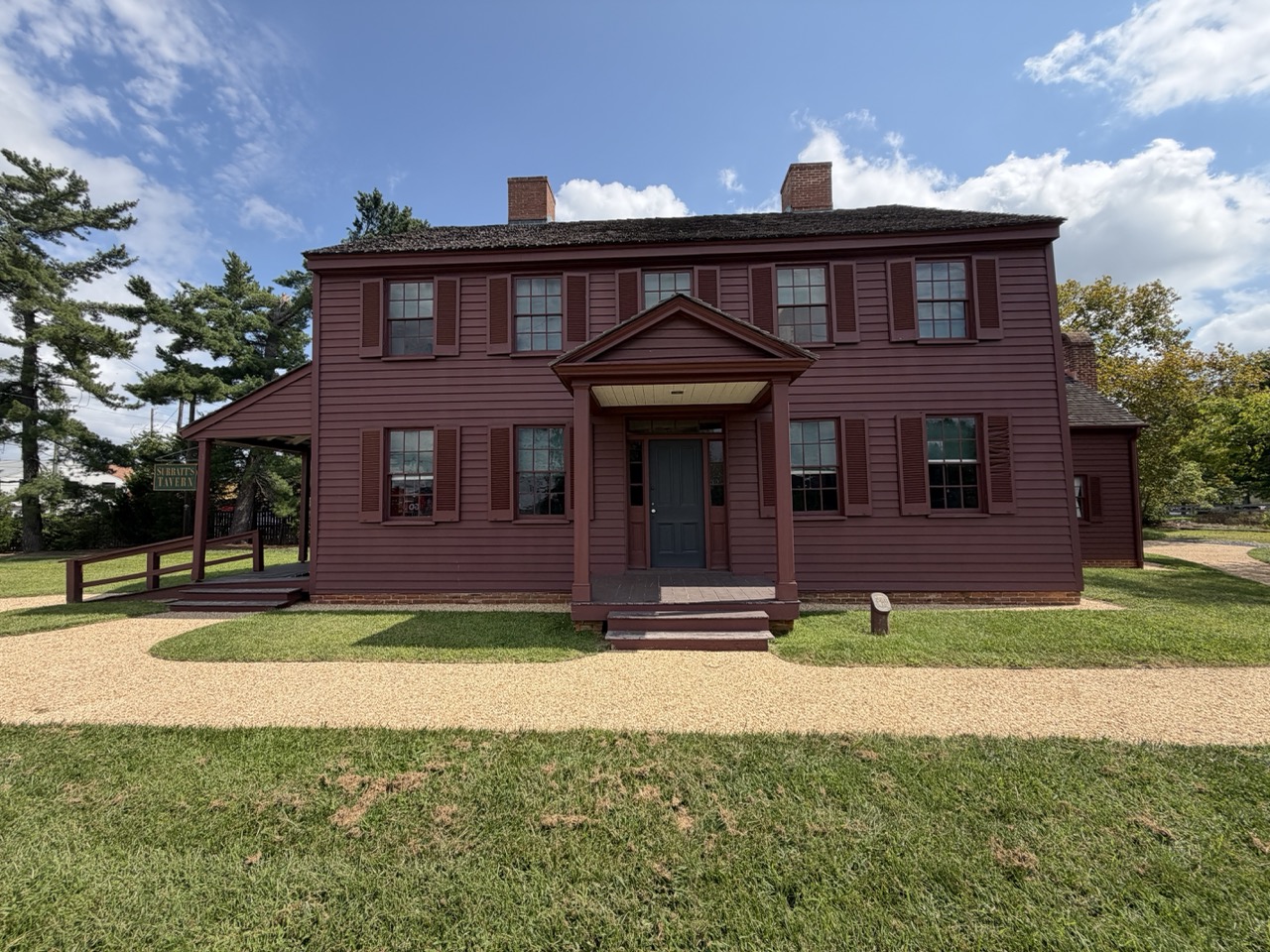
The Florence Griswold House in Old Lyme, Connecticut, home of the Lyme Art Colony.
The Florence Griswold Museum in Old Lyme, Connecticut, begins with a story that was common in its time but it leads somewhere entirely unexpected. By the late nineteenth century, Florence Griswold found herself in circumstances shared by many unmarried women of her generation. Her family’s wealth had disappeared, her parents and siblings were gone, and she inherited a large house that had once reflected her family’s prosperity but had become an expensive burden. Like many unmarried women of the middle and upper classes with limited economic opportunities, she turned to one of the few socially acceptable occupations available: taking in boarders.
Today, the boarding-house period is often a forgotten chapter in the history of historic houses. In the late nineteenth and early twentieth centuries, boarding houses were an important part of many women’s economic lives. Taking in boarders was considered an extension of managing a household, making it one of the few socially acceptable ways women could generate income while remaining within the domestic sphere.
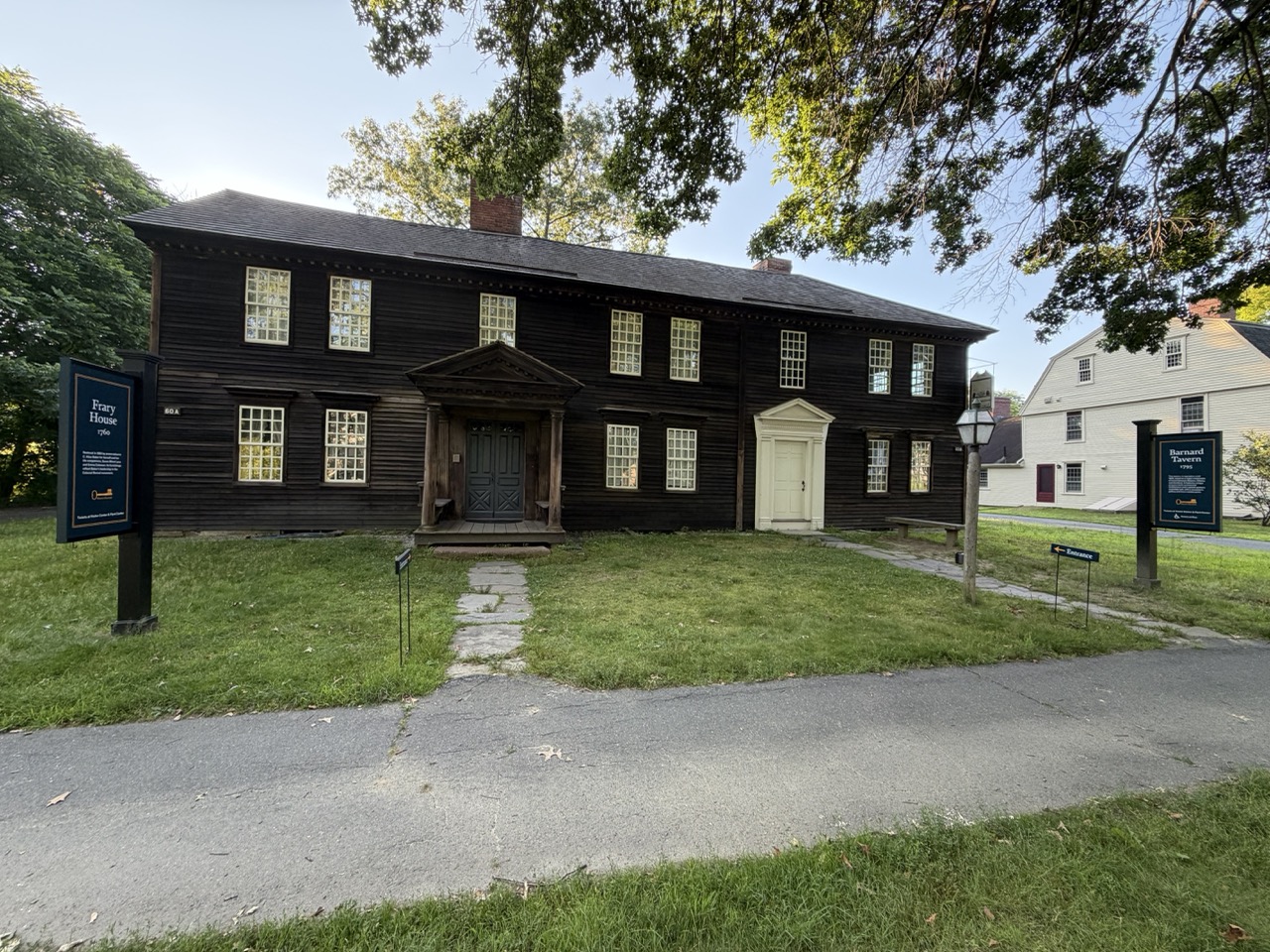
The Frary House (left), part of the building that also includes the Bernard Tavern, Historic Deerfield, Massachusetts.
When we visit a historic house museum, we usually come to learn about the people who once lived there. But how often do we learn about the people who saved the house? The Frary House in Historic Deerfield, Massachusetts, tells the overlooked story of the women who preserved the places we visit.
Built about 1750, the Frary House could easily have been interpreted as another colonial home. Instead, Historic Deerfield tells a different story. The house is furnished as the Colonial Revival home of C. Alice Baker after she restored it in the 1890s, shifting visitors’ attention to a later chapter in the building’s history. That interpretive choice immediately caught my attention because it suggests that a historic house’s most significant story is not always its earliest one.
Baker purchased the Frary House in 1890 after learning that it was in danger of collapse. She later explained that she bought it “to rescue the home and to make a home for her mother.” At a time when Old Deerfield was struggling economically, her decision preserved more than a single building. It became part of a much larger effort that would help shape the future of the village.
The guide described Baker as one of America’s earliest female preservationists—a woman who owned property independently, invested in railroads, taught school, researched local history, collected antiques, and published books at a time when women are seldom remembered for participating so fully in public and economic life. Whether every claim of being “the first” can withstand historical scrutiny almost becomes beside the point. What matters is that Baker represents a much larger story that historic sites rarely tell.
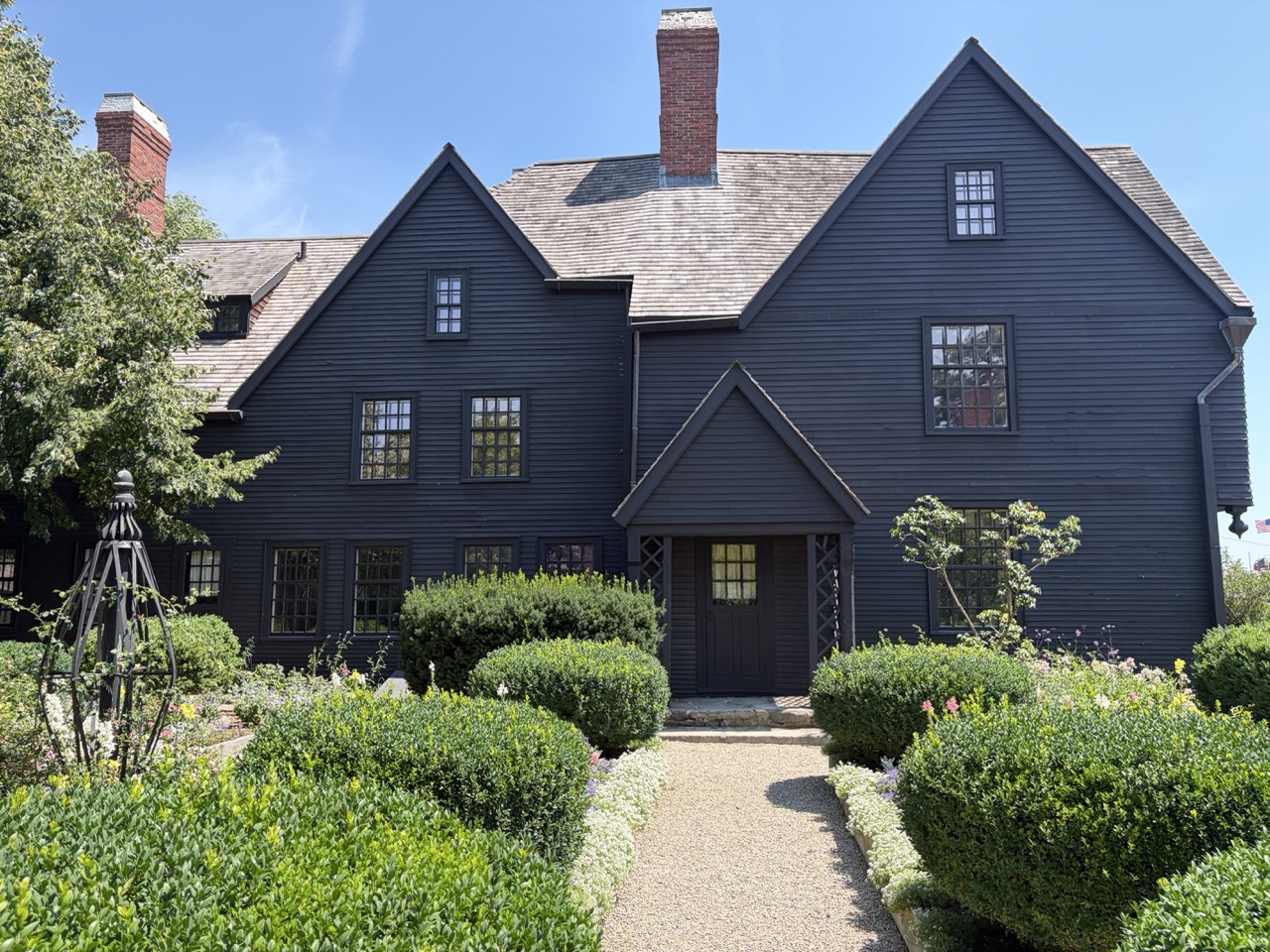
The House of the Seven Gables, Salem, Massachusetts.
What is a historic house museum supposed to do? Preserve an important building? Tell the story of the people who once lived there? Re-create a particular moment in history? Most historic house museums are organized around one primary purpose with the house serving as the central artifact through which that story is told.
The House of the Seven Gables in Salem, Massachusetts challenges that assumption. By the time I finished my visit, I realized that the woman who transformed the house into a museum had imagined something much larger. Caroline Emmerton, a Progressive Era reformer and preservationist, transformed a celebrated historic house into an institution that combined preservation, literary tourism, education, and social reform. More than a century later, that integrated vision still defines the site.
In 1668, Salem sea captain and merchant John Turner and his wife, Elizabeth, built the house that would become known as the House of the Seven Gables. Three generations of the Turner family lived there before the property passed to the Ingersoll family in 1782. One of its later residents, Susanna Ingersoll, welcomed frequent visits from her cousin, Nathaniel Hawthorne, whose experiences at the house inspired the setting and title of his 1851 novel The House of the Seven Gables. By the beginning of the twentieth century, the Turner-Ingersoll Mansion was already famous as both a remarkable survivor of colonial Salem and the home most closely associated with Hawthorne’s classic novel.
By the early twentieth century, however, the property’s future was uncertain. When the Turner-Ingersoll Mansion came up for sale, Emmerton purchased it in 1908. She was already deeply involved in the Progressive Era settlement house movement and saw an opportunity to accomplish far more than preserving a historic building. Working with architect Joseph Everett Chandler, she restored the house to what they believed reflected its seventeenth-century appearance while simultaneously establishing the House of the Seven Gables Settlement Association. Rather than operating the house simply as a museum, she used its popularity to support a settlement house which offered educational and social programs for Salem’s immigrant community.
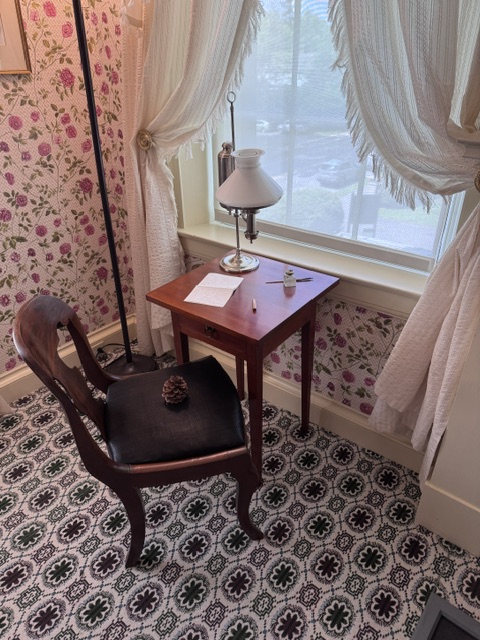
Louisa May Alcott’s desk in her bedroom at Orchard House in Concord, Massachusetts. Courtesy of Orchard House.
Many visitors come to Orchard House because they love Little Women. The museum embraces that connection. As it notes on its website, visitors often remark that a tour is “like a walk through Little Women!” It is easy to understand why. The house inspired the setting of the March family home, and many of the people who lived there found their way into Louisa May Alcott’s novel.
After touring Orchard House, however, I came away with a different realization. The house certainly rewards visitors who come looking for Little Women. But its greatest contribution is something deeper: it reveals the creative world that shaped Louisa May Alcott as a writer.
That distinction became clear as the tour unfolded. Rather than treating Louisa as the sole focus, the guide introduced each member of the Alcott family through the rooms they occupied and the activities that took place there. Instead of presenting a series of biographical sketches, the house gradually revealed a household alive with writing, theater, art, education, reform, conversation, and, at times, financial struggle.
By the end of the tour, Little Women seemed less like the work of an isolated author than the literary expression of a remarkable family’s shared experiences. The rooms themselves reveal the different ways creativity found expression within the Alcott family. The dining room and parlor evoke oldest daughter Anna’s family theatricals, younger sister May’s rooms preserve the work of an aspiring artist, and Louisa’s bedroom centers on the desk where she wrote much of Little Women. Together, these rooms reveal a household where writing, art, and performance were all part of everyday life.
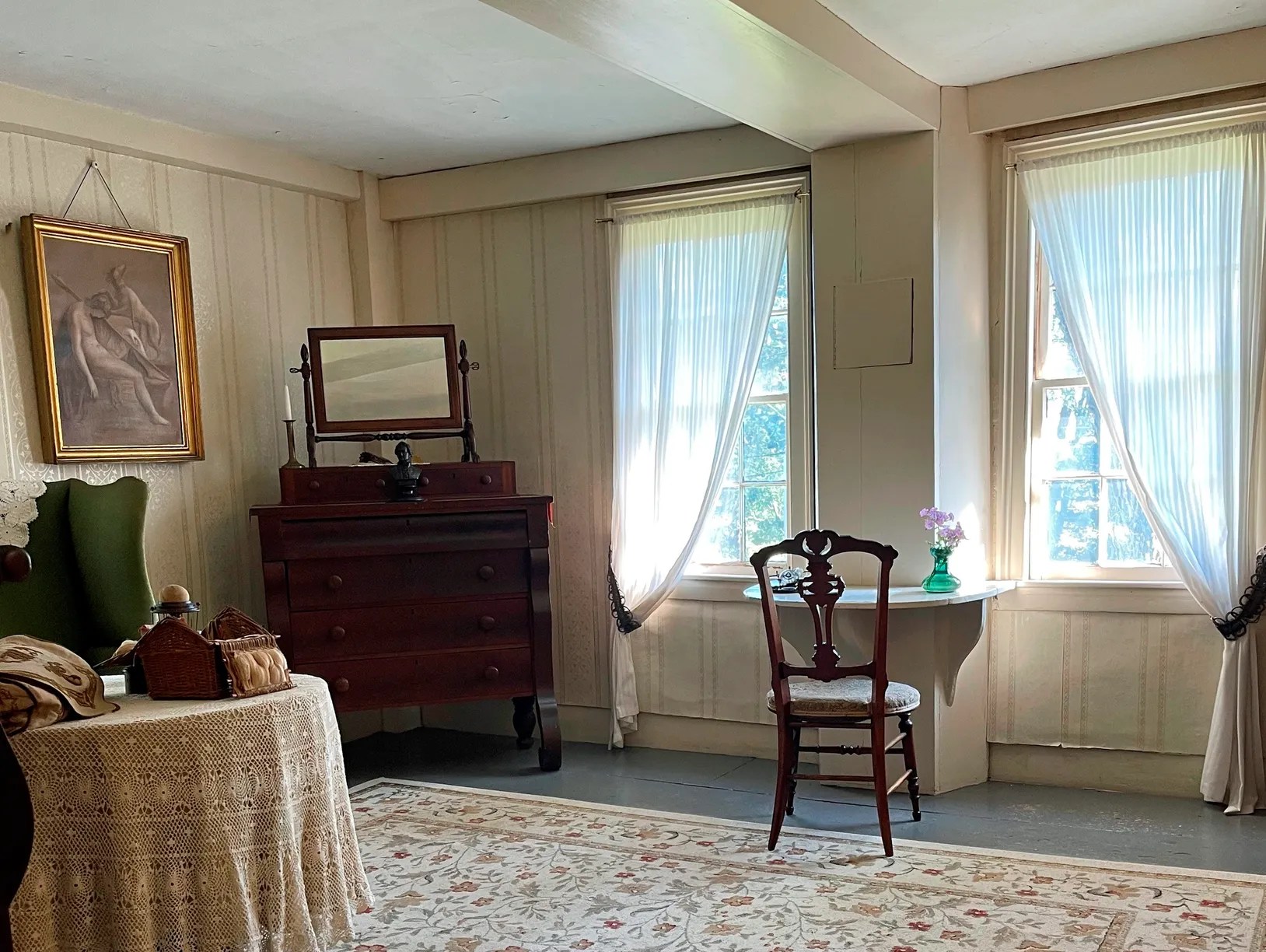
Emily Dickinson’s writing table, preserved in her bedroom at the Homestead in Amherst, Massachusetts.
Before visiting the Emily Dickinson Museum in Amherst, Massachusetts, I knew surprisingly little about Emily Dickinson. The Museum encompasses two historic houses: the restored Homestead, where Dickinson was born, died, and wrote most of her poetry, and the unrestored Evergreens, the neighboring home of her brother Austin, his wife Susan, and their family. Although the Museum includes both houses, it was the Homestead that demonstrated how a historic house can become the key to understanding a poet.
I knew Emily Dickinson was one of America’s greatest poets, that she published very little during her lifetime, and that she lived much of her adult life in relative seclusion. I was also familiar with a few of the recurring stories surrounding her life—her correspondence with Thomas Wentworth Higginson, her close relationship with her sister-in-law Susan Gilbert Dickinson, and the questions surrounding her withdrawal from society. Beyond that, she remained something of a mystery. What I did not expect was that the house itself would become the key to understanding her.
Many literary house museums preserve the places where authors lived and worked. The Emily Dickinson Homestead does something more ambitious. Rather than treating the Homestead simply as the place where Emily Dickinson lived, the guide used the house as a framework for understanding the person behind the poet. Each room served as a setting for exploring a different aspect of her life. This was done not through dates and events alone, but through her own poetry, her education, her family relationships, her intellectual curiosity, and her creative choices. In doing so, the house became not simply the setting for Dickinson’s story but an essential part of telling it.
Harriet Beecher Stowe’s writing desk in her Hartford home.
When we visit the home of a famous writer, what are we hoping to discover? The works have already been written. Their biographies have been published. Their letters have been collected. So what can walking through the rooms where they lived add to our understanding?
Those questions were on my mind as I visited the Harriet Beecher Stowe Center in Hartford, Connecticut. The Center asks visitors to look beyond Uncle Tom’s Cabin and consider how Harriet Beecher Stowe became one of the nineteenth century’s most influential antislavery writers. It is an ambitious interpretive approach, one that emphasizes the firsthand accounts of enslaved and formerly enslaved people, abolitionist networks, and the many individuals whose experiences, testimony, and activism shaped Stowe’s writing.
As I reflected on the tour afterward, however, I found myself asking a different question: What can a historic house contribute to this story that no biography, lecture, or documentary can?
The Harriet Beecher Stowe House in Cincinnati, Ohio, following completion of its 2 Era Restoration. The project interprets both the Beecher family residence and the later Edgemont Inn period, revealing the building’s evolving role in the community across generations.
When I visited the Harriet Beecher Stowe House in Cincinnati, Ohio this February, I expected to learn more about Harriet Beecher Stowe’s years in the city and how her experiences there influenced the writing of Uncle Tom’s Cabin. What I did not expect was to come away thinking as much about the building itself as the woman who once lived there.
The Harriet Beecher Stowe House recently completed what it calls a two-era restoration, interpreting both the Beecher family period (1840) and the later Edgemont Inn period (1940). At first, I wondered whether trying to tell two stories in one house might feel confusing. Instead, I found it to be one of the project’s greatest strengths.
The tour begins with Harriet Beecher Stowe, her family, and the Cincinnati she encountered in the 1830s and 1840s. Visitors learn about Lane Seminary, debates over slavery, the city’s free Black community, and the experiences that shaped Stowe’s understanding of freedom and injustice. These stories unfold in rooms restored to the Beecher era, allowing visitors to imagine the world she experienced as a young wife, mother, and writer living in Cincinnati.
What impressed me most, however, was how the restoration itself became part of the interpretation.
Digital tools do not automatically produce meaningful interpretation. What they can do—when used with discipline—is force clarity about audience, theme, and purpose. This is why I have begun using ESRI ArcGIS StoryMaps as a core interpretive platform in my graduate course CMST6307: Interpretation of Historic Sites at George Washington University.
This fall, students were commissioned—within a realistic professional scenario—to create StoryMaps interpreting the history of women in Washington, DC. Each project connected five or six historic sites through a coherent theme, tailored to a specific public audience. The results demonstrate how StoryMaps can function not as digital scrapbooks, but as public-facing interpretive products grounded in professional standards.
I’m incredibly proud of what they accomplished, but this isn’t a showcase of student work for its own sake. It’s a case study in how digital storytelling platforms can support the interpretation of historic sites and house museums.
Interpretive framework used in my interpretation course (and with my clients).
A Professional Product, Not a Classroom Exercise
The assignment was framed as a hypothetical consulting project for the White House Historical Association. Students were told: “The StoryMap should connect 5–6 historic sites through a coherent theme, tailored to a specific audience. It should demonstrate professional standards in historical research, interpretive writing, and digital design.”
From the beginning, the emphasis was not on technology, but on interpretation. Each student had to demonstrate the integration of three core elements: audience, content, and design.
The timeline is one of the most familiar tools in our interpretive toolkit. It helps us organize facts, identify turning points, and connect events over time. Yet the decision of what to include or exclude shapes the story we tell. Most timelines highlight wars, political milestones, or technological achievements. For many women, those events barely touched their daily lives.
As historian Joan Kelly famously asked, “Did Women Have a Renaissance?” Her answer revealed that what was celebrated as a golden age for men was, in fact, a period of restriction for women. That same question can and should be asked at every historic site: Did women’s lives improve or decline during the turning points we highlight? Or were their defining moments entirely different?
Reimagining the Timeline
What if, instead of centering wars and political leaders, we built timelines around women’s legal rights, economic opportunities, or access to education and institutions?
Although the federal government shutdown has started, the Smithsonian museums will remain open at least through Monday, October 6. Despite the media’s attention on 12:01 am on October 1, shutdowns don’t happen immediately because stopping a huge bureaucracy takes time, plus each agency has to determine who will be furloughed and who is essential—that’s why air traffic controllers keep working at airports but not educators at museums. Secondly, agencies can use private funds to continue operating, which is why the Smithsonian can keep the doors open a few more days.
I was fortunate to visit the National Museum of American History on September 30 with my “Interpreting Historic Sites and House Museums” course at George Washington University. For a couple of hours, my students analyzed the interpretation in two exhibitions that included historic buildings: Food (featuring Julia Child’s kitchen) and Within These Walls (featuring the 1750s Ipswich House, the largest object in the collection). They did a terrific job uncovering topics and themes, discussing how women are represented, and the assessing the use of objects.