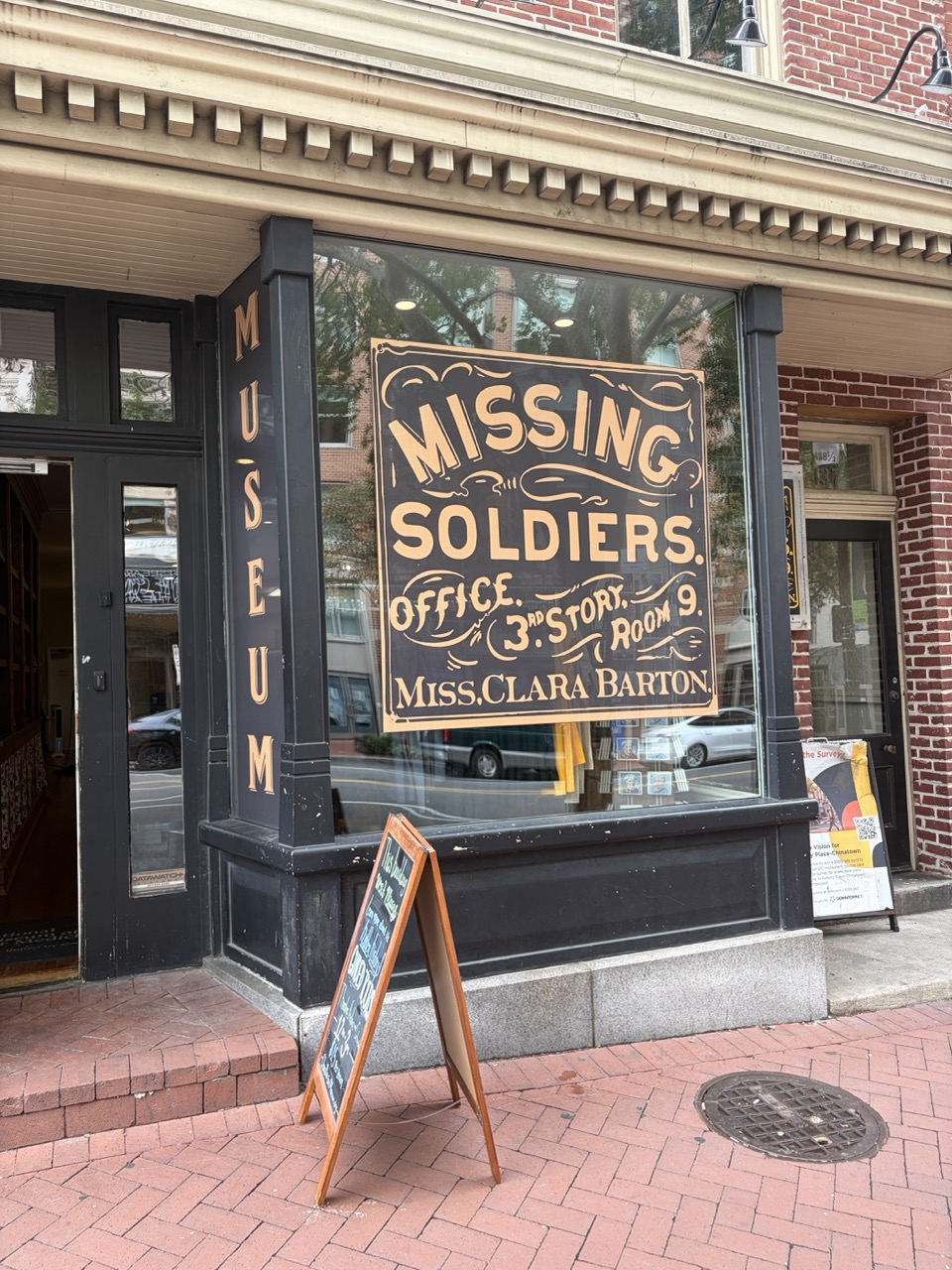
In 2013, Max and I visited the Washington building where Clara Barton had lived and worked during and immediately after the Civil War. At the time, its third floor was still being restored. The rooms were largely empty, the walls and floors exposed, and worktables and construction equipment reminded us that this nationally significant historic place had come remarkably close to disappearing.
Max wrote about that visit in “Sneak Peek at Clara Barton’s Office and Warehouse,” describing the discovery of the rooms and the materials that had survived in an attic crawl space for more than a century. The building had been slated for demolition when documents and other objects connected to Barton were found above the third floor. Their discovery eventually confirmed that these were the rooms where Barton had lived, stored supplies during the Civil War, and operated the Missing Soldiers Office.
I recently returned to see the completed Clara Barton Missing Soldiers Office Museum. Walking through the building brought back memories of that earlier visit, but it also raised a different question: What story should this particular place tell?
The question becomes especially important when interpreting someone as famous and well documented as Clara Barton. Her life encompassed teaching, federal employment, Civil War relief, the search for missing soldiers, the establishment of the American Red Cross, and decades of humanitarian work. All of these subjects are important, but no single historic site can interpret them all effectively.
Nor does it need to. Barton’s childhood, teaching career, battlefield service, Red Cross leadership, and final years are interpreted at other places associated with her. The Washington building can do something those sites cannot: bring visitors into the rooms where Barton and her staff turned thousands of appeals from families into an organized national search for missing soldiers. That is the story distinctive to this place.
After the Civil War, thousands of families did not know what had happened to a husband, son, brother, or father. A missing soldier might have been killed, wounded, captured, hospitalized, buried without identification, or separated from his regiment. Until his fate could be established, his family remained caught between hope and grief. A wife might also be unable to prove that she was a widow or claim the pension upon which her family depended.
Determined that these families should receive answers, Clara Barton created and led the Missing Soldiers Office from 1865 to 1868. This was an extraordinary undertaking at a time when no effective national system existed to account for the missing.
Working from rooms she adapted within a Washington boardinghouse, Barton led a staff of approximately twenty people, both men and women. Together, they received more than 63,000 letters and helped determine the fate of more than 22,000 soldiers. Standing in those rooms again, I wanted to understand the people and processes behind this enormous undertaking.
Who were these workers, and what brought them to the office? How did they divide the daily work of reading letters, recording names, searching for information, copying responses, and meeting with families? What national network allowed them to circulate the names of missing soldiers and bring information back to Washington? Answering these questions would reveal more fully how the office functioned and how Barton led it.
Historic interpretation requires selection. Background about Barton’s earlier life belongs here when it helps explain how she accomplished this work. Her teaching career helps explain her experience organizing people and creating an institution. Her Patent Office employment provides insight into her familiarity with records, government procedures, and office administration. Her wartime relief work established the reputation and connections upon which the Missing Soldiers Office depended. These experiences provide context for the work conducted here; they should not compete with it for the center of the story.
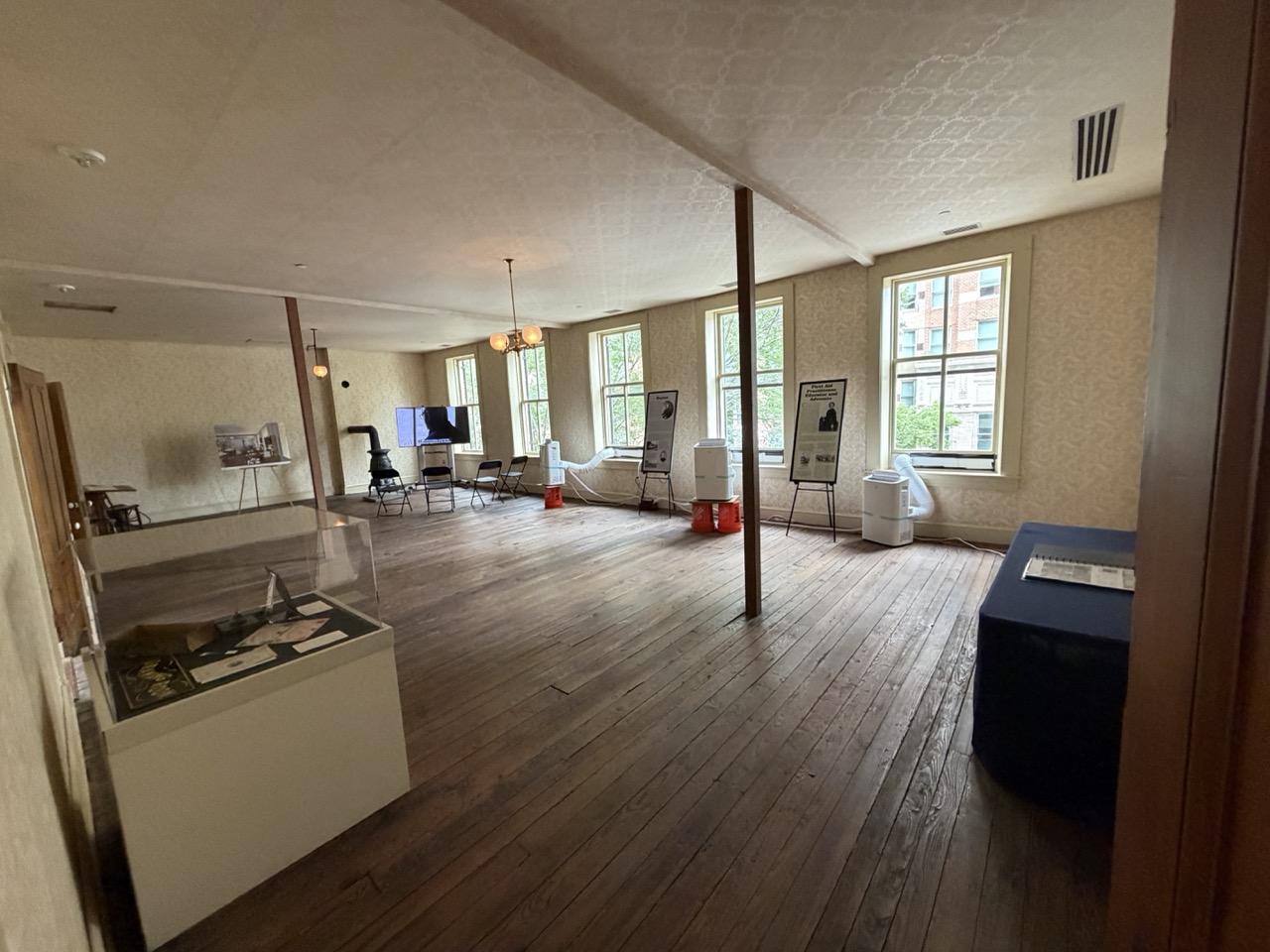
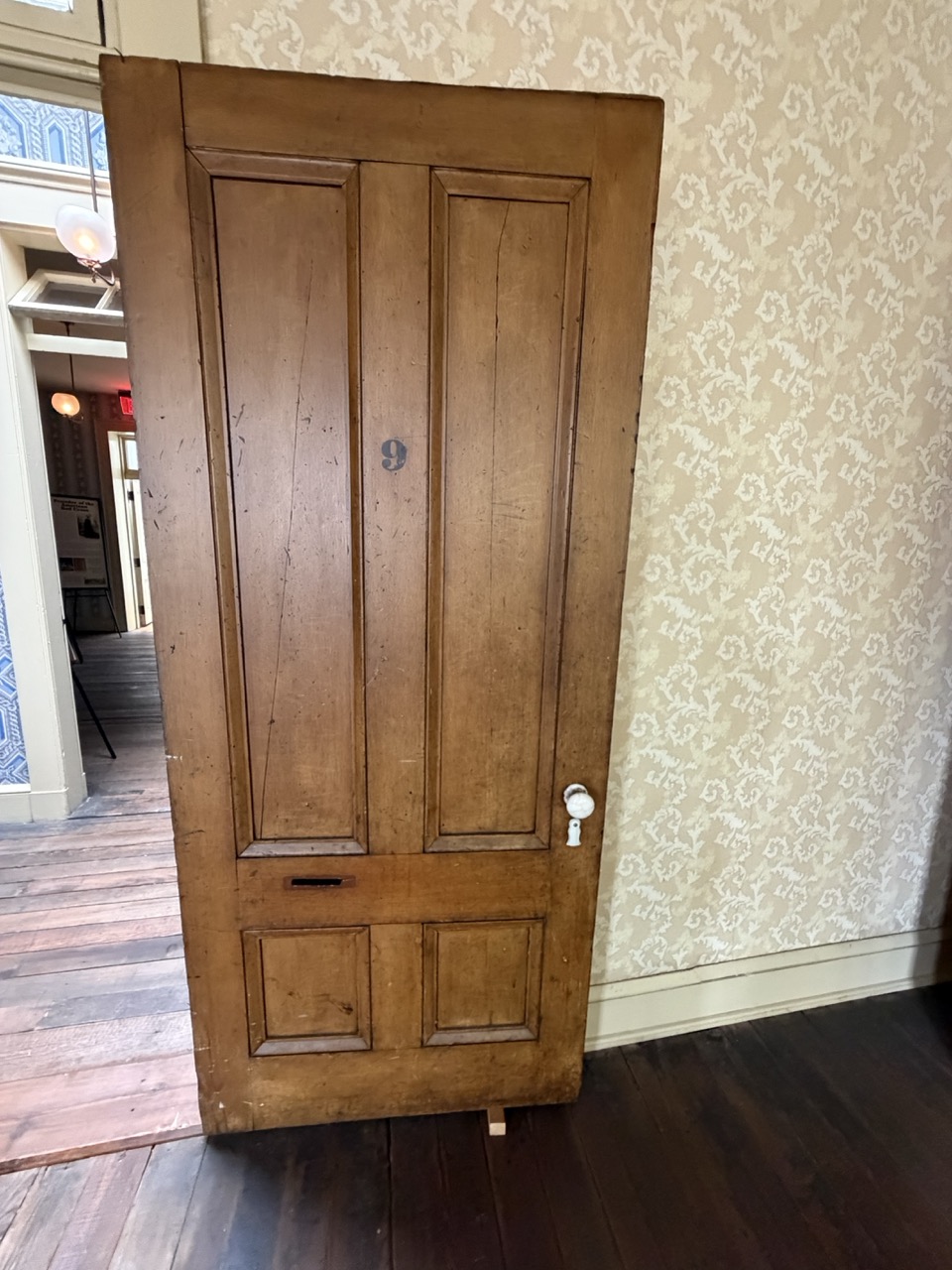
With the Missing Soldiers Office at the center, the building becomes evidence. Barton’s reduced bedroom and the removed partitions between adjoining boarding rooms show how she adapted the building to accommodate a growing operation. The surviving mail slot marks the point where inquiries from families entered the office. The Rolls of Missing Men carry the story beyond the building to the newspapers, postmasters, military officials, former soldiers, and communities that circulated names and returned information to Washington.
Imagine following one inquiry through the office: a family’s letter arriving in Washington, a staff member recording the soldier’s name, the name appearing on a printed roll, information returning from someone who recognized it, and, when an answer was found, a final letter carrying the news home. Through that one search, visitors could understand the family’s uncertainty, the staff’s labor, Barton’s leadership, and the national network that connected these rooms to communities across the country.
That would not make the story of Clara Barton smaller. It would make the work she accomplished here more persuasive, deeper, and clearer and tell a story that can be told most powerfully in this place.