On a recent visit to the Baltimore Museum of Art (BMA), I encountered something I have seldom found in the art museums I visit: gallery labels devoted to the collectors whose choices helped build the institution. The collector labels I encountered all focused on women. They described women appraising antiques, buying from dealers, studying artists’ work, and assembling collections that became part of the BMA.
That attention matters for women’s history. These women helped determine what the museum would hold and what generations of visitors would see. The labels explain the knowledge and decisions behind their gifts, connecting women’s influence to the objects on display.
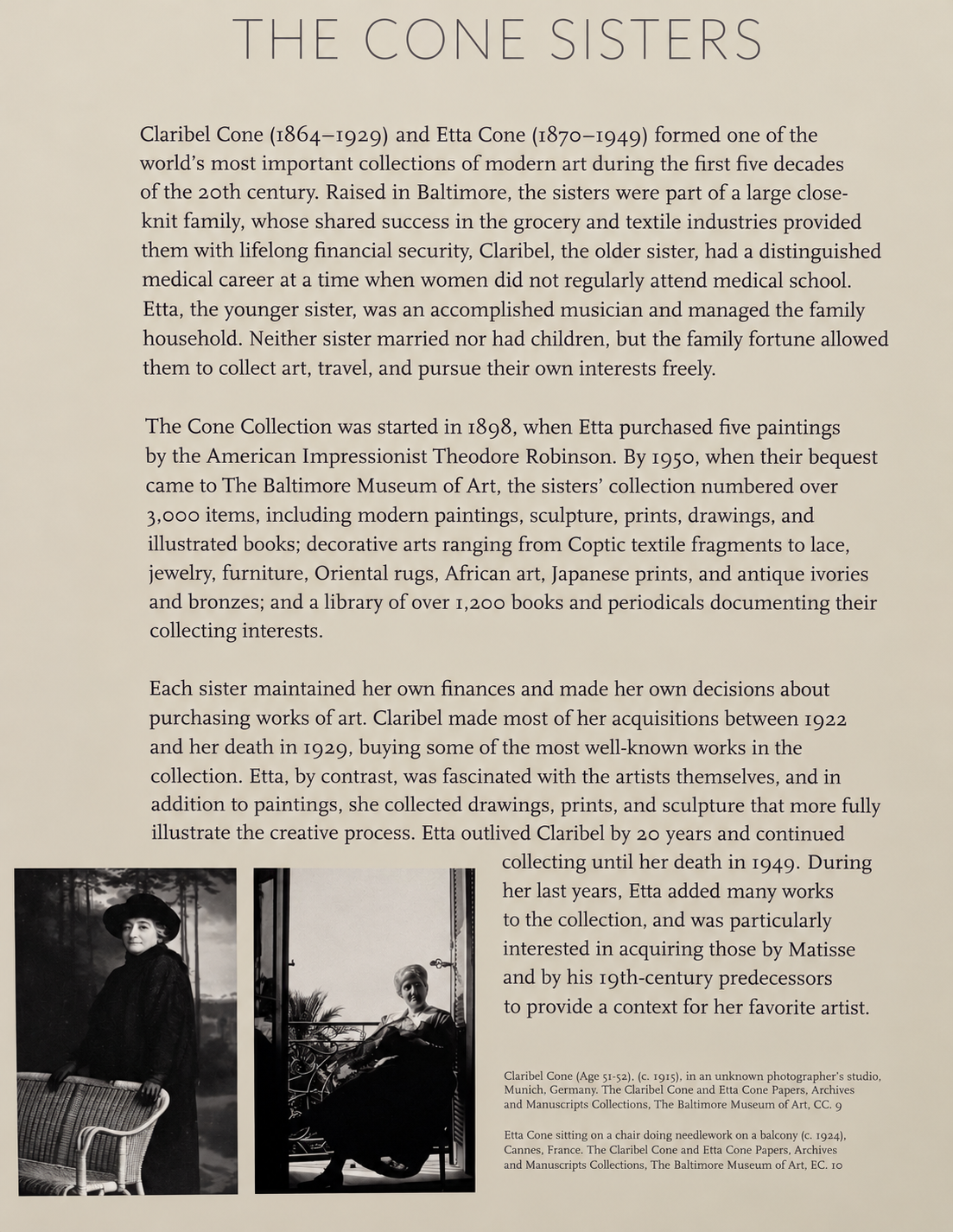
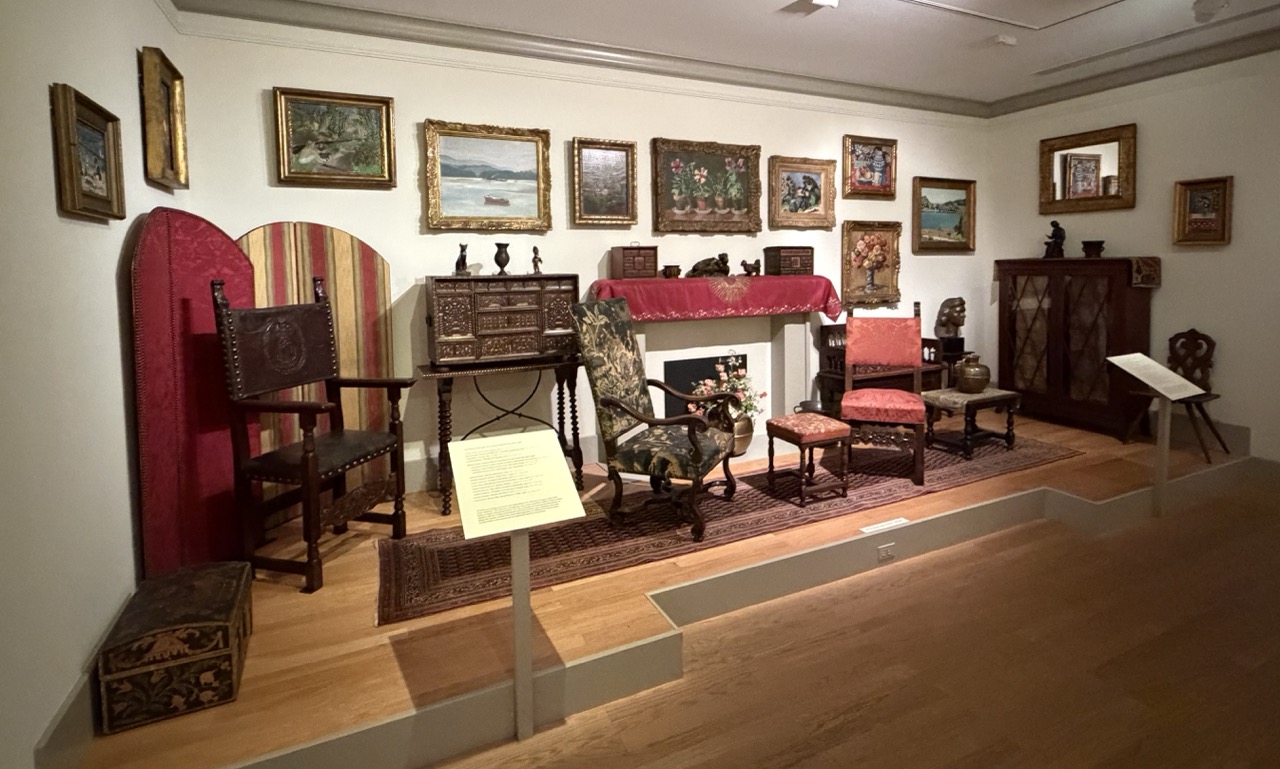
The Cone sisters, Claribel and Etta, receive particular attention through a display evoking their Baltimore apartments, with modern art alongside furniture, textiles, and personal possessions. The introductory label identifies Claribel as a physician and Etta as an accomplished musician. It also explains that each maintained her own finances and made her own purchasing decisions. The familiar name “Cone Collection” brings together the choices of two individuals.
Claribel acquired some of the collection’s best-known works. Looking at the BMA’s online records afterward, I found that she purchased Henri Matisse’s Blue Nude at auction in Paris in 1926.
Etta’s interest in artists’ creative processes informed her purchases of drawings, prints, and sculpture alongside paintings. She also acquired works by Matisse’s nineteenth-century predecessors to place his art in context.
Saidie Adler May made choices that complemented the sisters’ collection. According to the BMA’s website, she knew of their concentration on early twentieth-century French artists and directed much of her attention toward younger Surrealist and other European and American avant-garde artists. Her choices helped broaden the modern art that would enter the museum.
May’s gallery label also describes her interests in earlier European art and decorative objects. When William Randolph Hearst’s collection was sold through Gimbel Brothers department store in 1941, she purchased a medieval limestone Madonna and Child and more than fifty stained-glass panels, giving them to the BMA that year. The label states that she gave most of the objects in the gallery.
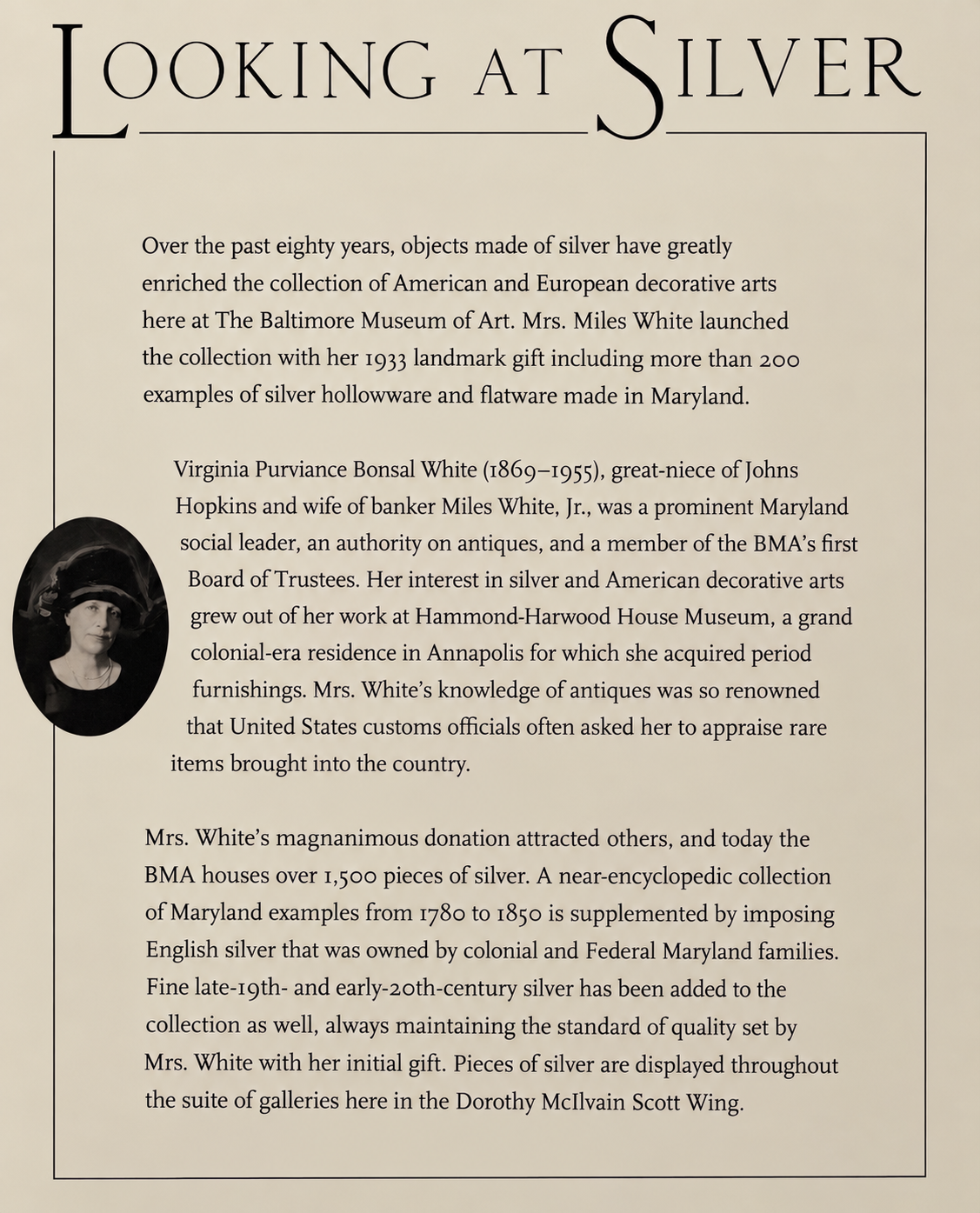
Among the silver displays, “Looking at Silver” introduces Virginia Bonsal White and her 1933 gift of more than 200 pieces of Maryland silver, including tableware for dining and serving food. Her work acquiring period furnishings for Hammond-Harwood House in Annapolis helped develop her interest in silver and American decorative arts. United States customs officials sought her expertise in appraising rare antiques brought into the country. Her gift to the BMA also attracted further donations, helping establish a collection that others continued to build.
“Remembering Dorothy McIlvain Scott” introduces her collection of American furniture, silver, portraits, and landscape paintings. The label connects her interest in American history to nearby objects, including furniture that belonged to Samuel Chase, a signer of the Declaration of Independence. Scott gave works during her lifetime and left much of her collection to the museum.
The BMA’s Women Collectors webpage extends this recognition, placing these women within a longer history of collecting and support for the museum.
I was glad to find this attention to women collectors within the galleries. A donor credit identifies who gave an object; these labels explain the knowledge and choices behind the gift. By placing those explanations alongside the collections, the BMA makes women’s work part of understanding the museum itself. These women helped shape what the public encounters today, and the museum gives them credit for it.