How do you interpret a historic house associated with a well-known woman while also telling the stories of the other women who lived and worked there?
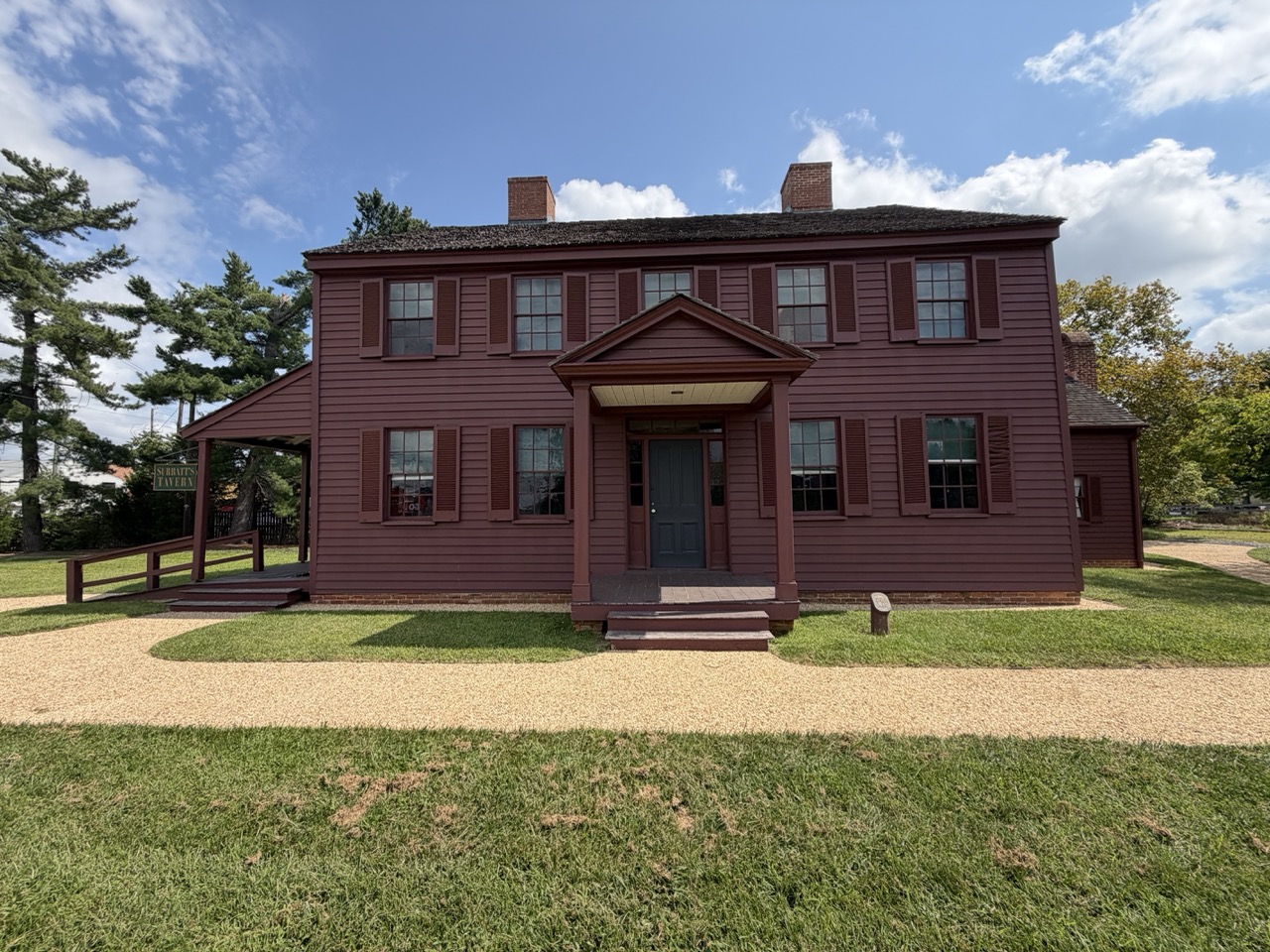
At the Surratt House Museum in Clinton, Maryland, the question is particularly interesting. Mary Surratt is infamous for her involvement in the conspiracy to assassinate Abraham Lincoln, but that story largely unfolded elsewhere. By 1864, Mary had moved to a boardinghouse she owned in Washington, D.C., and rented the Maryland property to tavernkeeper John Lloyd. The Washington boardinghouse became a meeting place for John Wilkes Booth and his fellow conspirators. The Maryland house played a different role: weapons and other supplies were hidden there and retrieved by Booth and David Herold as they fled Washington after the assassination.
Our guide made that distinction clear. Booth never entered the house, and we were essentially told to “check your Booth at the door.” Instead, the tour concentrated on the house and the people who had lived and worked there.
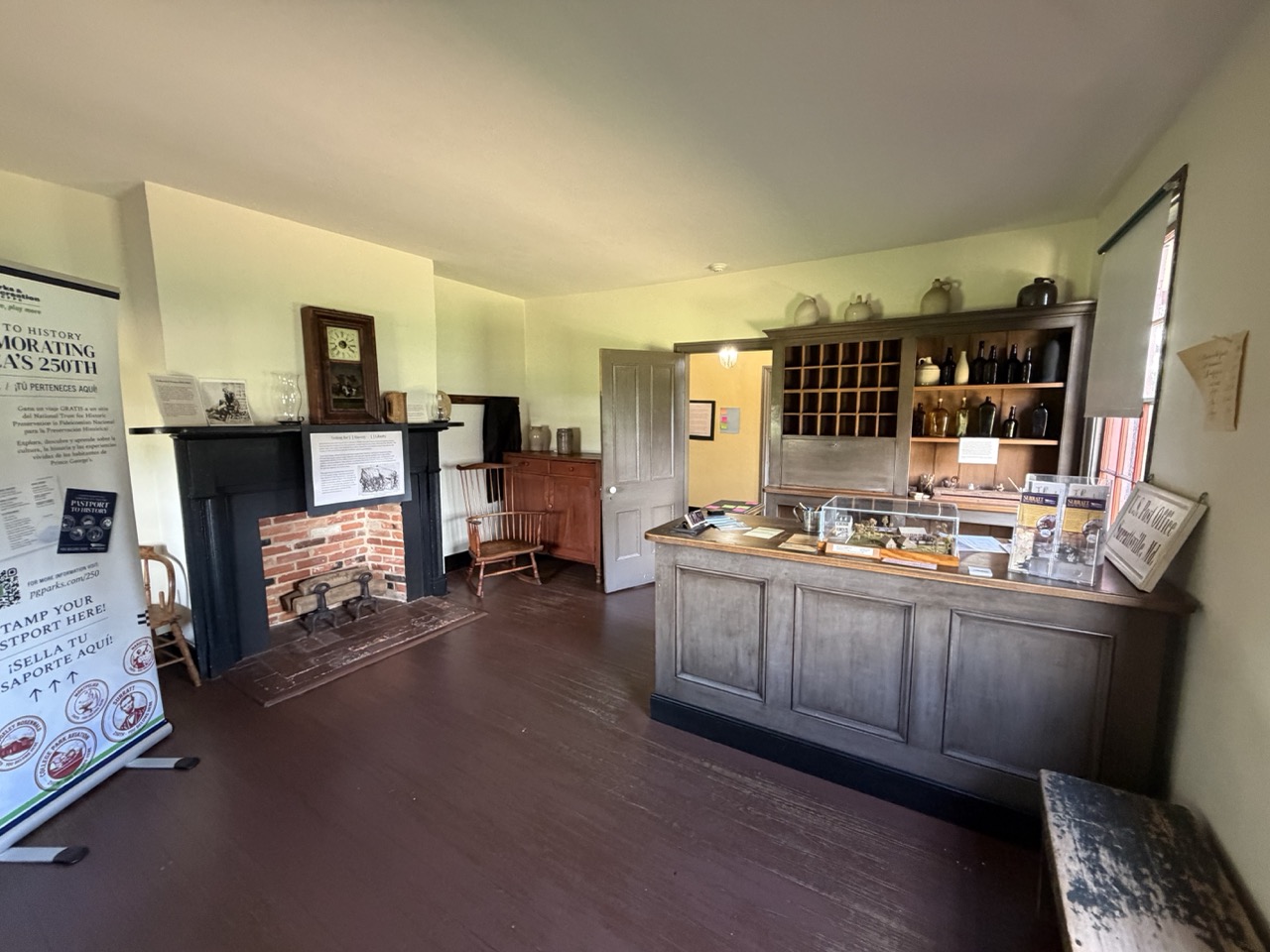
Mary and her husband, John, lived here with their children from 1852 to 1864. Their home also operated as a tavern, post office, polling place, and lodging place for travelers. In addition, the Surratts enslaved men, women, and children whose labor supported both the household and its businesses. The tour was most effective when it used the house itself to show how differently women experienced the same place.
Shortly after we entered through the back door, our guide asked us to look down the central passage and imagine an invisible line dividing the house. On one side were the tavern and other business activities; on the other were the Surratts’ private family rooms. Male patrons entered the business side, while female customers, friends, and family used another entrance. Enslaved and free Black people entered through the back. The enslaved women, however, crossed that invisible line because their work required them to serve both the family and tavern customers.
It was a simple but effective use of the house to explain how differently people occupied the same space. Mary Surratt and the women she enslaved were all subject to expectations based on gender, but those expectations did not operate in the same way. Race, slavery, work, and status also determined where they went, what they did, and what was expected of them.
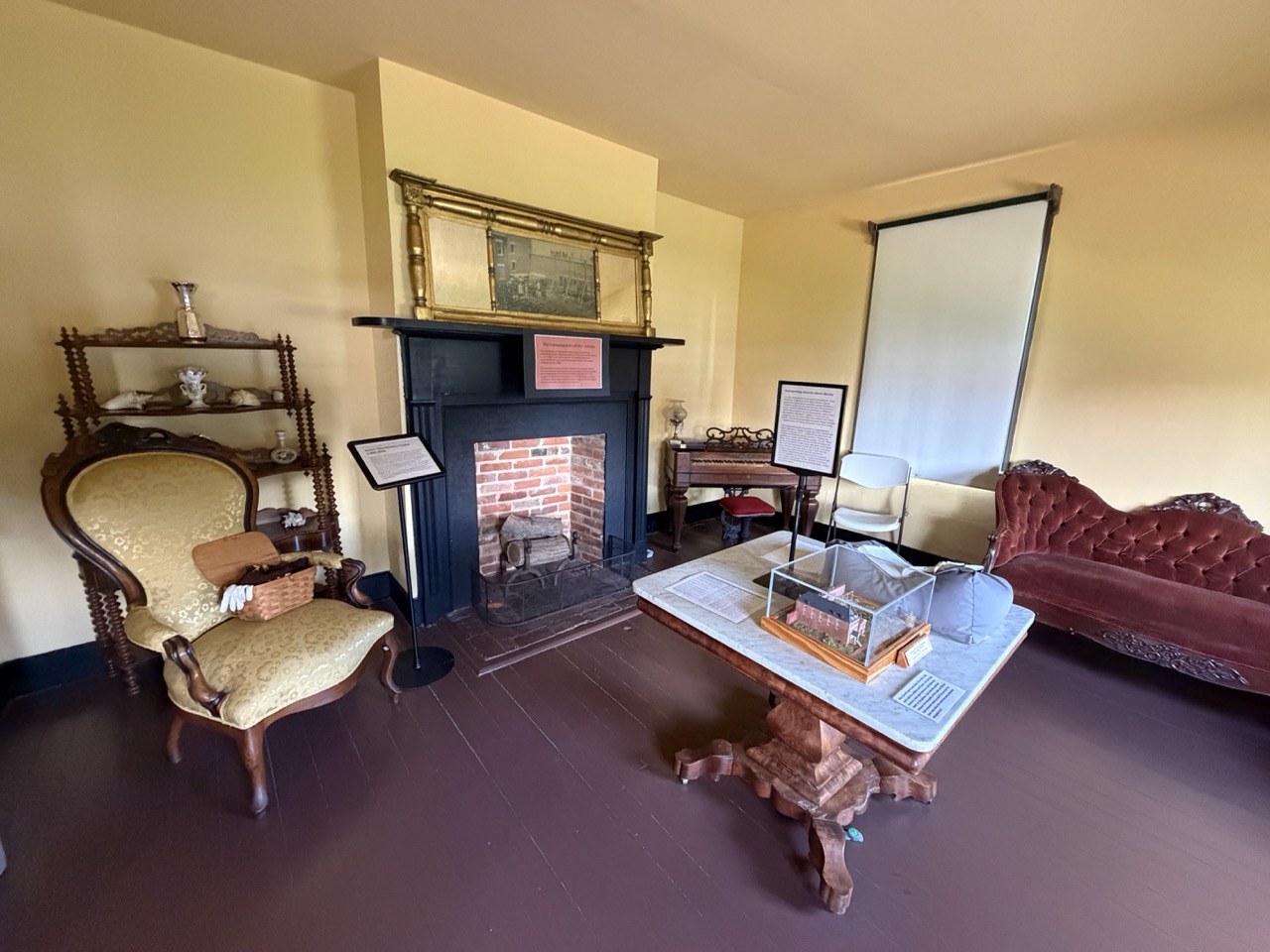
The private parlor offered another example. Here, a portrait of Mary Surratt faces a photograph of her execution. The guide explained that the portrait was not displayed to honor her but to place Mary literally face-to-face with the consequences of her actions.
It was also in this room that we learned about Rachel Hawkins, one of the women enslaved by the Surratts. Hawkins testified on Mary’s behalf at her trial, describing her as kind and saying that she had not mistreated her. The guide asked us to consider the circumstances in which Hawkins gave that testimony: she was newly free, had three children, needed to support herself, and was testifying in a courtroom filled with white people, including Surratt family and friends.
The guide then complicated Hawkins’s testimony with another account of Mary. At the Surratts’ earlier home in Oxon Hill, an enslaved person reportedly burned the house in response to Mary’s cruel treatment and escaped.
That made the parlor particularly effective. In a room dominated by Mary Surratt and her fate, the tour also asked us to consider another part of her life: her relationship with the people she enslaved. Hawkins’s testimony offers one perspective, while the account from Oxon Hill offers another. Together, they remind us that the surviving evidence does not give us a simple answer about how the people Mary enslaved experienced her.
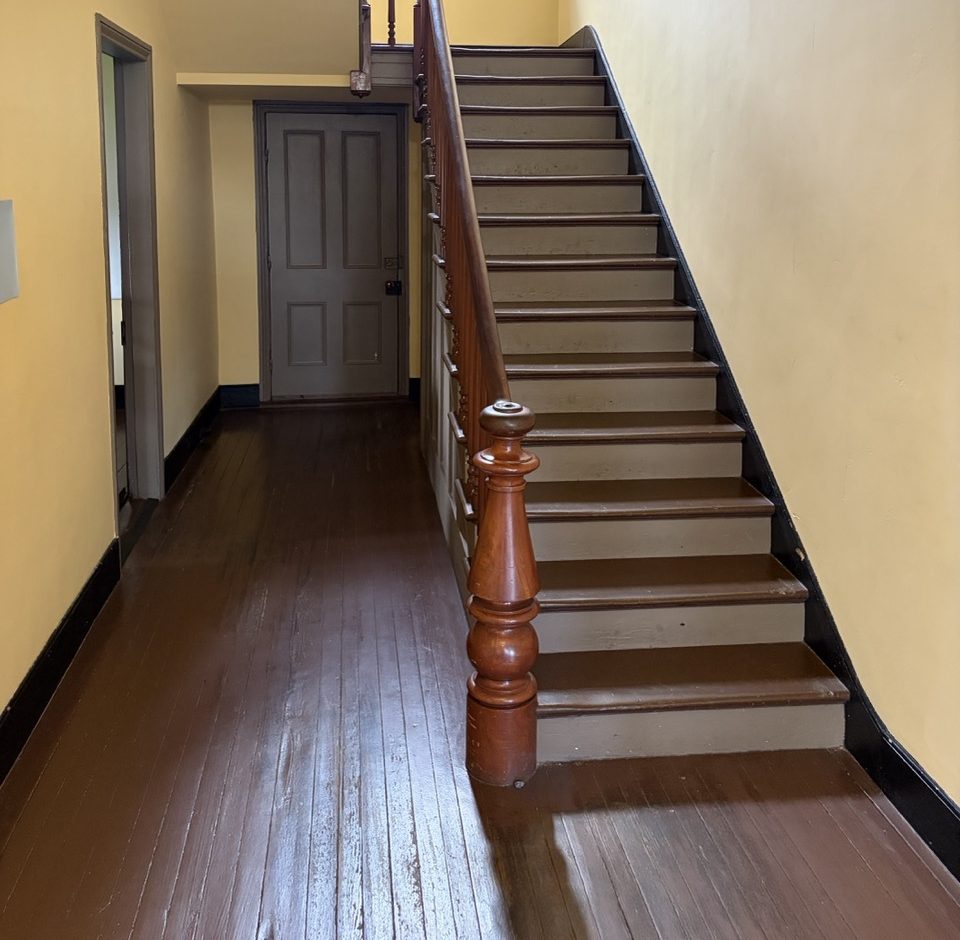
Upstairs, the rooms revealed other differences. The bedroom of Mary and John’s daughter, Anna Surratt, also accommodated female travelers, so what appears to be a private bedroom was not always private. Enslaved children most likely slept on the upstairs landing, where they could remain available to the family and tavern guests during the night.
The contrast is revealing. Anna might have to share her bedroom with another woman because her family operated a lodging business. An enslaved child sleeping only steps away was positioned there not for privacy or comfort, but to remain available to work.
These moments demonstrate what the physical spaces of a historic house can contribute to interpretation. The rooms can do more than provide settings for individual biographies. They can reveal how women living under the same roof experienced privacy, work, family, movement, and home differently.
That is particularly important at the Surratt House because of its association with Lincoln’s assassination. By making clear at the outset that John Wilkes Booth never entered the house and that its role in the conspiracy was primarily as a place where weapons and supplies were stored and later retrieved, the guide shifted attention back to the house itself.
That is what the Surratt House tour did particularly well. Mary Surratt remained central, but the house also provided a way to understand Anna Surratt, Rachel Hawkins, other enslaved women and children, and the women who stayed at the tavern. Rather than simply adding their stories to Mary Surratt’s, the tour used the rooms they shared to reveal how differently they experienced the same place.