
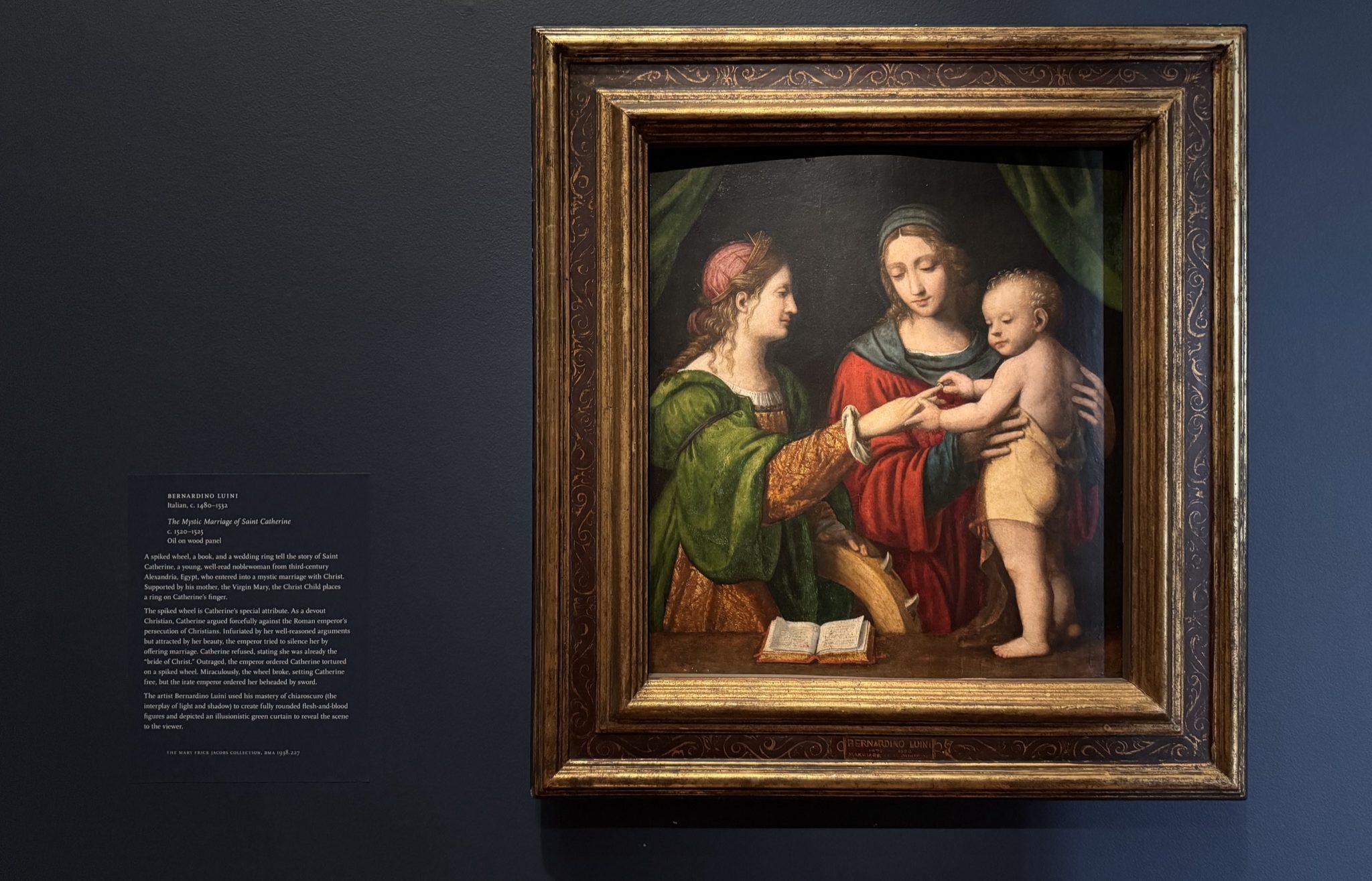
Recently, I visited two art museums in Baltimore and encountered strikingly different approaches to exhibition labels. Both museums displayed remarkable works of art, accompanied by labels that were historically informed, professionally written, and reasonably accessible. Yet I found myself eagerly reading the labels in one museum and losing interest in those at the other.
Why? The problem wasn’t simply length, vocabulary, or the amount of information provided. Some of the labels I enjoyed most were quite long. Rather, the difference was how the writers connected the information to the artwork and to my experience as a visitor.
The experience prompted me to think more carefully about what makes an effective exhibition label.
Begin with What Visitors Can See
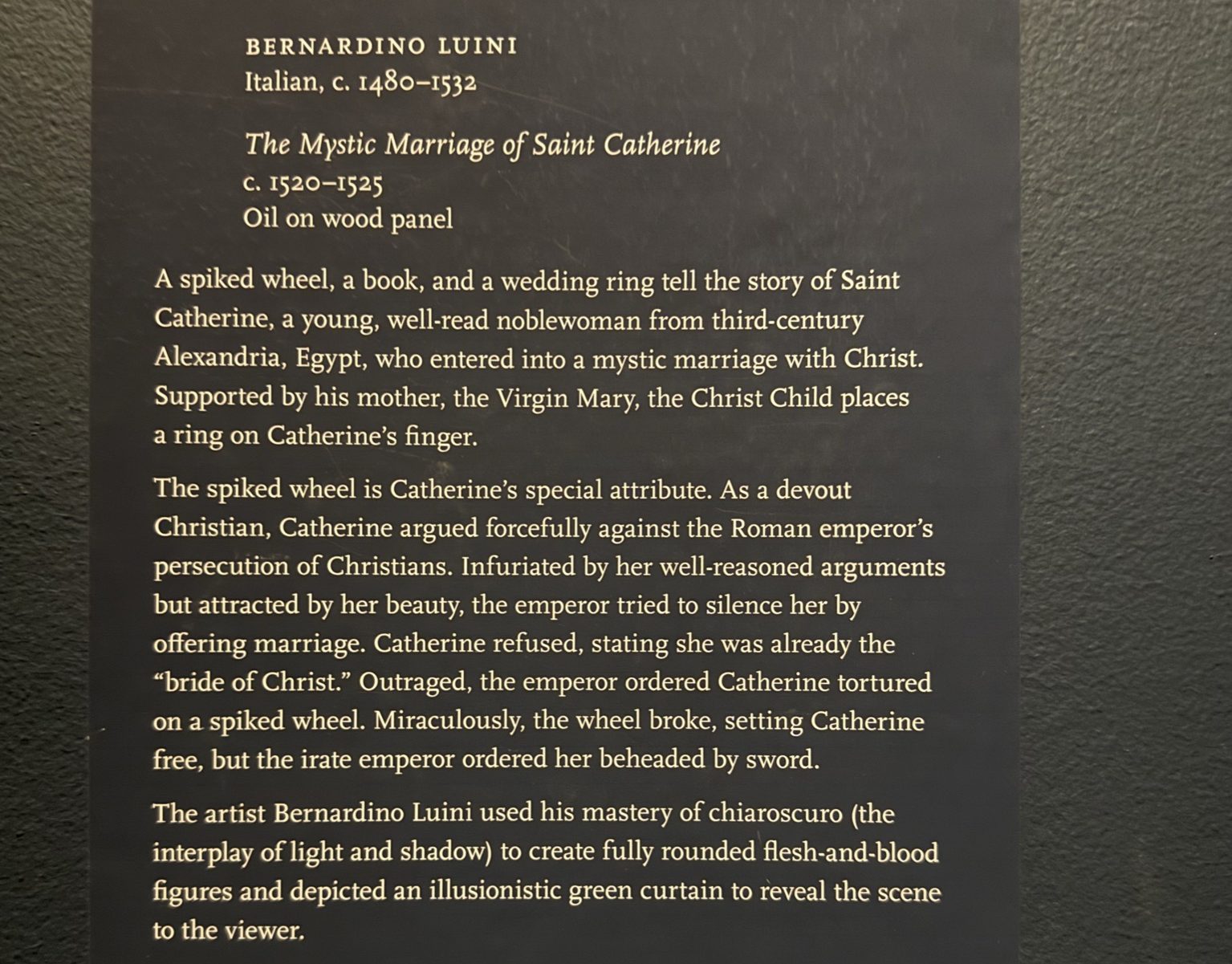
One museum consistently began its labels with something visible in the artwork. A Renaissance painting of Saint Catherine opened with a reference to a spiked wheel, a book, and a wedding ring. These seemingly ordinary objects became clues to understanding the painting’s religious story.
A Dutch landscape label began by describing the enormous expanse of water and sky, then identified the distant town and the boats crossing the river. It gradually revealed how the ferry system reflected distinctions in social class and everyday life.
These labels began with my experience of looking at the artwork and then deepened my understanding. They helped me notice things I might otherwise have missed.
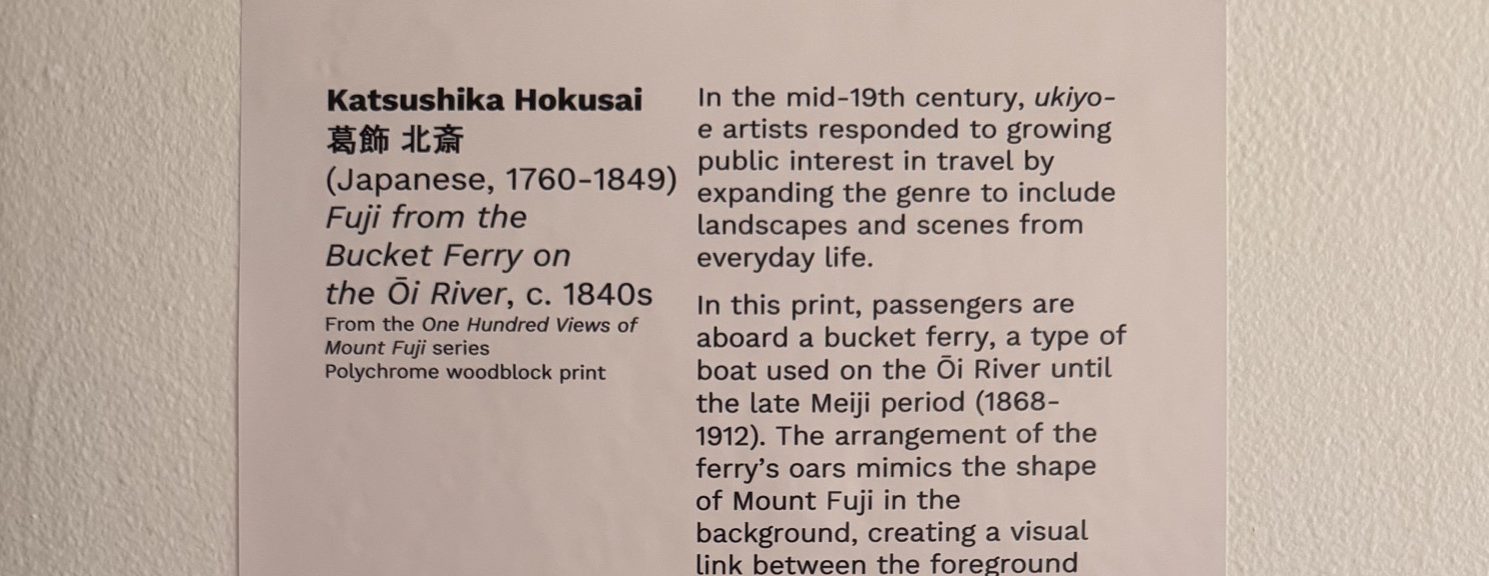
At the other museum, labels often began with broader art historical context: the development of Japanese landscape prints, the influence of Western artistic techniques, or changes in nineteenth-century society. This information was relevant, but it frequently delayed my encounter with the artwork itself.
The distinction was subtle but important. One approach seemed to say, “Look at this!” The other said, “First, you need to know this.”
Turn Information into Discovery
The strongest labels didn’t simply identify objects or explain historical facts. They revealed why particular details mattered. Visitors encounter an abundance of objects, images, and facts in museums. As curators, educators, and interpreters, one of our most important responsibilities is to select and organize information to create meaning. Everything cannot be equally important; otherwise, nothing is important. A single painting can offer several paths to different insights and outcomes. An effective label chooses a path and follows it, rather than trying to travel them all.
A still life of flowers, insects, and seashells became a window into the international trade networks of the seventeenth-century Dutch Republic. A river landscape revealed differences in how wealthy citizens and ordinary laborers traveled. Religious symbols helped explain an unfamiliar Christian narrative.
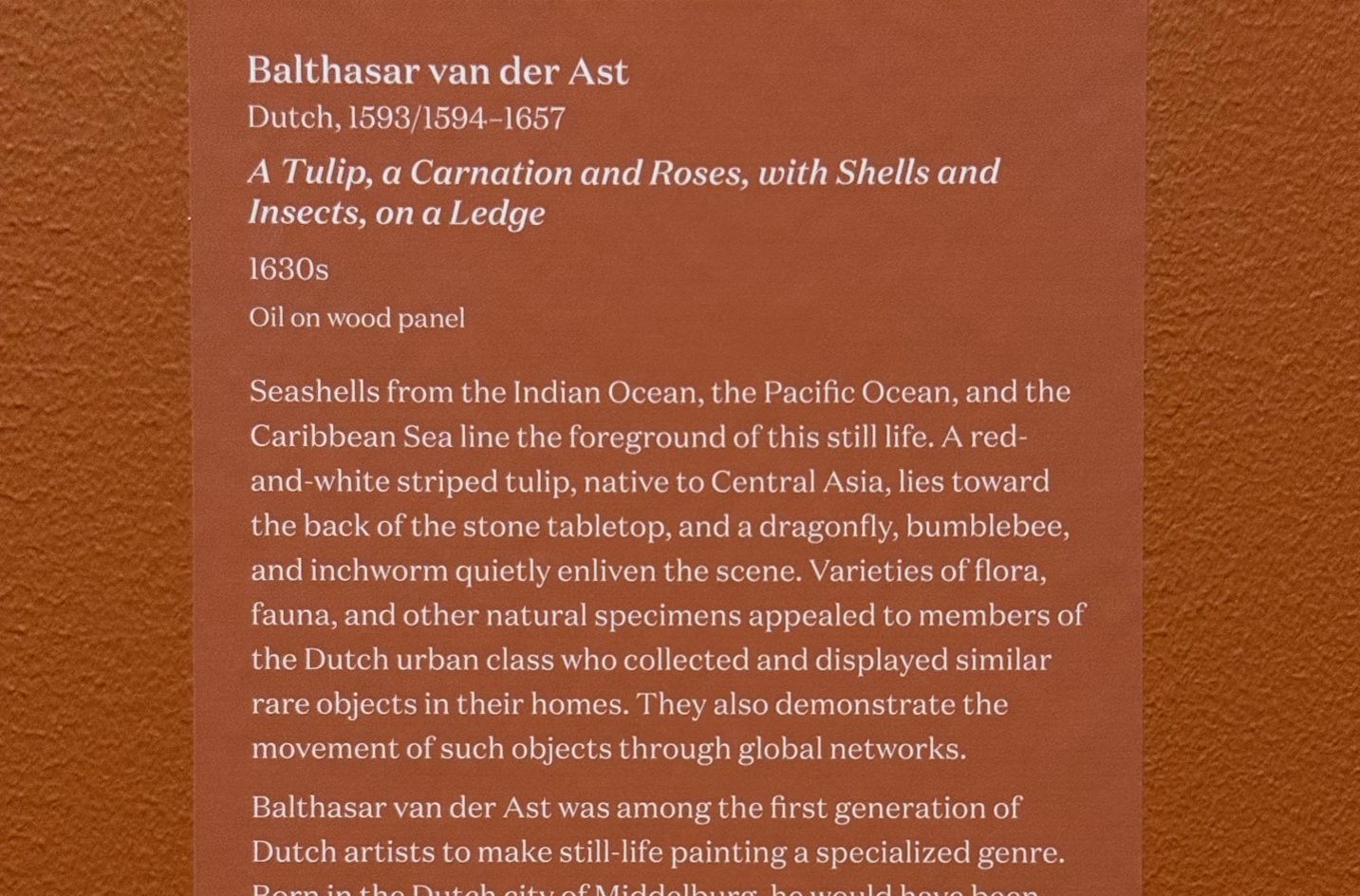
These interpretations connected the particular to the larger world. They helped me understand not only what the artworks depicted but also what they could reveal about society, culture, and human experience.
The less successful labels also contained intriguing observations. One pointed out how the arrangement of oars in a Japanese ferry print echoed the shape of Mount Fuji in the background. What a wonderful detail! But it appeared at the end of the label, almost as an afterthought. I wondered why the writer hadn’t started there. That observation could have encouraged visitors to examine the print more closely before exploring its historical context.
Give the Label a Clear Direction
Effective labels also have a sense of progression. They don’t simply accumulate interesting facts; they develop an idea. Engaging labels move from observation to explanation, from a specific detail to its broader significance. Each sentence builds on the previous one.
Others moved among historical background, artistic techniques, stylistic influences, and political developments without establishing a clear relationship among them. The information was accurate and sometimes fascinating, but what I was supposed to know, feel, or do as a result?
This is an editorial challenge. Museum professionals often suffer from the “curse of knowledge”—knowing far more about an object than they can possibly share. The task isn’t to summarize everything we know but to prioritize and organize the information that will most enrich the visitor’s experience.
Encourage Visitors to Look Again
Perhaps the most important test of an effective label is what happens after someone reads it. Does the visitor return to the artwork with new curiosity? Is there something new to notice, a relationship to discover, or an assumption to reconsider?
One label that particularly impressed me explained how an artist used light and shadow to create rounded figures. Another invited visitors to recognize social differences in a seemingly peaceful landscape. In both cases, I looked again—and saw more.
This is where information becomes interpretation. The label doesn’t merely transfer knowledge from expert to visitor. It connects two encounters with the same object: the first shaped by what visitors notice on their own, and the second enriched by what the label helps them discover.
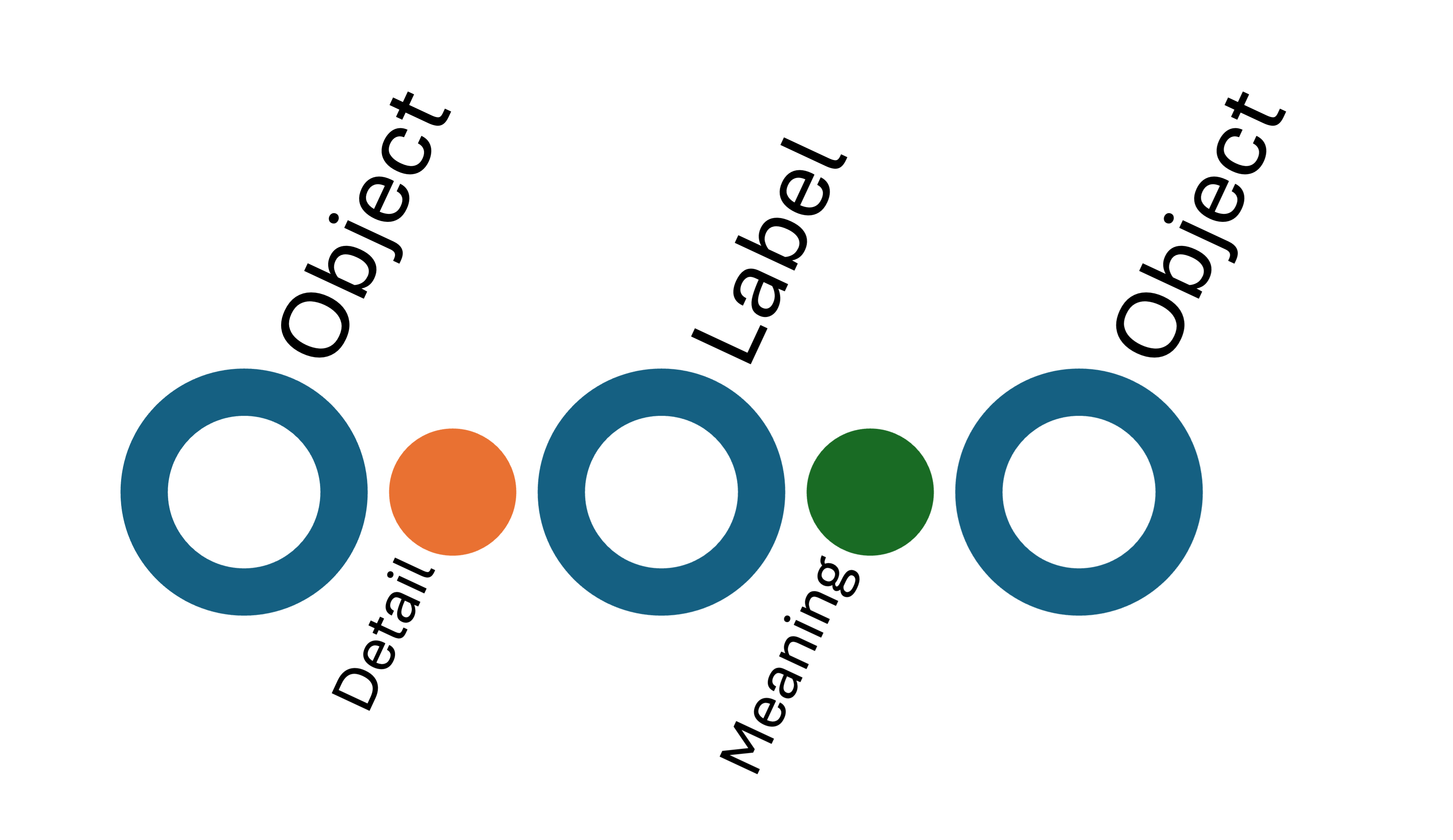
Writing for Visitors, Not Just About Objects
These experiences reminded me that effective label writing requires more than expertise and clear prose. It requires understanding how visitors encounter objects, what might attract their attention, and how a few carefully selected ideas can deepen that experience.
I came away with five questions to guide my own interpretive writing:
- Entry: Does the label begin with something visitors can see or recognize?
- Discovery: Does it reveal something they might otherwise miss?
- Development: Does the interpretation follow a clear progression?
- Meaning: Does it connect particular details to larger ideas or human experiences (themes)?
- Return: Does it encourage visitors to look again with greater understanding?
These questions aren’t limited to art museums. They apply equally to historic houses, history exhibitions, natural history collections, and other places where we use objects to tell stories.
Ultimately, a successful exhibition label does more than explain an object. It changes how we experience it.

