In the previous posts in this series, I looked at visitor codes of conduct, visitor photography policies, and commercial or media photography policies. Those policies are becoming more visible because photography is no longer a simple matter of “Can I take a picture?” A single image can be a personal memory, a social media post, a teaching tool, a scholarly document, a news illustration, a commercial asset, or evidence in a public debate.
This final post turns to the more complicated issues: fair use, copyright, photo releases, privacy, and ethics. As a reminder, I am not a lawyer, and this is not legal advice. Museums should consult an attorney when writing policies involving copyright, image permissions, privacy, publicity rights, releases, commercial use, or contracts. My purpose here is to identify common points of confusion that arise when museums, visitors, writers, teachers, scholars, and photographers try to understand what permission is needed and from whom.
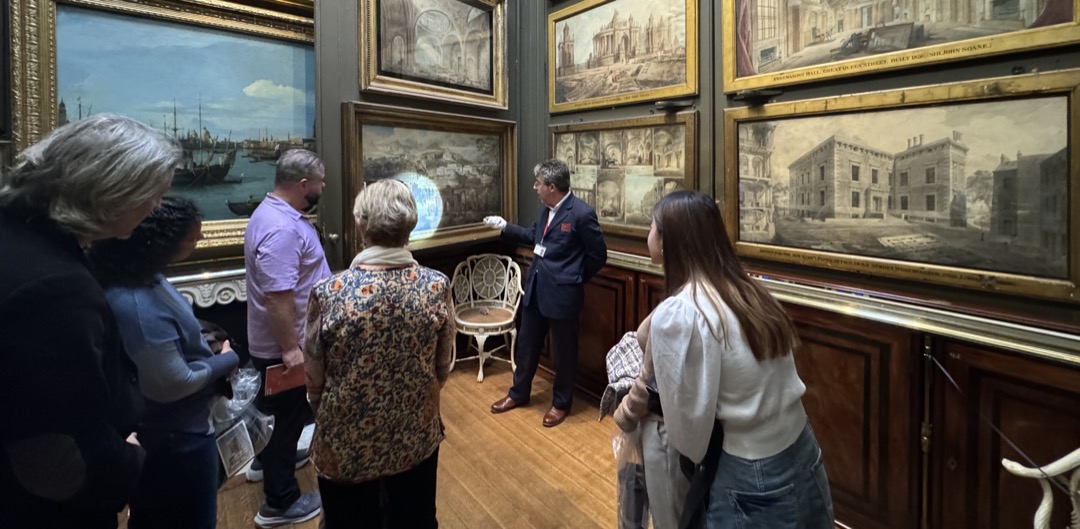
I encounter these questions in my own work. As someone who photographs museums and historic sites for this blog, teaching, consulting, and research, I occasionally wonder: should I ask permission from the museum before publishing a photograph of an exhibition? Do I need a model release if visitors appear in the background? Is it appropriate to photograph a historic house where people still live nearby? Does it matter if I am writing criticism, promoting the museum, or using the image in a paid presentation?
These questions are often confused with a different issue: what museums need to do when they use images of visitors for their own promotional purposes. A visitor taking a photograph in a gallery, a museum using a child’s image in a fundraising campaign, and a company filming a commercial in a sculpture garden are not the same thing. They raise different legal, ethical, and managerial questions. Policies should be clear enough that frontline staff can explain them without being expected to interpret copyright law, privacy law, or fair use on the spot.
Four Issues That Often Get Confused
Photography policies often blend several distinct issues:
- Copyright: who owns the rights to the artwork, photograph, exhibition label, design, film, or other creative work that appears in the image?
- Access: what conditions did the museum place on photography as part of admission, ticketing, visitor conduct, or use of its property?
- Privacy and publicity: are identifiable people shown in the image, and is their likeness being used in a way that requires permission?
- Ethics: even if a photograph is legally permissible, is it respectful, accurate, safe, and consistent with the museum’s values and the dignity of the people, places, and stories involved?
A good museum photography policy should not collapse these issues into one vague rule. “No commercial photography” may be useful, but it does not answer every question. “Permission required” may protect the institution, but it may also overstate the museum’s authority if fair use, public-domain materials, journalism, teaching, scholarship, or criticism are involved.
Copyright and Fair Use
Copyright law governs the use of creative works: artworks, photographs, books, films, exhibition graphics, sound recordings, architectural designs, and other protected materials. Owning a physical object is not the same as owning the copyright. A museum may own a painting, manuscript, costume, or photograph without owning the copyright in it. Conversely, a work may be in the public domain, but the museum may still control whether visitors can photograph it on site.
Fair use is one of the most important limits on copyright. The U.S. Copyright Office explains that fair use permits limited use of copyrighted works without permission for purposes such as criticism, comment, news reporting, teaching, scholarship, and research. It is judged case by case using four factors: the purpose and character of the use, the nature of the copyrighted work, the amount used, and the effect on the potential market. That means a photograph used in a scholarly article, exhibition review, classroom lecture, blog post, or news story may be treated differently from the same photograph used in an advertisement, product campaign, stock-photo library, or merchandise line. Commercial use does not automatically defeat fair use, and nonprofit educational use does not automatically guarantee it. Context matters.
Museums also need to distinguish between images they create or commission and images created by visitors, journalists, scholars, or photographers. A museum may have clear rights to its own photography, limited rights to commissioned photography depending on the contract, and no automatic rights to images made by visitors. Those distinctions matter when museums ask to reuse visitor photos, require credit, or claim control over images made on site.
For museums, the important point is this: a policy should not imply that every use of an image requires museum permission. A visitor, critic, journalist, teacher, or scholar may have a legitimate fair-use reason to reproduce or discuss an image. But fair use does not give someone the right to ignore museum rules while taking the photograph. A museum can regulate flash, tripods, drones, restricted areas, crowd disruption, special exhibitions, filming equipment, and commercial shoots as conditions of access. In other words, fair use may affect whether someone can use an image. It does not necessarily give them the right to create that image in any way they choose inside a museum.
Visitor Photography and Museum Access
Museums can usually set conditions for photography on their premises. That is why policies often prohibit flash, tripods, selfie sticks, drones, lighting equipment, props, livestreaming, or formal portrait sessions. These restrictions are usually less about copyright and more about collections care, safety, privacy, visitor flow, staff workload, and disrupting the museum experience.
This is where confusion often begins. A museum may say, “photography is for personal, noncommercial use only.” That may be a reasonable access policy, especially if the museum is trying to prevent wedding shoots, fashion shoots, sponsored influencer content, commercial filming, or stock photography. But it should be written carefully so that it does not appear to prohibit legitimate criticism, teaching, scholarship, journalism, or other uses that may be protected by law. A more balanced policy might say:
Personal, noncommercial photography is welcome unless otherwise posted. Photography must not endanger collections, disrupt visitors, violate privacy, or interfere with museum operations. Commercial, media, formal, staged, or equipment-assisted photography requires advance permission. Nothing in this policy is intended to limit uses permitted by law, including fair use for criticism, comment, news reporting, teaching, scholarship, or research.
That last sentence is essential. It acknowledges the museum’s need to manage behavior on site without overstating its copyright authority.
Three Cases That Show Why This Gets Complicated
Several cases show why museums should avoid oversimplifying image rights:
- In Bridgeman Art Library v. Corel Corp., exact reproductions of public-domain artworks (e.g., the museum’s photograph of a public domain photograph) may not create new copyright. A museum may still set access rules, charge licensing fees for its own image files, or control photography on site, but it should be careful about implying that every reproduction of a public-domain work requires copyright permission.
- In Marano v. Metropolitan Museum of Art, museums may rely on fair use for interpretation and scholarship. The Met successfully argued fair use after it used a copyrighted photograph of Eddie Van Halen playing the “Frankenstein” guitar in an online exhibition catalogue.
- In Price v. Garland, fair use/free expression does not automatically eliminate site-access rules. For museums and historic sites, especially government-operated ones, the lesson is that fair use and free-expression concerns do not automatically eliminate access rules, permit systems, fees, or site-management requirements.
Together, these cases point toward a more careful approach. Museums should distinguish copyright from access, and photographers should distinguish fair use from permission to film or photograph on site. A use may be fair under copyright law, but still violate a museum’s admission terms, photography policy, permit requirement, or site-use agreement.

Photo Releases and Visitor Privacy
Photo releases are another area of confusion. Visitors generally do not need a release from every person who appears incidentally in the background of a photograph taken in a gallery, garden, lobby, or public lecture. In many public or semi-public settings, people have a reduced expectation of privacy. The Reporters Committee for Freedom of the Press explains that if a subject has no reasonable expectation of privacy, an invasion-of-privacy claim is generally not possible; photographs taken in public places are generally less likely to be actionable on that basis. A museum, however, is not the same as a public sidewalk. Museums can establish policies even if people have reduced expectations of privacy. Be sure to examine a policy from the perspective of the museum, the photographer, and the visitor being photographed.
But “no reasonable expectation of privacy” should not be treated as permission to behave badly. There is a difference between a visitor appearing incidentally in the background and a stranger being made the subject of a close-up image. There is a difference between photographing a public lecture and recording a private conversation. There is a difference between a crowd scene and an identifiable child.
The use of the image also matters. A visitor posting a casual photo on personal social media is different from a museum using a close-up of a visitor in a membership campaign. Traditionally, model releases are most important when a person’s name, image, or likeness is used for commercial or promotional purposes. Stanford University’s Copyright and Fair Use guidance notes that releases are traditionally needed when a person’s name or image is used commercially, though they may be prudent in other situations as well.
For museums, this suggests a practical distinction:
- Visitors generally should not need releases for incidental background images in public museum spaces.
- Visitors should be encouraged to ask permission before making people outside their party the focus of a photo, especially children.
- Museums should obtain releases, or at least clear consent, when using identifiable visitors in advertising, fundraising, membership, promotional campaigns, or social media.
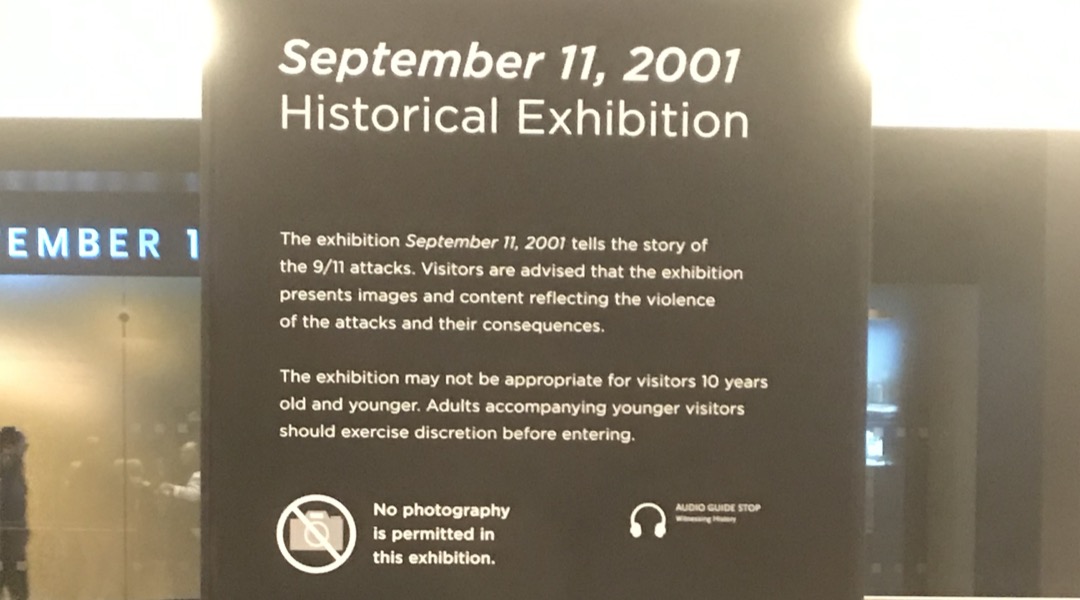
- Museums should use extra care with children, sensitive programs, vulnerable communities, and events dealing with trauma, religion, politics, health, immigration, race, or other personal subjects.
Children’s museums should be especially clear. A simple visitor policy such as “please photograph only your own group” may do more good than a long legal notice. It is understandable, respectful, and easy for staff to explain.
Buildings, Gardens, and Places Where People Live
Photography of buildings and landscapes raises another set of questions. Many museum buildings, historic houses, gardens, and streetscapes are visible from public areas. Photographing them is usually part of ordinary cultural documentation, journalism, travel writing, scholarship, or personal memory-making.
But there are ethical questions, especially when people live on or near the site. A historic house may be a museum, but its neighbors may be private residents. A museum garden may border private property. A cultural landscape may include sacred places, burial grounds, or sites of trauma. An image that is lawful may still feel intrusive, especially if it shows private entrances, windows, addresses, security arrangements, or identifiable people who did not expect to become part of a public story.
This is not only a legal issue. It is a matter of professional judgment. When photographing historic sites, I try to ask: Am I documenting a public-facing feature of the site, or am I intruding into someone’s private life? Does the image help readers understand the place, or is it merely decorative? Would I feel comfortable explaining why I took and published this photograph?
Museums can help by being explicit in their policies. A botanic garden might say: “Please respect the privacy of adjacent private properties.” A historic house might identify which interiors or exterior views are appropriate for photography. A site with sacred or culturally sensitive spaces might explain why photography is limited or prohibited.
Institutional Photography: Higher Standards for Museums
Museums should hold themselves to a higher standard than ordinary visitors. If a museum is taking photographs for marketing, fundraising, membership, advertising, or institutional social media, it should be transparent. Visitors should know when photography or filming is happening, how images may be used, and how to opt out when feasible.
Some museums rely on broad implied-consent language: by entering the museum, visitors agree that they may be photographed and that the museum may use their image. This may be operationally efficient, especially for large events, but it can feel sweeping or impersonal, and may be especially sensitive when children are involved. A more trust-building approach combines notice, choice, and restraint:
- Post signs when institutional photography is taking place.
- Give visitors a way to opt out, such as telling staff, using a sticker, or avoiding a marked area.
- Obtain written releases for identifiable close-ups, testimonials, children, or sensitive contexts.
- Avoid identifying children by name unless a caregiver has given permission.
- Do not use visitor images in ways that imply endorsement, vulnerability, or personal disclosure without explicit consent.
Museums should also separate archival documentation from promotion. Photographing an education program for internal records is not the same as using a child’s face in a development appeal.
Ethical Use and Context
The legal question is often only the beginning. Museums also need to ask whether an image use is ethical:
- Is the image accurate? Does it misrepresent the visitor experience?
- Does it use a sacred or traumatic place as a decorative backdrop?
- Does it show a person in a vulnerable moment?
- Does it turn grief, learning, protest, or difficult dialogue into promotional content?
- Does it reinforce stereotypes?
- Does it compromise trust with a community?
This is where museums should involve more than communications staff when developing policies. Depending on the situation, image-use decisions may need input from educators, curators, community advisors, visitor services, security, legal counsel, and leadership. A museum’s photography policy should protect the institution, but it should also protect relationships.
Practical Questions for Museums
When museums review their photography and image-use policies, they might ask:
- Are we distinguishing copyright from access rules?
- Are we distinguishing visitor photography from institutional photography?
- Are we distinguishing casual use from commercial, media, formal, or staged use?
- Do we explain when permission is required and why?
- Do we acknowledge fair use rather than implying that all image use requires museum approval?
- Do we have a process for releases when using identifiable people in promotional materials?
- Do we use special care for children and sensitive programs?
- Do we explain how visitors can avoid being photographed by the museum?
- Do we protect neighboring residents, sacred spaces, private areas, and vulnerable communities?
- Do our policies help staff make fair decisions without turning them into copyright lawyers?
Conclusion
Museum photography sits at the intersection of access, copyright, privacy, publicity, ethics, visitor experience, and public trust. That is why it can feel confusing.
The simplest way to reduce confusion is to separate the questions and the users. Can visitors take photographs on site? Can they publish or reuse those images? Are copyrighted works visible? Are identifiable people shown? Is the use personal, educational, journalistic, scholarly, promotional, or commercial? Is the museum taking the image, or is a visitor taking it? Is the image legally permissible but ethically questionable?
This information can be overwhelming but museums do not need to answer every legal question in a visitor policy. However, they should avoid implying that all photography is either harmless or prohibited. A better approach is to make clear distinctions; explain the reasons for restrictions to staff and volunteers; and respect the legitimate roles of memory-making, criticism, journalism, teaching, scholarship, research, privacy, and consent. The goal is not simply to control images. The goal is to manage photography in ways that protect collections, respect people, support learning, preserve trust, avoid unnecessary risk, and allow museums to remain visible and accessible in public life.
Additional Resources
- Copyright Alliance
- Creative Commons
- Levine, Melissa and Christine Steiner, “Copyright,” chapter 7C in Museum Registration Methods, Sixth Edition
- Limitations of Exclusive Right: Fair Use, U.S. Code title 17, section 107
- Open Access Images & Video, J. Murrey Atkins Library, University of North Carolina Charlotte
- Reporters Committee for Freedom of the Press
- Statement of the Fair Use of Images for Teaching, Research, and Study, Visual Resources Association
- U.S. Copyright Office
- Young, Anne M., “Rights and Reproductions,” chapter 7D in Museum Registration Methods, Sixth Edition
Photography at Museums and Historic Sites
This three-part series examines how museums and historic sites can welcome photography while protecting collections, visitors, staff, institutional resources, and intellectual property.
1. Can I Take a Picture?
How visitor photography policies can distinguish ordinary memory-making from activities that endanger collections, invade privacy, obstruct circulation, or disrupt the museum experience.
2. When Museums Become Backdrops: Managing Commercial and Media Photography
What changes when a museum becomes the setting for portraits, advertising, filmmaking, journalism, influencer content, or other professional productions—and why approval, fees, insurance, contracts, and supervision may be necessary.
3. Photography, Permission, and Fair Use: Where Museum Policies Get Complicated
An examination of copyright, permissions, privacy, model releases, fair use, and the limits of institutional control over photographs of museum collections, buildings, and public spaces.

