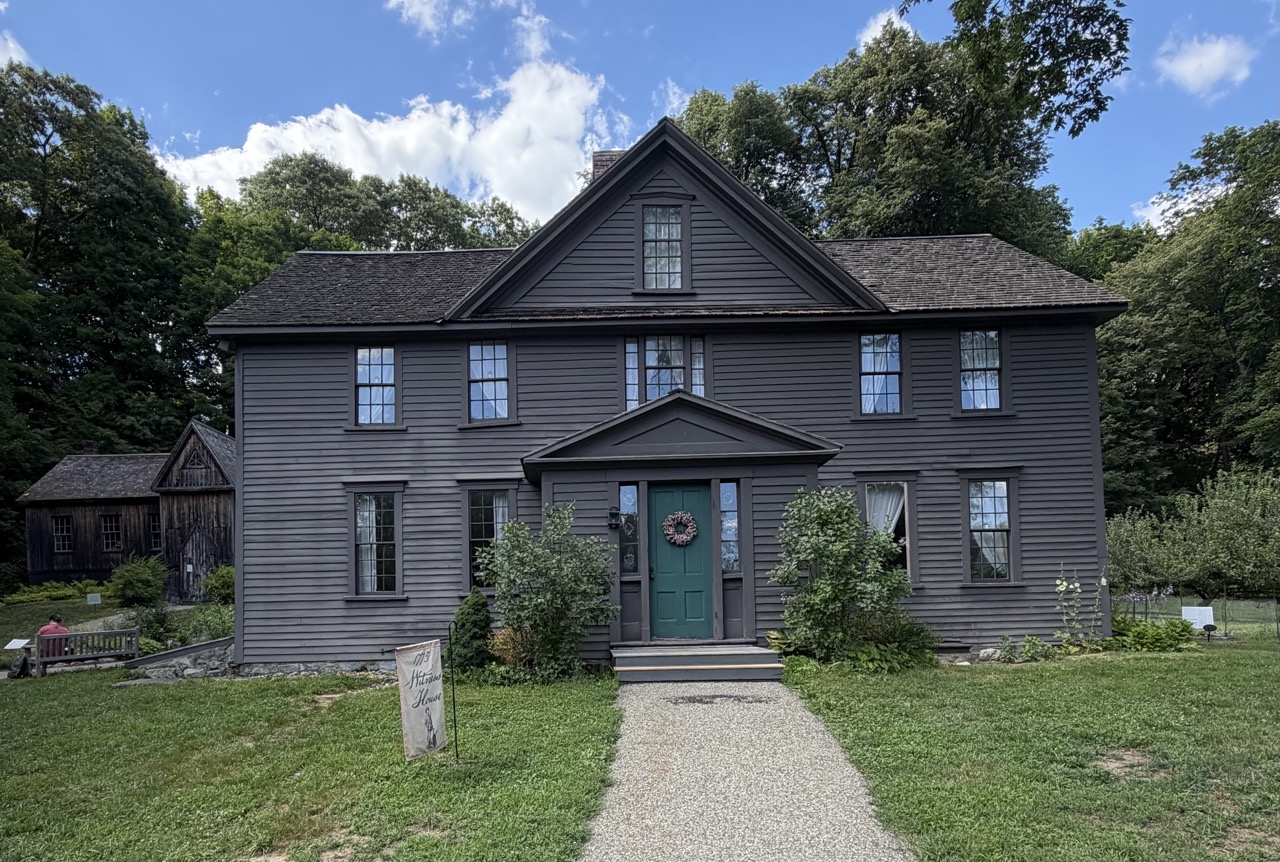
Many visitors come to Orchard House because they love Little Women. The museum embraces that connection. As it notes on its website, visitors often remark that a tour is “like a walk through Little Women!” It is easy to understand why. The house inspired the setting of the March family home, and many of the people who lived there found their way into Louisa May Alcott’s novel.
After touring Orchard House, however, I came away with a different realization. The house certainly rewards visitors who come looking for Little Women. But its greatest contribution is something deeper: it reveals the creative world that shaped Louisa May Alcott as a writer.
That distinction became clear as the tour unfolded. Rather than treating Louisa as the sole focus, the guide introduced each member of the Alcott family through the rooms they occupied and the activities that took place there. Instead of presenting a series of biographical sketches, the house gradually revealed a household alive with writing, theater, art, education, reform, conversation, and, at times, financial struggle.
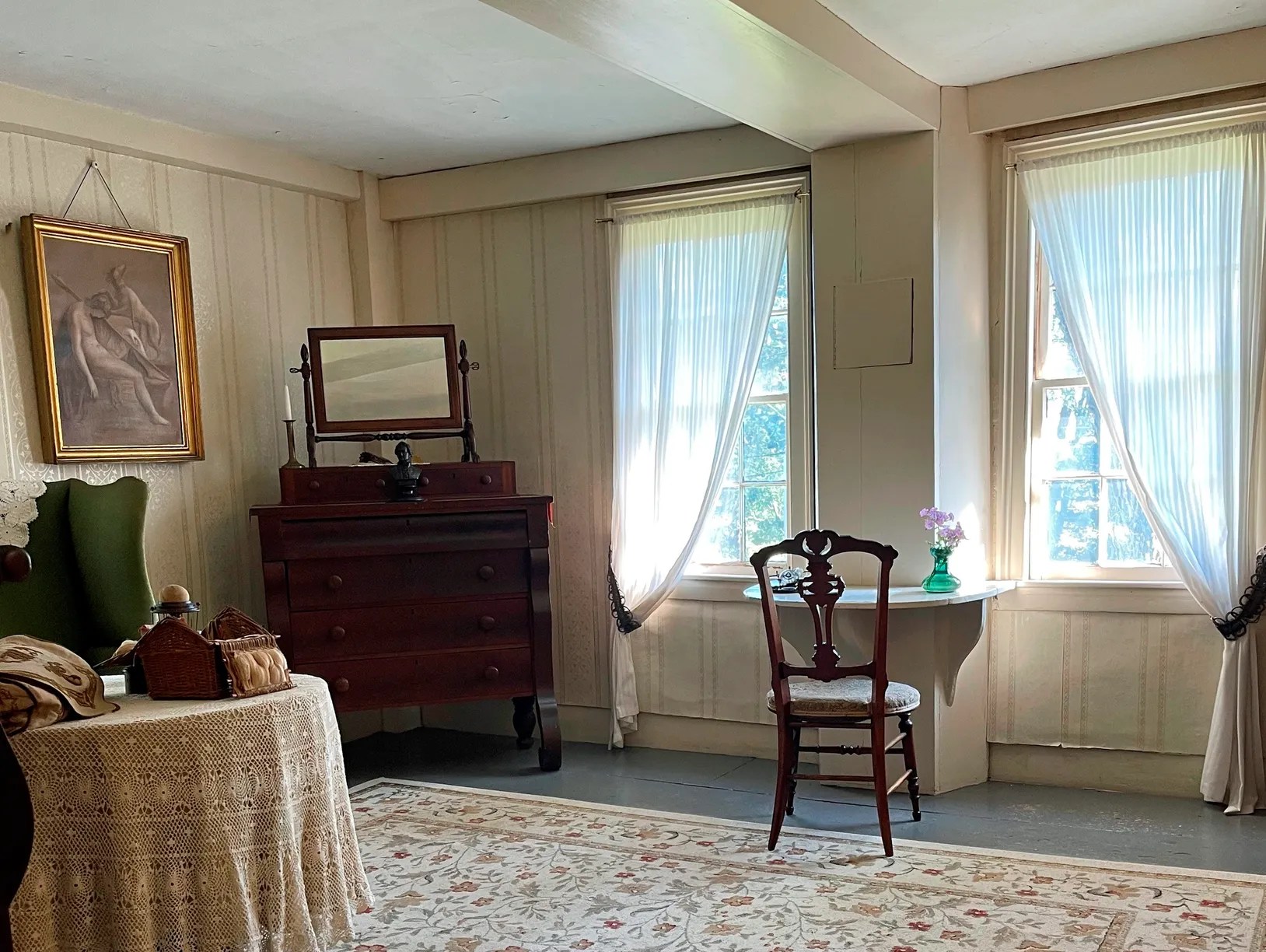
By the end of the tour, Little Women seemed less like the work of an isolated author than the literary expression of a remarkable family’s shared experiences. The rooms themselves reveal the different ways creativity found expression within the Alcott family. The dining room and parlor evoke oldest daughter Anna’s family theatricals, younger sister May’s rooms preserve the work of an aspiring artist, and Louisa’s bedroom centers on the desk where she wrote much of Little Women. Together, these rooms reveal a household where writing, art, and performance were all part of everyday life.
It also shows writing did not happen in isolation behind a closed door. Stories, performances, paintings, conversations, and ideas circulated throughout the house. The sisters acted in plays together. May filled rooms with sketches and paintings. Louisa transformed family experiences into fiction. Bronson pursued educational experiments and philosophical discussions. Abba’s commitment to social reform, and the practical demands of supporting the family, grounded the household in the realities of nineteenth-century life.
Each member of the family pursued those creative interests differently. Anna’s lifelong love of theater found expression first in the family theatricals at Orchard House and later in Concord’s Dramatic Union before she married and raised a family. May pursued professional artistic training in Europe. Louisa became a writer whose books ultimately supported the family financially. Abba combined motherhood with paid work and reform activism. Even Lizzie, whose life ended before the family moved into Orchard House, remained part of the family’s emotional world through the objects that preserved her memory.
The result was not a family of identical accomplishments but one in which different talents were recognized, encouraged, and allowed to flourish. That perspective also changes how we think about Louisa’s writing.
The half-moon desk is one of the museum’s iconic objects, and understandably so. Visitors naturally imagine Louisa sitting there writing Little Women. Yet the desk alone cannot explain her work any more than Emily Dickinson’s writing table can explain her poetry or Harriet Beecher Stowe’s study can explain her literary career. What gives the desk its meaning is the creative household that surrounded it.
Outside that room were sisters rehearsing plays, an artist experimenting with paint and sculpture, parents debating education and reform, constant financial pressures, and a family whose joys, disappointments, rivalries, and affection became the raw material for Louisa’s writing. She did not invent that world while sitting quietly at her desk. She lived it every day. That, I think, is Orchard House’s greatest accomplishment as a historic house museum.
A biography can tell us that Louisa May Alcott wrote Little Women. It can describe her family, summarize their accomplishments, and explain the autobiographical roots of her fiction. Orchard House contributes something different. By walking through the rooms where the family lived, worked, argued, performed, painted, wrote, and gathered together, visitors begin to understand the environment that nourished Louisa’s imagination.
Orchard House does more than preserve the setting of a beloved novel. It preserves the creative world that shaped Louisa May Alcott as a writer. Within these rooms she observed family relationships, experienced financial uncertainty, witnessed reform in action, recovered from illness, and drew upon the artistic and intellectual lives of those around her. Little Women grew from that world, but so did Hospital Sketches and the broader body of writing that established her literary career.