
Tag Archives: Orchard House

What Six Historic House Museums Taught Me About Place

Whenever I travel, I try to visit historic sites that interpret women’s history. This summer, while traveling through New England, I had the opportunity to visit six historic house museums associated with remarkable women: the Harriet Beecher Stowe Center, the Emily Dickinson Museum, Louisa May Alcott’s Orchard House, the House of the Seven Gables, Historic Deerfield’s Frary House, and the Florence Griswold Museum.

Years of visiting historic sites have led me to pay as much attention to how museums interpret history as to the history itself. I rarely experience these tours simply as a visitor. I find myself paying attention to the choices guides make, the stories they emphasize, the evidence they use, and the ways they connect people to place. Each museum approached interpretation differently, reflecting its own mission, history, and collections.
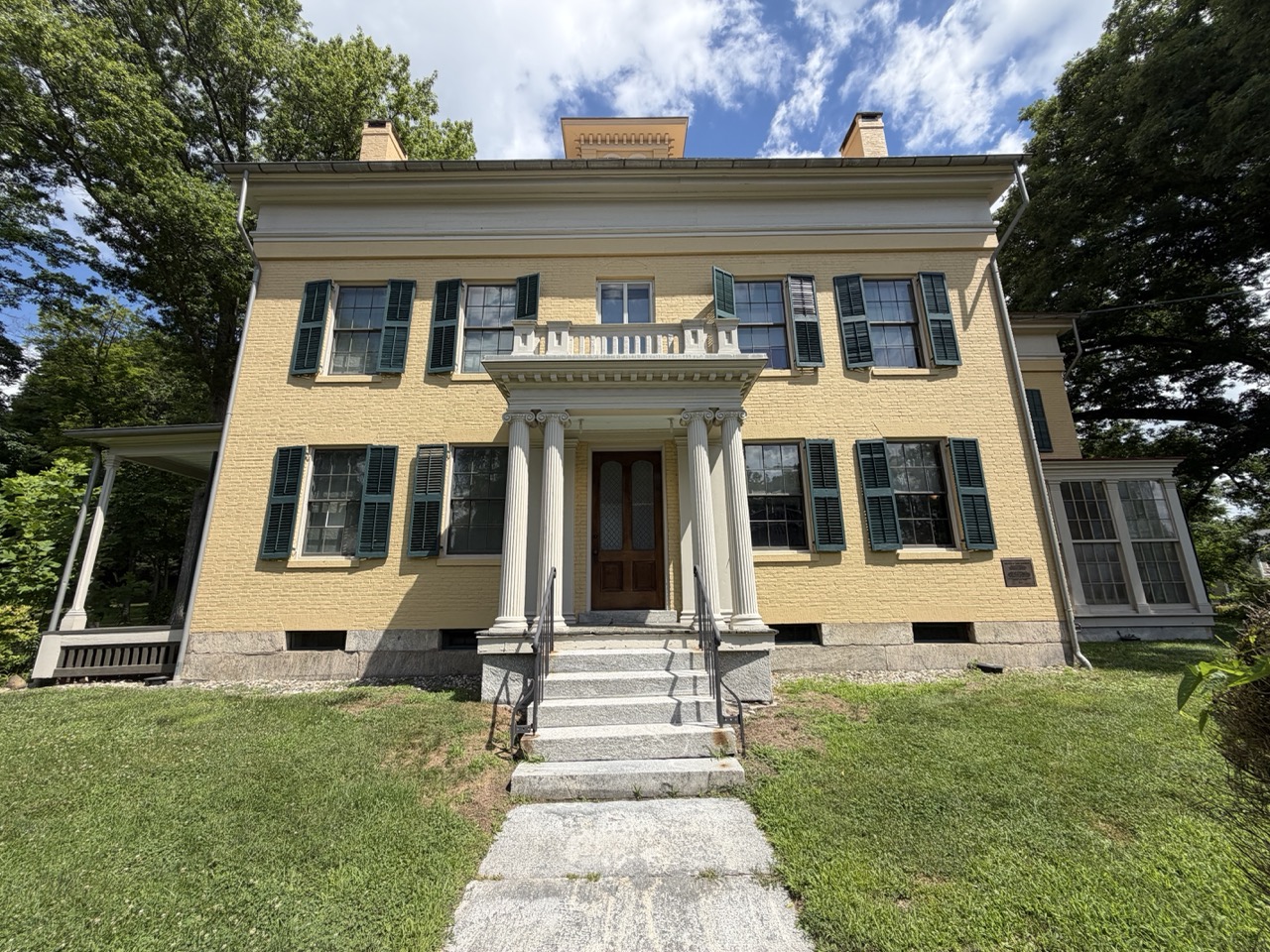
The Dickinson Homestead in Amherst, Massachusetts.

The Emily Dickinson Homestead was one of the strongest examples. Rather than treating the house as the place where Dickinson happened to live, the guide used each room to explore her intellectual life. Her poetry, education, family relationships, and creative choices were woven together through the spaces of the house. By the end of the tour, I wanted to read more Emily Dickinson—not because I felt I should, but because the interpretation had made me curious about the remarkable mind behind the poems.

Louisa May Alcott’s Orchard House took a similarly thoughtful approach while reaching a different conclusion. Instead of focusing exclusively on Louisa, the tour revealed an entire household alive with writing, theater, art, education, reform, and conversation. The house demonstrated that Little Women did not emerge from the imagination of an isolated writer but from the creative life of an extraordinary family. The rooms themselves became evidence of that larger story.

Continue reading
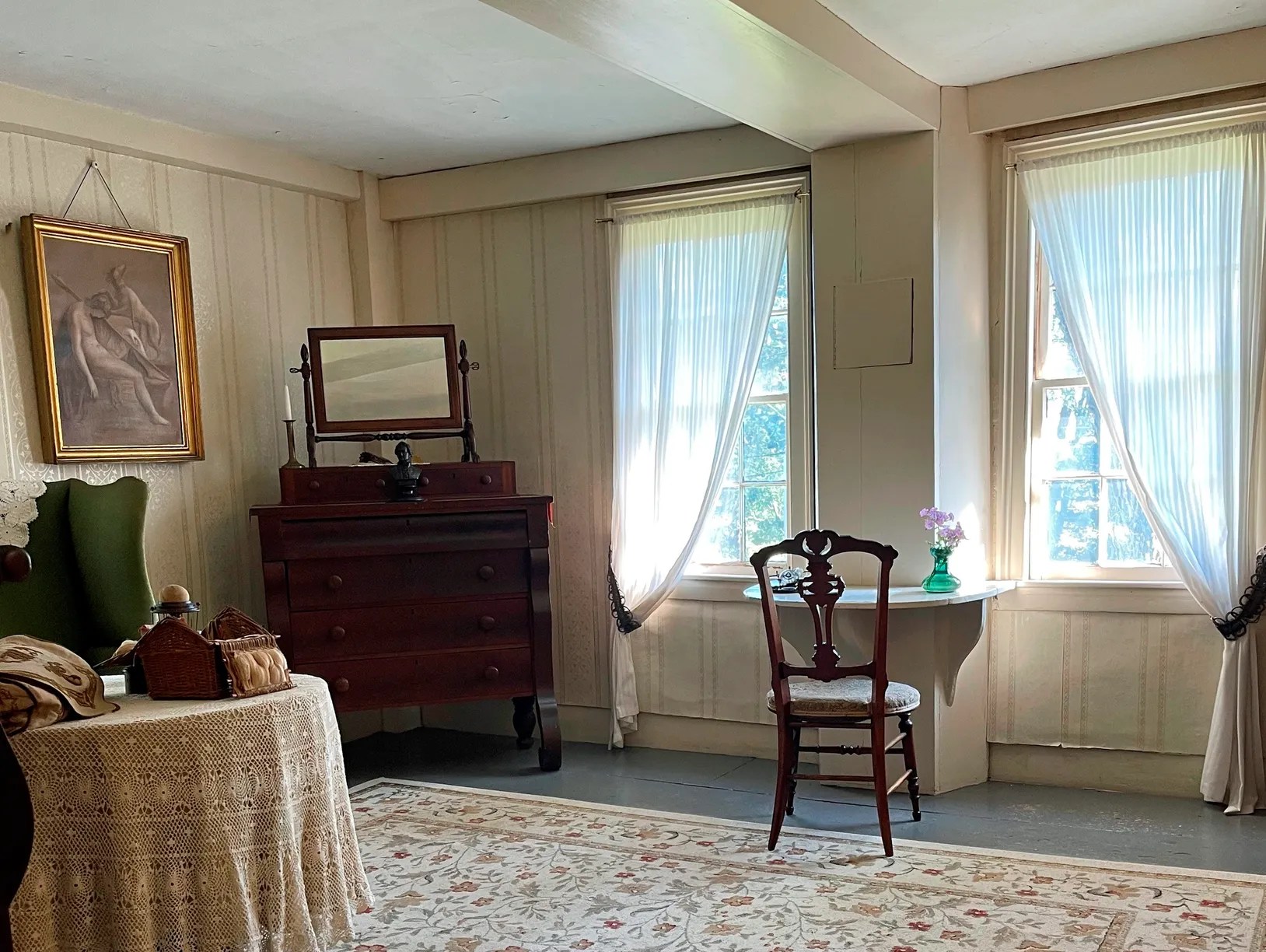
Louisa May Alcott’s Orchard House: Revealing More Than Little Women

Louisa May Alcott’s desk in her bedroom at Orchard House in Concord, Massachusetts. Courtesy of Orchard House.

Many visitors come to Orchard House because they love Little Women. The museum embraces that connection. As it notes on its website, visitors often remark that a tour is “like a walk through Little Women!” It is easy to understand why. The house inspired the setting of the March family home, and many of the people who lived there found their way into Louisa May Alcott’s novel.

After touring Orchard House, however, I came away with a different realization. The house certainly rewards visitors who come looking for Little Women. But its greatest contribution is something deeper: it reveals the creative world that shaped Louisa May Alcott as a writer.

That distinction became clear as the tour unfolded. Rather than treating Louisa as the sole focus, the guide introduced each member of the Alcott family through the rooms they occupied and the activities that took place there. Instead of presenting a series of biographical sketches, the house gradually revealed a household alive with writing, theater, art, education, reform, conversation, and, at times, financial struggle.

By the end of the tour, Little Women seemed less like the work of an isolated author than the literary expression of a remarkable family’s shared experiences. The rooms themselves reveal the different ways creativity found expression within the Alcott family. The dining room and parlor evoke oldest daughter Anna’s family theatricals, younger sister May’s rooms preserve the work of an aspiring artist, and Louisa’s bedroom centers on the desk where she wrote much of Little Women. Together, these rooms reveal a household where writing, art, and performance were all part of everyday life.

Continue reading