
Whenever I travel, I try to visit historic sites that interpret women’s history. This summer, while traveling through New England, I had the opportunity to visit six historic house museums associated with remarkable women: the Harriet Beecher Stowe Center, the Emily Dickinson Museum, Louisa May Alcott’s Orchard House, the House of the Seven Gables, Historic Deerfield’s Frary House, and the Florence Griswold Museum.
Years of visiting historic sites have led me to pay as much attention to how museums interpret history as to the history itself. I rarely experience these tours simply as a visitor. I find myself paying attention to the choices guides make, the stories they emphasize, the evidence they use, and the ways they connect people to place. Each museum approached interpretation differently, reflecting its own mission, history, and collections.
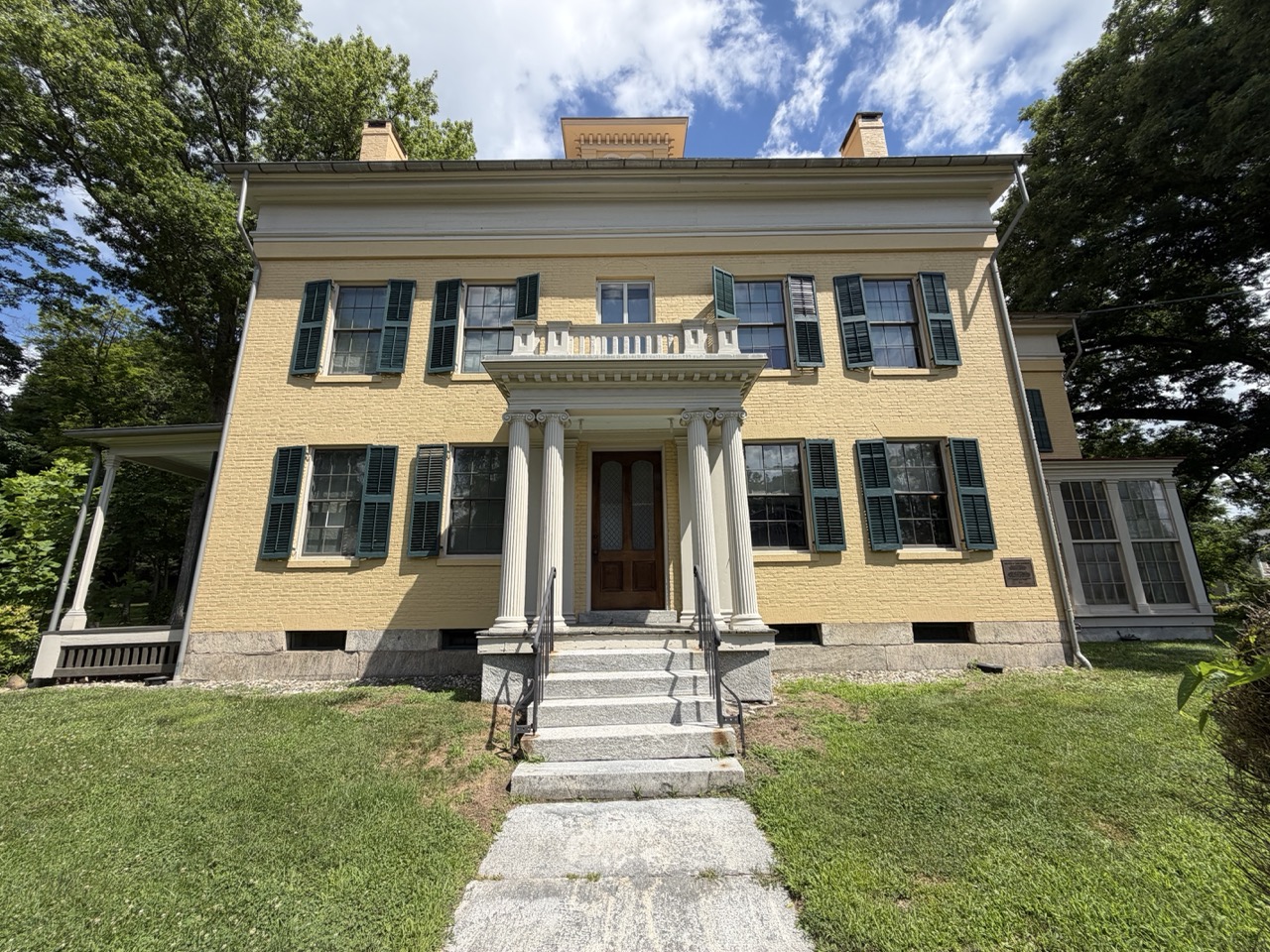
The Emily Dickinson Homestead was one of the strongest examples. Rather than treating the house as the place where Dickinson happened to live, the guide used each room to explore her intellectual life. Her poetry, education, family relationships, and creative choices were woven together through the spaces of the house. By the end of the tour, I wanted to read more Emily Dickinson—not because I felt I should, but because the interpretation had made me curious about the remarkable mind behind the poems.
Louisa May Alcott’s Orchard House took a similarly thoughtful approach while reaching a different conclusion. Instead of focusing exclusively on Louisa, the tour revealed an entire household alive with writing, theater, art, education, reform, and conversation. The house demonstrated that Little Women did not emerge from the imagination of an isolated writer but from the creative life of an extraordinary family. The rooms themselves became evidence of that larger story.
The House of the Seven Gables offered another interpretive approach. I was particularly interested in how the museum would balance the stories of the seventeenth-century house, Nathaniel Hawthorne, and Caroline Emmerton’s settlement association. Rather than privileging one over the others, the tour demonstrated how those layers of history enrich one another and explain why the site remains significant today.
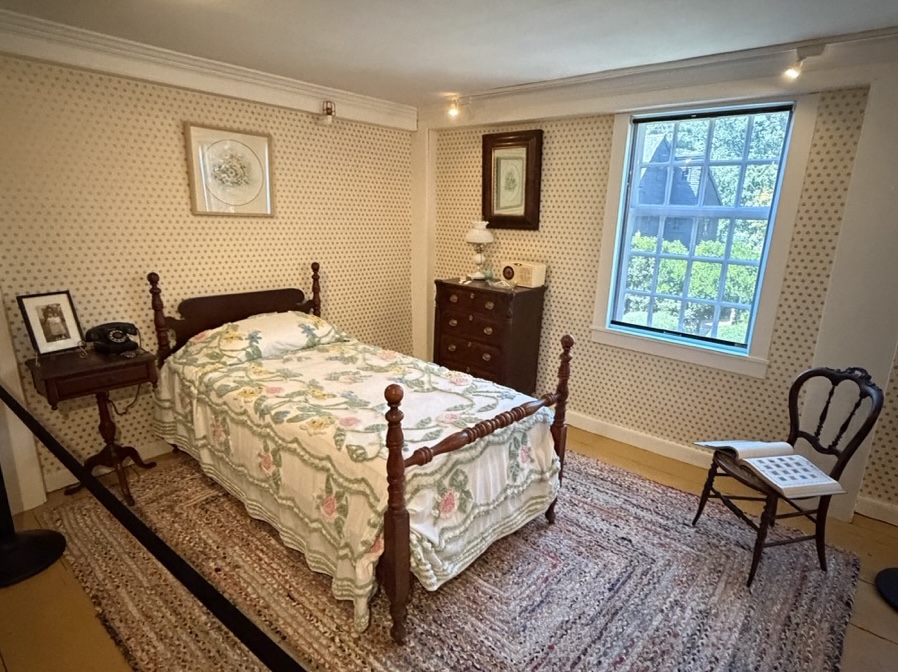
At Historic Deerfield’s Frary House and the Florence Griswold Museum, another theme emerged. Both reminded me that historic houses often have significant stories beyond those of their original occupants. The Frary House interprets C. Alice Baker and the women who preserved Deerfield through scholarship, preservation, craftsmanship, and tourism. The Florence Griswold Museum places Florence herself—not just the artists—at the center of the story, demonstrating how one woman’s labor, hospitality, and determination created the conditions in which one of America’s most important art colonies could flourish. Both museums broaden our understanding of whose work made these places meaningful.
Another observation also stayed with me. Every historic house, regardless of its interpretive approach, contains possibilities that extend beyond any single tour. The physical evidence remains. Rooms, objects, and landscapes continue to invite new questions and fresh interpretations as scholarship evolves. During my visit to the Harriet Beecher Stowe Center, for example, I found myself reflecting on Harriet’s modest writing desk, the shared domestic spaces where she worked, and the contrast with her husband’s private study. Those spaces encouraged me to think more deeply about how the physical environment shaped the experience of writing in the nineteenth century. One of the enduring strengths of historic house museums is that they continue to provoke new questions long after a visit has ended.
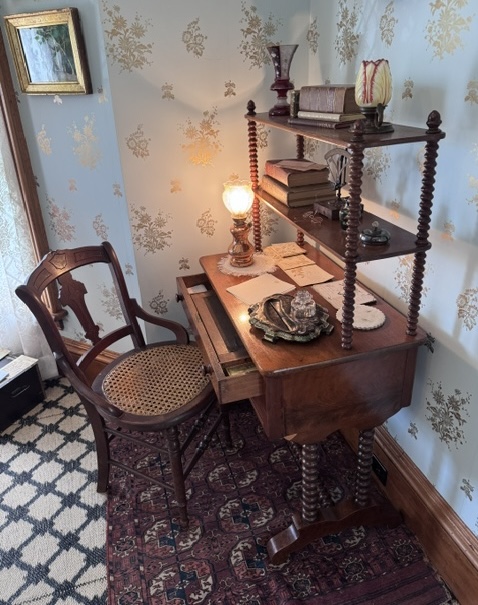
Looking back across all six museums, I was struck by another pattern. The most memorable tours were not primarily about architecture, furniture, or decorative arts, although those were certainly present. Instead, they used those things to illuminate larger human stories. A writing desk became evidence of creativity. A boarding house became evidence of women’s entrepreneurship. A restored Colonial Revival interior became evidence of preservation. A settlement worker’s bedroom became evidence of social reform. Objects mattered because they helped explain people.
These visits reinforced a theme I have been exploring in my own work: the stories told at historic house museums are always the result of interpretive choices. A house associated with a famous individual can also illuminate the lives of women. Sometimes they are wives, sisters, or daughters. Sometimes they are the women who preserved the house or gave it a new purpose. Sometimes they are both. Expanding the narrative does not diminish the better-known story. It enriches it.
Together, these museums demonstrate one of the distinctive strengths of the historic house museum. A biography can explain a life. An exhibition can display objects. A documentary can tell a compelling story. But only a historic house brings people, place, and material culture together in a single experience. Visitors stand where history unfolded and see how rooms, landscapes, furnishings, and everyday objects shaped the lives of those who lived there. At its best, the historic house becomes not simply the setting for history, but one of its most important sources of evidence.

