
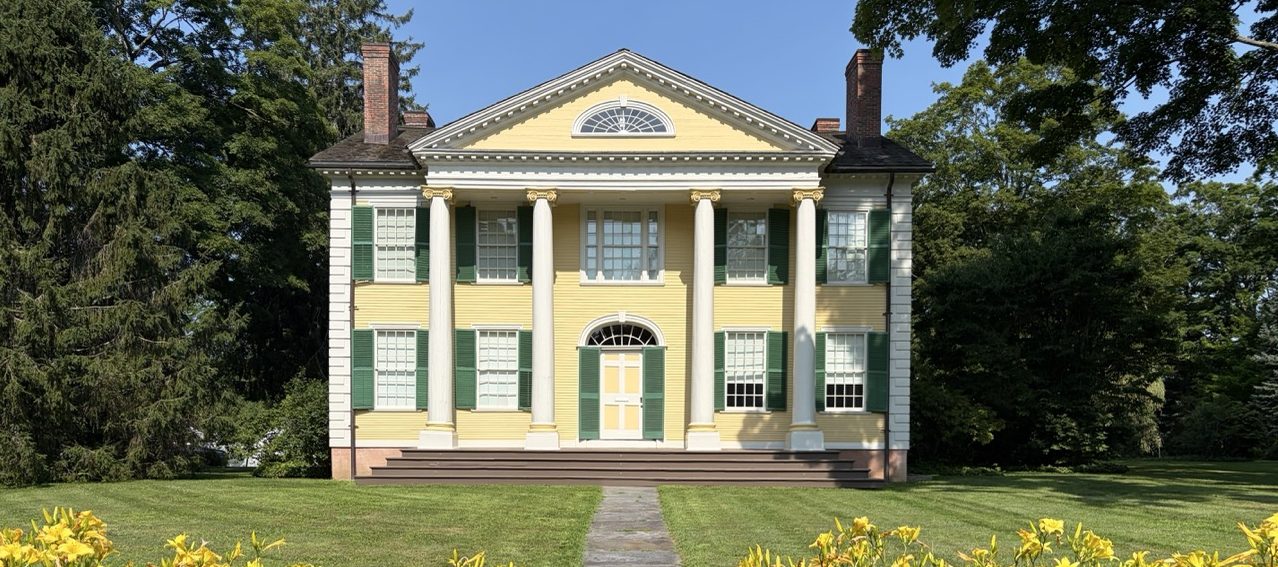
The Florence Griswold Museum in Old Lyme, Connecticut, begins with a story that was common in its time but it leads somewhere entirely unexpected. By the late nineteenth century, Florence Griswold found herself in circumstances shared by many unmarried women of her generation. Her family’s wealth had disappeared, her parents and siblings were gone, and she inherited a large house that had once reflected her family’s prosperity but had become an expensive burden. Like many unmarried women of the middle and upper classes with limited economic opportunities, she turned to one of the few socially acceptable occupations available: taking in boarders.
Today, the boarding-house period is often a forgotten chapter in the history of historic houses. In the late nineteenth and early twentieth centuries, boarding houses were an important part of many women’s economic lives. Taking in boarders was considered an extension of managing a household, making it one of the few socially acceptable ways women could generate income while remaining within the domestic sphere.
What makes Florence Griswold’s story remarkable is not that she operated a boarding house. It is what grew out of it. In the summer of 1899, one of Griswold’s guests was landscape painter Henry Ward Ranger. Captivated by Old Lyme’s scenery, he returned the following year with fellow artists. Before long, Griswold’s boarding house had become the center of what would become the largest and best-known Impressionist art colony in America. Artists such as Henry Ward Ranger, Childe Hassam, and Willard Metcalf spent their summers there, painting the surrounding landscape and helping transform the artistic identity of the town itself.
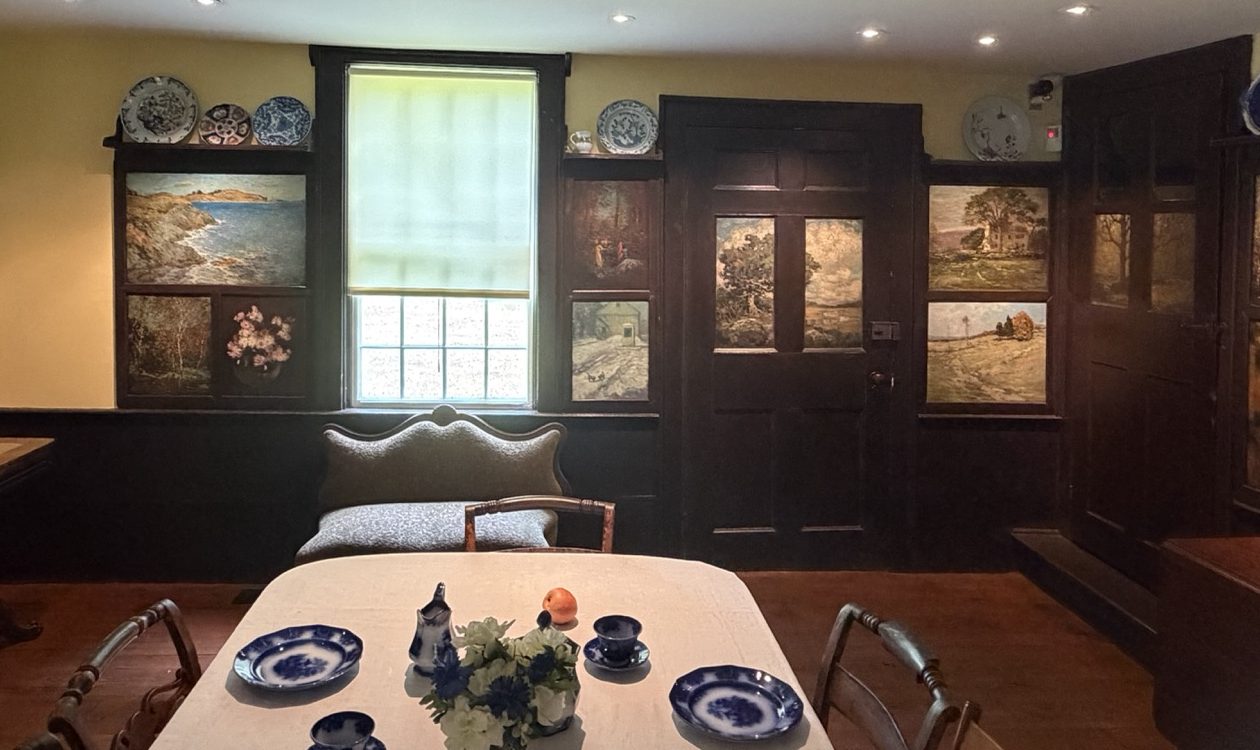
Unlike most boarding houses, this one did more than generate income. It became an institution that shaped American art. The Museum understandably celebrates this remarkable achievement. Visitors can still see the extraordinary paintings the artists left behind on doors, wall panels, and other wooden surfaces throughout the house. Few historic houses contain such personal and lasting expressions of gratitude from the people who once stayed there.
The Museum also wisely places Griswold at the center of the story, and I think that interpretive choice is exactly right. Although the artists created the celebrated Lyme Art Colony, none of it would have happened without the woman who welcomed them into her home. Griswold did far more than provide rooms and meals. She managed the boarding house, organized outings, converted outbuildings into studios, packed and shipped forgotten belongings, extended credit when artists struggled financially, and charged rents that were often too low to cover her own expenses. She also became an advocate for the artists, displaying their work in a gallery she created in her front hallway and later managing the Lyme Art Association’s gallery next door, where she encouraged visitors to Old Lyme to purchase their paintings.
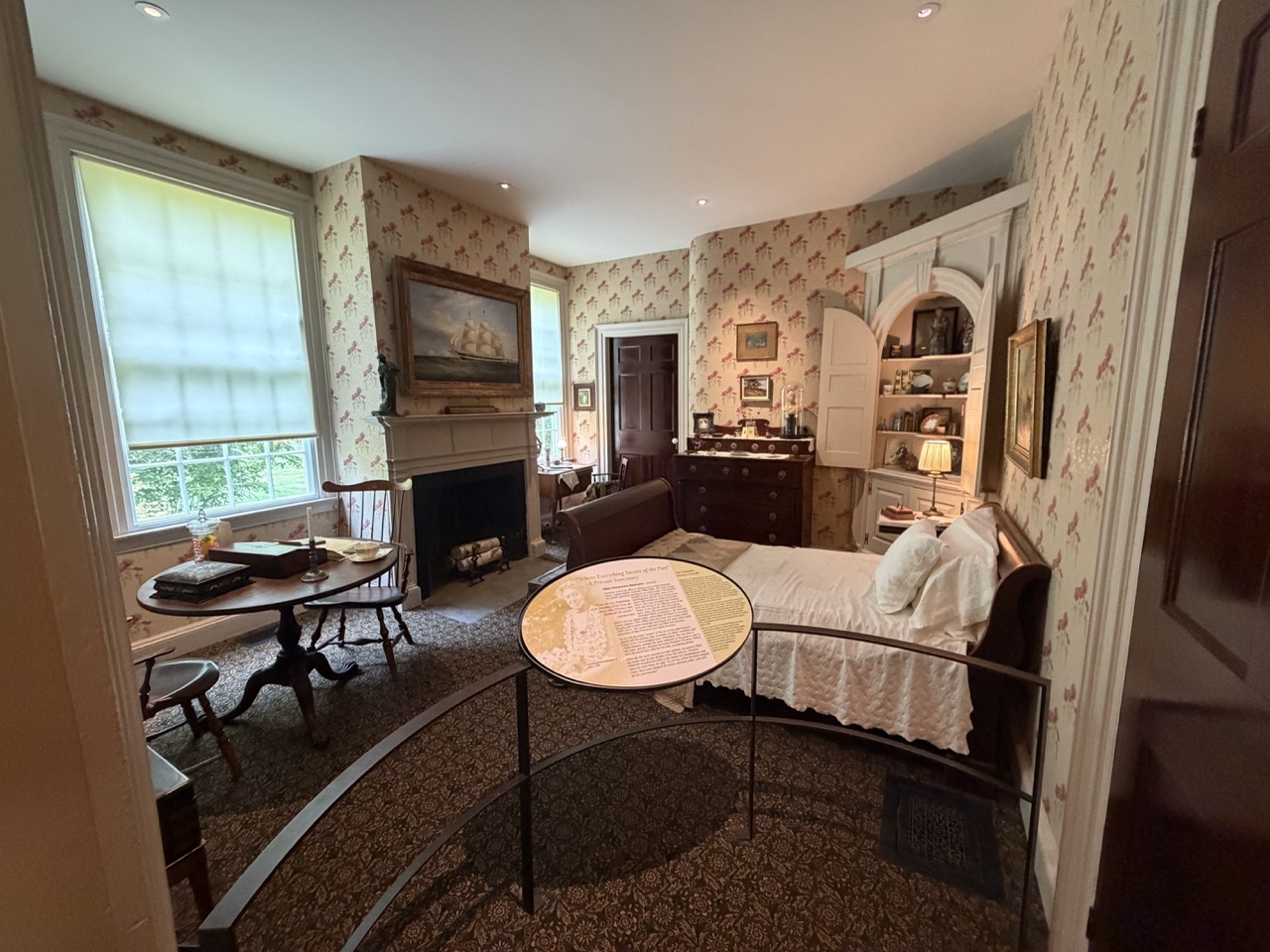
The artists’ affection for Griswold was genuine. While she was away during the winter of 1910, they secretly redecorated and renovated several rooms including the central hall and parlor as a surprise expression of gratitude. They returned year after year, bringing new painters and helping establish Old Lyme as one of the country’s leading art colonies. Yet even their generosity could not overcome the economic realities she faced.
The boarding house generated enough income to keep the house operating and allowed long-overdue improvements such as electricity and indoor plumbing. Even so, Griswold continued to rely on multiple mortgages and struggled financially throughout her life. Her generosity often exceeded what the business could support. She refused paintings in place of rent because she believed the artists needed them more than she did—works that would later become immensely valuable.
The contrast is striking. Griswold created the environment in which one of America’s most influential art colonies flourished. She nurtured friendships, encouraged creativity, and provided the stability that allowed so much remarkable work to be produced. Still she herself never achieved financial security.
When Griswold died in 1937, her possessions were auctioned to satisfy her remaining debts. The Museum has had to reconstruct many of the interiors from photographs, paintings, records, and surviving fragments because so little of the original furnishings remained.
The Florence Griswold Museum rightly celebrates the artists who lived and worked there. I left equally impressed by the woman who made their community possible. Her story reminds us that behind many great artistic movements—and behind many historic houses—stood women whose labor, hospitality, and financial sacrifices made those achievements possible.


Will the new museum in Westerly affect the Griswald?
LikeLike