

After visiting more than fifty museums and historic sites across Switzerland, I returned with far more observations than I could fit into a few blog posts—or a few hundred photographs. My three recent posts examined recurring patterns across Swiss museums: the influence of private collectors on art museums, changing approaches to interpretation at history museums, and the seemingly secondary details—from architectural models to museum stores and accessibility—that profoundly shape the visitor experience.
But words and still photographs can only convey so much. Sometimes you need to see visitors play at a transportation museum, walk through the rooms of a medieval castle, or watch a historic clock come to life. Five short videos offering glimpses of museums and historic sites that particularly interested me. Each YouTube Short lasts less than a minute, but together they illustrate several of the larger questions raised in my earlier posts.
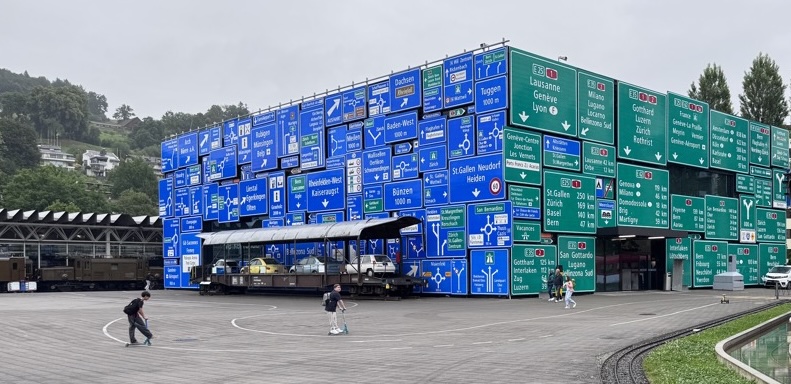
A Museum Designed for Movement
The Verkehrshaus, or Swiss Museum of Transport, in Lucerne is one of Switzerland’s largest and most popular museums. Its campus is divided into separate pavilions devoted to trains, automobiles, planes, ships, and space travel.
The arrangement does more than organize a vast collection. Moving outdoors between buildings gives visitors a break from galleries filled with large machines and similar objects. Each pavilion becomes a new destination rather than simply another room in an endless museum. That’s exactly one of the strengths of historic sites—they’re usually a collection of buildings that naturally offer a break in-between. How might we take advantage of this format?
Inside, the museum’s greatest strength is activities for families. Visitors climb into vehicles, examine locomotives from below, operate mechanical devices, watch model trains, and experiment with transportation technology. The traditional galleries were comparatively quiet during my visit; the interactive spaces were crowded with parents and children. The Verkehrshaus shows that curiosity and delight are legitimate outcomes, especially for children. It is not merely displaying transportation history. It is allowing visitors to explore how things move.
That contrast raises an important interpretive question: when families consistently choose physical exploration over detailed historical narratives, should a museum continue trying to lead them toward conventional exhibitions—or more fully embrace the experience they clearly value? Identifying your primary audience is crucial for effective interpretation. Who do you want to impact most?
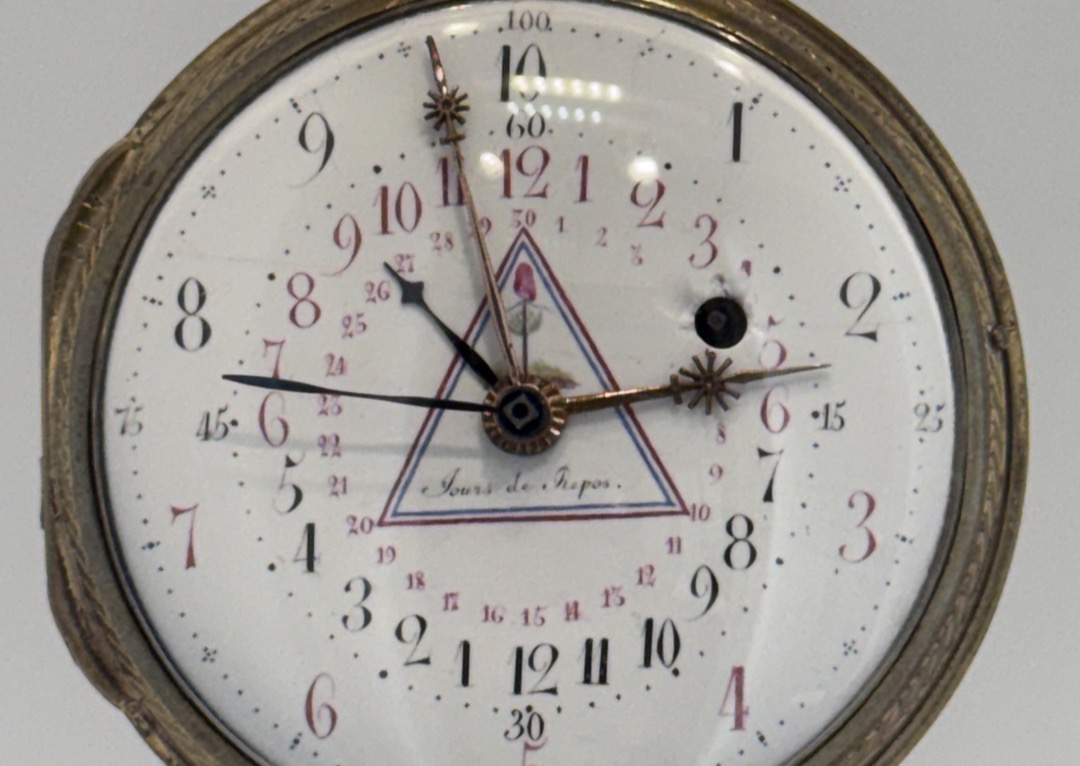
Timekeeping on a Human Scale
The Uhrenmuseum Winterthur offers nearly the opposite experience. Rather than a sprawling campus filled with enormous machines, this small museum presents an exceptionally focused collection of clocks and watches. Switzerland is closely associated with precision timekeeping, but the museum reveals that familiar national identity through individual mechanisms, changing technologies, decorative craftsmanship, and centuries of experimentation.
Specialized museums can be challenging. Visitors may lack the technical knowledge needed to distinguish one mechanism from another, while rows of similar objects can quickly become repetitive. Yet their scale can also be an advantage. A focused collection invites close looking and allows visitors to trace developments that would disappear inside a broader decorative arts or technology museum.
The Uhrenmuseum reminded me that a small museum does not need to tell a large story. It needs to make its particular story comprehensible and meaningful. Push harder in that direction and you’ll make exhibitions more engaging.
Entering Switzerland’s Hidden Defenses
Near Lake Lucerne, Fort Fürigen presents a very different aspect of Swiss history. Built into a mountain, the fortress was part of the country’s defensive preparations during the Second World War and continued to serve a military purpose during the Cold War.
Visitors enter a concealed world of tunnels, equipment, guns, barracks, and operational spaces. Unlike a conventional gallery, the site itself is the principal artifact. Its confined rooms, heavy doors, limited light, and position inside the mountain communicate the experience more powerfully than a diagram or case of military objects could.
Places like Fort Fürigen also complicate familiar images of Switzerland as neutral, peaceful, and picturesque. Neutrality did not mean an absence of military planning. The fortress reveals the extensive preparations required to defend that position during periods of European conflict.
Historic sites are often most effective when the building and the story cannot be separated. At Fort Fürigen, the physical experience of entering the mountain is interpretation.
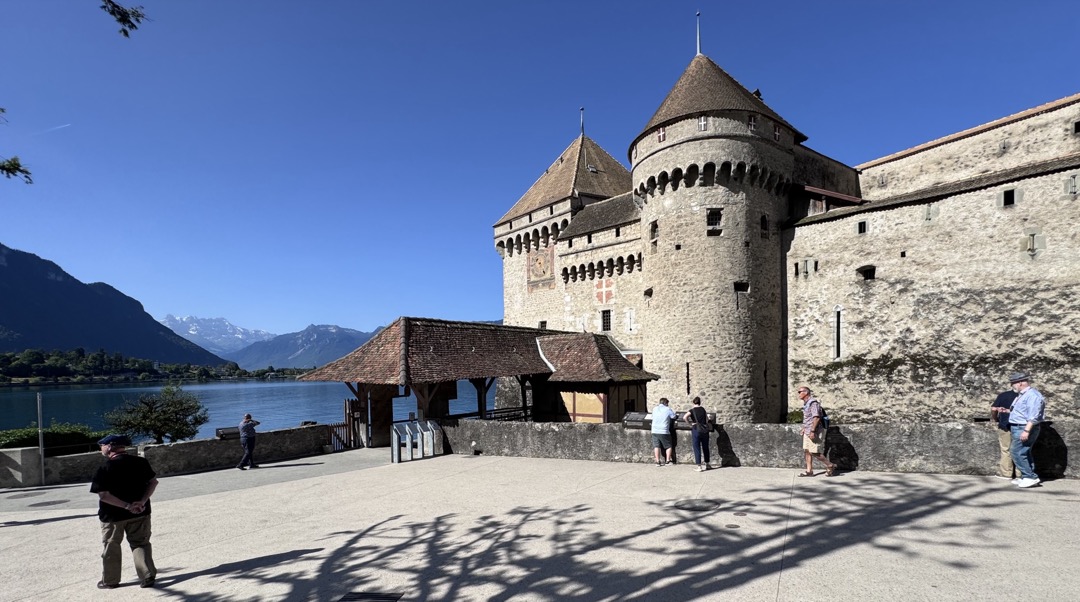
A Castle That Needs Little Introduction—but Still Needs Interpretation
Chillon Castle, dramatically positioned on the shore of Lake Geneva, is among Switzerland’s most recognizable historic monuments. Its towers, courtyards, halls, underground chambers, and waterfront setting create the kind of visual experience that many visitors hope to find in a medieval castle.
A spectacular building, however, does not interpret itself. One of Chillon’s most effective interpretive devices is a miniature showing how a room’s faded medieval murals would originally have appeared. The model helps visitors perceive something that survives only partially. It communicates the former visual richness of the room without repainting the historic walls or requiring visitors to reconstruct the evidence entirely in their imaginations.
That modest intervention exemplifies an important principle: interpretation should help visitors see what time, alteration, distance, or complexity has made difficult to understand. A model is not a substitute for the authentic place. It helps people recognize more of what remains.
Period Rooms as Collections
The period rooms at the Landesmuseum Zürich differ from the furnished domestic interiors familiar at many American museums. These rooms are primarily collections of architecture: carved paneling, painted ceilings, decorative surfaces, columns, cornices, and other elements removed from historic buildings and reassembled inside the museum.
They are impressive, but they also present an interpretive challenge. Why was this particular room preserved? Where did it come from? What happened to the building around it? What does it reveal about craftsmanship, social status, regional identity, collecting, or the history of museums themselves?
The Landesmuseum is experimenting with several answers. Some rooms include furnishings, costumes, portraits, silver, ceramics, or military flags. Mirrors encourage visitors to notice elaborate ceilings. Labels explain architectural elements, conservation decisions, and the process of relocating interiors.
The results are uneven. Objects sometimes activate the rooms without clearly explaining their relationship to the architecture. Nevertheless, the museum deserves credit for recognizing that inherited installations cannot simply remain frozen in time.
Period rooms contain many possible stories. The interpretive task is not to manufacture meaning but to decide which meanings visitors most need help discovering.
From Long Essays to Short Videos
These five sites differ enormously in size, subject, audience, and interpretive approach. One encourages physical exploration. Another rewards close examination. A military fortress uses the power of place, while a castle uses a model to recover a lost visual experience. A national museum wrestles with the legacy of architectural collecting.
The videos cannot provide the depth of a blog post, and the blog posts cannot reproduce the sensory experience of moving through these places. Used together, however, they offer different ways of noticing.
That may be the most valuable result of visiting museums outside one’s own country. The purpose is not to decide whether Swiss or American museums are better. It is to encounter different assumptions about collections, interpretation, design, retail, accessibility, and visitor behavior—and then return home asking better questions.
You can read the complete series here:
 Engaging Places