
We recently returned from a two-week visit to Switzerland, where we visited more than fifty museums and historic sites across the German-, French-, and Italian-speaking regions. In the art museums of German-speaking Switzerland, I noticed a strong tendency to organize galleries around named private collections, or Sammlungen. In the history museums and historic sites, I noticed something different: interpretive practices in transition.
Some sites still rely on familiar approaches: chronological narratives, object identification, and basic descriptions of place. But many museums are clearly rethinking their exhibitions. They are experimenting with new interpretive layers, broader contexts, difficult histories, and more ambitious questions about identity, science, colonialism, and national memory.
The results are uneven, but they are worth attention. Swiss history museums seem to be moving beyond “what happened?” and “what is this object?” toward more complex questions: What systems produced this wealth? How did a person’s life connect to larger social and technological changes? How is national identity constructed? What should be done with inherited installations that no longer speak clearly to visitors?
For museum professionals elsewhere, the Swiss examples offer several useful lessons.
Reinterpretation Without Reinstallation
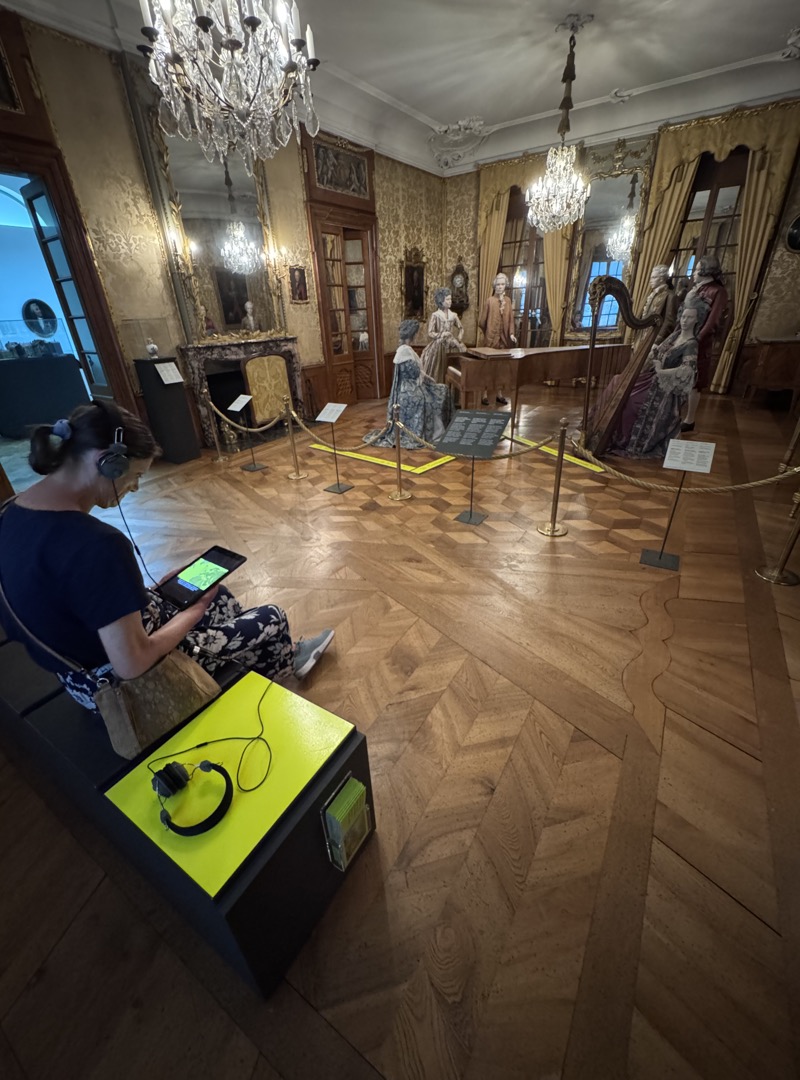
One of the most effective examples appeared at the Bern History Museum (Bernisches Historisches Museum), where the museum has added a bright chartreuse interpretive layer on “Bern and Colonialism” across four existing exhibitions. Although Switzerland did not have formal overseas colonies in the same way as Britain, France, Spain, or the Netherlands, it still asked a more subtle and revealing question: how did Swiss people, businesses, consumers, and institutions participate in and benefit from colonial systems?
The museum’s brochure states that “colonial mindsets continue to shape many aspects of our lives.” Those mindsets, it explains, are also reflected in the museum’s collections and exhibitions. At selected stations, the museum draws attention to previously unnoticed colonial entanglements and their continuing impact. That framing matters. Colonialism is not treated as one isolated topic in one special exhibition. It is presented as a set of relationships that touches many kinds of objects, stories, and historical periods.
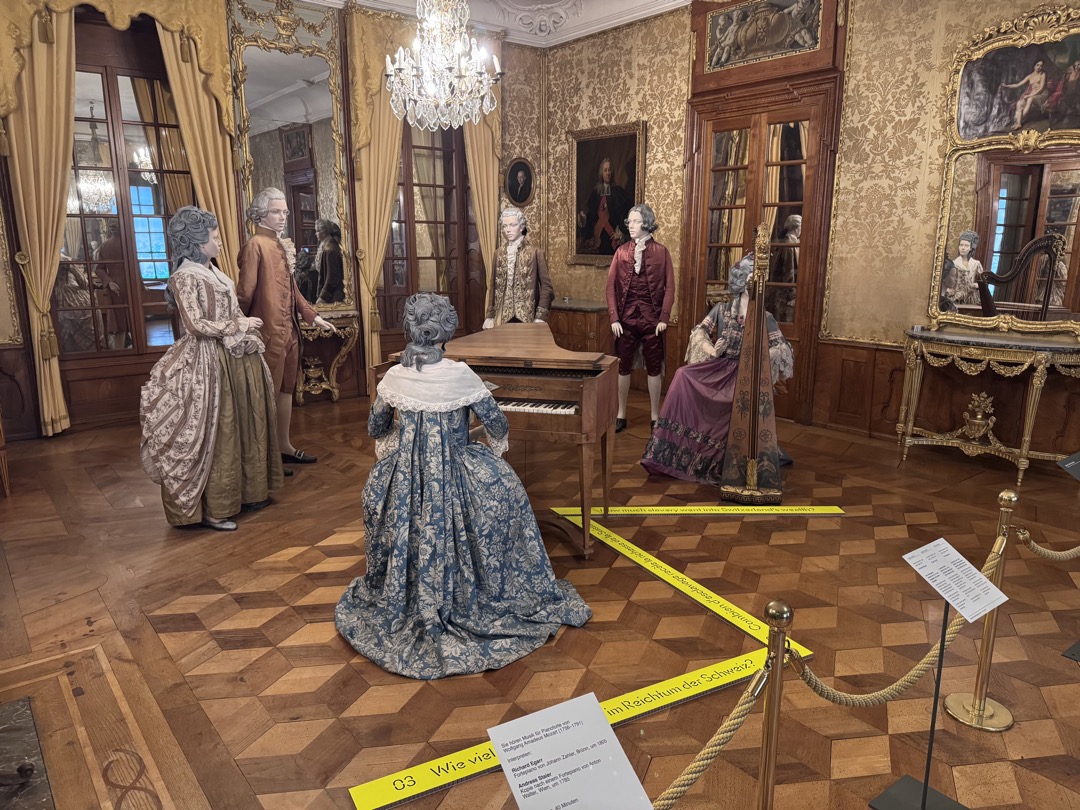
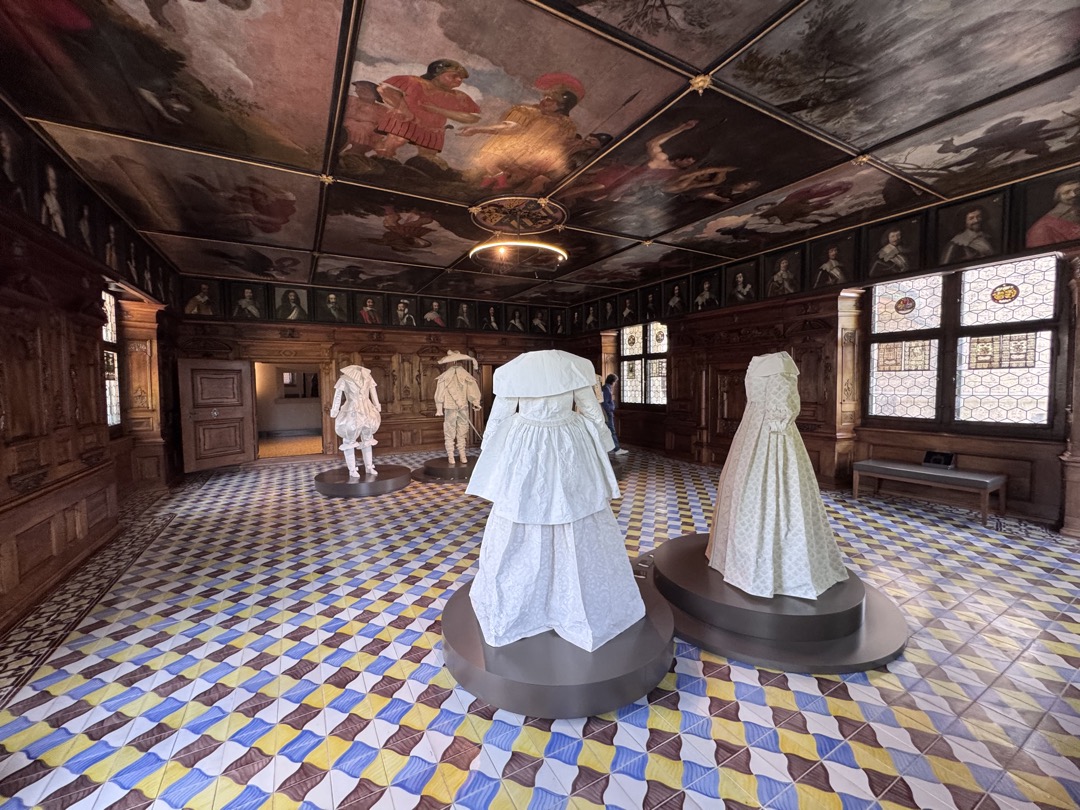
The most effective example I saw was in an eighteenth-century period room from Neuchâtel. The room could easily have been interpreted as a display of elite refinement: elegant interiors, fashionable clothing, and the material culture of privilege. Instead, the chartreuse colonialism layer connected that refinement to slavery and global trade. The museum’s brochure explains that in West Africa, colored fabrics from India and Europe were exchanged for enslaved people, who were then forced to work on plantations in the Americas producing sugar, coffee, cocoa, and cotton—the “colonial goods” prized by Europeans.
In the room itself, a chartreuse label snakes across the floor among the mannequins. It asks, in English, German, and French: “How much slavery went into Switzerland’s wealth?” That question changes the room. It interrupts the elegance. It connects local prosperity to global exploitation. It shifts attention from style to systems. Visitors are invited to see the clothing not simply as evidence of taste, but as part of an economy entangled with slavery.
For museums and historic sites, this is a highly transferable strategy. The Bern Historical Museum did not need to dismantle the room or wait for a full renovation. It added a visible, well-designed interpretive layer that changed how visitors understood what was already there. Many museums have inherited exhibitions that omit slavery, colonialism, Native American dispossession, labor exploitation, migration, gender, disability, or environmental change. A full reinstallation may be years away but Bern shows that reinterpretation can begin sooner. A new question, placed in the right location, can reframe an entire room.
Biography as Context, Not Hero Worship
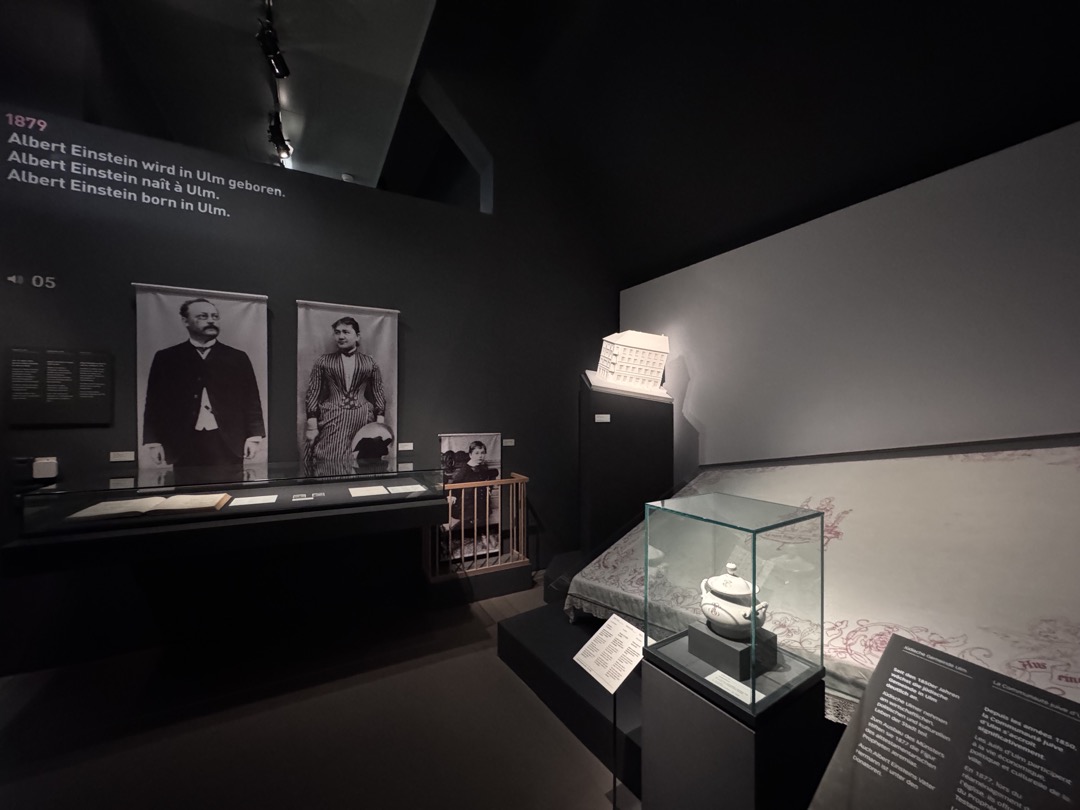
The Bern History Museum’s Einstein exhibition offers another strong interpretive model. It could easily have become a conventional “great man” exhibition: birth, education, discovery, fame, death. Instead, it places Einstein’s life within several overlapping worlds.
The exhibition begins with his Jewish identity and family background in Ulm, then follows his education, friendships at university in Zürich, and his family’s business in electrical engineering. These contexts matter because they prevent Einstein’s scientific achievements from appearing as isolated genius. His ideas emerged from relationships, institutions, technologies, migrations, and intellectual networks.
The exhibition also does something many history museums might avoid: it tries to explain the science. Einstein’s theories are introduced through original copies of his publications and explained through videos. That combination works well. The publications provide historical authenticity, while the videos help visitors approach ideas that cannot be understood from documents alone.
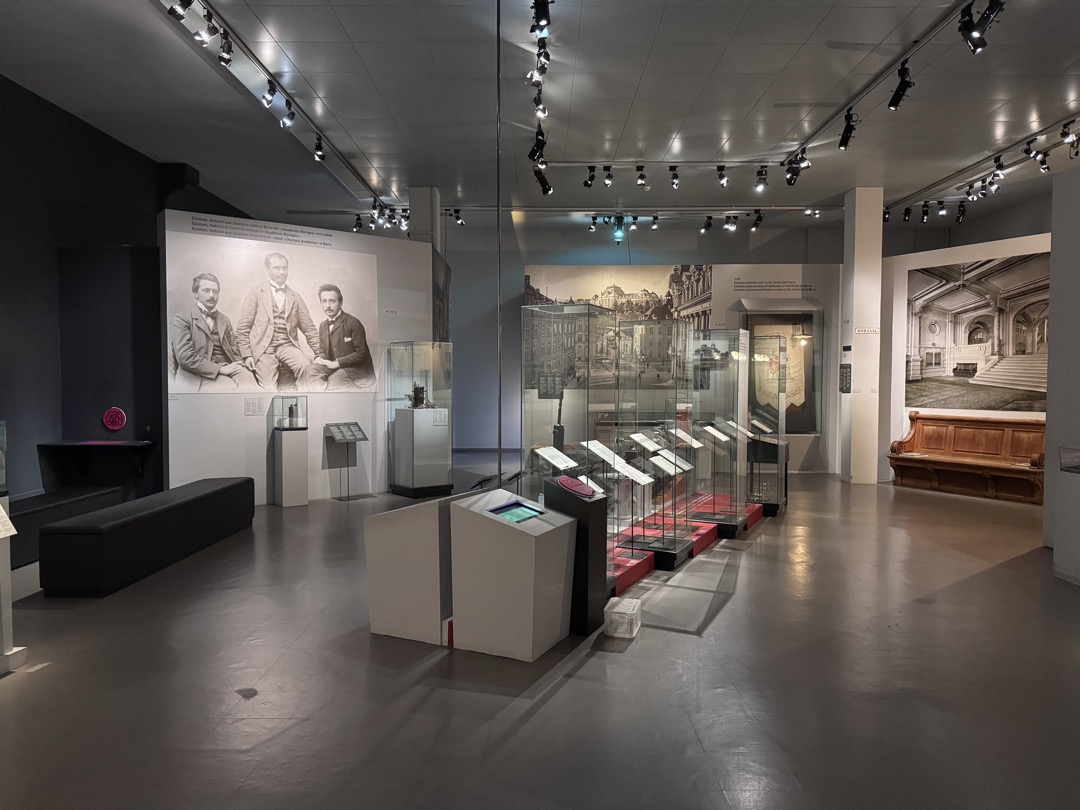
The gallery design supports this contextual approach. In some areas, one side of the gallery focuses on Einstein’s life while the other presents broader national or technological developments, including radio, electrical systems, and household appliances. Visitors move between individual biography and the larger world in which that biography unfolded.
This is a useful model for historic sites. A biographical exhibition should not merely tell what happened to a person. It should use that life to open a larger world. The strongest interpretation is not “this person was important,” but “this person helps us understand a larger set of historical events.”
Reinterpreting Period Rooms
The Swiss National Museum (Landesmuseum Zürich) presents a different challenge: what should a museum do with historic rooms that were collected, moved, preserved, and reinstalled long ago?
These period rooms differ from many American examples. In the United States, period rooms are often furnished domestic interiors designed to suggest how people lived. At the Landesmuseum, the rooms are more architectural. They preserve walls, ceilings, paneling, decorative finishes, and fragments of historic buildings. Some are largely empty. Visitors may enter or look into a room where the primary objects are the walls and ceiling themselves. Museum nerds: these period rooms influenced American museums, a story described in a blog post and in detail in the book, Period Rooms: Historische Zimmer im Landesmuseum.
That makes interpretation essential. Without it, visitors may admire craftsmanship without understanding what they are seeing, where the room came from, why it was moved, how it was conserved, or what it reveals about taste, wealth, trade, religion, politics, or regional identity.
The Landesmuseum appears to be experimenting with several strategies. Exterior labels primarily identify the rooms, while interior labels provide more depth. Some interpretation explains design elements such as cornices, columns, wainscoting, and wall paneling. Other labels discuss conservation or the process of moving historic interiors into the museum.
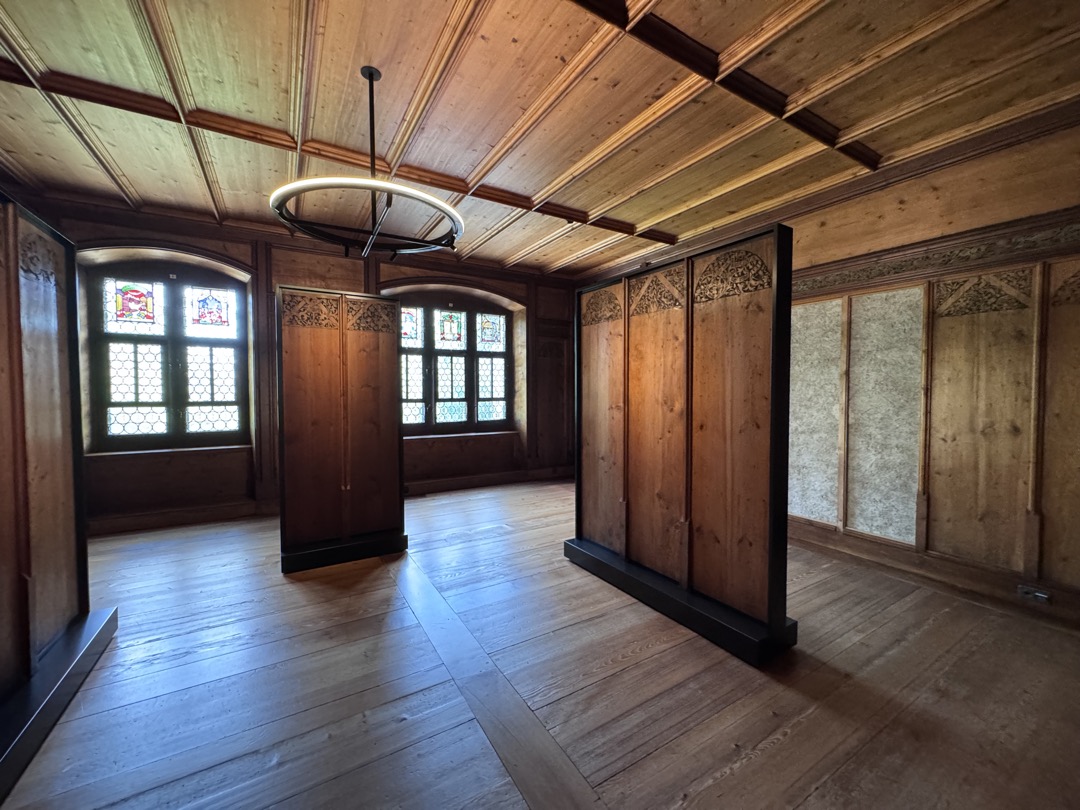
The installations themselves vary widely. One room includes mirrors covering part of the floor, drawing attention upward to the ceiling and perhaps adding light to the space. Other rooms contain porcelain vases, papier-mâché mannequins in period dress, portraits, gold and silver decorative arts, early military flags, or furnishings appropriate to the period. Some rooms function almost as galleries for objects; others try to evoke a historic interior.
Not all of these experiments are equally clear. A silver collection or military flags placed in a historic room may activate the space visually, but the relationship between the objects and the room is not always apparent. Are the objects historically connected to the room? Do they represent the same period, region, or social world? Or are they using the room as an atmospheric setting?
Still, I appreciated the museum’s willingness to experiment. Legacy installations are difficult. They are often too significant to remove, too beautiful to ignore, and too opaque to interpret with a simple label. The Landesmuseum’s period rooms suggest that reinterpretation may proceed through trial and error: new labels, new lighting, new juxtapositions, new uses, and new questions.
The larger lesson is that period rooms need interpretation not because they lack meaning, but because they contain too many possible meanings.
Interpreting Swiss Identity
The Landesmuseum also takes on an even more abstract subject: the idea of Switzerland itself.
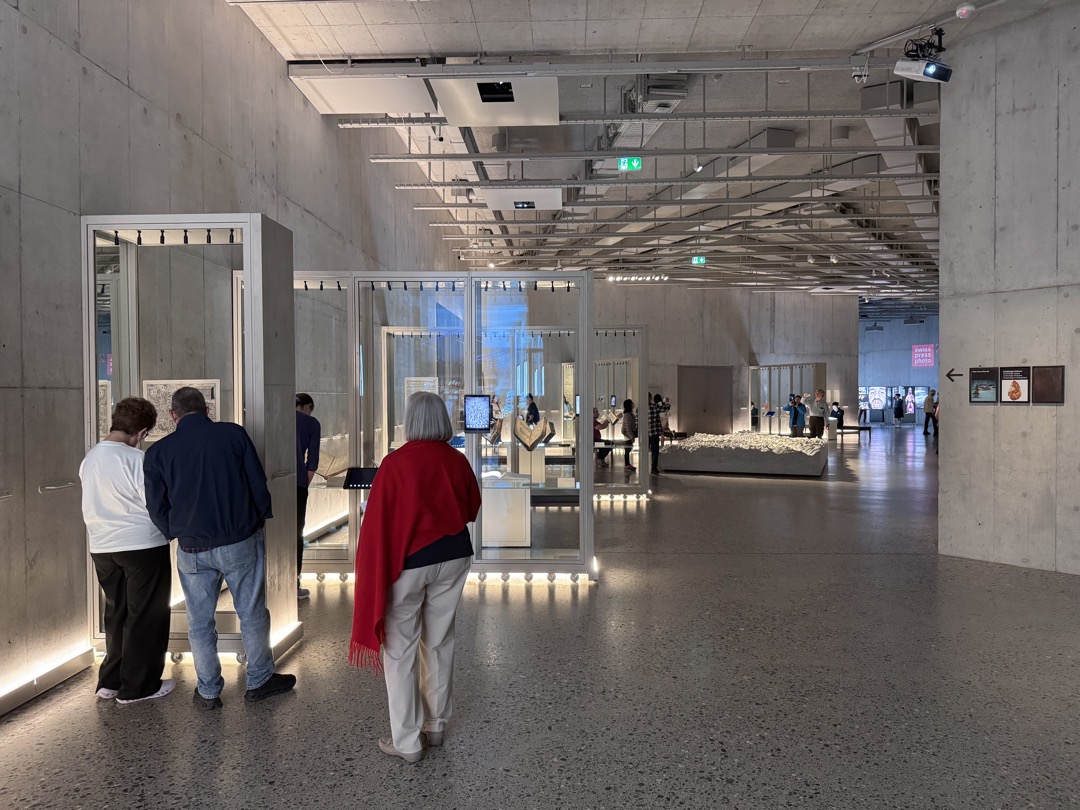
Rather than presenting Swiss history only as a sequence of political events, the museum explores how Swiss identity has been constructed through stories, documents, images, myths, and landscapes. William Tell appears not simply as a historical or legendary figure, but as a symbol of independence and resistance to oppression. Books, documents, and visual culture show how ideas of Switzerland were repeated and circulated.
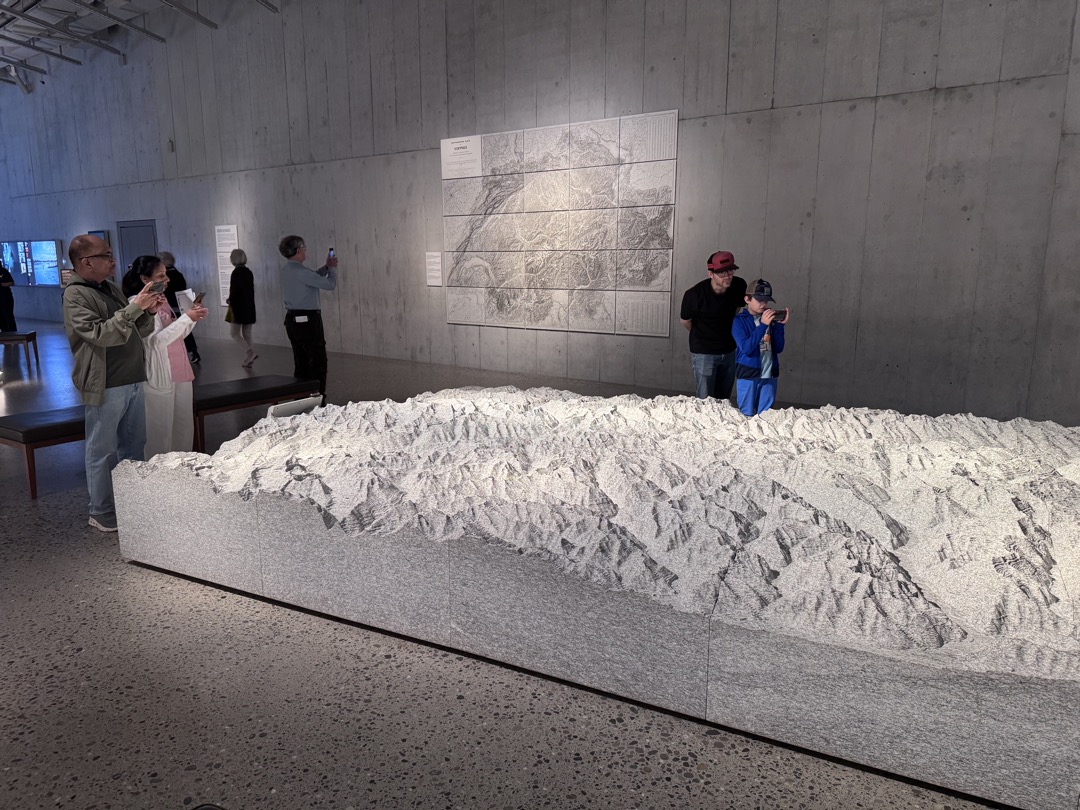
The large three-dimensional map of the Alps is especially revealing. In Switzerland, the Alps are not just geography. They are part of national identity, tourism, military imagination, environmental consciousness, and international reputation. Landscape became culture for the Swiss.
I found this intriguing because many history museums are more comfortable interpreting people and events than ideas. “Identity” is difficult to exhibit because it is abstract, contested, and constantly changing. I sense that visitors are enjoying the objects but missing the big idea about the Ideas.
I’m unsure how to improve upon it without visitor research. What do visitors understand by the end? Do they recognize that national identity is constructed? Do they see the relationship between myth, landscape, politics, and material culture? Or do they simply encounter a series of impressive objects associated with Switzerland?
Still, the ambition is admirable. Museums should be willing to interpret not only what happened, but how people come to believe that a nation, region, or community has a distinctive character.
Designing for Families at the Verkehrshaus
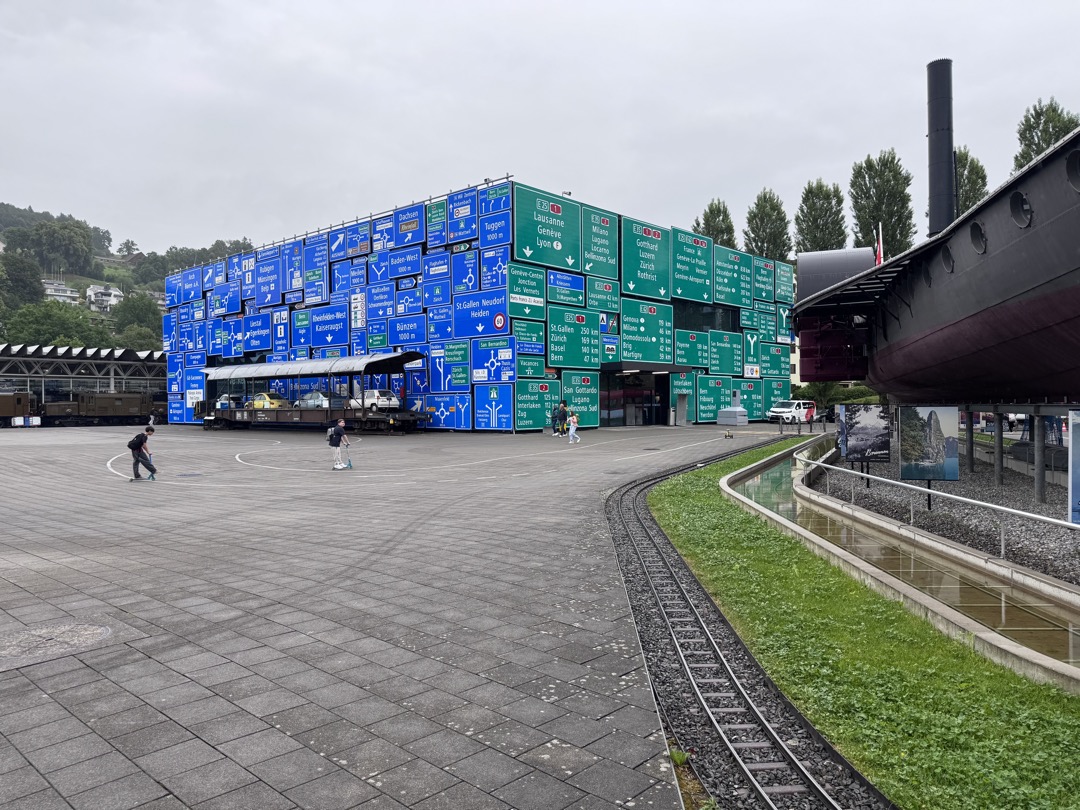
The Verkehrshaus der Schweiz (Swiss Museum of Transport) in Lucerne offers a different lesson. It is large, popular, expensive, and clearly successful with families. Interestingly, it does not consider itself a museum (hence Verkehrshaus or Transport House) but an “interactive experience centre featuring numerous attractions on the themes of traffic, transport and energy.” (Perhaps it should begin replacing the word “museum” in its publicity?) Its exhibitions are organized by transportation type—trains, cars, ships, planes—each housed in separate buildings and generally arranged chronologically.
That campus structure is one of the museum’s best ideas. It is exhausting to move through row after row of similar objects, especially in large technology and transportation museums. By separating exhibitions into different buildings, the Verkehrshaus requires visitors to go outside, reset their attention, and re-enter the museum with a refreshed mind. The Getty Center in Los Angeles uses a similar strategy effectively: movement between buildings becomes part of the visitor experience.
Inside the buildings, however, the museum’s real strength is not interpretation but activity. Visitors can view a locomotive from underneath, sit in a cable car, remove a tire from a racing car, follow model trains course through mountains, watch videos, climb into vehicles, and press buttons. For children under twelve, this is probably thrilling. For parents, it creates an active and safe environment where children can explore, touch, climb, and react.
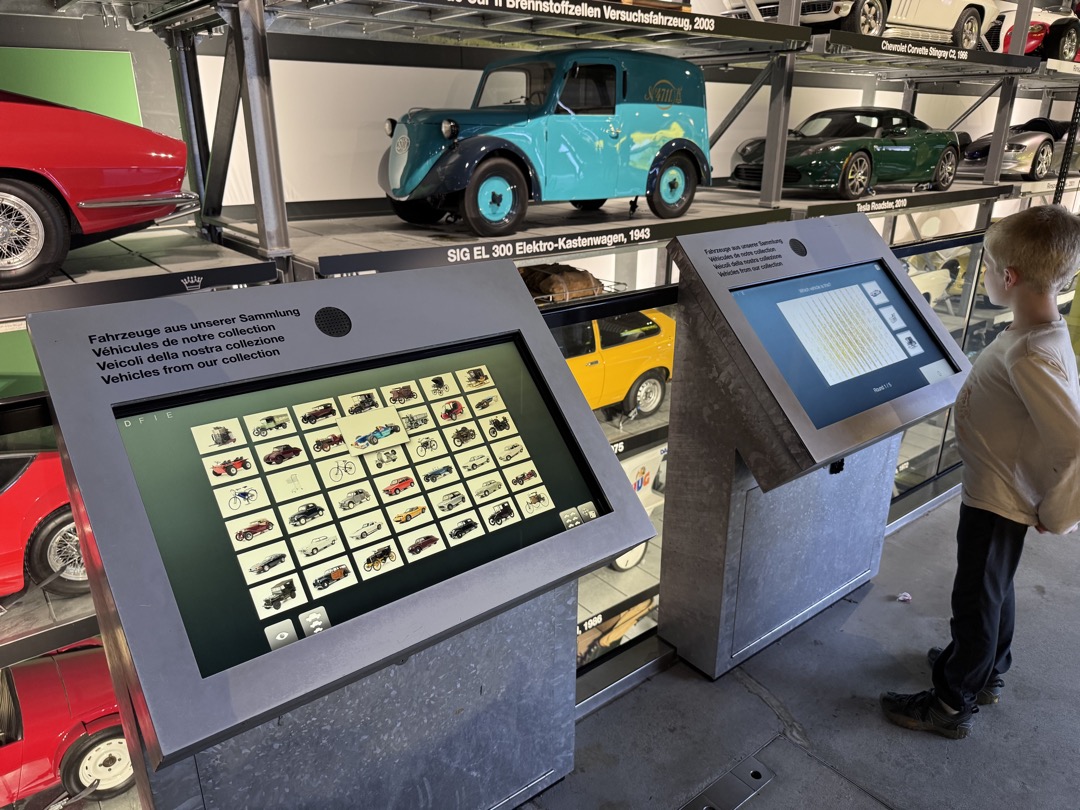
The museum does include some more traditional exhibitions with longer labels and fewer interactives, but these areas were largely empty of visitors during my visit. That matters. Visitors were not simply being denied deeper content; many seemed uninterested in exhibitions presented in that format. The museum’s audience was voting with its feet, and the liveliest areas were the most physical, interactive, and experience-driven.
In that context, it probably makes sense for the Verkehrshaus to lean into what it does best. It is primarily a museum for families with young children, and for that audience, basic identification and explanation may be sufficient. A child who can climb into a vehicle, look under a locomotive, or operate a mechanical activity may be gaining familiarity, confidence, curiosity, and delight. Those are legitimate outcomes.
Still, some comparison and analysis would strengthen the experience without undermining its appeal. The museum could ask simple but meaningful questions: How did trains change travel through the Alps? Why did cable cars matter to mountain communities and tourism? What made one vehicle faster, safer, cheaper, or more efficient than another? How did transportation reshape Swiss identity, labor, energy use, and the landscape?
These questions do not require long labels. They could be embedded in interactives, prompts, family challenges, or side-by-side comparisons. The goal would not be to turn the Verkehrshaus into a text-heavy museum, but to move some experiences from activity toward higher levels of thinking.
The larger concern is audience expectation. The museum’s promotional materials and website should be clear that this is primarily a museum for families with children under twelve. Adults visiting on their own may find it chaotic, noisy, and superficial. Teenagers may not want to spend a day surrounded by younger children. Visitors expecting a more analytical museum of transportation history may be disappointed.
That does not make the Verkehrshaus unsuccessful. It means the museum has a strong audience niche and should be honest about it. Its interpretive challenge is not to become something entirely different, but to add enough comparison, context, and analysis that family activities occasionally have higher educational rewards.
What Comes Next: From Topics to Themes
Across these museums, I saw evidence of a field in motion. Swiss history museums are moving beyond simple chronology and object identification, but many are still experimenting with what should come next.
The Bern Historical Museum shows how powerful a new interpretive layer can be. Its colonialism project makes overlooked relationships visible without requiring a complete reinstallation. Its Einstein exhibition shows how biography can be enriched by social, technological, religious, and scientific context.
The Landesmuseum Zürich demonstrates both the promise and difficulty of reinterpreting inherited collections and installations. Its period rooms are visually compelling but interpretively challenging. Its exhibition on Swiss identity takes on an ambitious abstract subject that would benefit from careful visitor research.
The Verkehrshaus shows the power and limits of audience-centered design. It understands families with young children extremely well, but its interactivity often produces activity more than analysis.
What seems largely missing is the next stage: stronger thematic interpretation.
Many of these museums have extraordinary collections. They have remarkable buildings, objects, documents, interiors, technologies, and stories. But the collections often need more unpacking. They need clearer arguments about why they matter, how they connect, and what visitors should know, feel, or do differently after encountering them.
History museums often begin with topics: transportation, Einstein, period rooms, national identity, colonialism. Topics are useful, but they are not the same as themes. A topic says what an exhibition is about. A theme says what the exhibition means. Chronology tells visitors what happened next. Interpretation helps them understand why it mattered.
For history museums and historic sites in Switzerland—and elsewhere—the most important questions may be less about what they have and more about what they want their visitors to know, feel, or do as a result of the experience.
The Swiss museums I visited are not all answering those questions fully yet. But some are beginning to ask them in thoughtful and imaginative ways that can inspire museums and historic sites in America.


