
Museums spend a lot of time thinking about how to ask people for support. We spend far less time thinking about what happens after someone says yes.
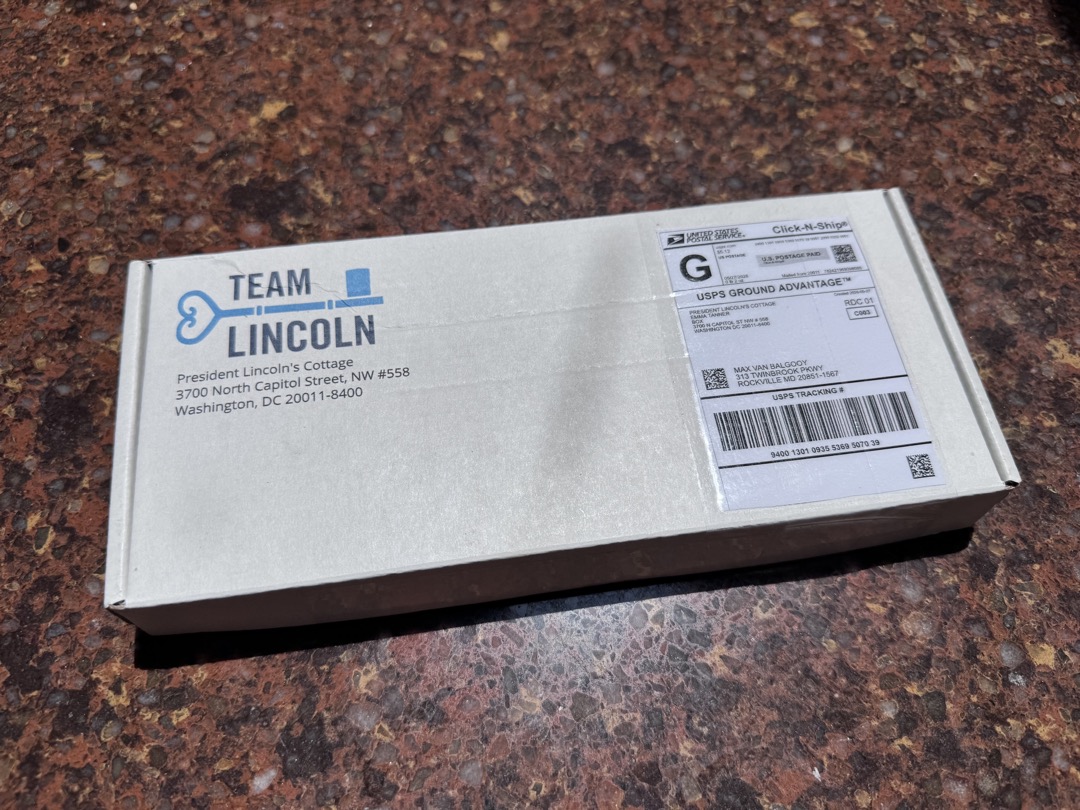
Recently, I made a gift to President Lincoln’s Cottage in Washington, D.C., in support of Students Opposing Slavery, a project I have long admired. Within a short time, a small box arrived in the mail. Before I even opened it, the package already looked intentional: a Team Lincoln logo with a blue accent on a sturdy thin white box. What could this possibly contain?
Inside the bold colors immediately jumped out as a surprise. Neatly laid out was a handwritten thank-you note, two enamel “Team Lincoln” pins, a card promoting the Cottage’s podcast, and a message welcoming me to Team Lincoln while restating the organization’s mission. It was simple, but it felt thoughtful, personal, and memorable.
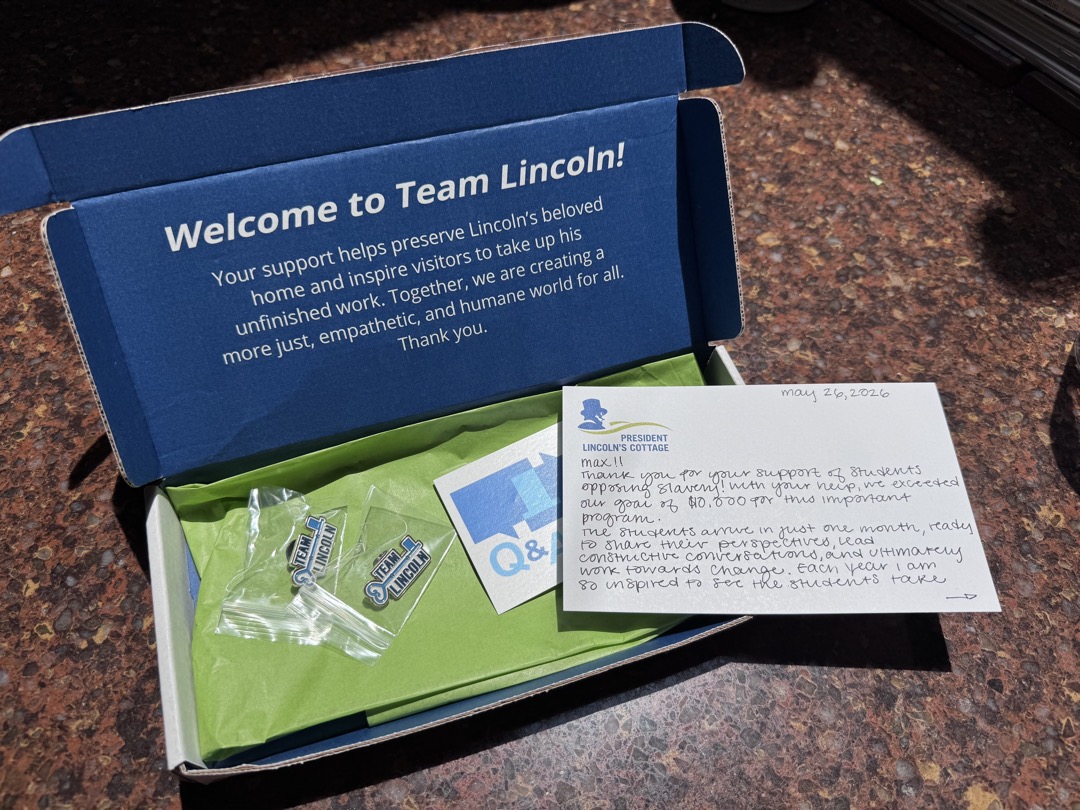
The handwritten note mattered most. In an age when donor acknowledgments are often generated from templates and word-processing systems, handwriting signals that an actual person took a moment to say thank you. That does not mean every museum needs to send a box or pins to every donor. But it does suggest that stewardship is not just a transaction. It is an opportunity to deepen a relationship.
What impressed me was how well the package connected gratitude, mission, and identity. The Cottage did not merely acknowledge the gift. It invited me into a community. “Team Lincoln” is a small phrase, but it gives donors a way to feel part of something larger than a financial contribution.
For museums and historic sites, this is the lesson: thank-you notes are not administrative chores. They are interpretive and relational moments. They can remind supporters why the work matters, show the personality of the organization, and make generosity feel seen.
President Lincoln’s Cottage turned a modest donor acknowledgment into a meaningful experience. That is good fundraising, but it is also good museum practice.

