

After writing about art museums and history museums in Switzerland, I still had a set of smaller observations that did not quite fit into either post. They are not really small, however. They shaped the visitor experience again and again.
After visiting more than fifty museums and historic sites across Switzerland, I found that some of the most revealing differences appeared not in the major exhibitions, but in the supporting details: models and miniatures, museum stores, souvenirs, and stairs.
These features affect how visitors understand buildings, remember their visits, and physically move through museum spaces. They also reveal how museums think about access, retail, interpretation, and audience needs.
Models and Miniatures
Swiss museums and historic sites make frequent and effective use of models and miniatures. At their best, these are not decorative add-ons or simplified versions for children. They are interpretive tools that help visitors understand things that are otherwise difficult to see.
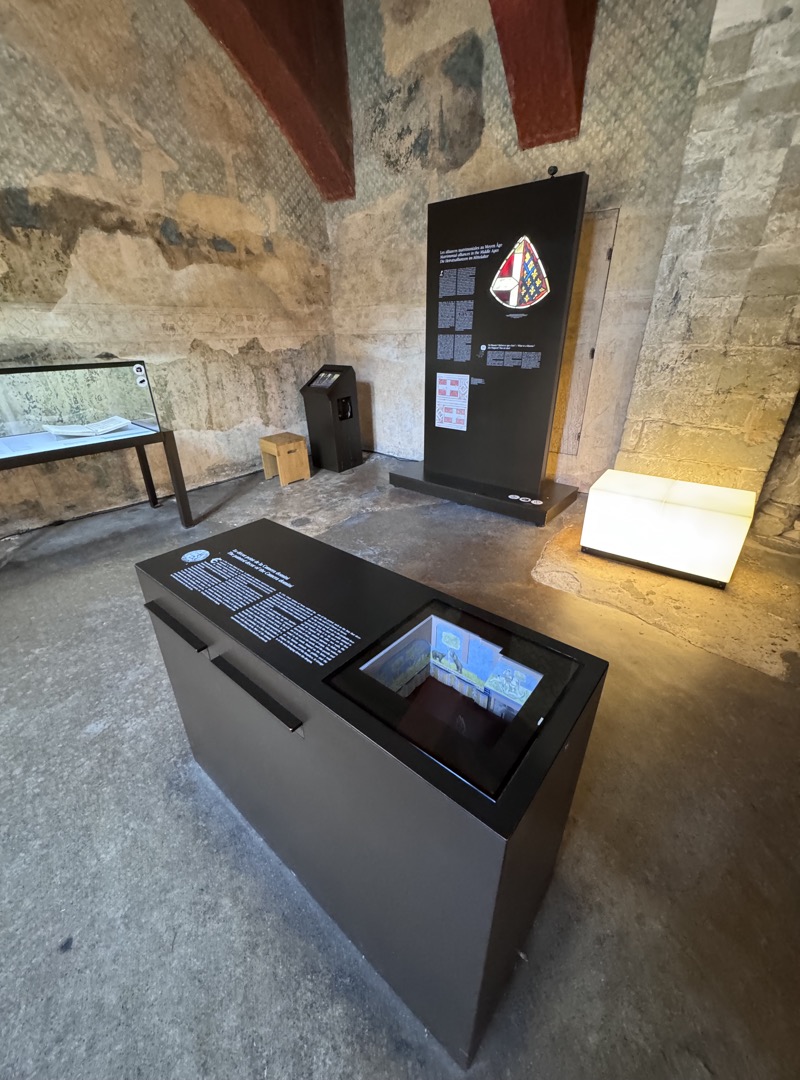
At Chillon Castle, a miniature showed how a room would have looked in the medieval period because the murals have faded over time. That is exactly the kind of interpretive problem a model can solve. The historic fabric is still present, but time has made it difficult to perceive. A miniature allows visitors to imagine the original visual effect without repainting, over-restoring, or asking visitors to make sense of nearly invisible evidence on their own.
At the Bern History Museum, miniatures recreated lost Bronze Age villages discovered through archaeology. Here again, the model fills a gap. Archaeological evidence is often fragmentary and technical. A miniature can translate postholes, artifacts, excavation plans, and scholarly reconstruction into something visitors can understand at a glance.

Models were also useful outside buildings. At the Grossmünster in Zürich, a bronze model presents the church in miniature. In a dense urban setting, it can be difficult to step far enough away to see a large cathedral or church as a complete form. Streets, surrounding buildings, construction scaffolding, and the scale of the structure itself prevent visitors from understanding the whole at once. A bronze model solves that problem by making the entire building visible and comprehensible.
The Grossmünster model also serves as a tactile orientation tool for blind or low-vision visitors, with interpretive labeling specifically designed for that purpose. It suggests how architectural models can support multiple forms of access: visual orientation, spatial comprehension, and tactile exploration.
The larger lesson is simple: models are not childish. Used well, they make the invisible, missing, distant, damaged, or complex understandable.
American museums and historic sites could use them more often, especially when interpreting ruins, archaeological sites, altered buildings, landscapes, inaccessible spaces, or historic interiors that have lost much of their original appearance. It is a far less expensive alternative to restoration and nearly as effective for interpretation.

Museum Stores: Familiar, but Different
Swiss museum stores looked familiar in many ways. Like museum shops in the United States, they offered books, postcards, greeting cards, children’s items, design objects, and gifts. But some differences stood out.
One surprise was the sale of alcohol. At the Landesmuseum Zürich, the museum store sold dozens of Swiss-made gins, whiskies, grappas, absinthes, vermouths, and amaros. This may reflect different retail norms and a stronger connection to regional food and drink culture, but it was still unexpected from an American museum perspective. At the Verkehrshaus in Lucerne, there was even a bar serving alcohol. By the afternoon, it was very busy with parents, which was perhaps not surprising in a large, noisy, highly interactive museum filled with children. After three hours, I wanted a drink, too.
More disappointing were the generic souvenirs. Many museum stores sold the same material found in ordinary Swiss souvenir shops: Swiss flag keychains, Victorinox knives, inexpensive Swiss watches, Lindt chocolates, and small tourist trinkets. These items may sell, but they rarely connect meaningfully to the museum’s mission, collections, or site.
A museum store should do more than capture tourist spending. At its best, it extends the museum’s identity. It helps visitors remember what was distinctive about the place they visited.
That is why the most successful souvenirs were not the generic Swiss products, but the ones that connected Switzerland, design, collecting, and a specific museum or historic site.

Zero-Franc Souvenirs
One of the most interesting souvenirs I encountered was the zero-franc note.
These souvenir banknotes are denominated at zero francs, but they borrow the format, quality, and visual language of Swiss currency. Since Swiss banknotes are among the most beautifully designed in the world, this is a strong foundation. The souvenir versions use that familiar form but include an engraved image of a museum, cathedral, castle, or historic site.
I saw them at Chillon Castle, the cathedral in Lucerne, and several other larger historic sites. They usually cost only a few francs, making them affordable, collectible, lightweight, and easy to take home.
What makes them successful is that they are both broadly Swiss and site-specific. Unlike a generic keychain or chocolate bar, a zero-franc note connects to the country’s visual culture while also marking a particular place. It feels like a souvenir that belongs in Switzerland rather than something that could be sold anywhere. I wish I had bought more of them.
They offer a useful lesson for museum stores everywhere. The best souvenirs connect three things at once: the museum, the place, and the visitor’s desire to remember the experience.
Enamel Pins and Collecting Habits
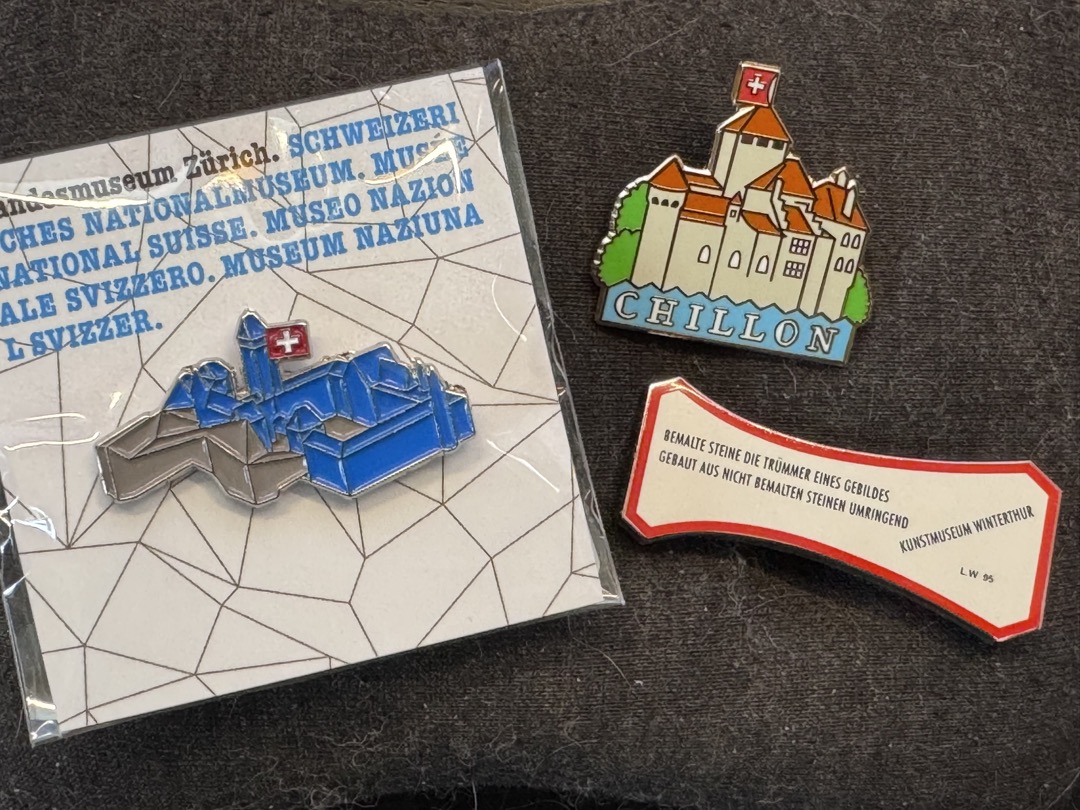
One small disappointment was the relative absence of enamel pins. They are common in many museum stores in the United States and I collect them, so I noticed their scarcity in Switzerland.
This is not a major issue, but it does point to differences in museum retail culture. American museum stores often carry small collectible identity objects: pins, patches, stickers, magnets, and similar items. Swiss museum stores seemed less focused on enamel pins, at least in the places I visited.
Instead, the zero-franc notes seemed to serve some of that collectible function. They were inexpensive, distinctive, and easy to accumulate across multiple sites.
Too Many Stairs
The most frustrating recurring feature of Swiss museums was stairs. Of course, stairs are expected in historic buildings. Castles, towers, old houses, churches, and medieval urban sites were not designed for modern accessibility. But what surprised me was the frequency of unnecessary stairs in museums, including recent additions and new exhibitions.
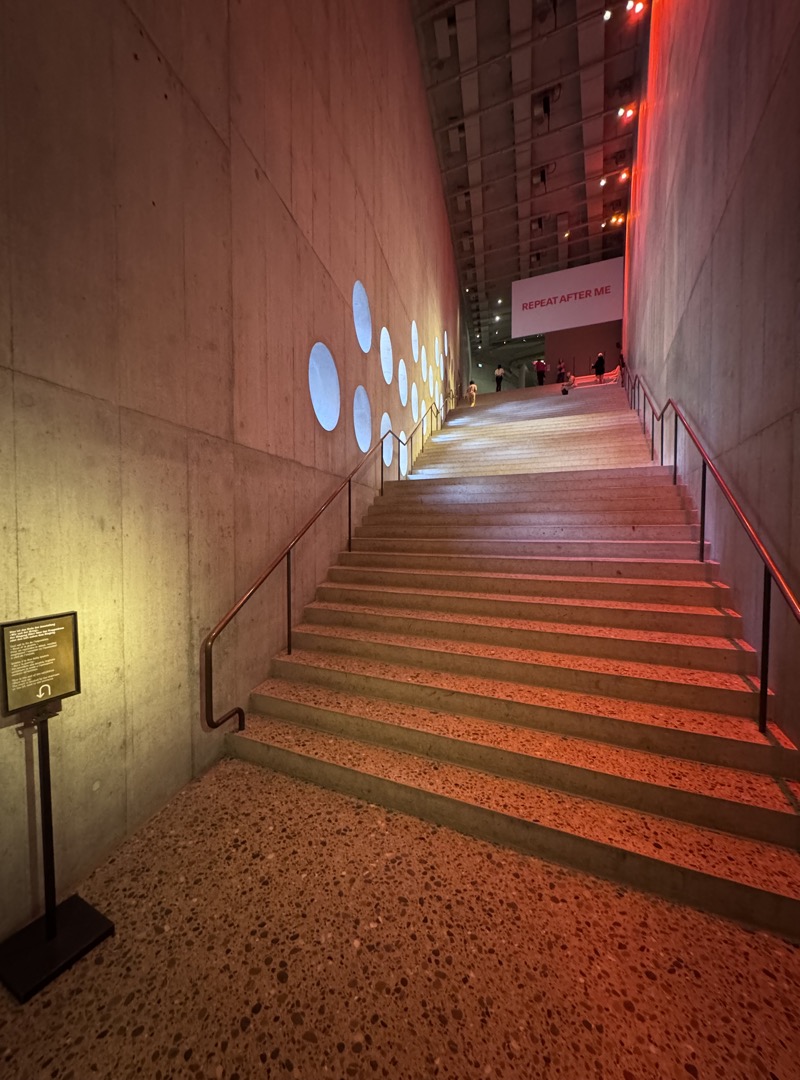
At the Landesmuseum Zürich, stairs were particularly common and annoying. Even the new addition includes a dramatic three-story stairway leading to a relatively modest exhibition gallery. After making the climb, the destination felt underwhelming. The stairway seemed to be making an architectural statement rather than improving the visitor experience. Note to architects: your design should impress visitors, not inconvenience them.
Elevators were usually available nearby, but they were not always easy to locate. That distinction matters. Accessibility is not only the presence of an elevator somewhere in the building. It is whether the accessible route is obvious, respectful, convenient, and integrated into the primary visitor experience.
Thun Castle offered another example. The castle recently installed a new permanent exhibition on its history, but the exhibit cases are placed in the center of the room on a platform about six inches high. Most likely, the platform was used to bring electricity to the cases for lighting. But from a visitor perspective, it created an unnecessary tripping hazard. Each time I approached a case, I had to remember to watch my feet rather than the objects on display.
This is where Swiss museums often felt behind current expectations in the United States. American museums and historic sites are far from perfect, but decades of ADA compliance and accessibility advocacy have changed the standard. Increasingly, the expectation is not simply that an alternate route exists, but that the primary visitor route should be accessible whenever possible.
The problem is not that historic buildings have stairs. The problem is that recent museum design still seems too comfortable treating stairs as normal and elevators as secondary. Universal design asks a different question: how can the museum create a common route that works well for as many visitors as possible from the beginning?
In Swiss museums, the answer too often seemed to be: stairs first, elevator somewhere nearby.
Details Are Interpretation Too
Models, museum stores, souvenirs, and stairs may seem like secondary matters compared with exhibitions and collections. But they strongly shape how visitors experience museums and historic sites.
A model can make a vanished village or faded mural understandable. A bronze miniature can help visitors grasp the form of a cathedral they cannot see from a distance. A museum store can either reinforce the identity of a place or fall back on generic tourist merchandise. A souvenir can be forgettable or brilliantly connected to national design and local memory. A stairway can create drama, but it can also create fatigue, exclusion, or frustration.
These details matter because museums are not experienced only through labels and objects. They are experienced through movement, orientation, comfort, memory, and surprise.
Swiss museums often excel at preservation, craftsmanship, and the care of historic fabric. They also use models and miniatures in ways that many American museums could learn from. Their zero-franc souvenir notes are among the smartest museum souvenirs I encountered.
But when it comes to universal design, many museums still have work to do. Stairs should not be the default assumption, especially in new work. Accessibility should be part of the main experience, not an alternate route.
After fifty museum visits, these details stayed with me. They reminded me that visitor experience is built from many small decisions. Some clarify, some delight, and some get in the way.

