Category Archives: Architecture

Walking Through Two Eras at the Harriet Beecher Stowe House

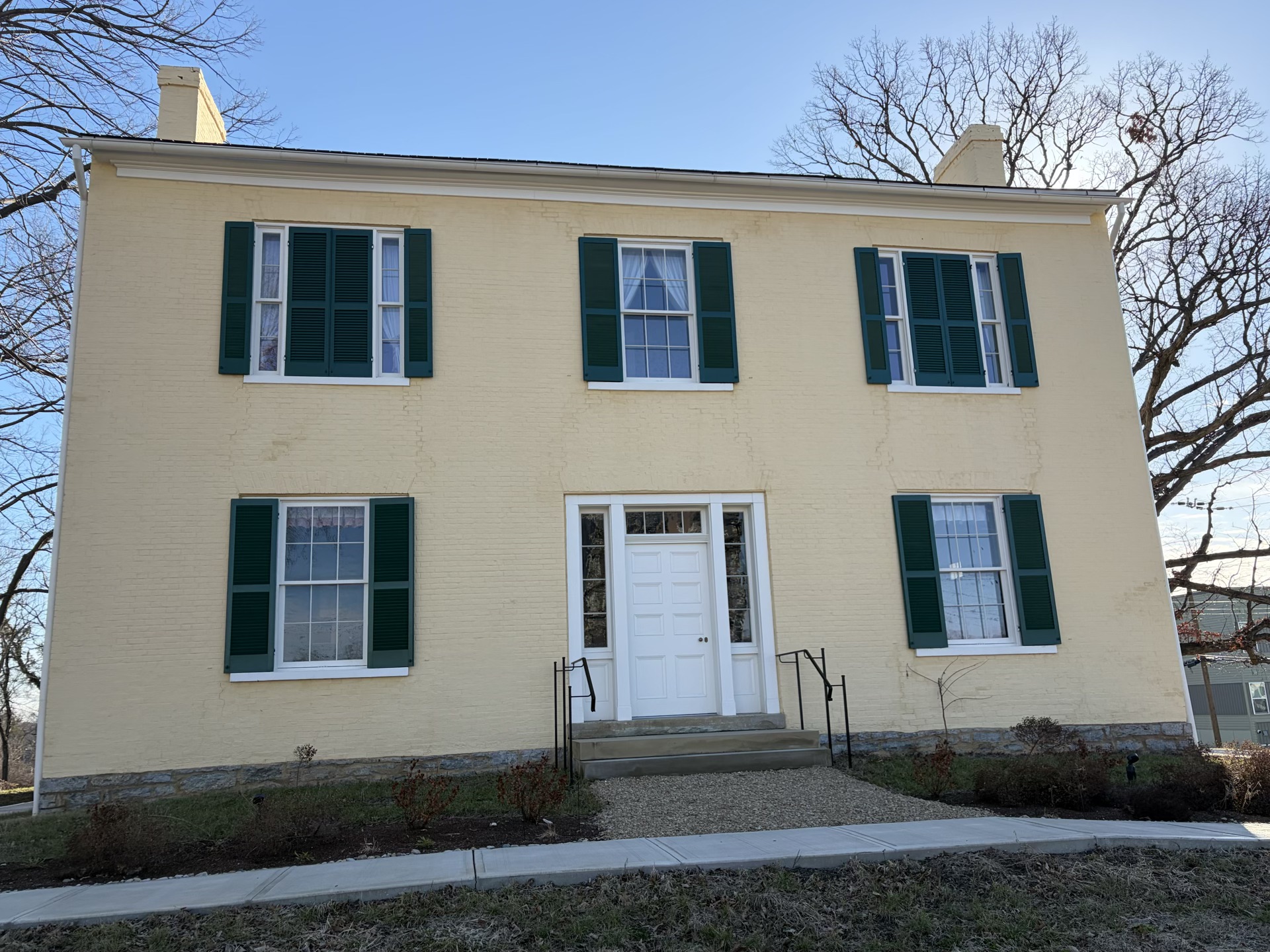
The Harriet Beecher Stowe House in Cincinnati, Ohio, following completion of its 2 Era Restoration. The project interprets both the Beecher family residence and the later Edgemont Inn period, revealing the building’s evolving role in the community across generations.

When I visited the Harriet Beecher Stowe House in Cincinnati, Ohio this February, I expected to learn more about Harriet Beecher Stowe’s years in the city and how her experiences there influenced the writing of Uncle Tom’s Cabin. What I did not expect was to come away thinking as much about the building itself as the woman who once lived there.

The Harriet Beecher Stowe House recently completed what it calls a two-era restoration, interpreting both the Beecher family period (1840) and the later Edgemont Inn period (1940). At first, I wondered whether trying to tell two stories in one house might feel confusing. Instead, I found it to be one of the project’s greatest strengths.

The tour begins with Harriet Beecher Stowe, her family, and the Cincinnati she encountered in the 1830s and 1840s. Visitors learn about Lane Seminary, debates over slavery, the city’s free Black community, and the experiences that shaped Stowe’s understanding of freedom and injustice. These stories unfold in rooms restored to the Beecher era, allowing visitors to imagine the world she experienced as a young wife, mother, and writer living in Cincinnati.

What impressed me most, however, was how the restoration itself became part of the interpretation.

Continue reading

When Museums Become Backdrops: Managing Commercial and Media Photography

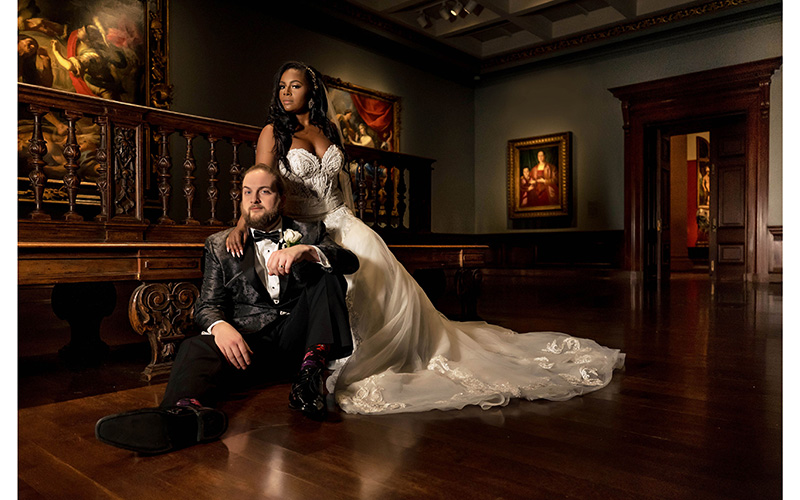
Wedding photo taken at the Cincinnati Museum of Art. Credit: Sherri Barber Photography.

In the previous post in this series, I looked at visitor photography policies: whether visitors can take pictures, where they can take them, what equipment they can use, and how museums distinguish casual personal photography from behavior that disrupts the visitor experience. But there is another side to museum photography policies.

When photography moves beyond ordinary visitor memory-making, the questions become more complicated. A museum gallery, historic house, a picturesque barn, sculpture garden, or historic landscape can quickly become a backdrop for someone else’s project: a wedding shoot, fashion session, graduation portrait, influencer campaign, documentary film, news segment, advertisement, stock photography shoot, or corporate video. That shift changes the issue. The question is no longer simply, “Can I take a picture?” It becomes: who benefits from the image, what resources are being used, what risks are created, and how is the museum’s name, space, collection, or reputation being presented?

As with the earlier posts, this is not a scientific or comprehensive study. I reviewed a selection of commercial, media, and photography policies from museums and historic sites to identify patterns in current practice. I am not a lawyer, and this is not legal advice. Museums should consult an attorney when developing policies involving copyright, releases, insurance, contracts, filming agreements, or commercial use. My interest here is in how these policies reflect museum management, visitor experience, institutional risk, and revenue. Just a warning: this is a loooong post because of the complexity of this topic—and I’ll only be touching the surface.

From Visitor Photography to Site Use

The most useful distinction is between photographing a museum and using a museum as a setting. A visitor photographing a child in a gallery, a favorite object, a historic room, or a garden path is usually documenting a visit. A photographer staging an engagement session, fashion shoot, commercial, product video, or sponsored social media post is using the museum as a resource. Those are different activities. They require different policies.

Continue reading

The Mid-Century Ranch House: Mary van Balgooy Shares Its History on Marketplace

Mary van Balgooy, vice president of Engaging Places, shared a brief history of the ranch house in America on Marketplace today. The ranch house was one of the most prolific housing styles of the mid-twentieth century, and Mary is one of the nation’s leading experts on Cliff May, the designer behind more than 3,000 homes in the U.S. who played a pivotal role in popularizing this style with the help of Sunset and House Beautiful magazines. Mary has authored two influential articles on Cliff May (here and here), one of which earned the Doyce Nunis Award from the Historical Society of Southern California, and a lengthy series of blog posts at Xamary.

Hosted by Kai Ryssdal, Marketplace provides essential context on the day’s economic news through stories, conversations, and data, helping listeners make sense of the economic landscape. The show reaches more than 11.7 million listeners each week across 800 public radio stations nationwide, with an additional 2.3 million listeners tuning in via podcasts.

On the Road: Newport Summer School

We’re now at the midpoint of the Newport Summer School and by the end of each day, we all share sore feet and stiff backs—except for Richard Guy Wilson, the director of the program. He may be in his 80s, but he has a bottomless reserve of energy.

Participating in the course are a wide range of interests. We have a couple people who lead historic preservation organizations and a couple more who are in graduate school and getting ready to enter the field. We have a handful who work with historic sites, including Edith Wharton’s The Mount, National Park Service, and Lisbon Cathedral. A couple of interior designers and a few who don’t work in the field but love the art and architecture of the 19th century. Ages stretch from early 20s to late 60s.

The diversity of interests and experiences makes for fun conversations and as several noted, can feel comfortable “nerding out” about a preservation issue or an architectural feature. But I’ve also discovered the value of the program—and it varies. Everyone wants to learn about 19th century architecture in Newport, which has an extraordinary collection by some of America’s best architects and interior designers. The combination of illustrated lectures and field sessions allows us to see a lot in a very short time. For graduate students, it creates a foundation of knowledge that will inform their studies and careers. For mid-career professionals, it provides comparisons for our projects and communities, broadening our perspectives. Perhaps more importantly, it also “feeds our soul,” providing a much needed break from the demands of the office while refreshing our passions.

Today we head north to Providence, starting earlier and returning later than usual, so I expect another exhausting day. But it will be worth it.

On the Road: Gilded Age Newport in Color

I’m in Newport, Rhode Island for the Newport Summer School. The Victorian Society in America (an offshoot of the one in London) has been hosting this week-long program for 42 years. Directed by Dr. Richard Guy Wilson, a well-recognized expert in the field of architectural history, it is a mix of lectures and guided tours of significant houses, churches, and civic buildings that are both open to the public and private. In a week, you gain a deep understanding of the history of Newport through architecture—and a network of new colleagues.

Our first day was devoted to the 18th century, considered Newport’s first Golden Age because it brought new wealth to the town and a higher level of architectural design. That wealth came from trade, including enslaved people, a topic that is increasingly being addressed in the interpretation at historic sites and museums.

Indeed, the Rhode Island Black Heritage Society, Newport Historical Society, and the Preservation Society of Newport County are collaborating on exhibitions on the history and contributions of African Americans in the region. Before we officially began the course, Soni Stokes, curator of the exhibition, generously gave me and a small group of colleagues a tour of “Gilded Age Newport in Color” at Rosecliff, one of the mansions owned by the Preservation Society. It discusses the lives of dozens of people and families of African heritage through geography, biography, and topics such as business, entrepreneurship, religion, recreation, and politics. What most impressed me was the variety of documents and objects in the exhibition, most on loan from a private collection, giving me a much more holistic view into the lives of African Americans in New England.

Studying House Museums in Newport and London

The Newport Summer School visiting one of the many historic houses in Newport, Rhode Island. Source: Victorian Society of America.

George Washington University recently awarded me a semester-long sabbatical for fall 2024, which will give me a break from teaching in the museum studies program and allow me to more actively pursue my interests in:

  • the early history of house museums to better understand their formation and evolution of interpretive practices;
  • the interpretation of house museums; and
  • the management of historic sites, especially in strategy and leadership to move performance up to the next level or respond to an ever-changing environment.

For a deep dive into these topics, I’m delighted that I’ve been selected for two prestigious programs:

  • In June, I will be in Newport, Rhode Island attending the Victorian Society’s Summer School. Over ten days, our class will explore four centuries of American architecture, art, culture, and landscape guided by renowned architectural historian Dr. Richard Guy Wilson. The program will delve into Newport’s rich history, often referred to as the “Queen” of American resorts, and includes exclusive tours of private homes, behind-the-scenes access to America’s grandest mansions, and insightful presentations by leading scholars.
  • In September, I will be in England for Royal Collection Studies, organized by The Attingham Trust for the Study of Historic Houses and Collections. This ten-day residential course in Windsor provides extraordinary access to one of the world’s leading collections of fine and decorative art, all housed within the grand architecture of the royal palaces. The course combines lectures and tutorials, visits to both occupied and unoccupied palaces in and around London, and close-up object study, aiming to give heritage sector professionals a deeper understanding of this remarkable collection.

If you’re working in a house museum or historic site, these specialized residential mid-career courses are both incredibly educational and refreshing. Participating in the Attingham Summer School in 2008 significantly enriched my scholarship, and fifteen years later I continue to draw upon the principles and practices learned during our site visits and insightful discussions. You’ll find a professional development experience for nearly any interest or length of time, and many offer scholarships. For example, if you’re seeking a course more focused on management, consider the History Leadership Seminar or the SEMC Leadership Institute (it appears that the [Getty] Museum Leadership Institute is no longer operating).

And alas, this schedule also means that my plans for attending the AASLH Annual Meeting in September will be postponed to 2025 in Cincinnati, Ohio. And if I don’t see you there, I hope it’s because you’ll be participating in an incredible professional development opportunity (remember to apply 6-8 months in advance!).