
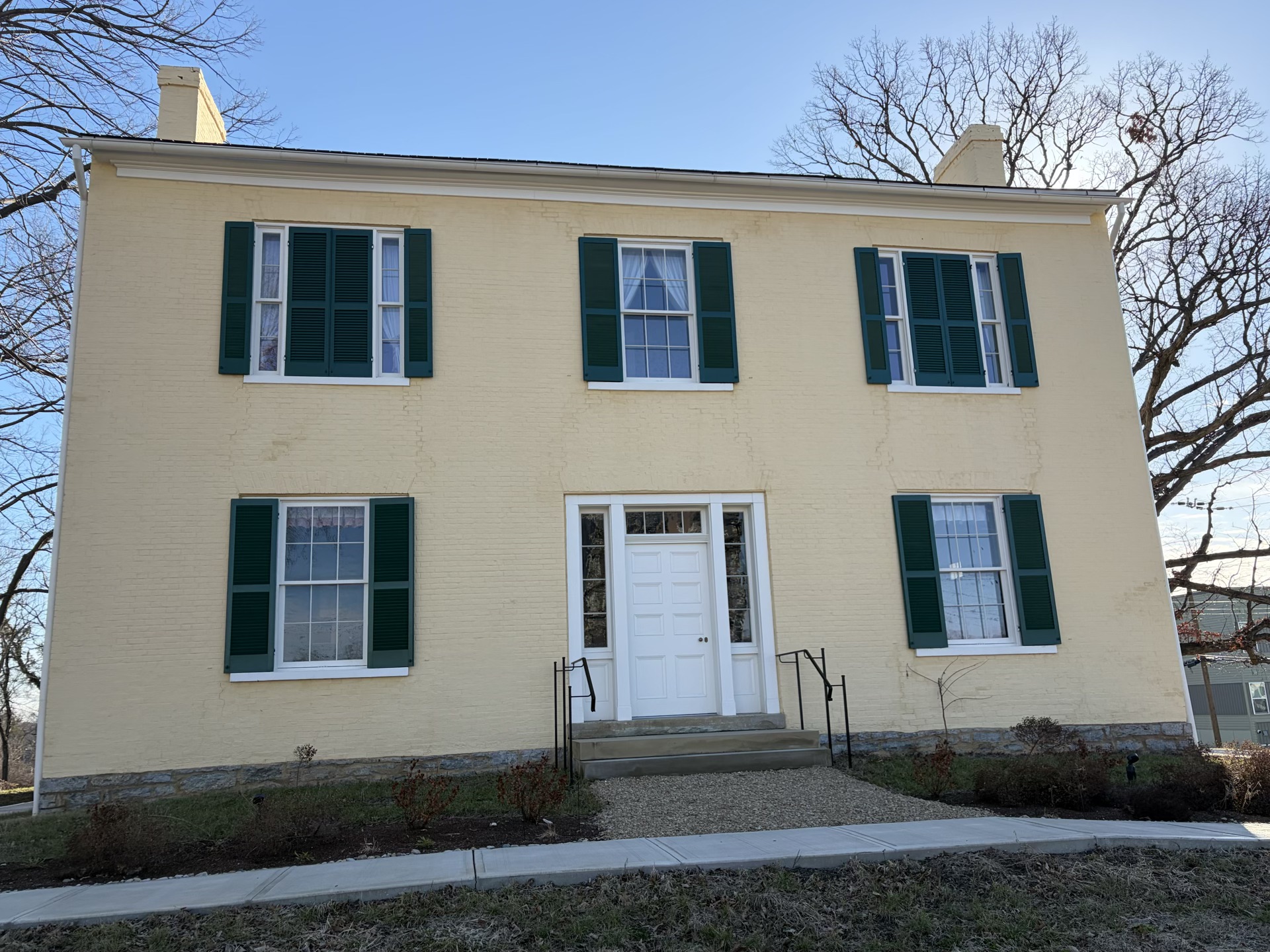
When I visited the Harriet Beecher Stowe House in Cincinnati, Ohio this February, I expected to learn more about Harriet Beecher Stowe’s years in the city and how her experiences there influenced the writing of Uncle Tom’s Cabin. What I did not expect was to come away thinking as much about the building itself as the woman who once lived there.
The Harriet Beecher Stowe House recently completed what it calls a two-era restoration, interpreting both the Beecher family period (1840) and the later Edgemont Inn period (1940). At first, I wondered whether trying to tell two stories in one house might feel confusing. Instead, I found it to be one of the project’s greatest strengths.
The tour begins with Harriet Beecher Stowe, her family, and the Cincinnati she encountered in the 1830s and 1840s. Visitors learn about Lane Seminary, debates over slavery, the city’s free Black community, and the experiences that shaped Stowe’s understanding of freedom and injustice. These stories unfold in rooms restored to the Beecher era, allowing visitors to imagine the world she experienced as a young wife, mother, and writer living in Cincinnati.
What impressed me most, however, was how the restoration itself became part of the interpretation.
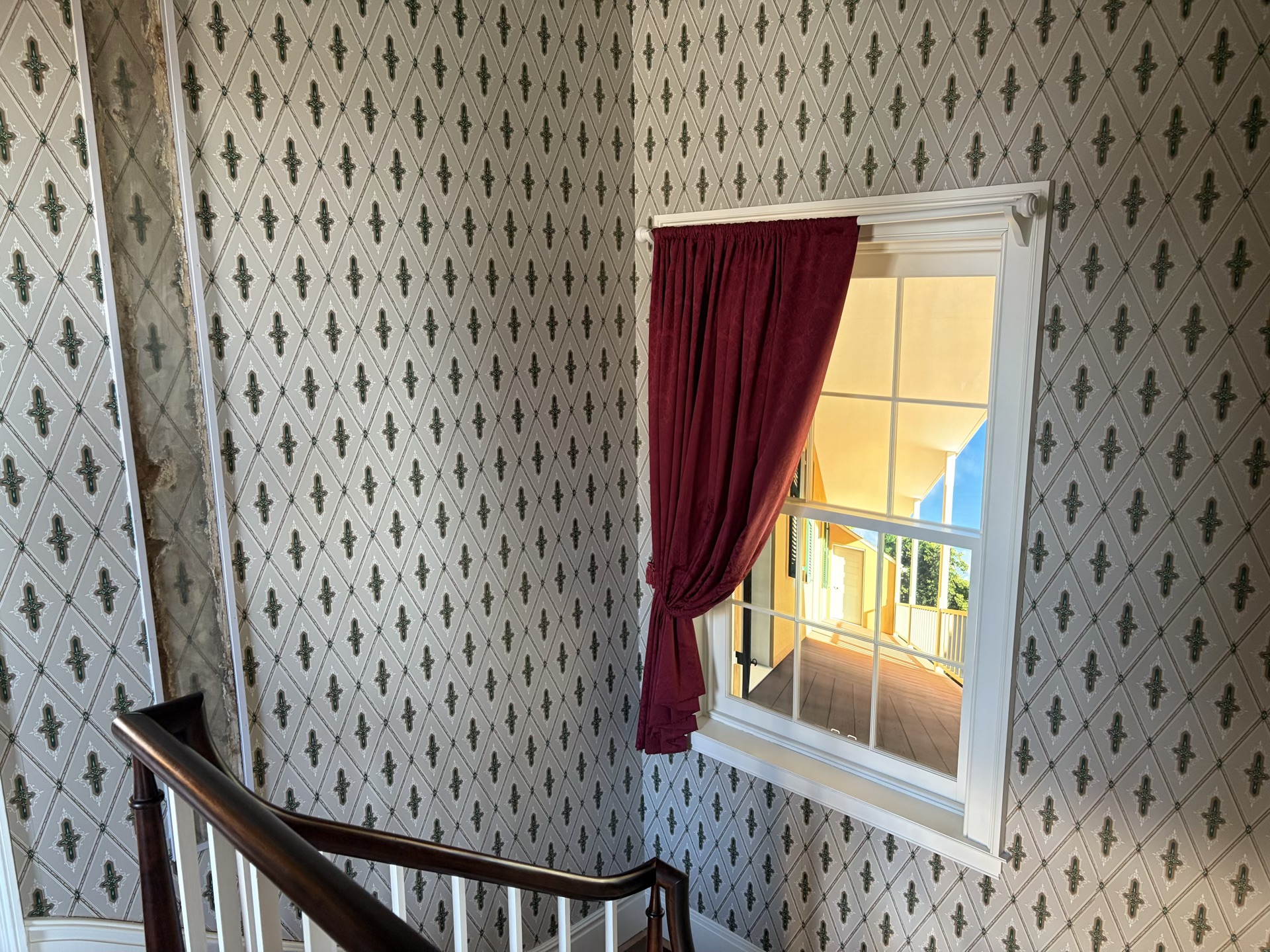
Throughout the house, guides point out physical evidence uncovered during restoration. A reconstructed staircase helps visitors understand the original circulation pattern of the house. Fragments of historic wallpaper informed the recreation of finishes. In one room, a faux window marks what was once an exterior wall before later additions changed the building’s footprint. These details do more than showcase restoration work; they help visitors understand how historians and preservationists read a building for clues about its past.
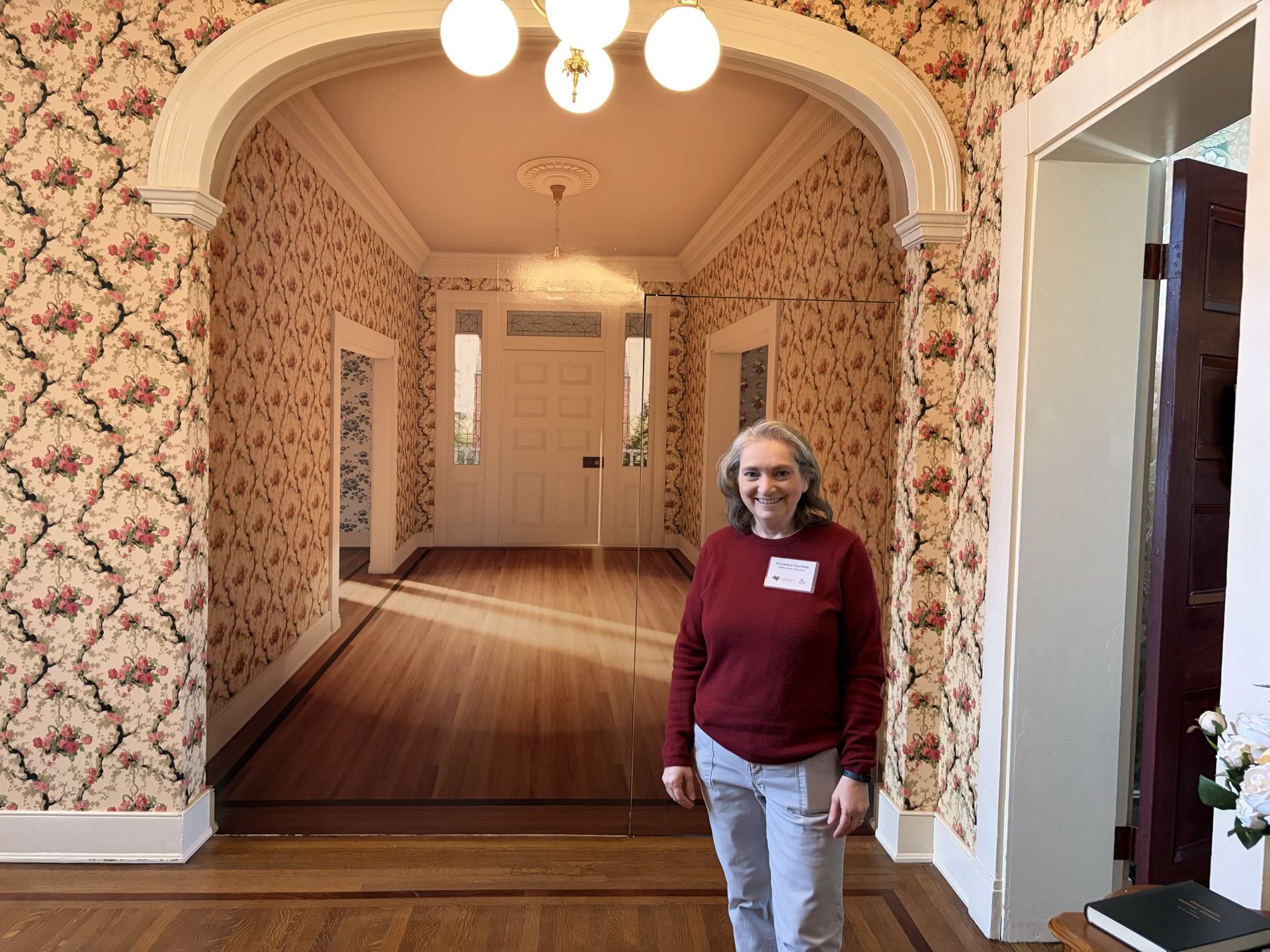
One particularly effective feature is a photo mural that helps visitors visualize the boarding house portion of the structure and imagine spaces that no longer exist in their original form. Combined with faux windows, these interpretive devices help visitors see the building not as a static artifact, but as a place that evolved over time.
The transition from the Beecher era to the Edgemont Inn era is remarkably smooth. Rather than feeling like a separate exhibit, the later history emerges naturally as visitors move into the twentieth-century portions of the building. The physical act of walking through the addition reinforces the story being told.
Here the focus shifts from a famous author to a broader community. The Edgemont Inn served African American travelers and residents during segregation and appeared in The Negro Motorist Green-Book, a guidebook that helped African Americans identify businesses where they could find lodging, meals, and other services while traveling.Through census records, photographs, newspaper accounts, and reconstructed interiors, visitors are introduced to the people who lived, worked, and gathered here decades after Harriet Beecher Stowe left Cincinnati.
Many historic house museums stop telling their story when their famous resident departs. What struck me about the Harriet Beecher Stowe House is its willingness to embrace what came next.
The result is a richer understanding not only of the building, but of Cincinnati itself. Visitors encounter a nineteenth-century story about abolition, reform, and literature, alongside a twentieth-century story about Black entrepreneurship, community, and opportunity. Both are important and both happened here.
As I left the site, I found myself thinking less about a single individual and more about the many people who passed through this house over nearly two centuries. The restoration allows visitors to see those layers rather than choosing one moment at the expense of another.
That achievement is not easy. It requires careful research, thoughtful restoration, and a tour experience that helps visitors move comfortably between different periods and perspectives. The Harriet Beecher Stowe House accomplishes all three. After seeing the project firsthand, it is easy to understand why it received AASLH’s Award of Excellence. More importantly, it demonstrates how a historic house can tell a larger and more inclusive story when it allows the building’s full history to be seen.

