
Tag Archives: The House of the Seven Gables Settlement Association

What Six Historic House Museums Taught Me About Place

Whenever I travel, I try to visit historic sites that interpret women’s history. This summer, while traveling through New England, I had the opportunity to visit six historic house museums associated with remarkable women: the Harriet Beecher Stowe Center, the Emily Dickinson Museum, Louisa May Alcott’s Orchard House, the House of the Seven Gables, Historic Deerfield’s Frary House, and the Florence Griswold Museum.

Years of visiting historic sites have led me to pay as much attention to how museums interpret history as to the history itself. I rarely experience these tours simply as a visitor. I find myself paying attention to the choices guides make, the stories they emphasize, the evidence they use, and the ways they connect people to place. Each museum approached interpretation differently, reflecting its own mission, history, and collections.
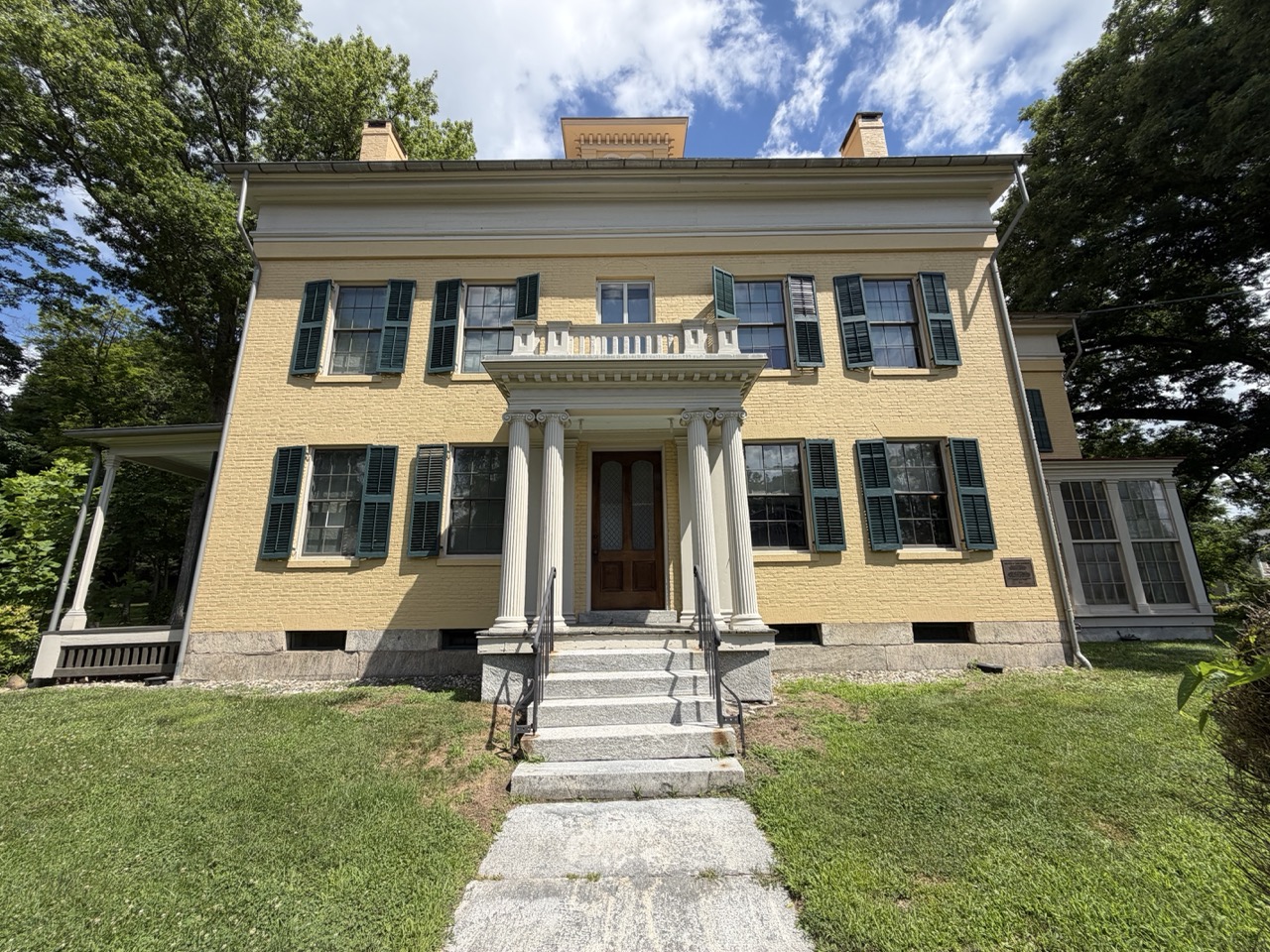
The Dickinson Homestead in Amherst, Massachusetts.

The Emily Dickinson Homestead was one of the strongest examples. Rather than treating the house as the place where Dickinson happened to live, the guide used each room to explore her intellectual life. Her poetry, education, family relationships, and creative choices were woven together through the spaces of the house. By the end of the tour, I wanted to read more Emily Dickinson—not because I felt I should, but because the interpretation had made me curious about the remarkable mind behind the poems.

Louisa May Alcott’s Orchard House took a similarly thoughtful approach while reaching a different conclusion. Instead of focusing exclusively on Louisa, the tour revealed an entire household alive with writing, theater, art, education, reform, and conversation. The house demonstrated that Little Women did not emerge from the imagination of an isolated writer but from the creative life of an extraordinary family. The rooms themselves became evidence of that larger story.

Continue reading
The House of the Seven Gables: More Than a Historic House Museum

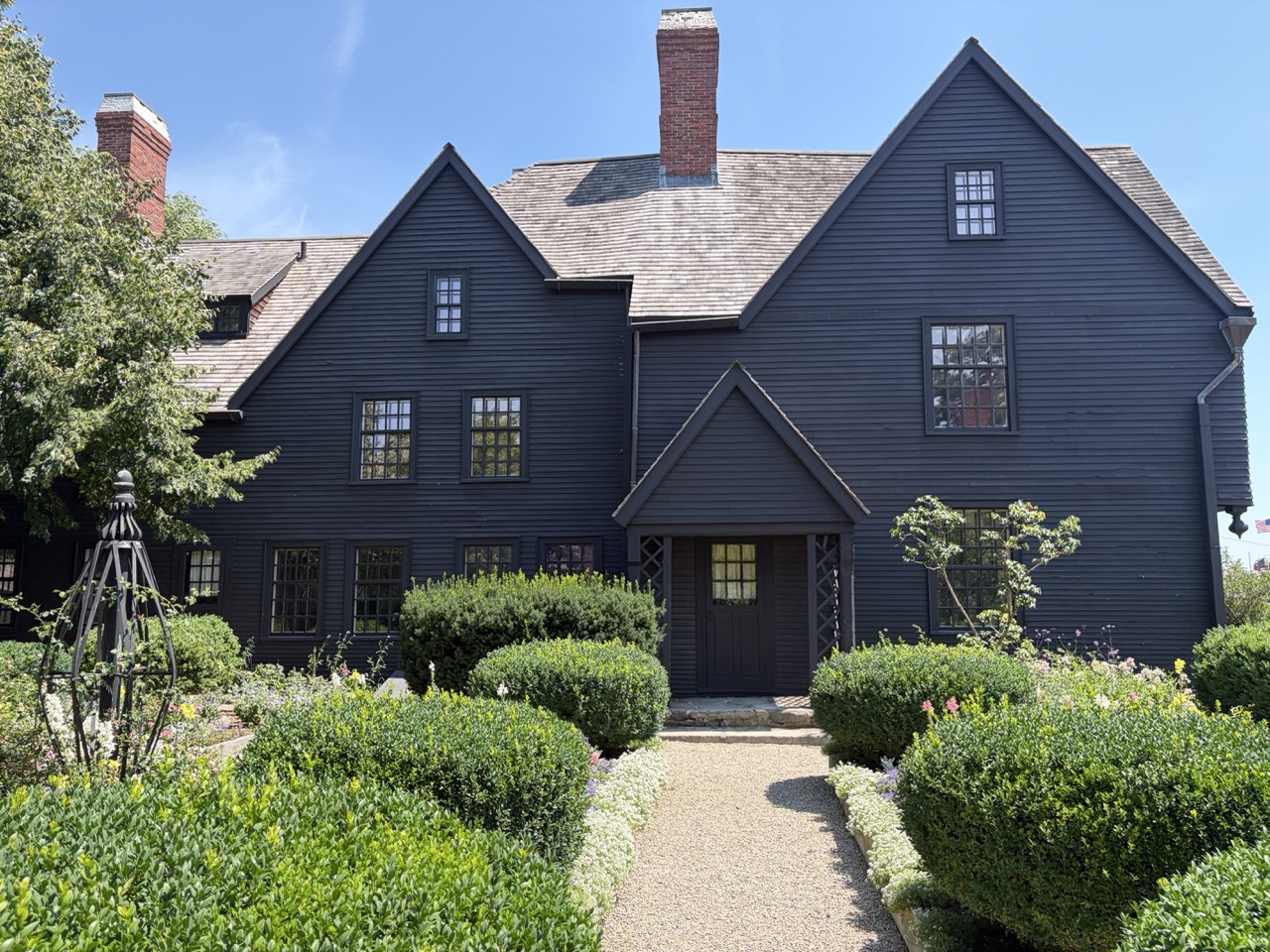
The House of the Seven Gables, Salem, Massachusetts.

What is a historic house museum supposed to do? Preserve an important building? Tell the story of the people who once lived there? Re-create a particular moment in history? Most historic house museums are organized around one primary purpose with the house serving as the central artifact through which that story is told.

The House of the Seven Gables in Salem, Massachusetts challenges that assumption. By the time I finished my visit, I realized that the woman who transformed the house into a museum had imagined something much larger. Caroline Emmerton, a Progressive Era reformer and preservationist, transformed a celebrated historic house into an institution that combined preservation, literary tourism, education, and social reform. More than a century later, that integrated vision still defines the site.

In 1668, Salem sea captain and merchant John Turner and his wife, Elizabeth, built the house that would become known as the House of the Seven Gables. Three generations of the Turner family lived there before the property passed to the Ingersoll family in 1782. One of its later residents, Susanna Ingersoll, welcomed frequent visits from her cousin, Nathaniel Hawthorne, whose experiences at the house inspired the setting and title of his 1851 novel The House of the Seven Gables. By the beginning of the twentieth century, the Turner-Ingersoll Mansion was already famous as both a remarkable survivor of colonial Salem and the home most closely associated with Hawthorne’s classic novel.

By the early twentieth century, however, the property’s future was uncertain. When the Turner-Ingersoll Mansion came up for sale, Emmerton purchased it in 1908. She was already deeply involved in the Progressive Era settlement house movement and saw an opportunity to accomplish far more than preserving a historic building. Working with architect Joseph Everett Chandler, she restored the house to what they believed reflected its seventeenth-century appearance while simultaneously establishing the House of the Seven Gables Settlement Association. Rather than operating the house simply as a museum, she used its popularity to support a settlement house which offered educational and social programs for Salem’s immigrant community.

Continue reading