
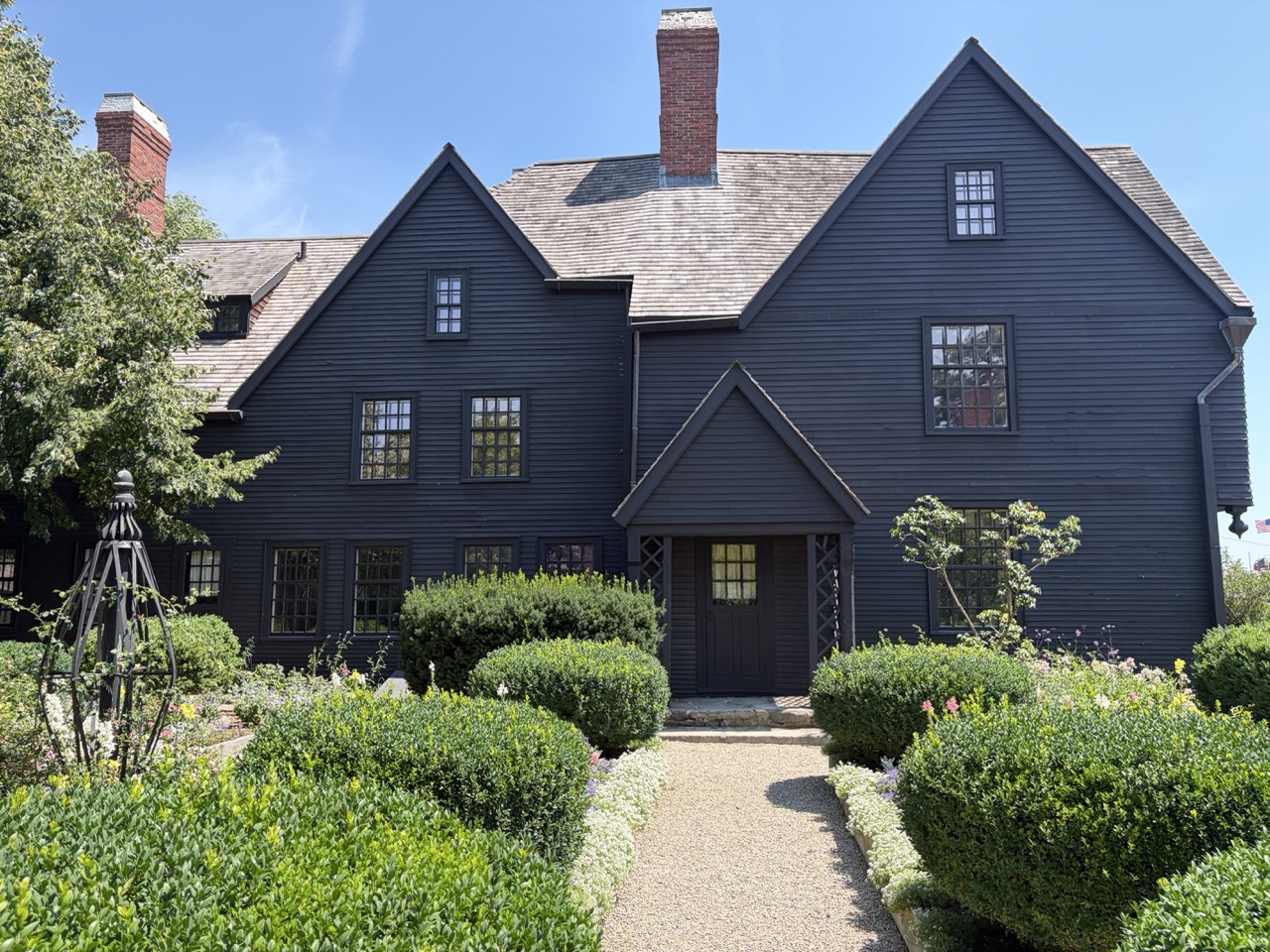
What is a historic house museum supposed to do? Preserve an important building? Tell the story of the people who once lived there? Re-create a particular moment in history? Most historic house museums are organized around one primary purpose with the house serving as the central artifact through which that story is told.
The House of the Seven Gables in Salem, Massachusetts challenges that assumption. By the time I finished my visit, I realized that the woman who transformed the house into a museum had imagined something much larger. Caroline Emmerton, a Progressive Era reformer and preservationist, transformed a celebrated historic house into an institution that combined preservation, literary tourism, education, and social reform. More than a century later, that integrated vision still defines the site.
In 1668, Salem sea captain and merchant John Turner and his wife, Elizabeth, built the house that would become known as the House of the Seven Gables. Three generations of the Turner family lived there before the property passed to the Ingersoll family in 1782. One of its later residents, Susanna Ingersoll, welcomed frequent visits from her cousin, Nathaniel Hawthorne, whose experiences at the house inspired the setting and title of his 1851 novel The House of the Seven Gables. By the beginning of the twentieth century, the Turner-Ingersoll Mansion was already famous as both a remarkable survivor of colonial Salem and the home most closely associated with Hawthorne’s classic novel.
By the early twentieth century, however, the property’s future was uncertain. When the Turner-Ingersoll Mansion came up for sale, Emmerton purchased it in 1908. She was already deeply involved in the Progressive Era settlement house movement and saw an opportunity to accomplish far more than preserving a historic building. Working with architect Joseph Everett Chandler, she restored the house to what they believed reflected its seventeenth-century appearance while simultaneously establishing the House of the Seven Gables Settlement Association. Rather than operating the house simply as a museum, she used its popularity to support a settlement house which offered educational and social programs for Salem’s immigrant community.
Settlement houses are one of the Progressive Era’s most defining approaches to social reform. Unlike traditional charities that offered temporary relief, settlement houses sought to address the causes of poverty by living within the communities they served. Settlement workers—many of them college-educated women entering one of the few professions open to them—provided educational programs, childcare, recreation, English-language instruction, job training, and other services designed to help immigrant families build better lives. The House of the Seven Gables became the center of that work.
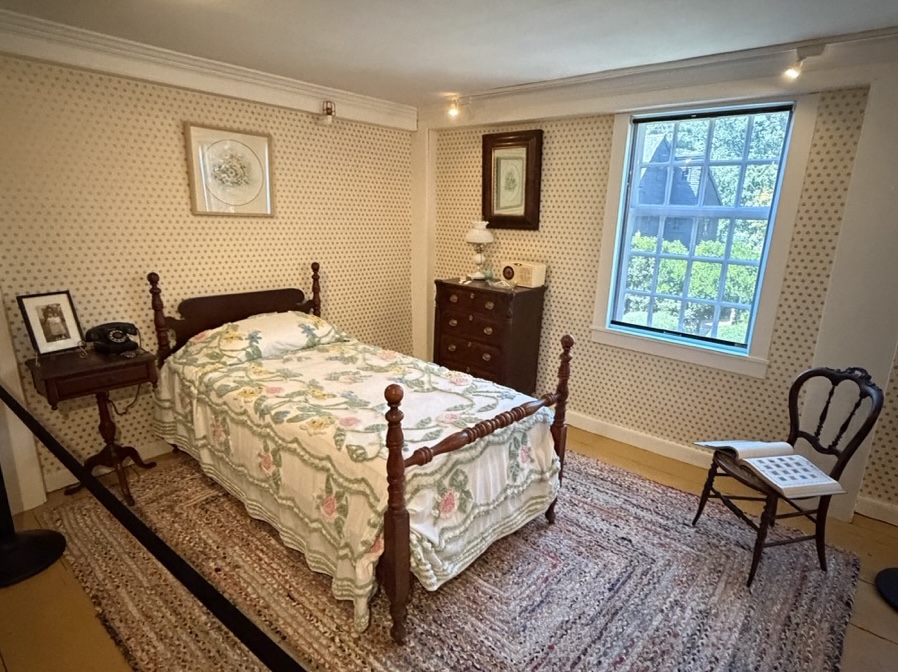
What surprised me most during the tour was that the house itself was part of the settlement association. It was not simply a museum whose admission fees supported programs somewhere else. Settlement workers lived in the house, which also served as the association’s headquarters. One of the rooms interpreted on the tour is furnished as a settlement worker’s bedroom, reminding visitors that the upper floors once housed the women carrying out the association’s mission while visitors toured rooms connected to the Turner family, the Ingersolls, and Hawthorne’s novel.
Emmerton’s vision also extended beyond a single building. The Settlement Association assembled a campus of historic structures, saving additional houses from demolition and adapting them for classrooms, recreation, clubs, and community programs. Preservation became another way the association served the surrounding community.
Looking back from today, Emmerton’s model seems strikingly modern. Rather than treating preservation and public service as competing priorities, she brought them together within a single institution. Hawthorne’s literary fame attracted visitors, whose admission fees funded educational and social programs. In turn, the settlement gave the historic house a continuing public purpose beyond simply preserving an old building. Preservation and social reform strengthened one another.
The tour also prompted me to think about preservation in a different way. What is authentic? What is original? What is significant? Visitors encounter seventeenth-century architecture, Joseph Everett Chandler’s Colonial Revival restoration, and features inspired by Hawthorne’s novel, including the famous secret staircase. Hawthorne himself never experienced the house exactly as visitors see it today. From a modern preservation perspective, that might seem confusing. Yet I came away asking a different question.
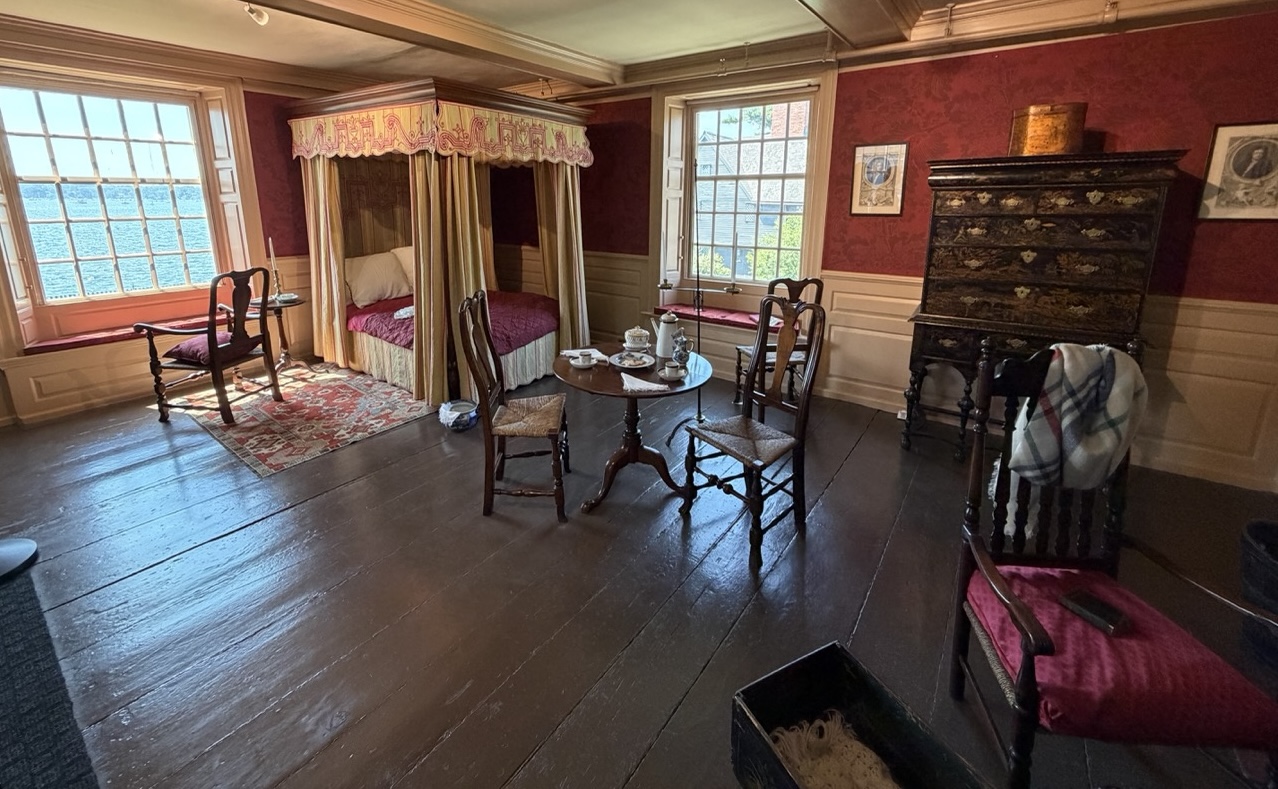
Rather than asking whether every feature is original, perhaps we should ask what the site is trying to preserve. The answer is not a single moment in time. The significance of the House of the Seven Gables lies in its many layers: a seventeenth-century merchant’s house, Hawthorne’s literary inspiration, Caroline Emmerton’s preservation work, and the settlement association she created. Emmerton understood that each layer of the site’s history enriched the others. She preserved an important historic building, embraced the public’s fascination with Hawthorne, and created a visitor experience capable of sustaining an ambitious social mission. The result is a historic house unlike any other I have visited.
More than a century later, that vision continues. The House of the Seven Gables Settlement Association still preserves the historic property while serving the modern immigrant communities of Salem through literacy, citizenship, college preparation, and cultural programming. The people served have changed, and the programs have evolved, but Emmerton’s central idea remains largely intact.
As I left Salem, I found myself thinking less about Hawthorne than about Caroline Emmerton. Historic house museums often ask us to look backward. Emmerton imagined a historic house that could also look forward. She transformed a famous old house into a living institution—one that preserved history while improving lives. That combination of preservation, literary interpretation, and social reform remains as compelling today as it was more than a century ago.
The House of the Seven Gables is therefore more than a historic house museum. It shows that historic preservation can be a means of serving a community rather than an end in itself. At its best, it can strengthen communities, expand opportunities, and connect the past to the needs of the present. Caroline Emmerton understood that better than most, and the institution she created continues to demonstrate the enduring power of that idea.

