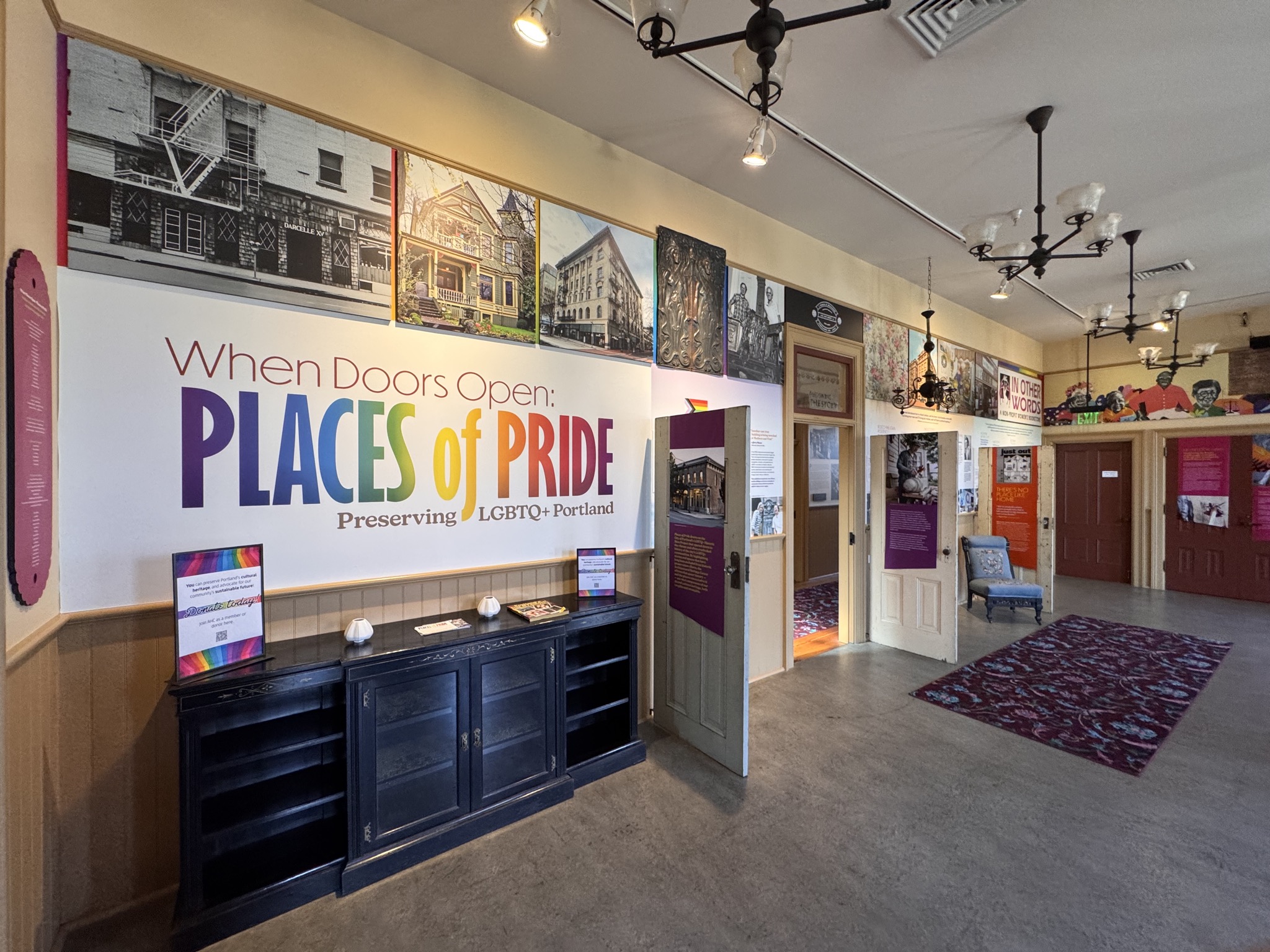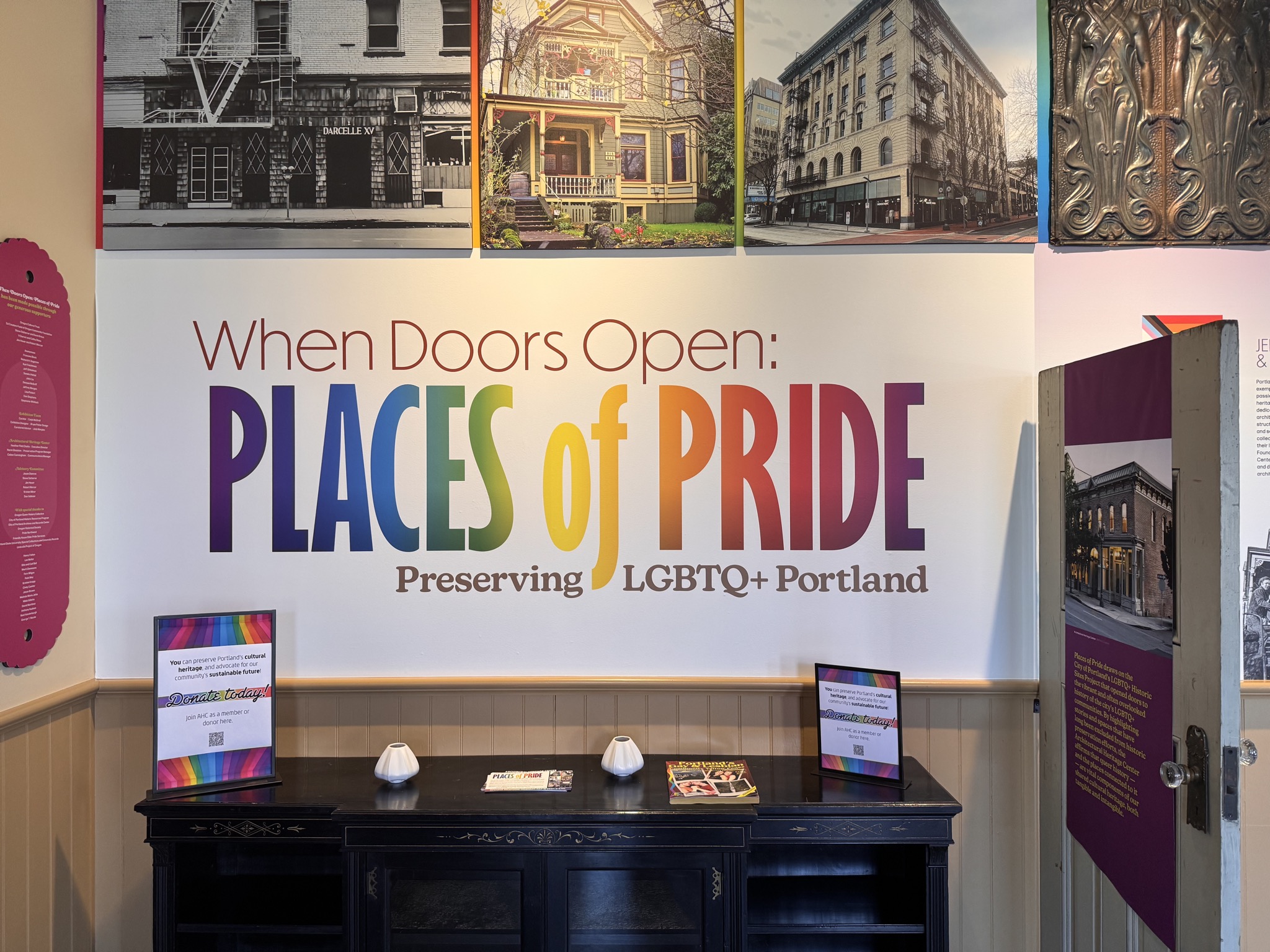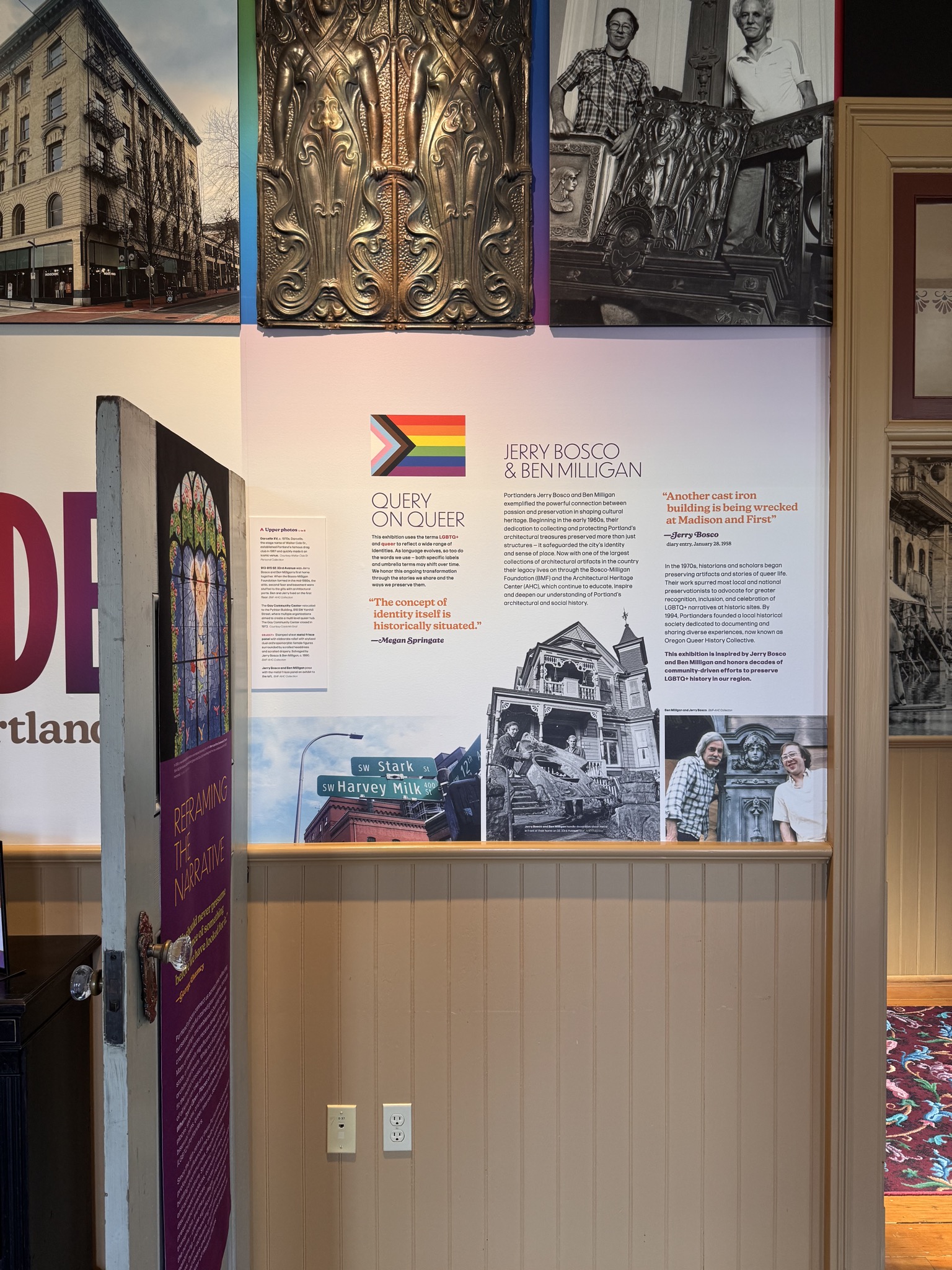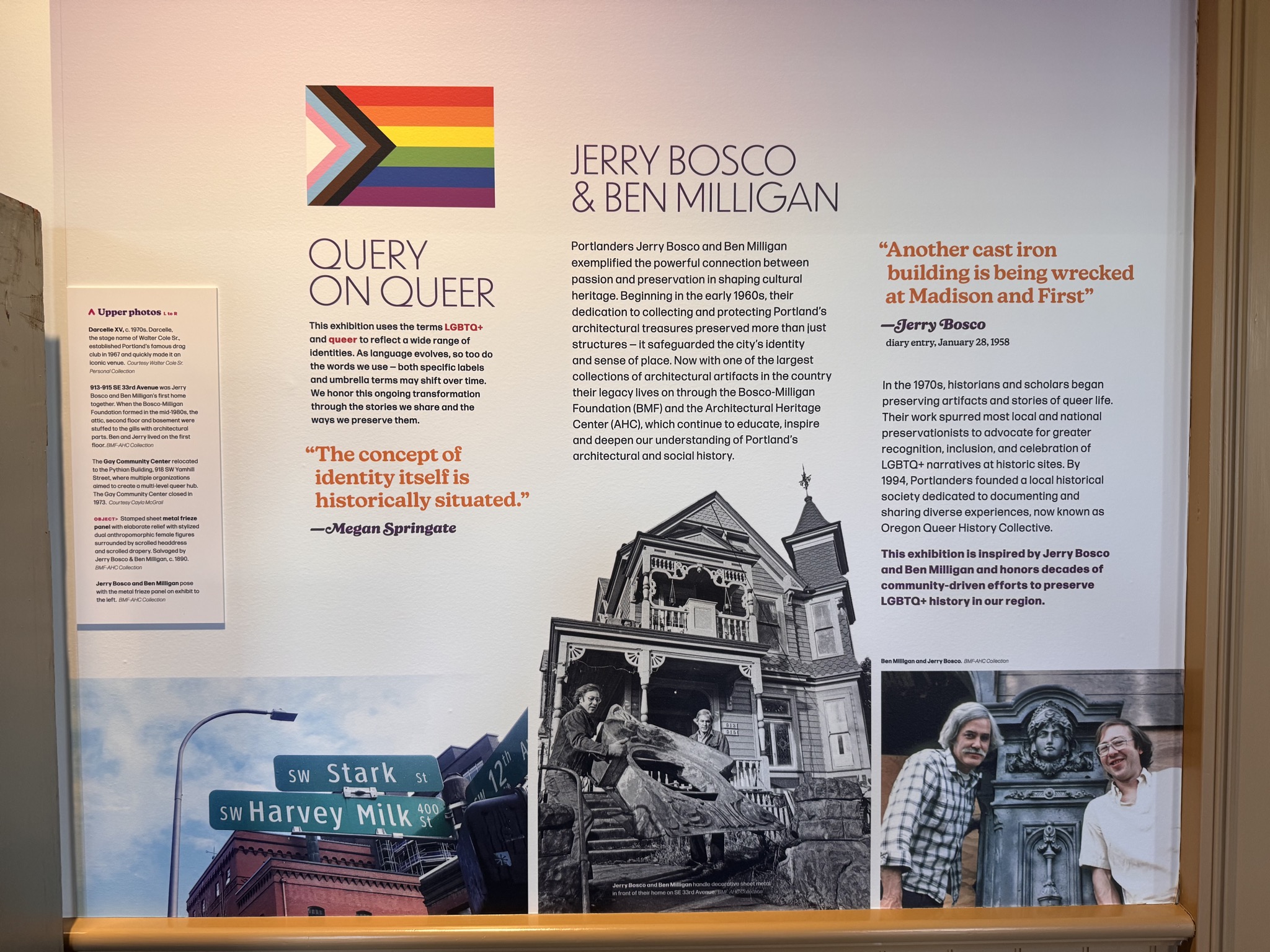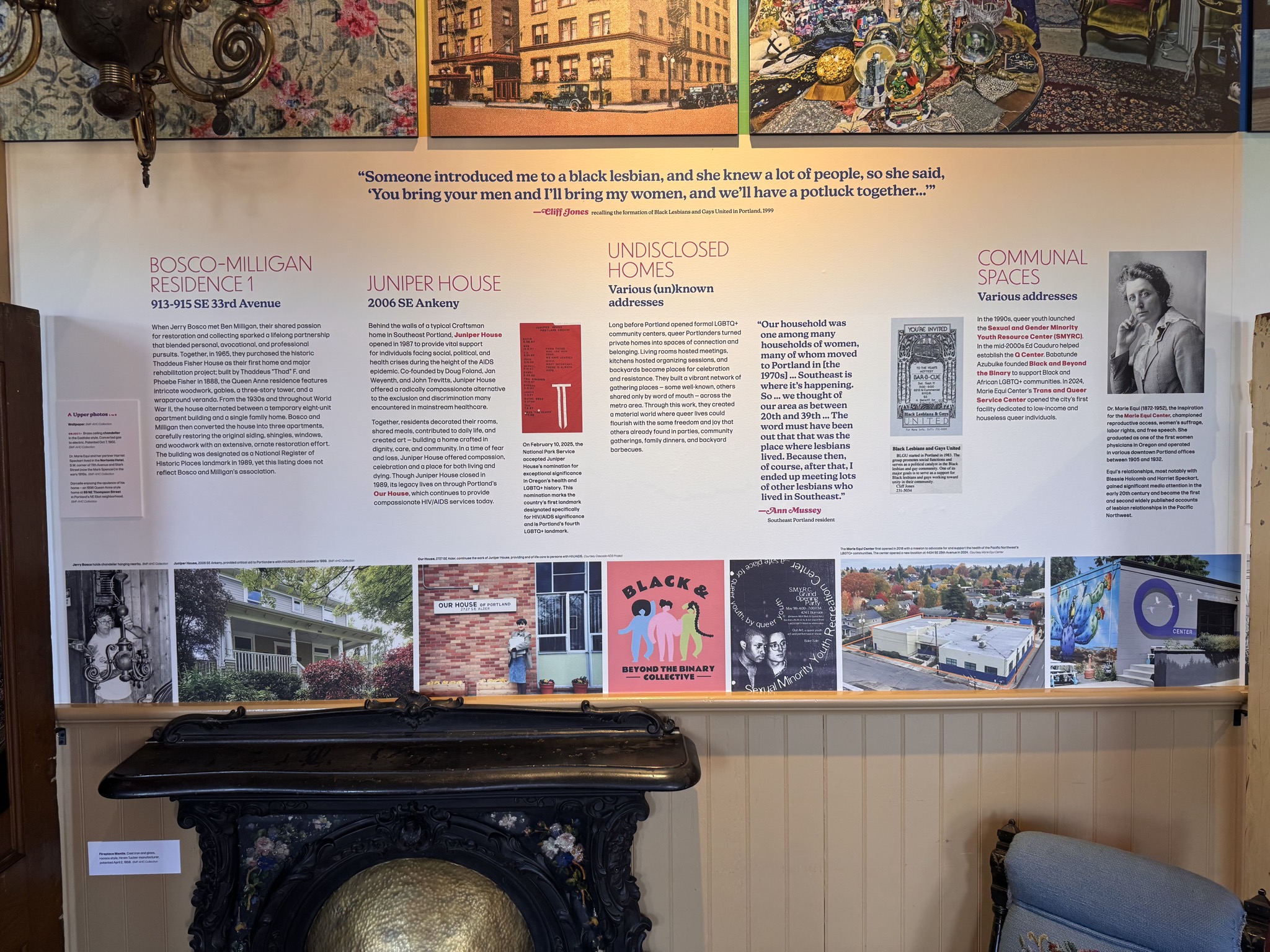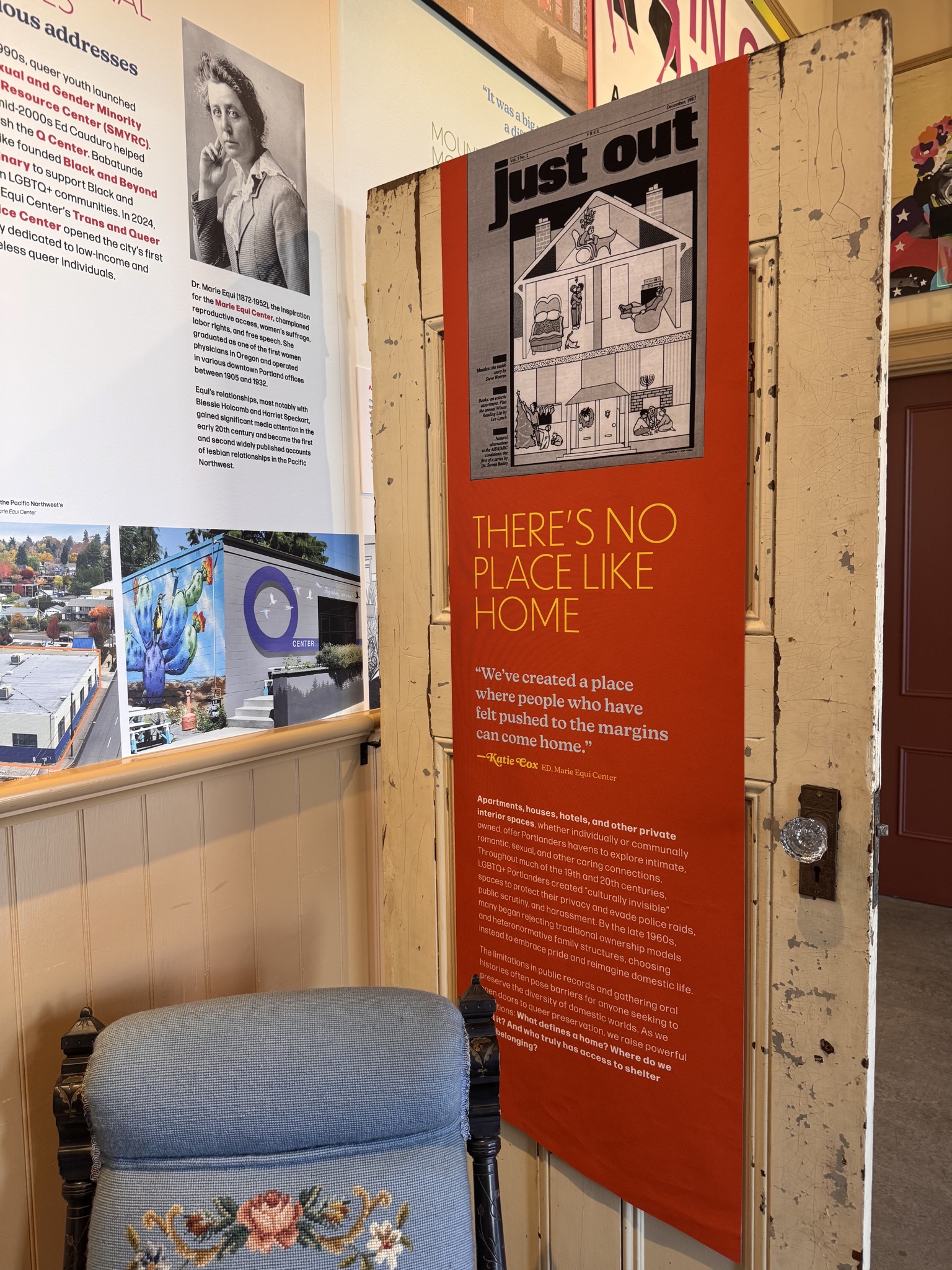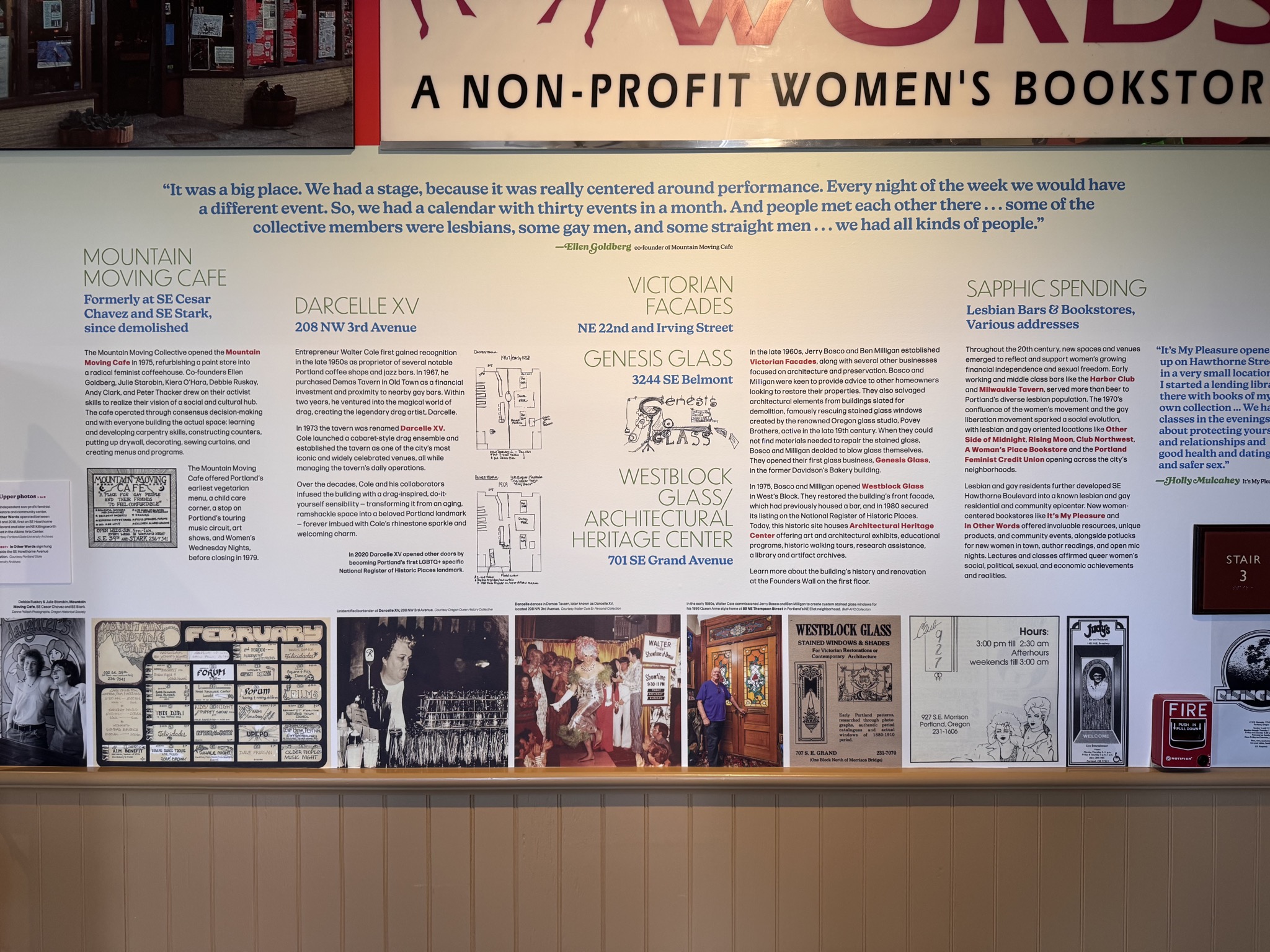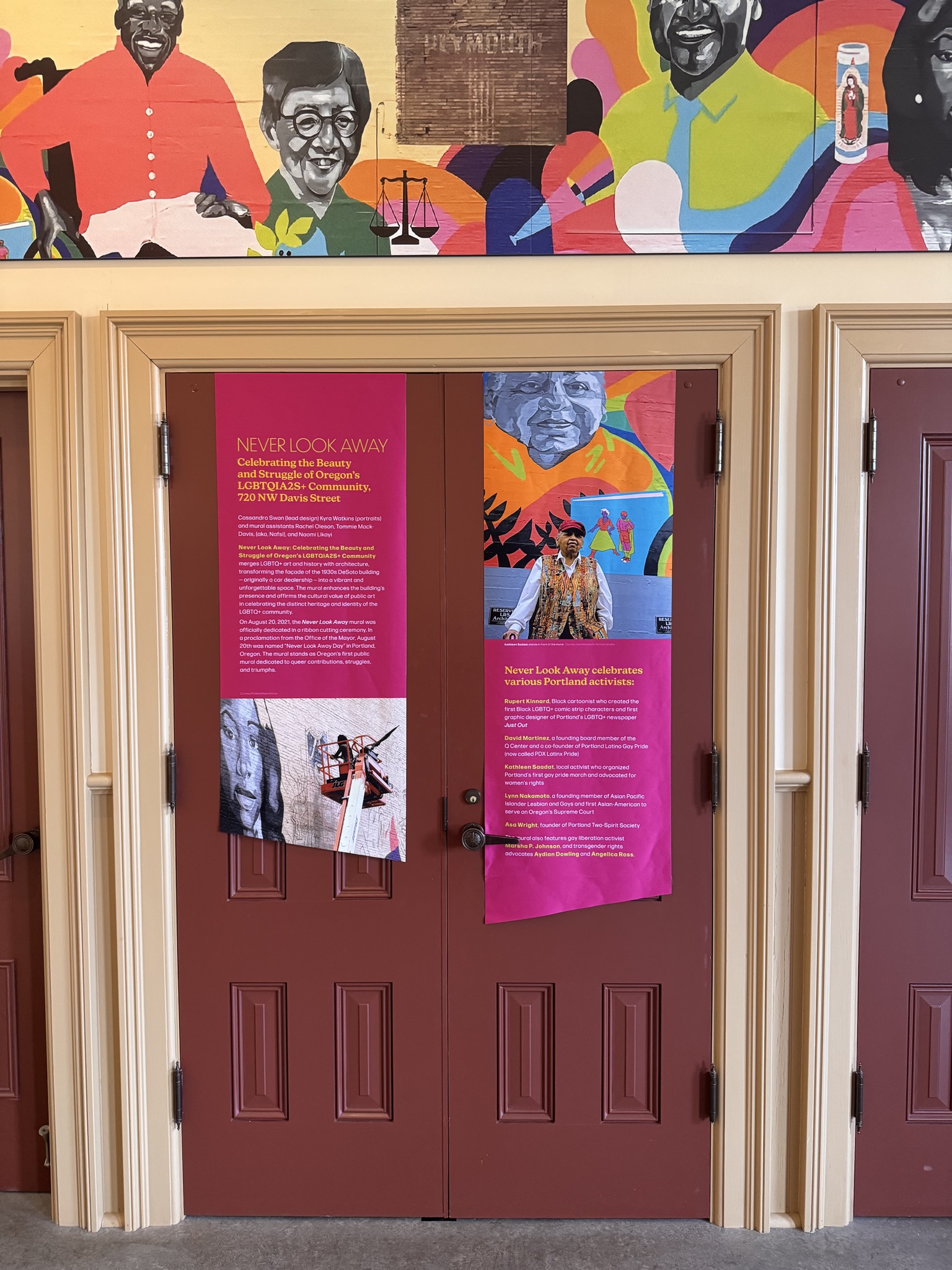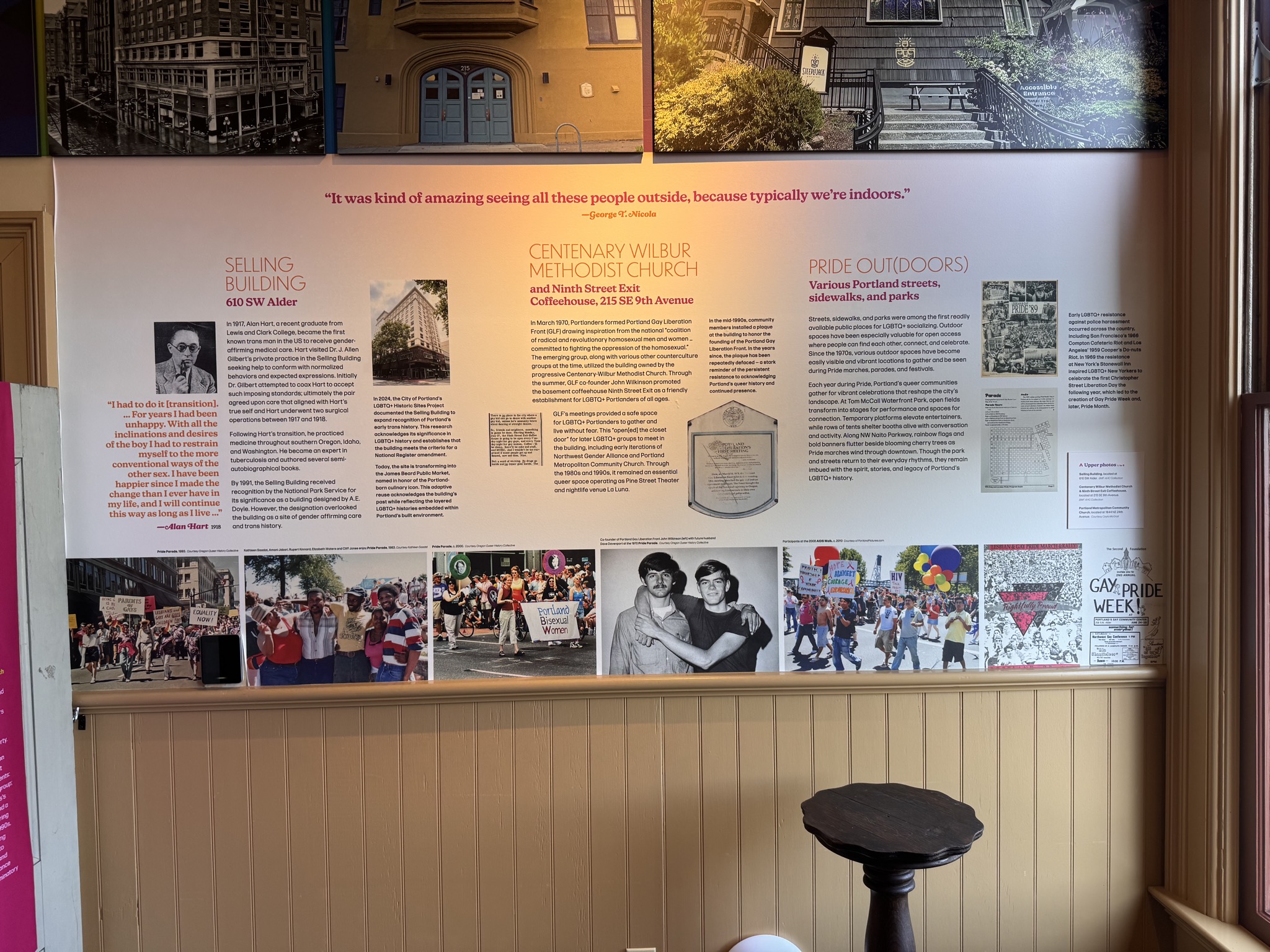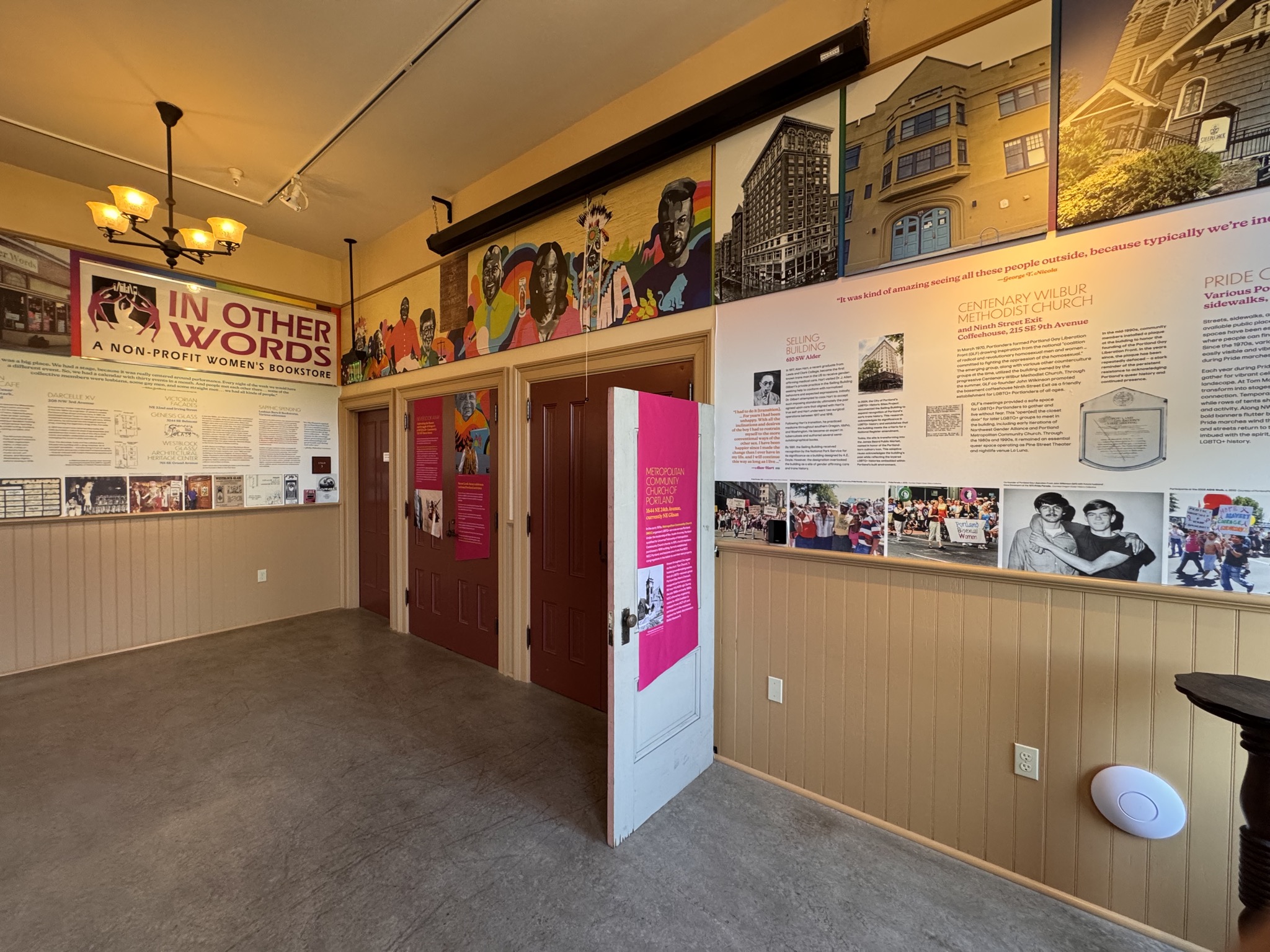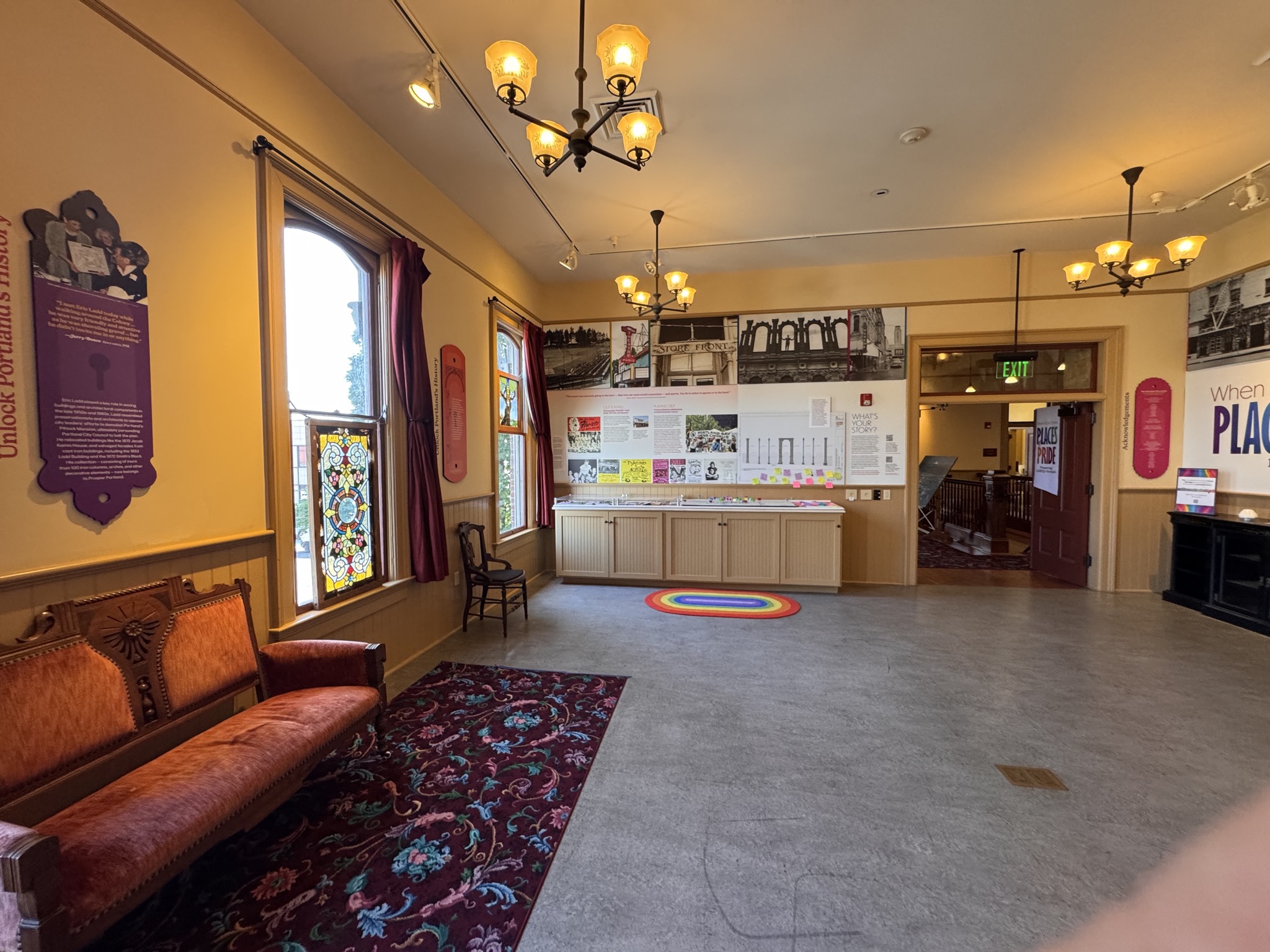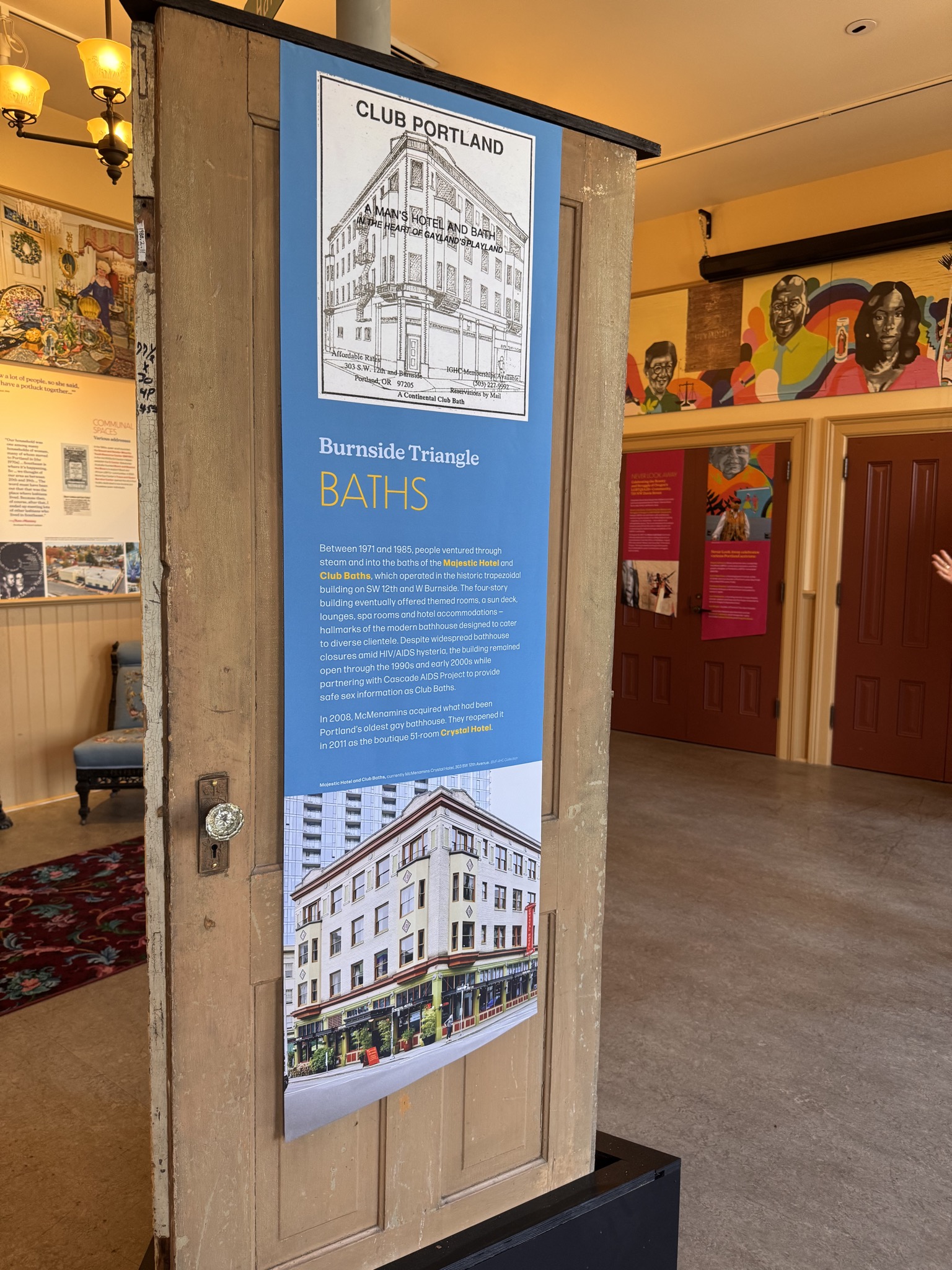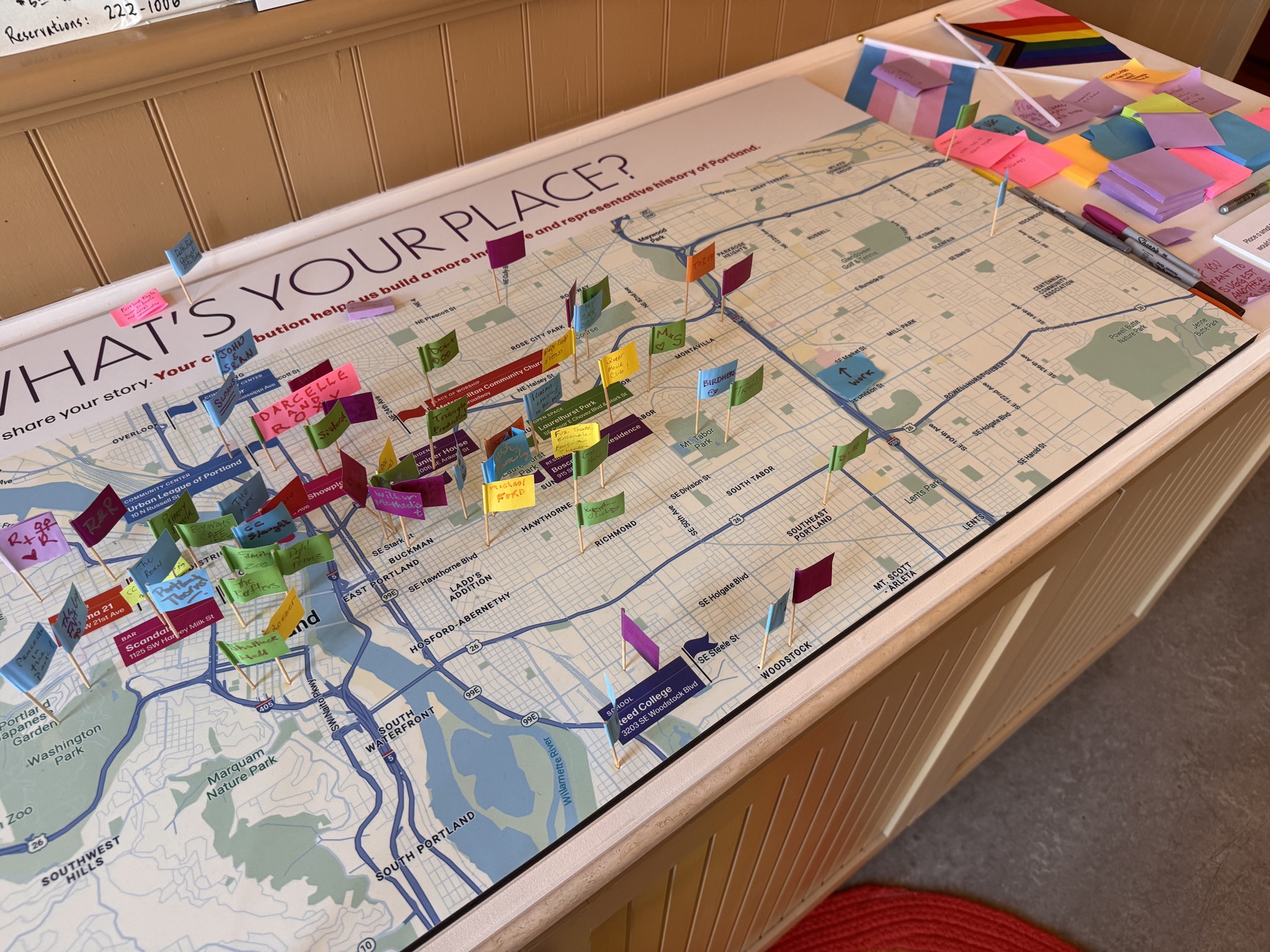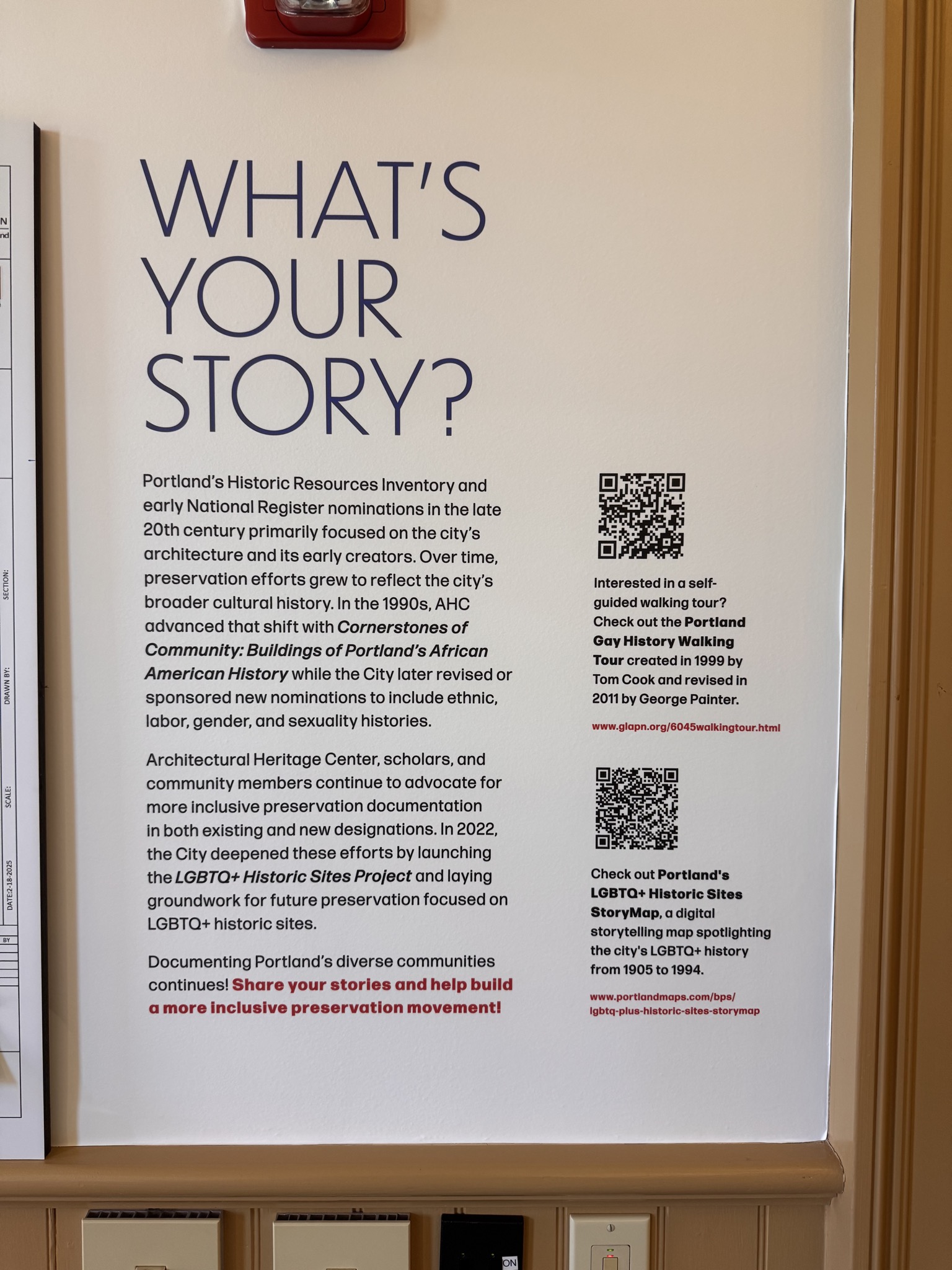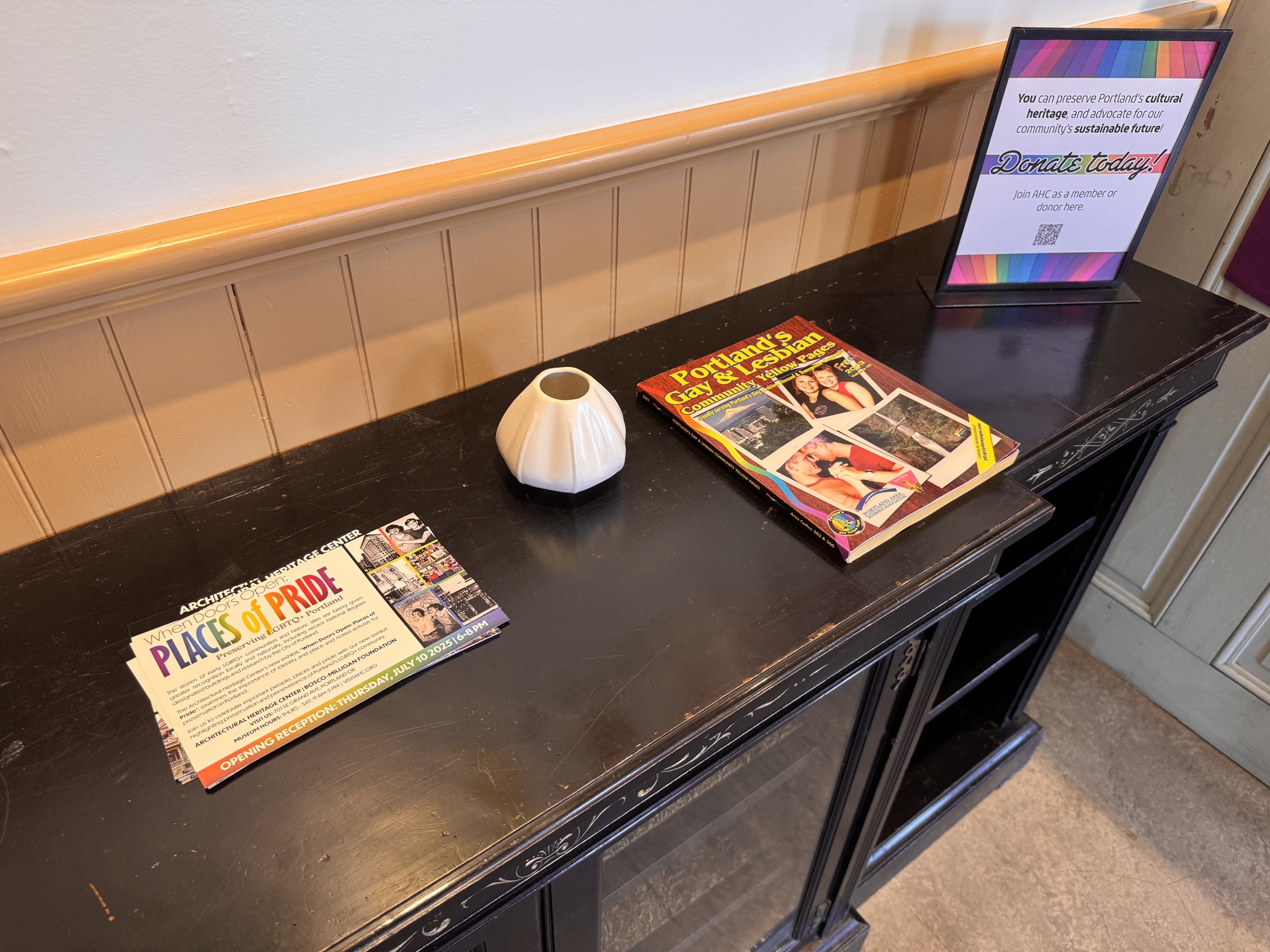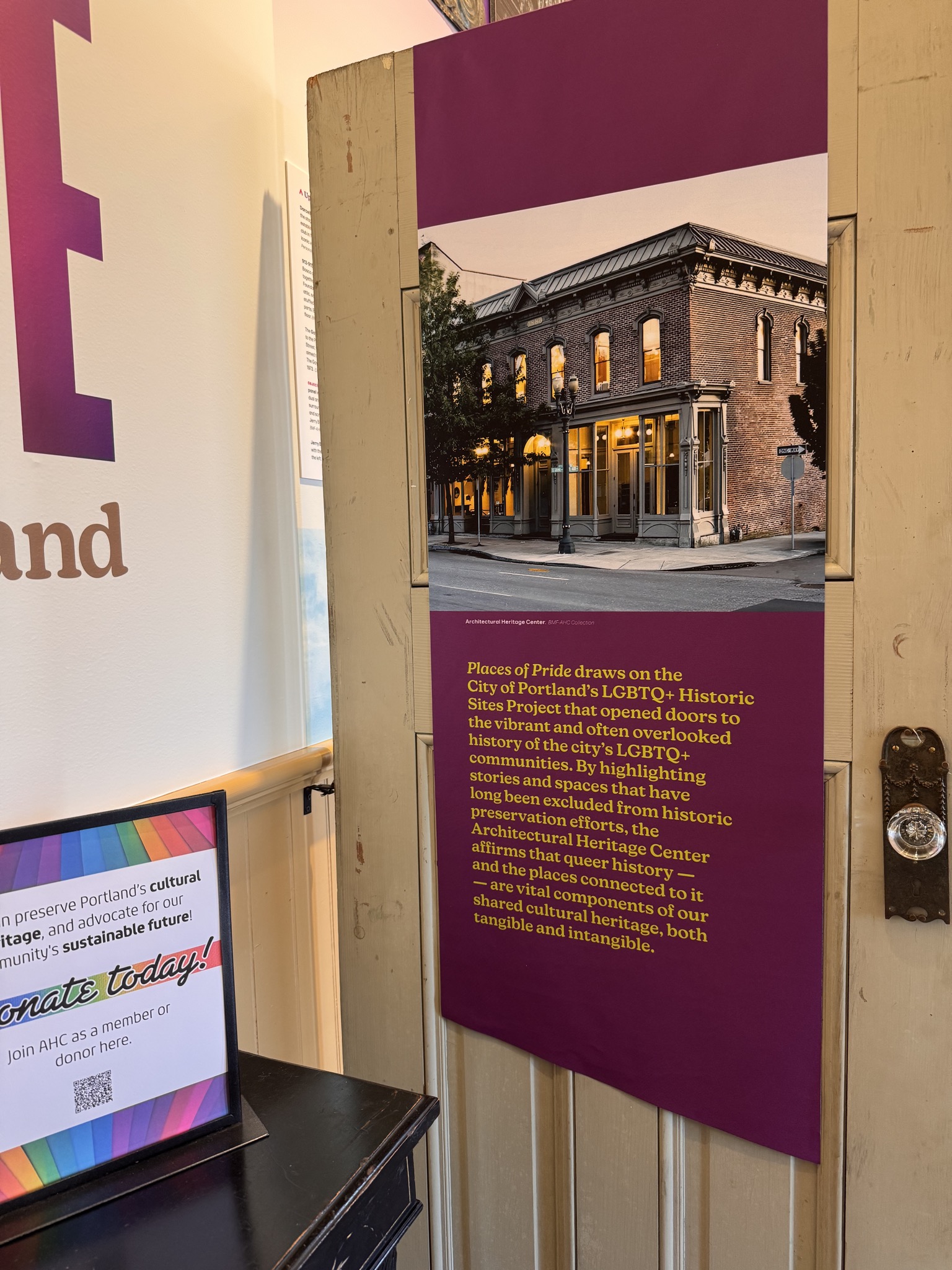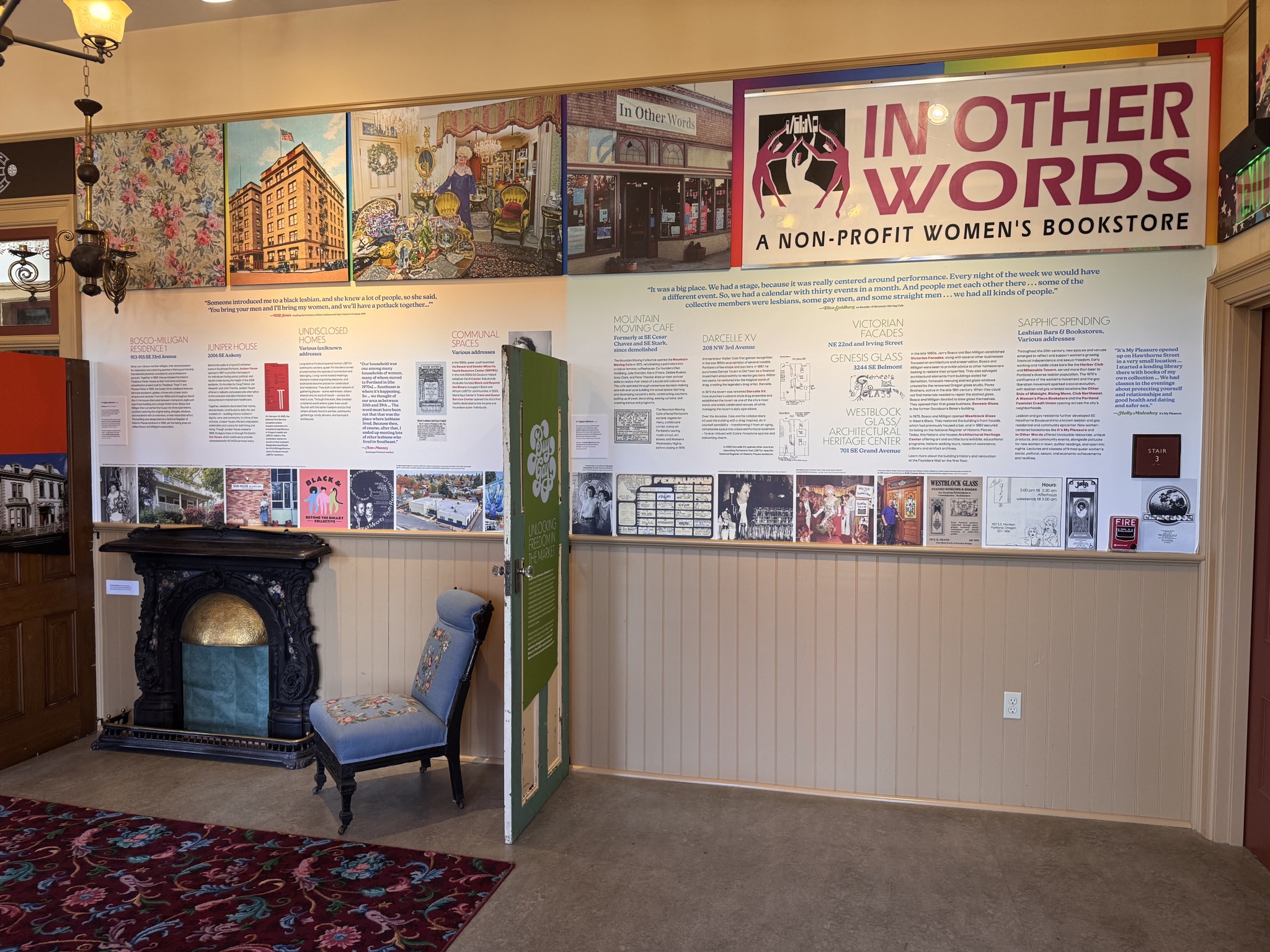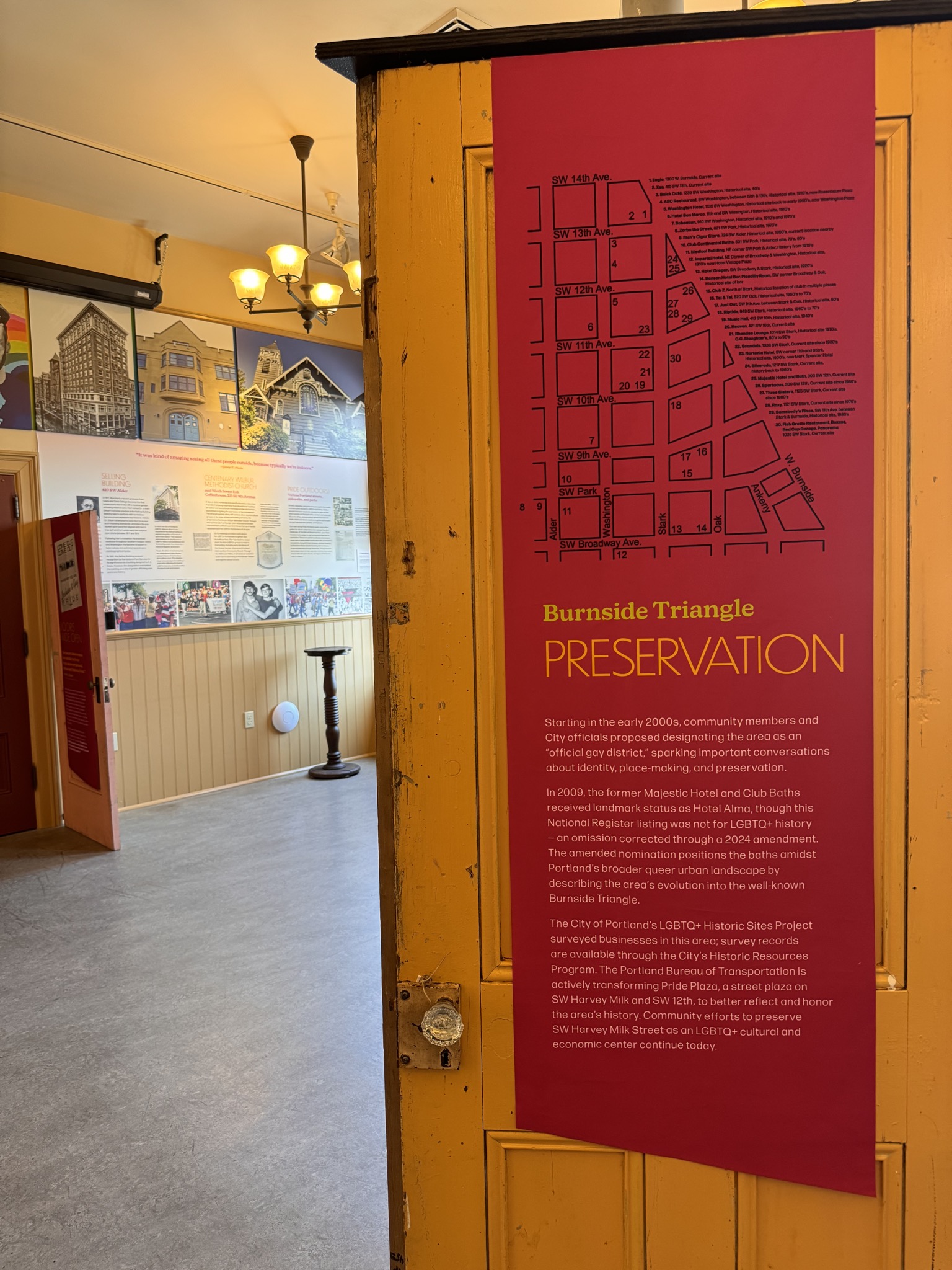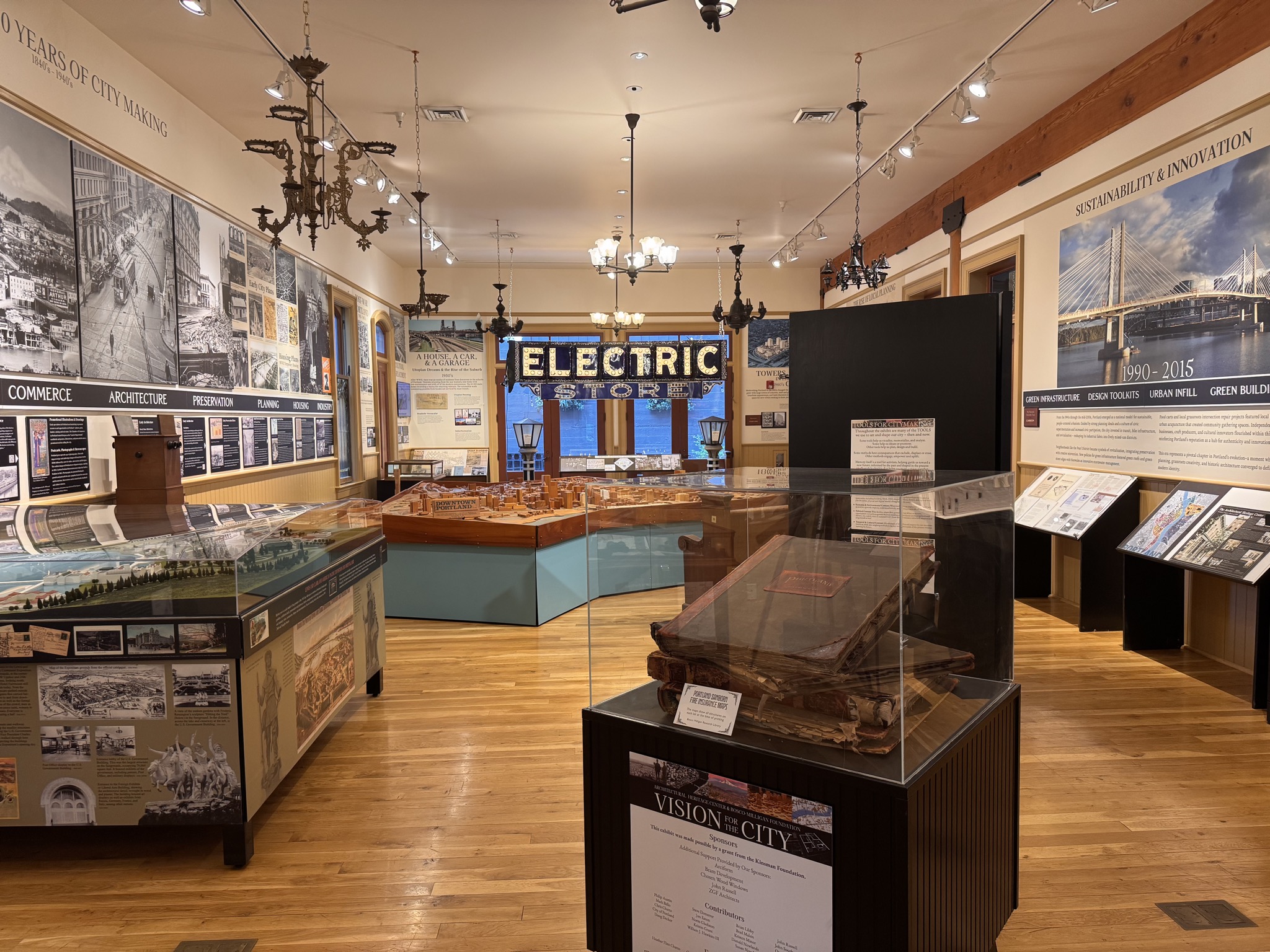
During a summer visit to Portland, Oregon, we stopped at the Architectural Heritage Center to conduct research but also visited their exhibitions, including When Doors Open: Places of Pride, which examined places associated with the city’s LGBTQ+ history. These places are often overlooked in museum exhibitions and historic preservation, which makes this exhibition especially useful as a reference for museums and historic sites thinking about how to interpret communities whose histories may be embedded in buildings, gathering places, businesses, and neighborhoods rather than conventional museum collections.
Opened in July 2025, Places of Pride explores the relationship among identity, place, and memory. The exhibition focuses on homes, gathering places, businesses, and other spaces that served not simply as physical settings but as places of belonging, support, activism, and community formation for LGBTQ+ Portlanders. It also highlights LGBTQ+ preservationists and activists who worked to protect buildings and places important to the city’s history.
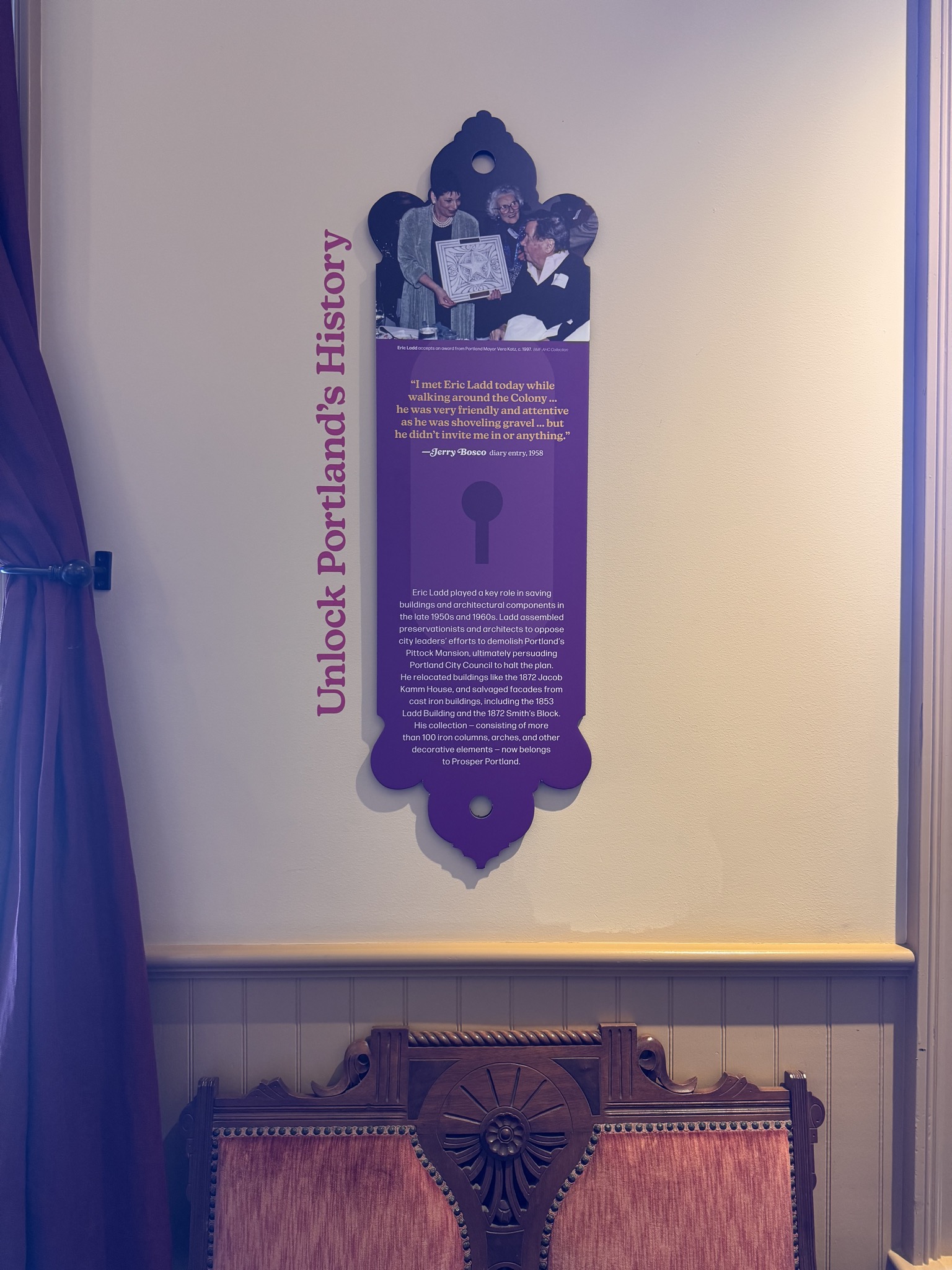
The subject has a particularly strong connection to the Architectural Heritage Center itself. Its origins lie with Ben Milligan and Jerry Bosco, a gay couple who began collecting architectural elements salvaged from Portland buildings during the 1960s as professional partners. Together they accumulated stained glass, doors, hardware, tiles, mantels, lighting, and other architectural fragments while also acquiring and preserving historic properties. After both were diagnosed with AIDS in the 1980s, they developed plans for the Bosco-Milligan Foundation so that their collection could continue to support preservation education. The Architectural Heritage Center eventually opened to the public in 2005.
Their story appears within Places of Pride alongside those of other LGBTQ+ Portlanders and the places they helped create or preserve. Guest curator Cayla McGrail of the Oregon Queer History Collective describes the exhibition as elevating the places that shaped Portland’s LGBTQ+ past and present, with particular attention to resilience, community, and joy. The exhibition therefore connects the history of LGBTQ+ places with the history of preservation itself—asking not only which buildings survive, but whose associations make them significant.
That question also connects the exhibition to a larger effort by the City of Portland. Between 2022 and 2024, the city’s LGBTQ+ Historic Sites Project identified and documented places associated with LGBTQ+ history, prepared a citywide historic context statement, and nominated several resources to the National Register of Historic Places. More than 400 resources associated with LGBTQ+ history were identified during the project, reflecting people, organizations, events, businesses, gathering places, and other aspects of queer life in Portland.
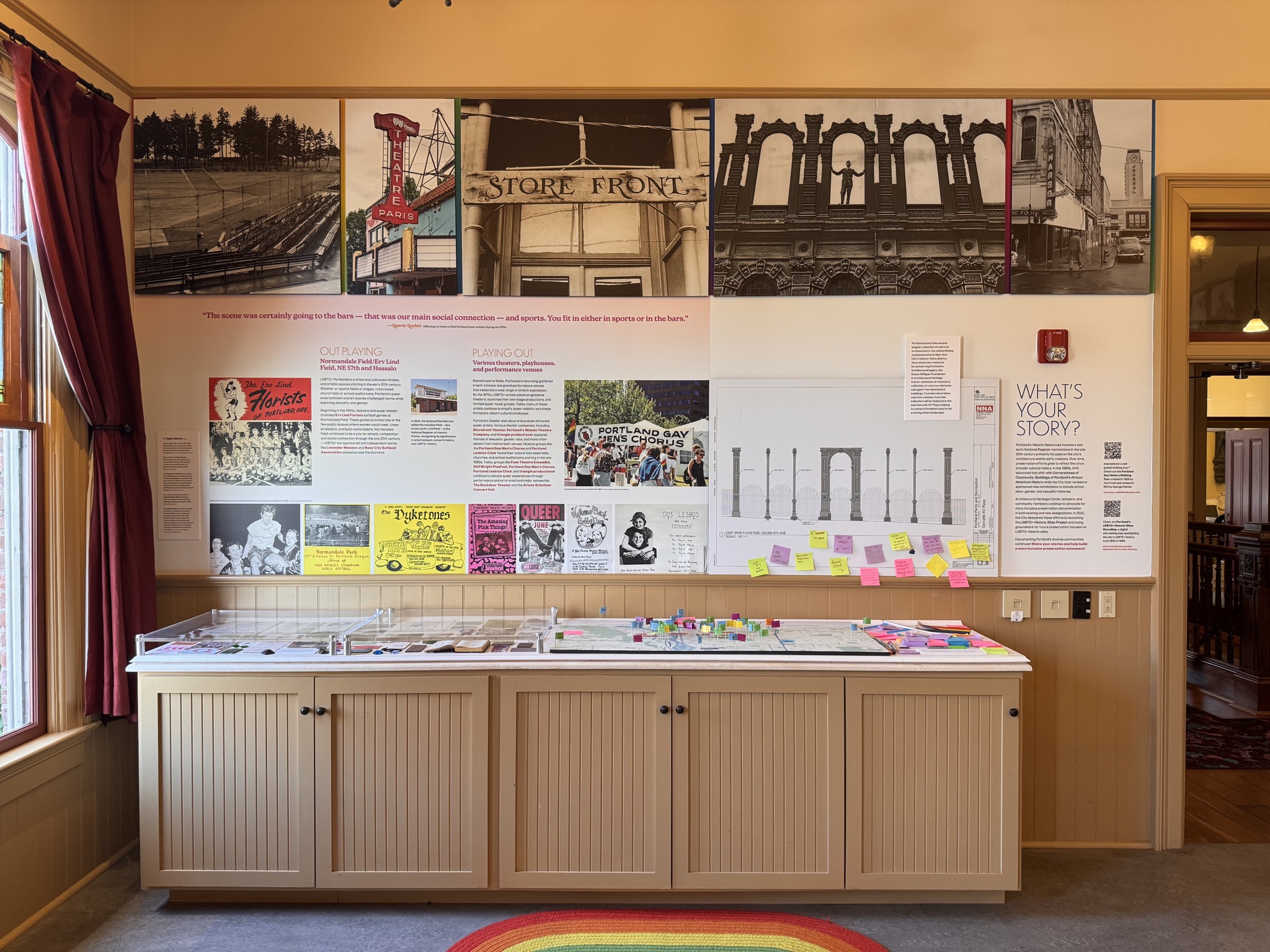
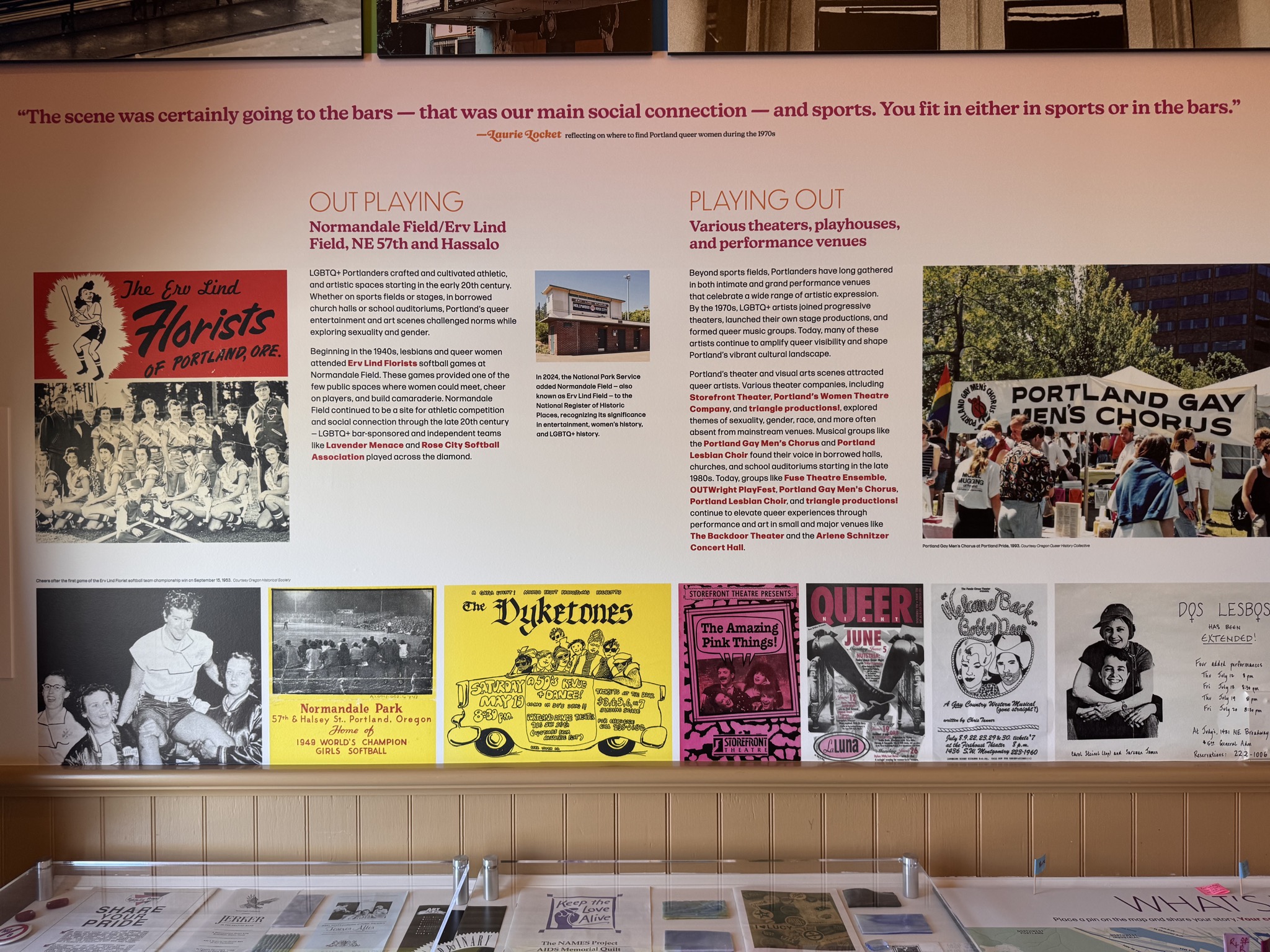
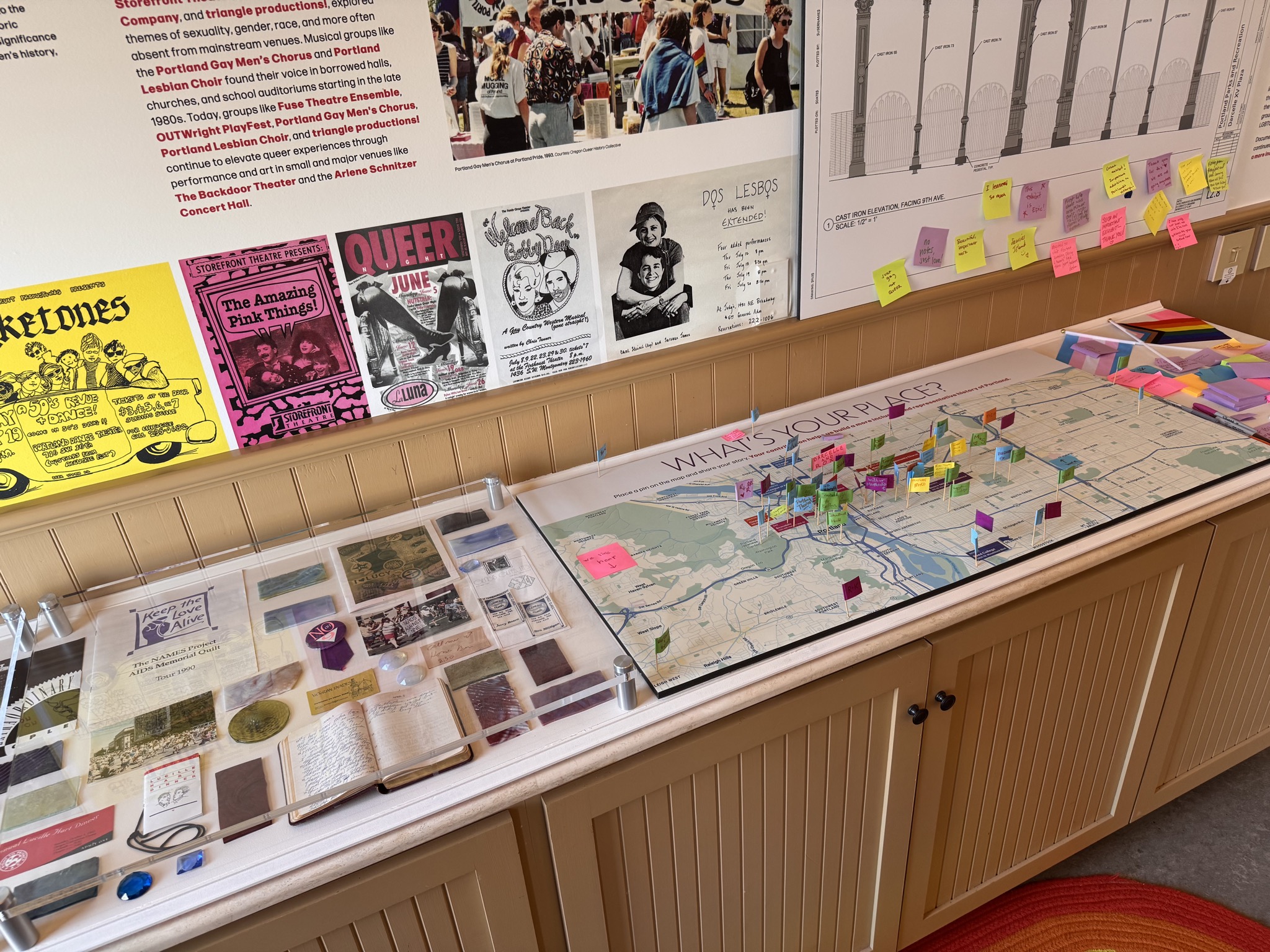
For museum professionals, Places of Pride is also worth examining because of its modest means. This is a temporary exhibition rather than a large, heavily fabricated installation. It demonstrates how photographs, reproduced documents, graphics, text panels, banners, borrowed objects, and other relatively inexpensive materials (old doors!) can be assembled to interpret place-based history. For smaller museums and historic sites—where temporary exhibitions often have limited budgets, staff, fabrication capacity, and collections—those choices may be as useful to study as the subject itself.
The exhibition also suggests another way to think about architectural and historic-site interpretation. Buildings matter not only because of their architects, construction dates, styles, or physical fabric. Their significance can also derive from what people did inside them: finding safety, forming relationships, organizing politically, creating businesses, gathering socially, or building community. When Doors Open provides a useful comparison for organizations trying to connect preservation with social and community history.
About Field Notes
Field Notes is a series on EngagingPlaces.net intended as a visual reference for exhibition designers, developers, curators, educators, interpreters, managers, and other museum professionals. Most of us can visit only a small fraction of the exhibitions produced around the country, while the photographs museums publish online usually emphasize a handful of carefully composed installation views.
The couple dozen photographs below serve a different purpose. They are documentary rather than promotional or aesthetic, and I selected them primarily to show what a visitor actually encounters: entrances and transitions, gallery organization, introductory and section texts, photographs and other visual materials, labels, graphics, object groupings, cases, sightlines, scale, and the relationships among different parts of the exhibition.
This is not intended as a review or critique of When Doors Open. Think of these photographs instead as a visual field notebook—a record of one museum’s approach that may provide examples, comparisons, questions, or ideas for your own work.