Tag Archives: Oregon

Field Notes: Shifting the Narrative at the Portland Art Museum

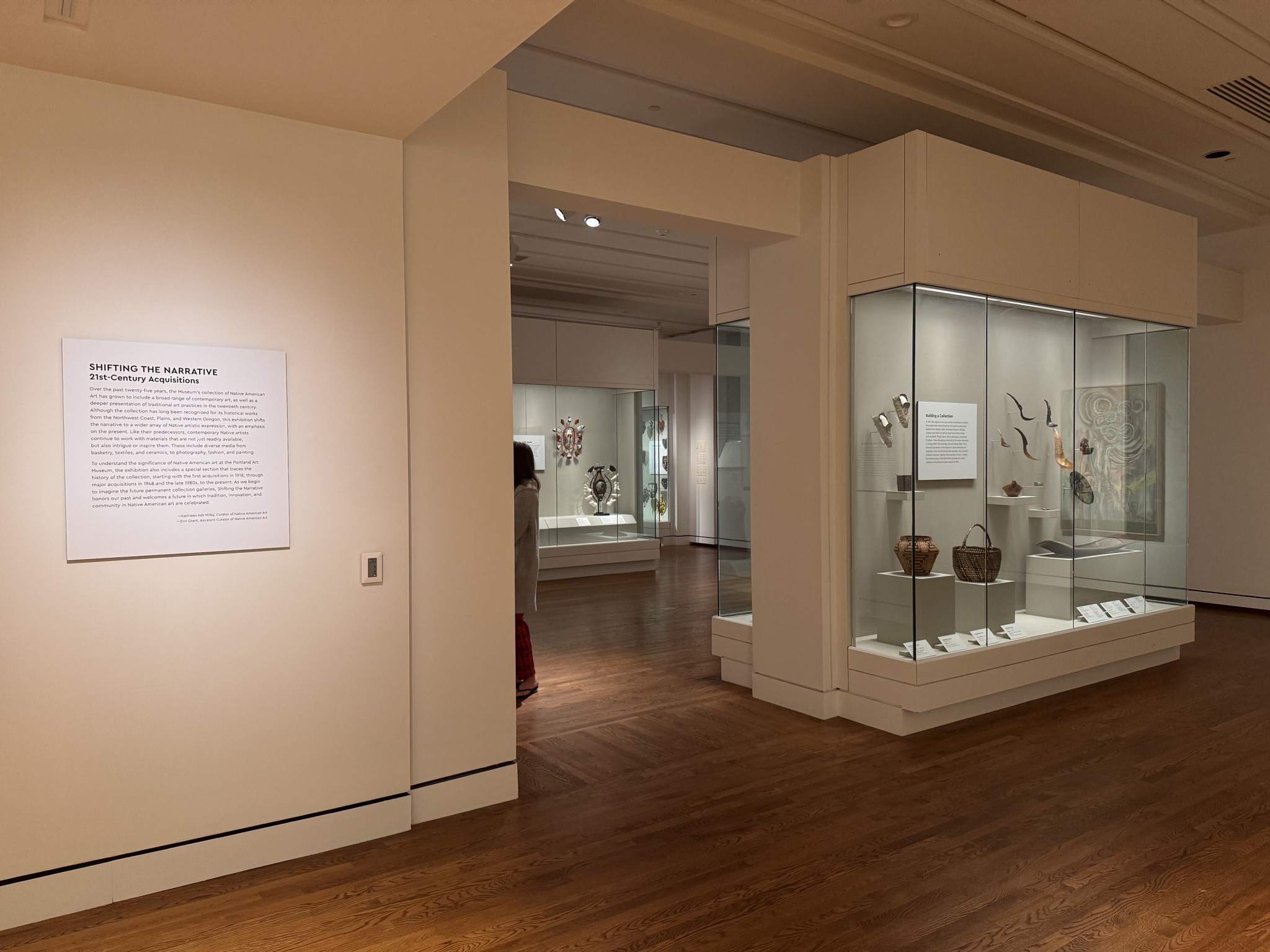
I recently visited the Portland Art Museum following the completion of its major renovation, which connected its two historic buildings with a new central Mark Rothko Pavilion as its main entrance. Among the exhibitions that caught my attention was Shifting the Narrative: 21st Century Acquisitions, which provides an unusually direct look at how a museum is reconsidering the interpretation of Native American art through collecting, exhibitions, and relationships with Native artists and communities. The Portland Art Museum holds more than 3,500 Native American objects representing approximately 200 Indigenous cultural groups throughout the Americas.

Opened in November 2025, Shifting the Narrative is partly an exhibition about art and partly an exhibition about changing museum practice. The temporary exhibition includes both contemporary and historical works in photography, sculpture, fashion, basketry, painting, and printmaking. Organized chronologically by acquisition period, the exhibition begins with its collecting of Native American art in 1918, with major additions of Northwest Coast objects in 1948. It then turns to its efforts to actively expand the collection through contemporary acquisitions since 2000 to better reflect the region and amplify diverse Native voices, including Wendy Red Star, Will Wilson, and Julie Buffalohead.

The second half of the exhibition focuses on the history of the museum itself. It outlines the museum’s relationships with artists, visitors, students, and Native communities. It initially acquired works as opportunities arose, then in 1991 created a dedicated curator of Native American art, which help build relationships with contemporary artists. A diagram shows how the collection grew and changed over time, including through sale and repatriation. This section of the exhibition also invites visitors to discuss their experiences with Native American art and test their knowledge of Native American art.

Continue reading →
Field Notes: Places of Pride at the Architectural Heritage Center

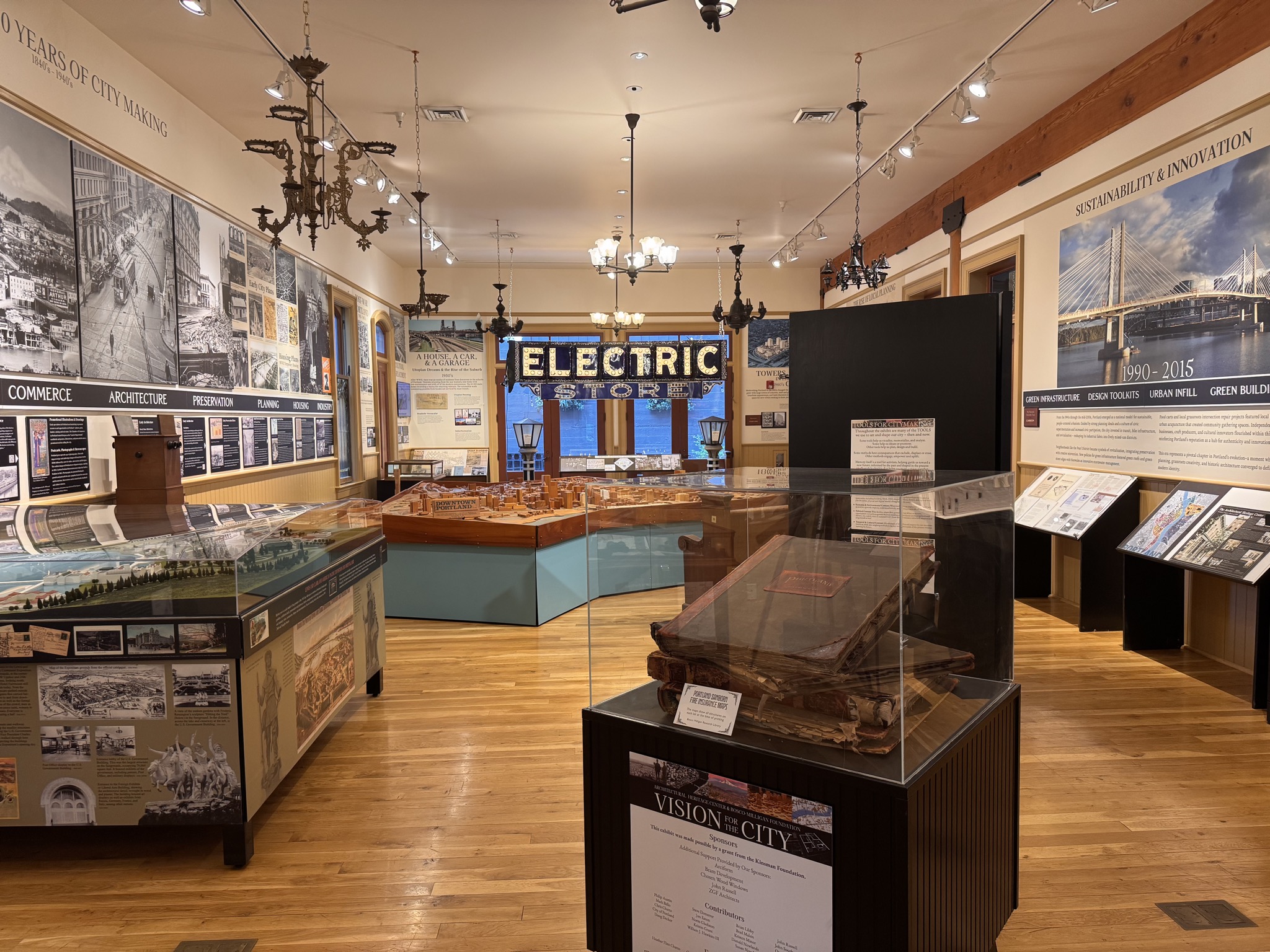
The main permanent exhibition at the Architectural Heritage Center in Portland, Oregon.

During a summer visit to Portland, Oregon, we stopped at the Architectural Heritage Center to conduct research but also visited their exhibitions, including When Doors Open: Places of Pride, which examined places associated with the city’s LGBTQ+ history. These places are often overlooked in museum exhibitions and historic preservation, which makes this exhibition especially useful as a reference for museums and historic sites thinking about how to interpret communities whose histories may be embedded in buildings, gathering places, businesses, and neighborhoods rather than conventional museum collections.

Opened in July 2025, Places of Pride explores the relationship among identity, place, and memory. The exhibition focuses on homes, gathering places, businesses, and other spaces that served not simply as physical settings but as places of belonging, support, activism, and community formation for LGBTQ+ Portlanders. It also highlights LGBTQ+ preservationists and activists who worked to protect buildings and places important to the city’s history.

The subject has a particularly strong connection to the Architectural Heritage Center itself. Its origins lie with Ben Milligan and Jerry Bosco, a gay couple who began collecting architectural elements salvaged from Portland buildings during the 1960s as professional partners. Together they accumulated stained glass, doors, hardware, tiles, mantels, lighting, and other architectural fragments while also acquiring and preserving historic properties. After both were diagnosed with AIDS in the 1980s, they developed plans for the Bosco-Milligan Foundation so that their collection could continue to support preservation education. The Architectural Heritage Center eventually opened to the public in 2005.

Continue reading →

Field Notes: “Experience Oregon” at the Oregon Historical Society

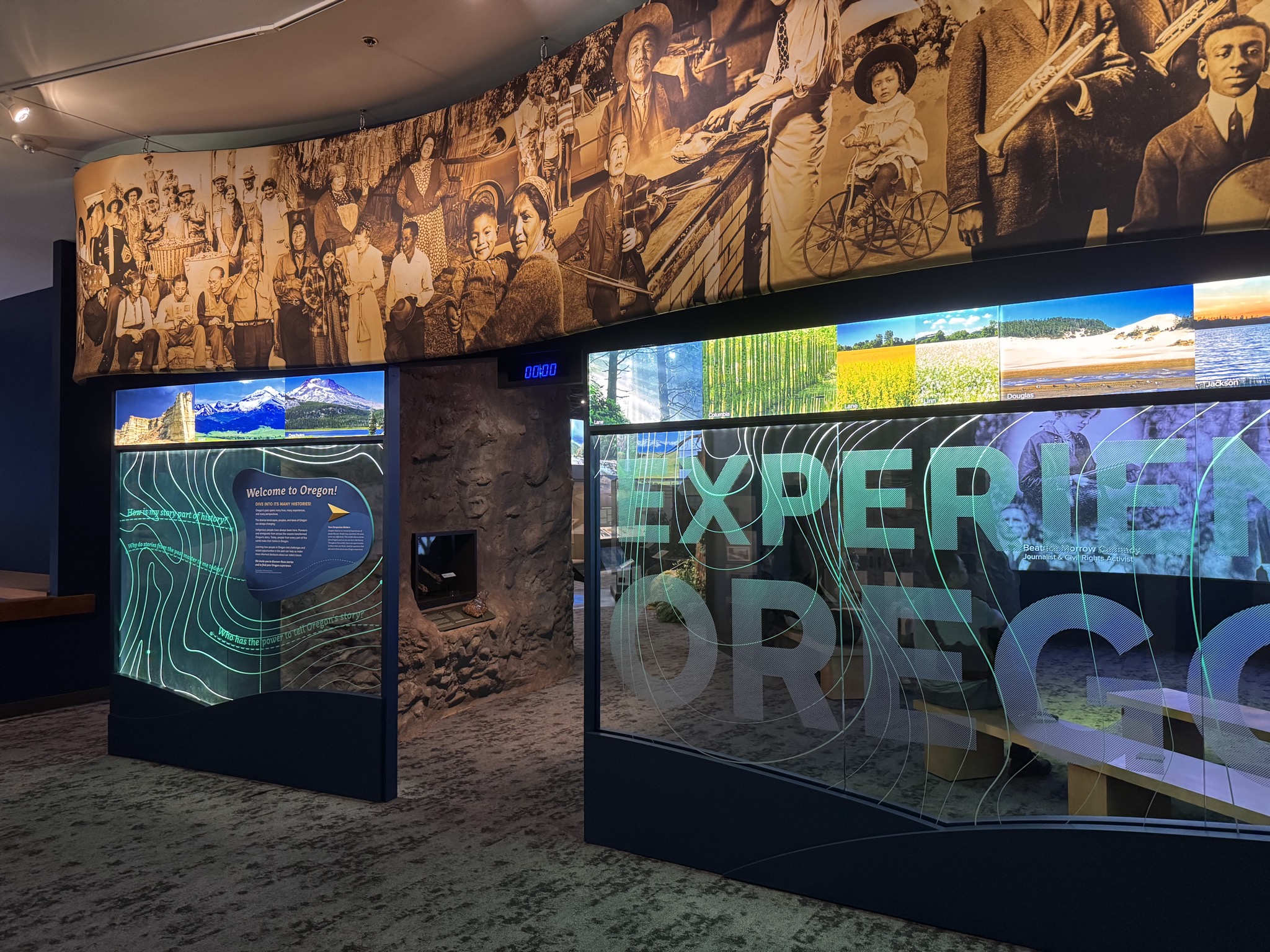
Most of us see only a small fraction of the exhibitions being produced by museums around the country. Experience Oregon, the permanent exhibition at the Oregon Historical Society in Portland, offers one example of how a state history museum can combine collections, media, immersive environments, and interactive experiences to tell a broad and complicated story.

Opened in February 2019, Experience Oregon occupies the museum’s entire third floor and explores Oregon history from human settlement to the present. Rather than relying entirely on a chronological narrative, the exhibition makes connections across time through subjects such as home, movement, and water, while emphasizing the relationships among people, communities, and the land. More than 300 objects and archival materials from the Oregon Historical Society’s collections appear throughout the exhibition.

The exhibition offers many different ways to encounter that history. Visitors begin with a panoramic theater introducing Oregon’s landscapes, people, and major themes. Elsewhere they can walk through a covered wagon, explore maps, listen to personal narratives, encounter historic photographs and artifacts, participate in debates about historical issues, and learn about subjects ranging from Indigenous cultures and treaty-making (or treaty-breaking!) to migration, racism, immigration, civil rights, industry, transportation, politics, and social change. OHS described more than twenty interactive stations when the exhibition opened, including sensory experiences that use smells associated with salmon, hazelnuts, and wheat.

The exhibition was designed by The Design Minds and fabricated by 1220 Exhibits. Digital media is integrated throughout rather than concentrated in a single area. North Shore Productions developed the exhibition’s media, including the panoramic introductory film, archival documentaries, audio narratives, and a film about the revitalization of Chinuk Wawa. Upswell developed several of the interactive experiences, including map-based explorations, stations where visitors consider issues from Oregon’s past, and a digital “Memory Blanket” that allows visitors to assemble a personal record of their experience.

The exhibition received a 2020 Leadership in History Award from the American Association for State and Local History and a 2020 Special Achievement – Informed by Community Voices Award from the American Alliance of Museums.

Continue reading →

Local Museums Connect GW and NSDCA

IMG_4059

Museum studies students learning QGIS in GW’s Museums and Community Engagement course.

Closing out my first semester as a professor in the Museum Studies Program at George Washington University was inspirational.  Graduation was perhaps the culmination of the students’ achievements, but it was also seen in their final products in the three courses I taught.  I always aim to give them a major project that provides a real-world experience, such as completing an Organizational Assessment report from AAM’s Museum Assessment Program (MAP). In the “Museums and Community Engagement” class, the final assignment is a community engagement plan but it was done in partnership with several local museums, creating a mutually-beneficial relationship.

Because The National Society of The Colonial Dames of America (NSCDA) has the largest alliance of museums and historic sites in the nation (except for the National Park Service), I prepared for the course by reaching out to my colleagues at Dumbarton House in Washington, DC, which is the headquarters for the Dames. Karen Daly and Catherine Nuzum welcomed the partnership between this course and their sites, providing advice along the way and helping me identify Continue reading →