Most of us see only a small fraction of the exhibitions being produced by museums around the country. Experience Oregon, the permanent exhibition at the Oregon Historical Society in Portland, offers one example of how a state history museum can combine collections, media, immersive environments, and interactive experiences to tell a broad and complicated story.
Opened in February 2019, Experience Oregon occupies the museum’s entire third floor and explores Oregon history from human settlement to the present. Rather than relying entirely on a chronological narrative, the exhibition makes connections across time through subjects such as home, movement, and water, while emphasizing the relationships among people, communities, and the land. More than 300 objects and archival materials from the Oregon Historical Society’s collections appear throughout the exhibition.
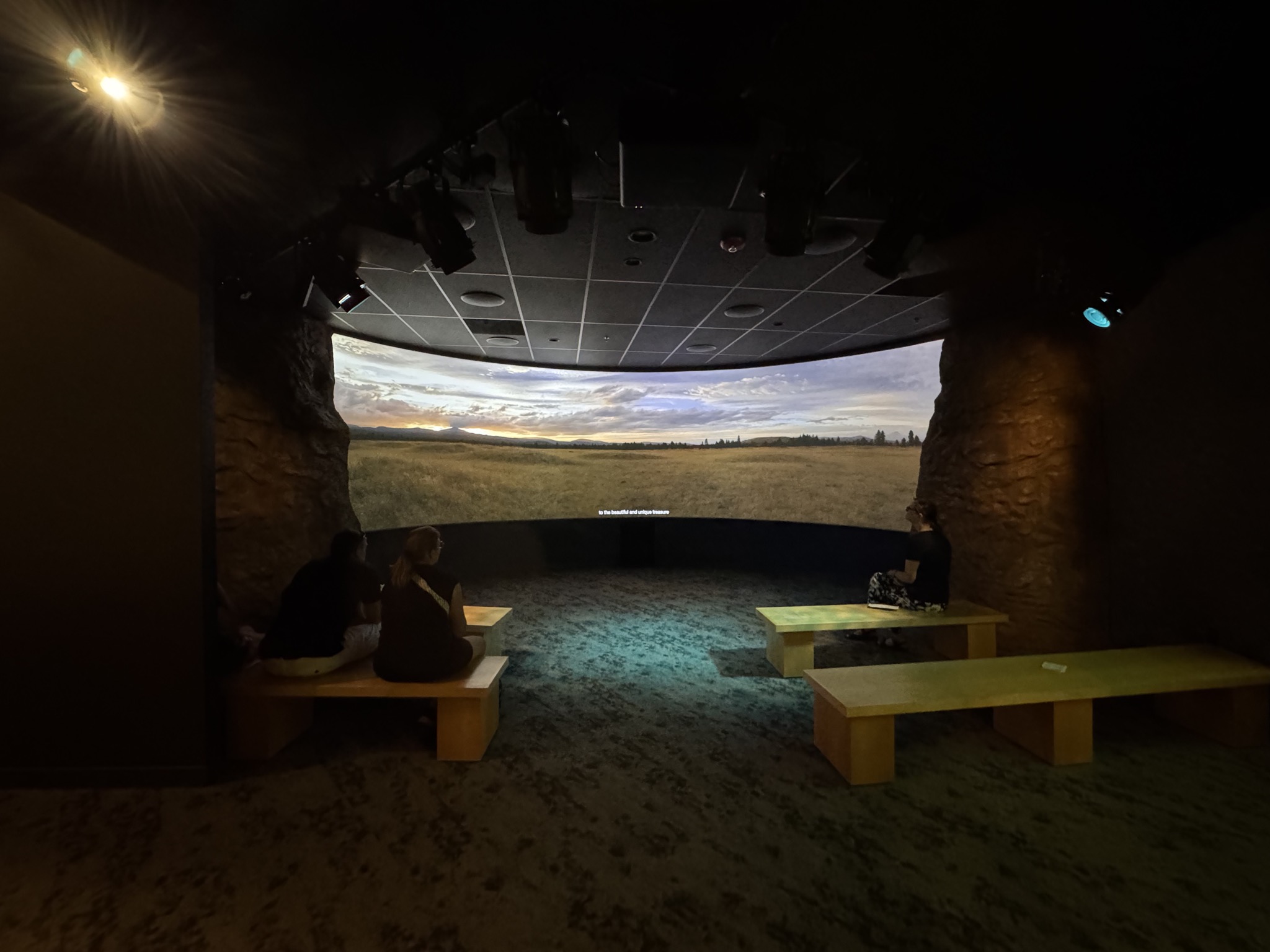
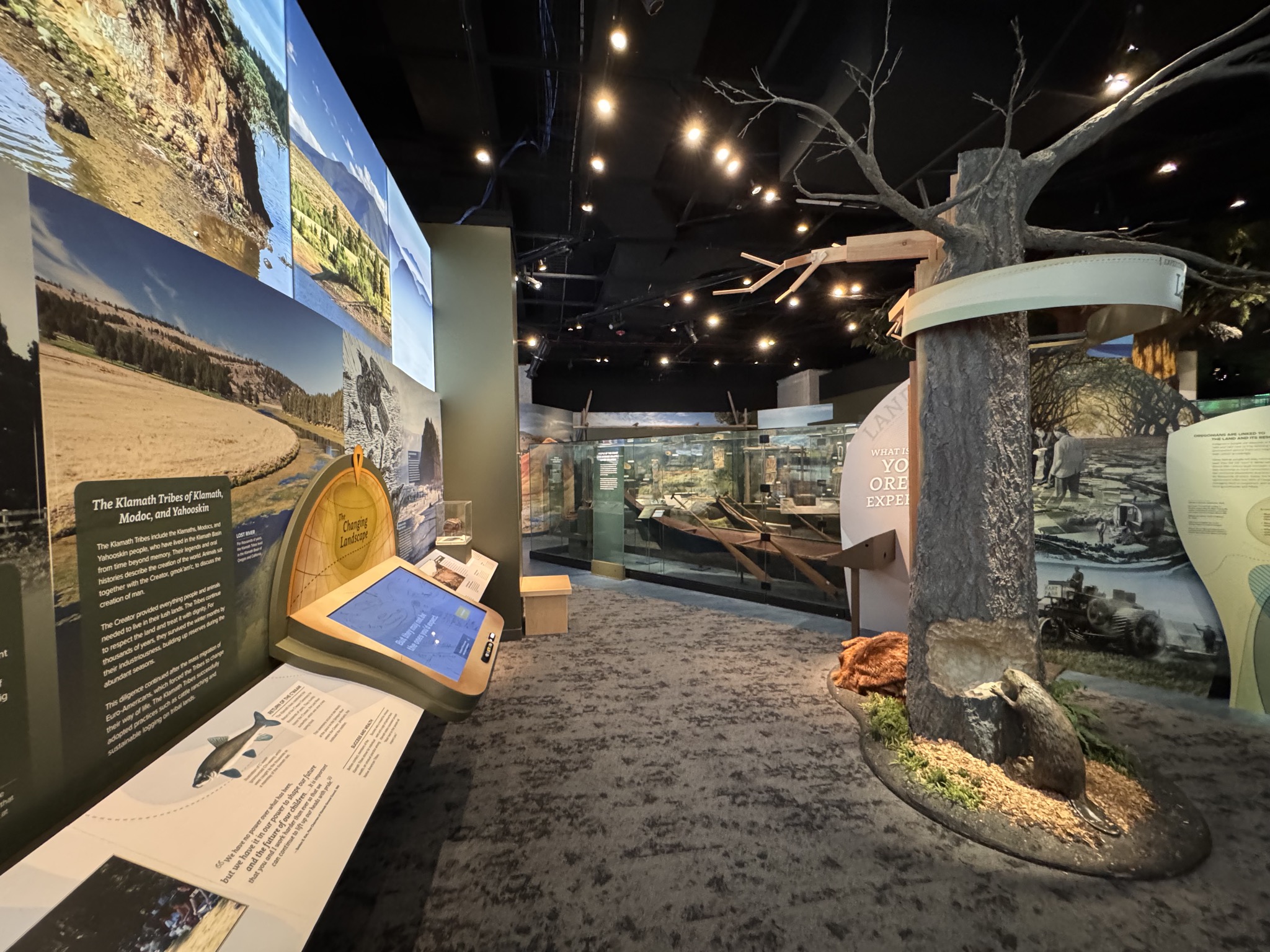
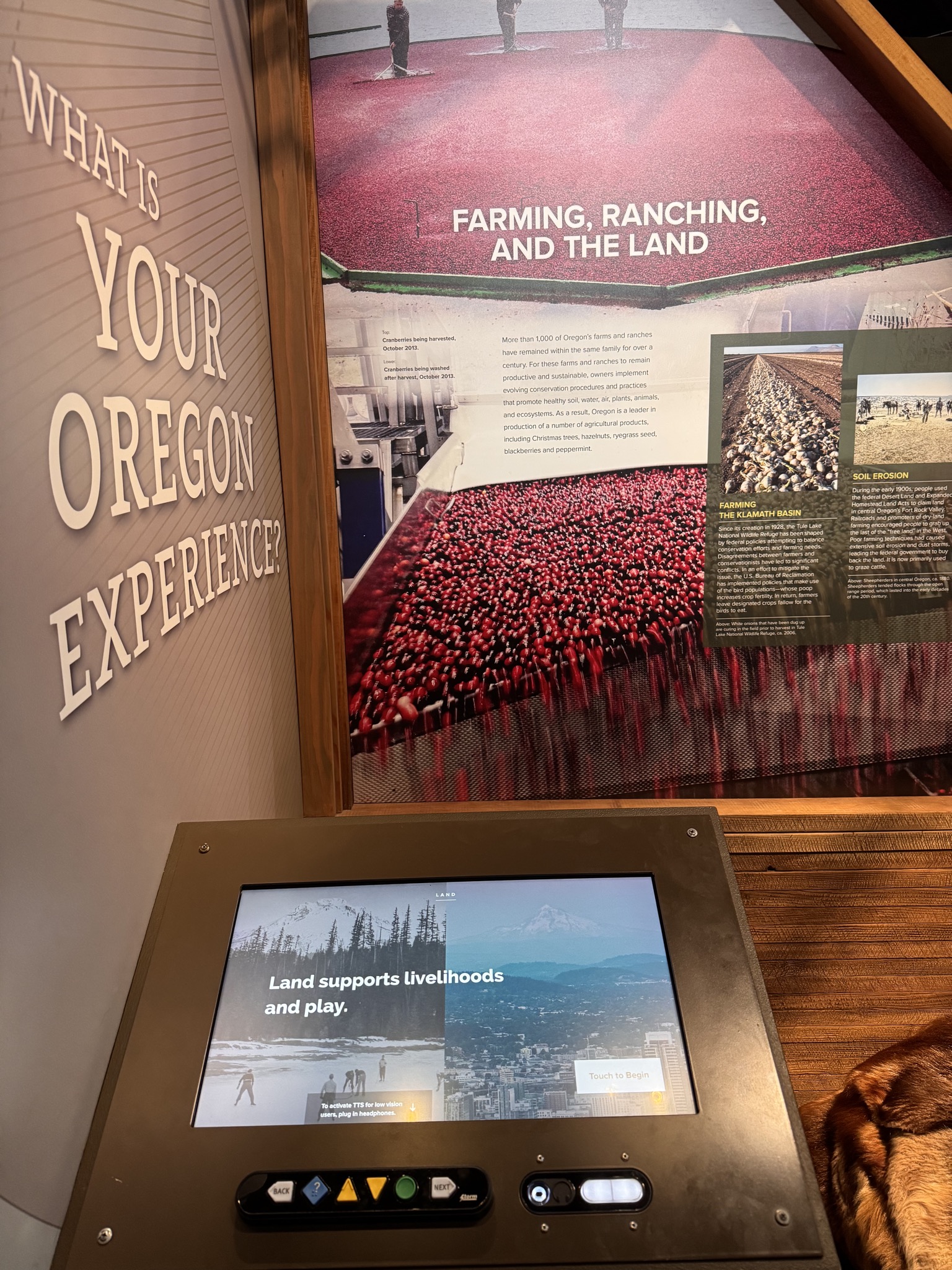
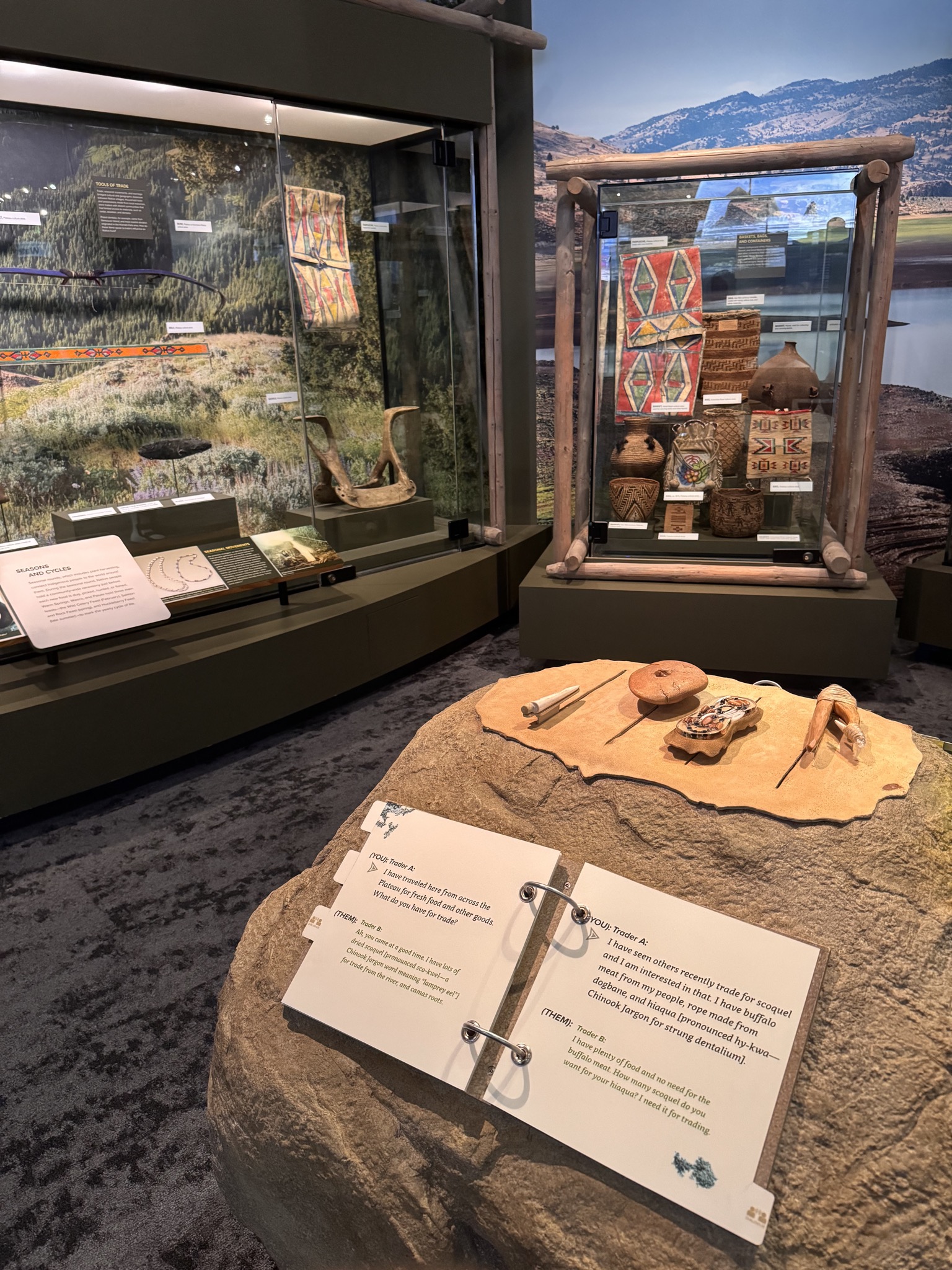
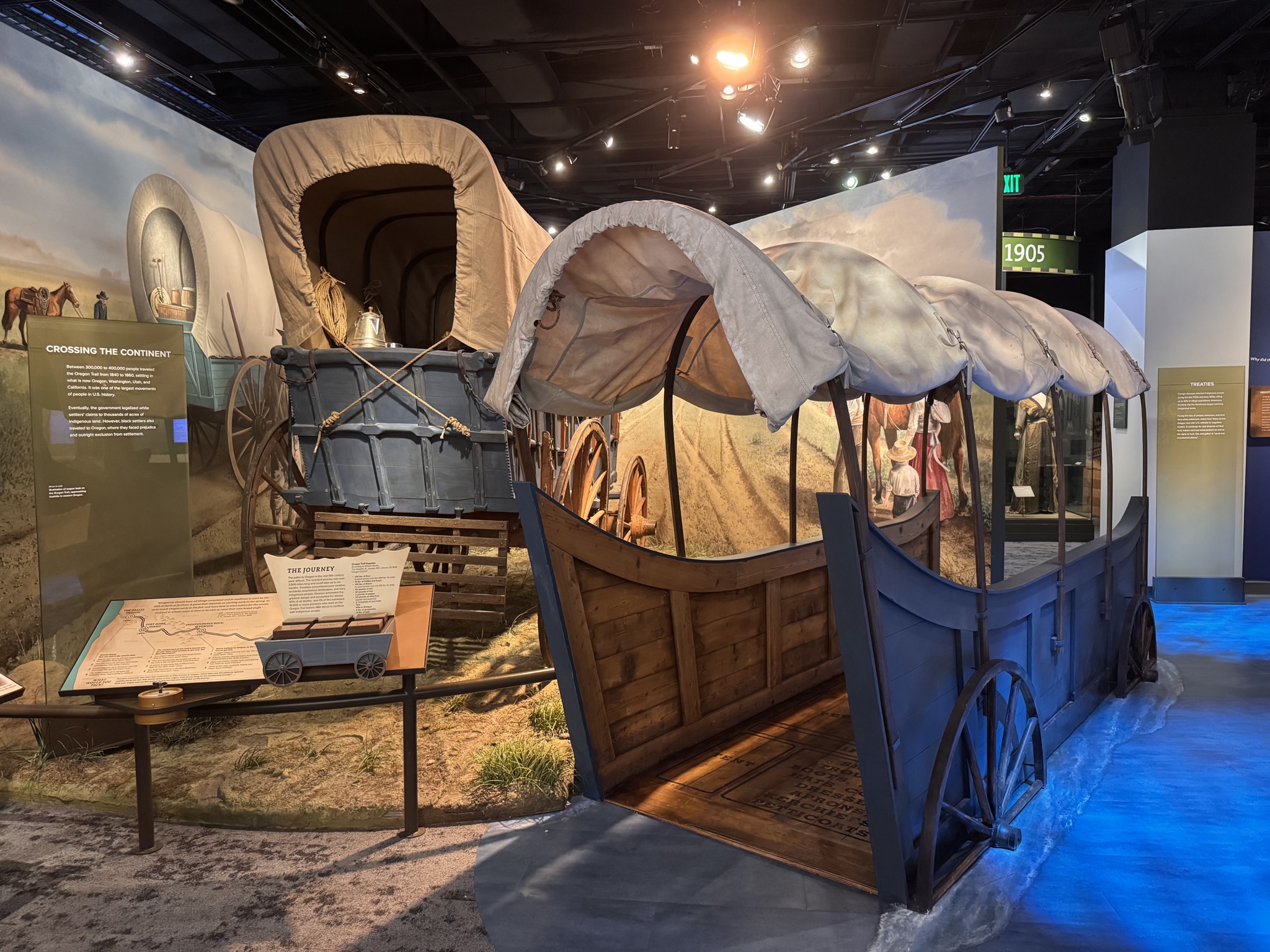
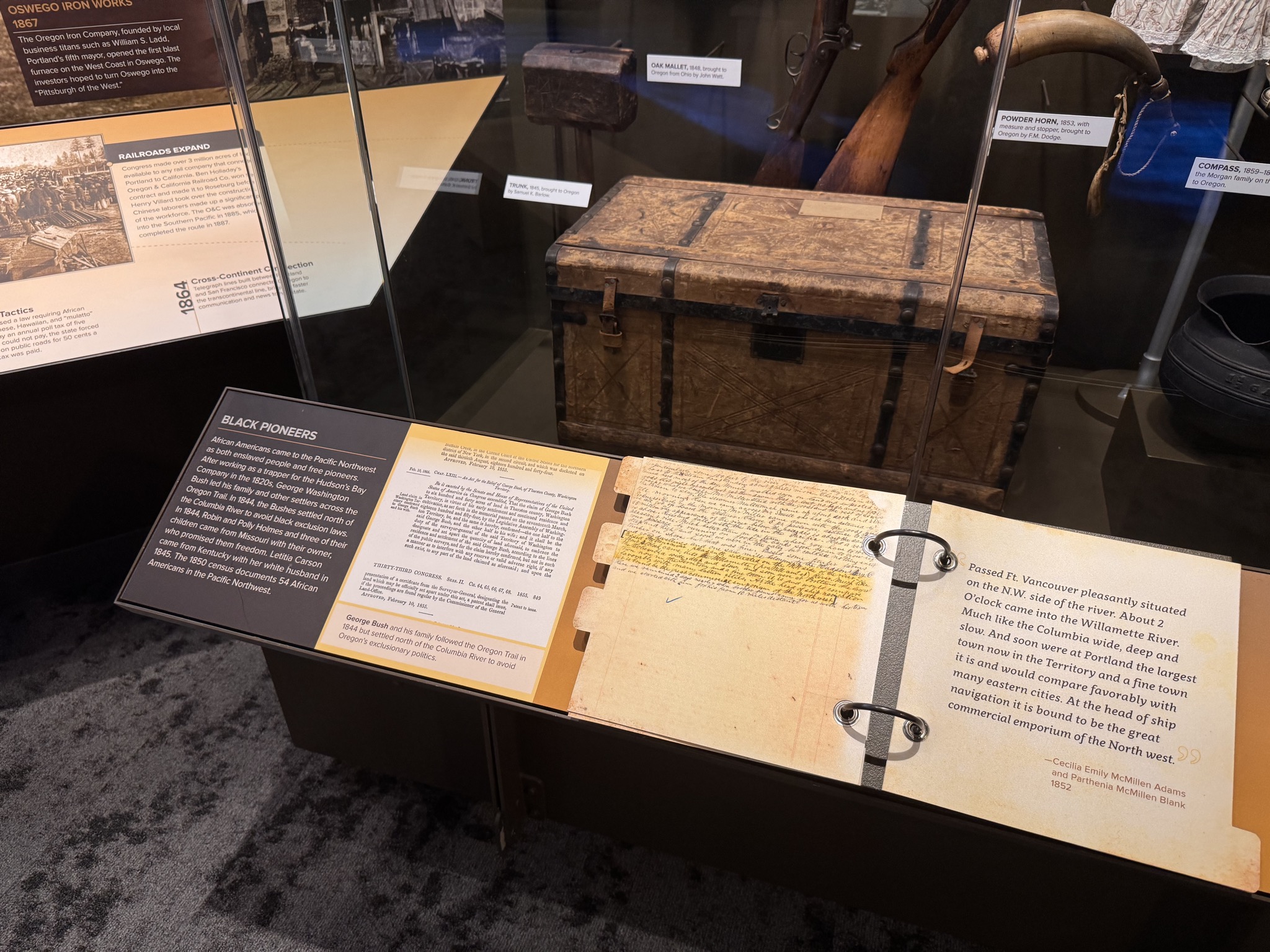
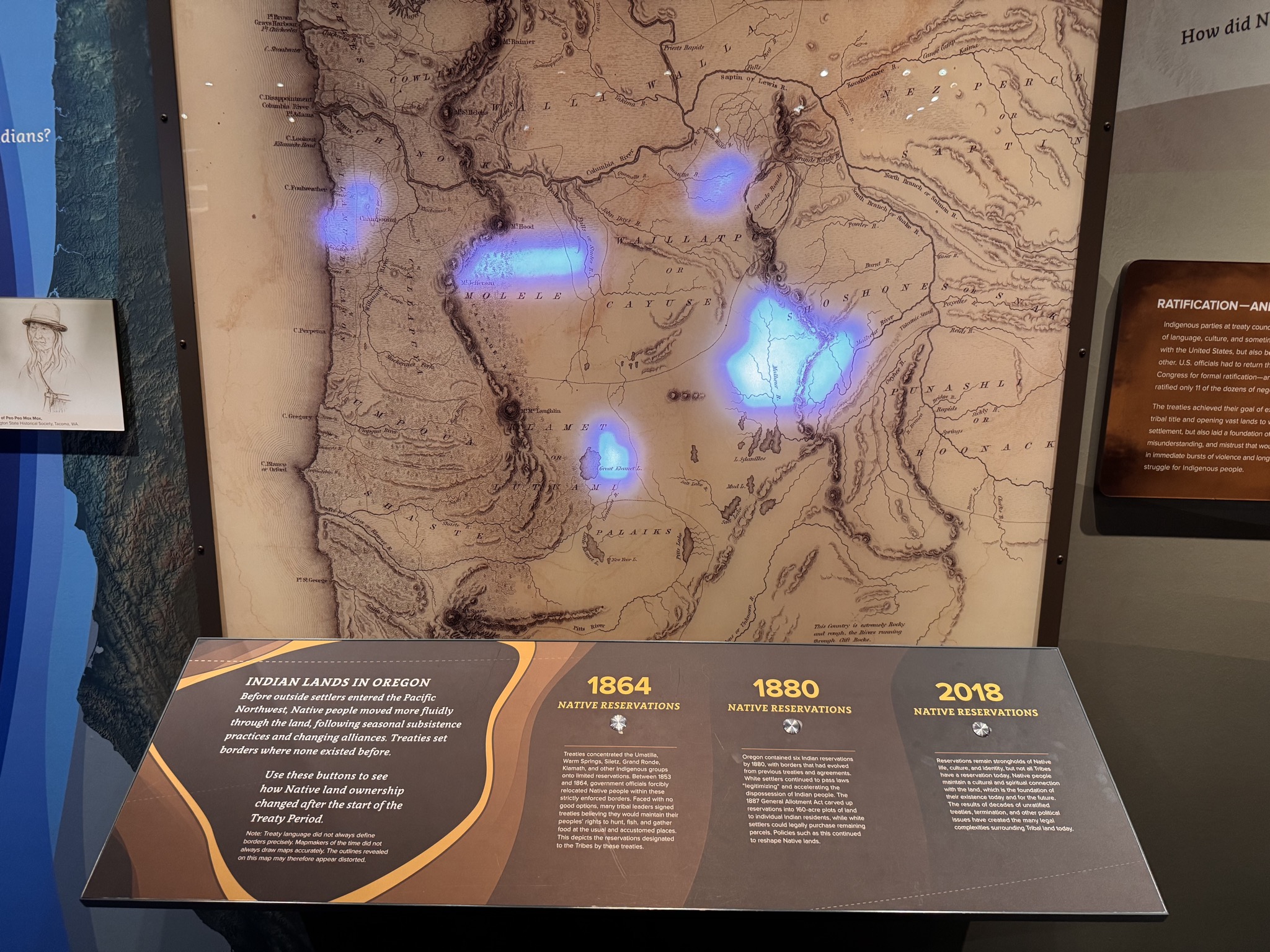
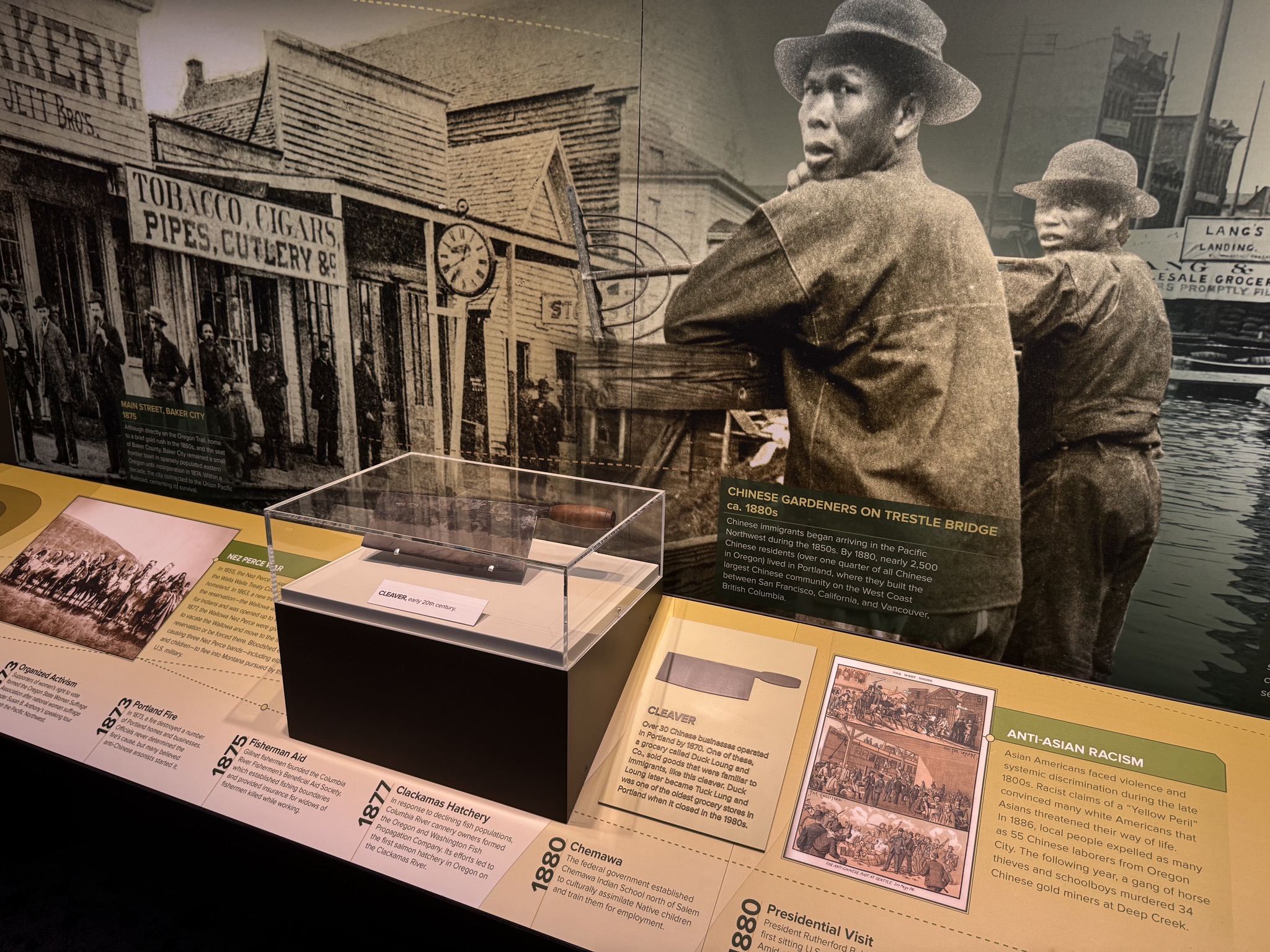
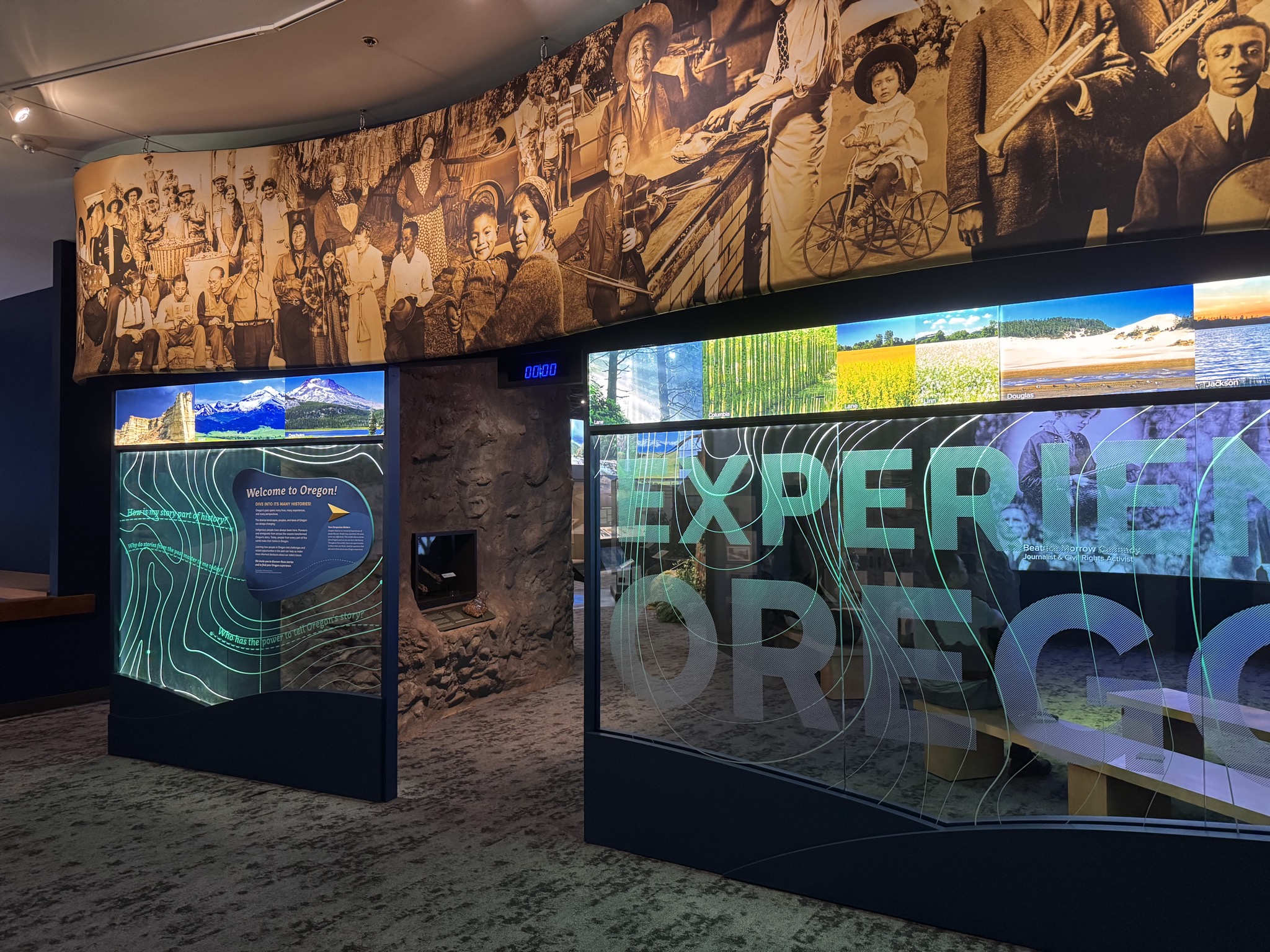
The exhibition offers many different ways to encounter that history. Visitors begin with a panoramic theater introducing Oregon’s landscapes, people, and major themes. Elsewhere they can walk through a covered wagon, explore maps, listen to personal narratives, encounter historic photographs and artifacts, participate in debates about historical issues, and learn about subjects ranging from Indigenous cultures and treaty-making (or treaty-breaking!) to migration, racism, immigration, civil rights, industry, transportation, politics, and social change. OHS described more than twenty interactive stations when the exhibition opened, including sensory experiences that use smells associated with salmon, hazelnuts, and wheat.
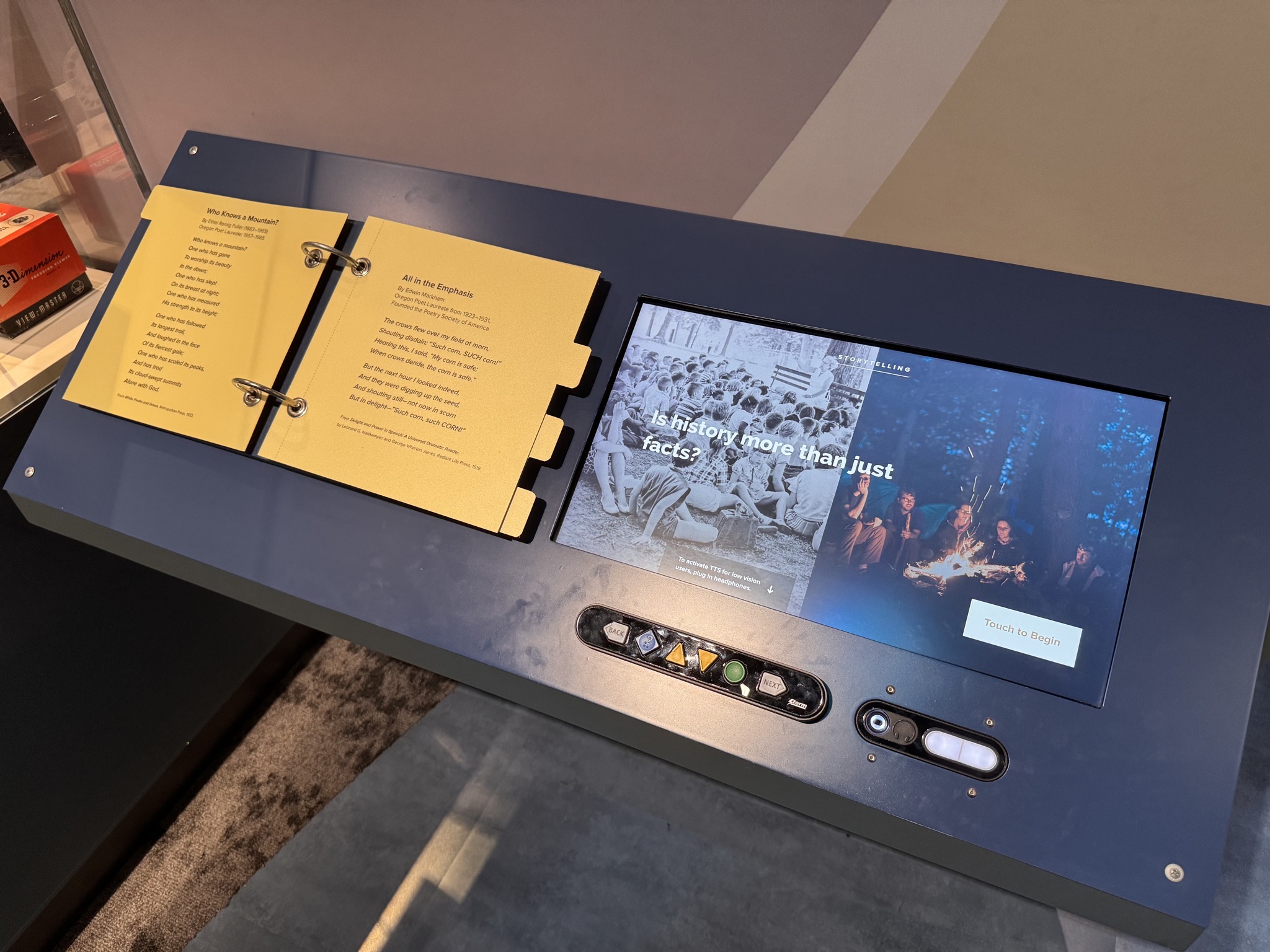
The exhibition was designed by The Design Minds and fabricated by 1220 Exhibits. Digital media is integrated throughout rather than concentrated in a single area. North Shore Productions developed the exhibition’s media, including the panoramic introductory film, archival documentaries, audio narratives, and a film about the revitalization of Chinuk Wawa. Upswell developed several of the interactive experiences, including map-based explorations, stations where visitors consider issues from Oregon’s past, and a digital “Memory Blanket” that allows visitors to assemble a personal record of their experience.
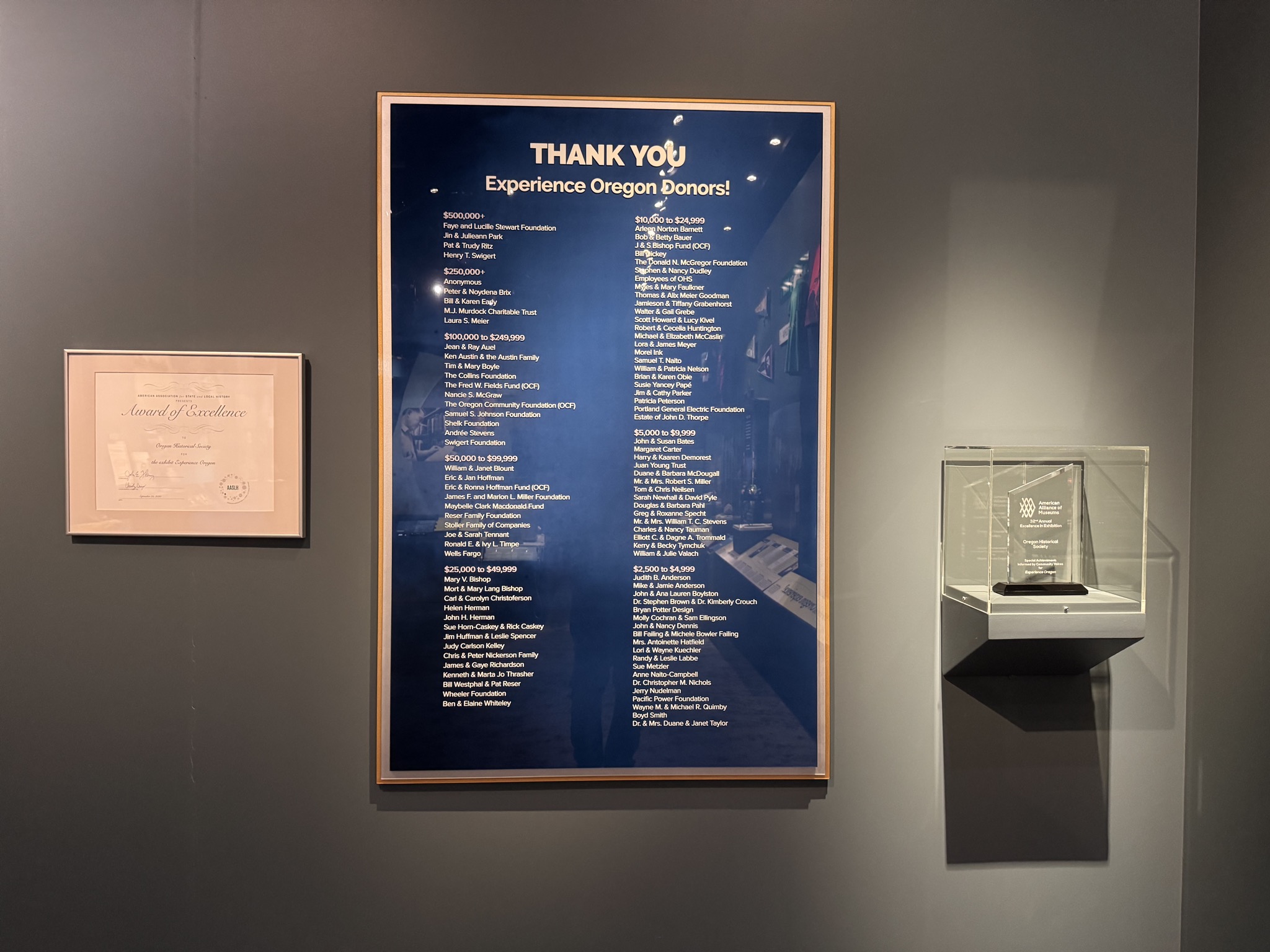
The exhibition received a 2020 Leadership in History Award from the American Association for State and Local History and a 2020 Special Achievement – Informed by Community Voices Award from the American Alliance of Museums.
Looking at the exhibition
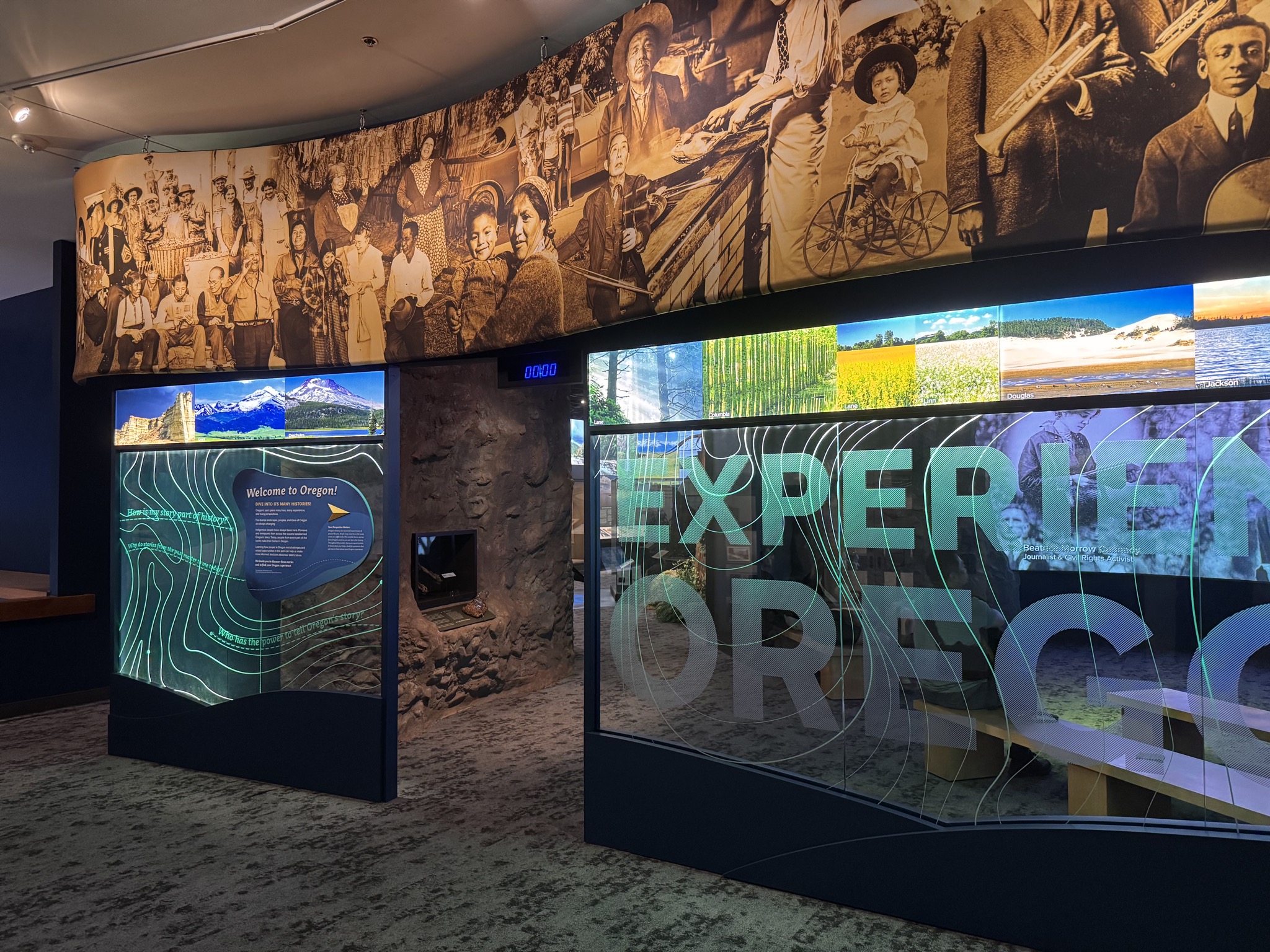
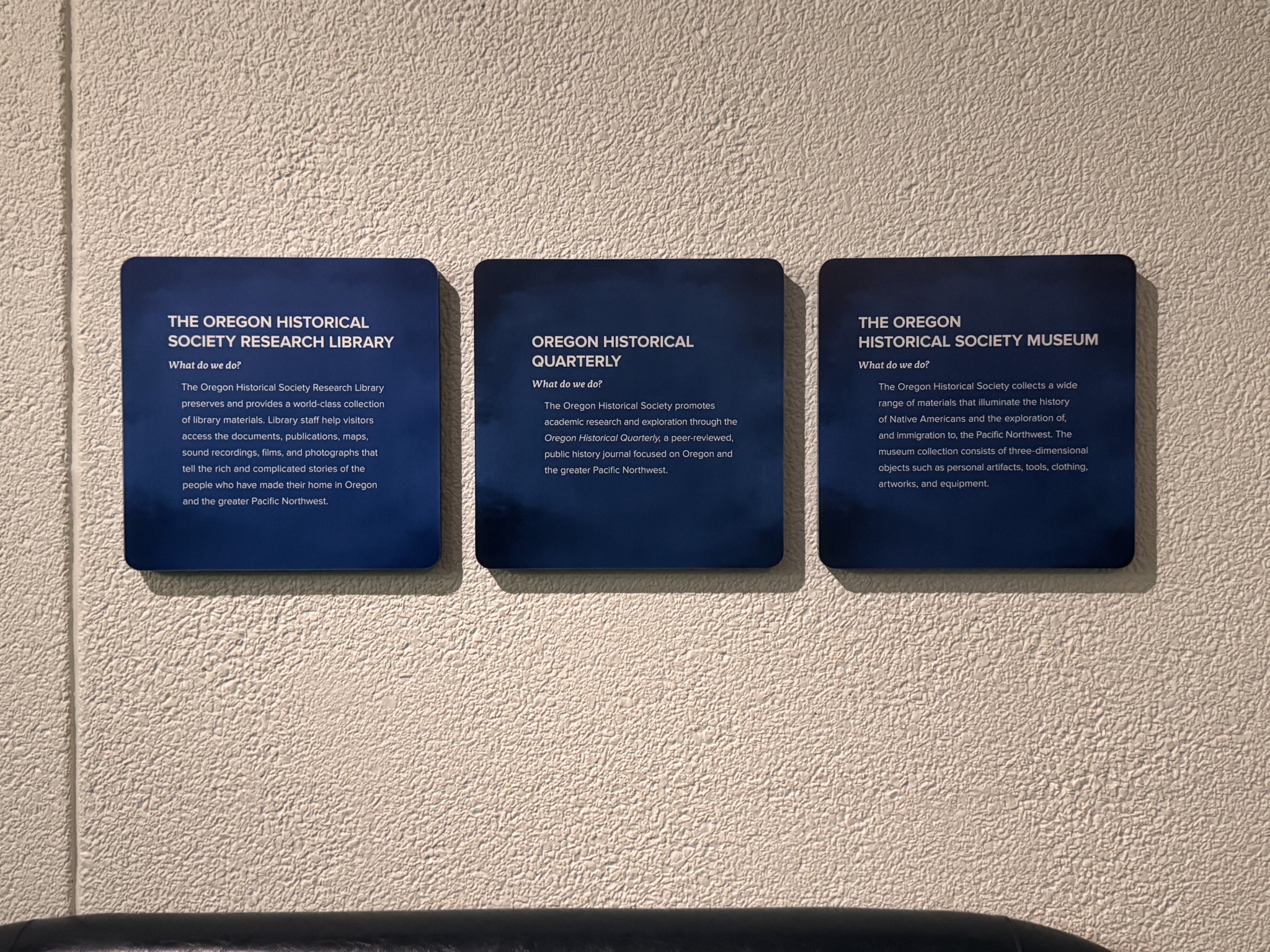
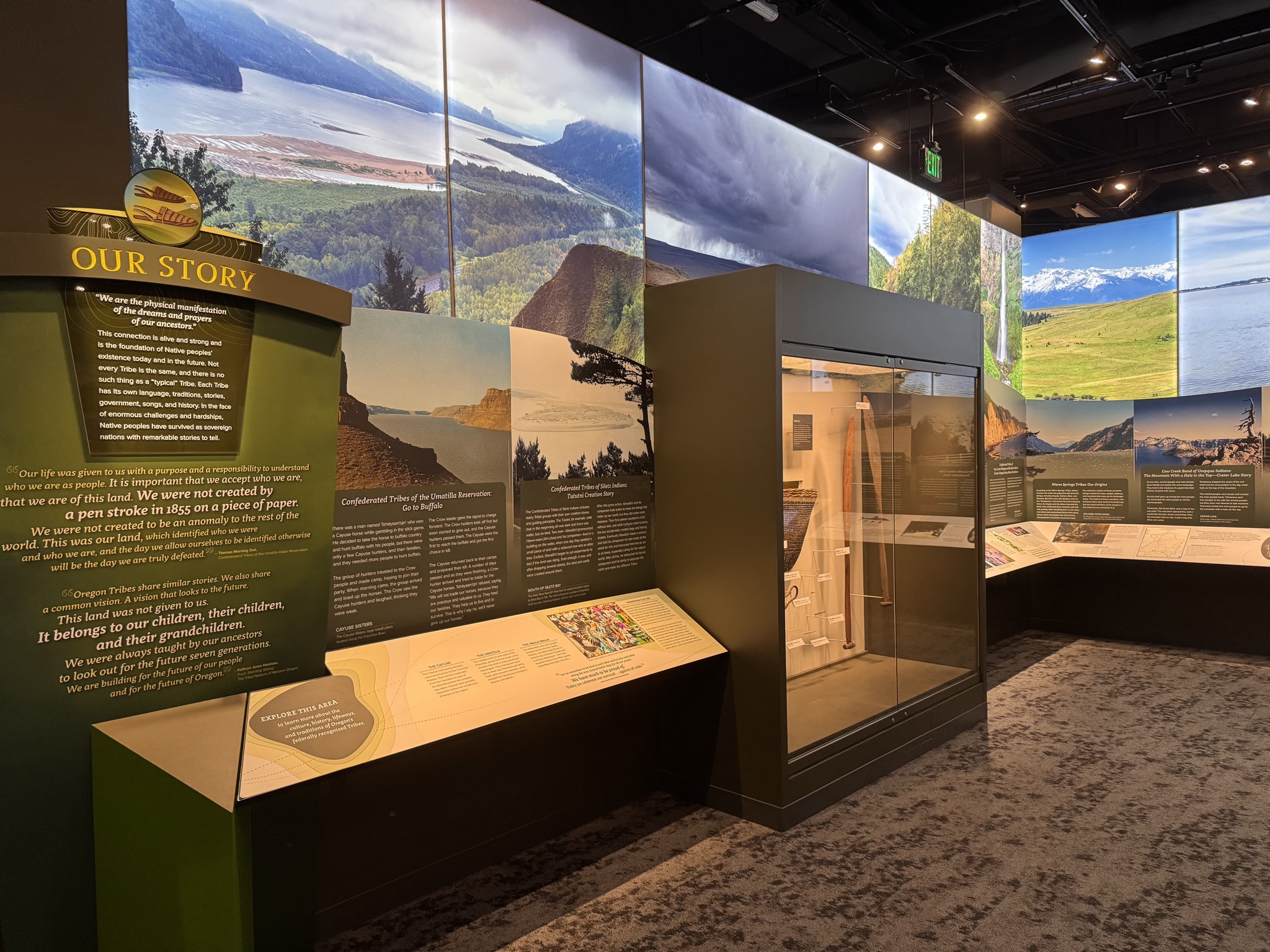
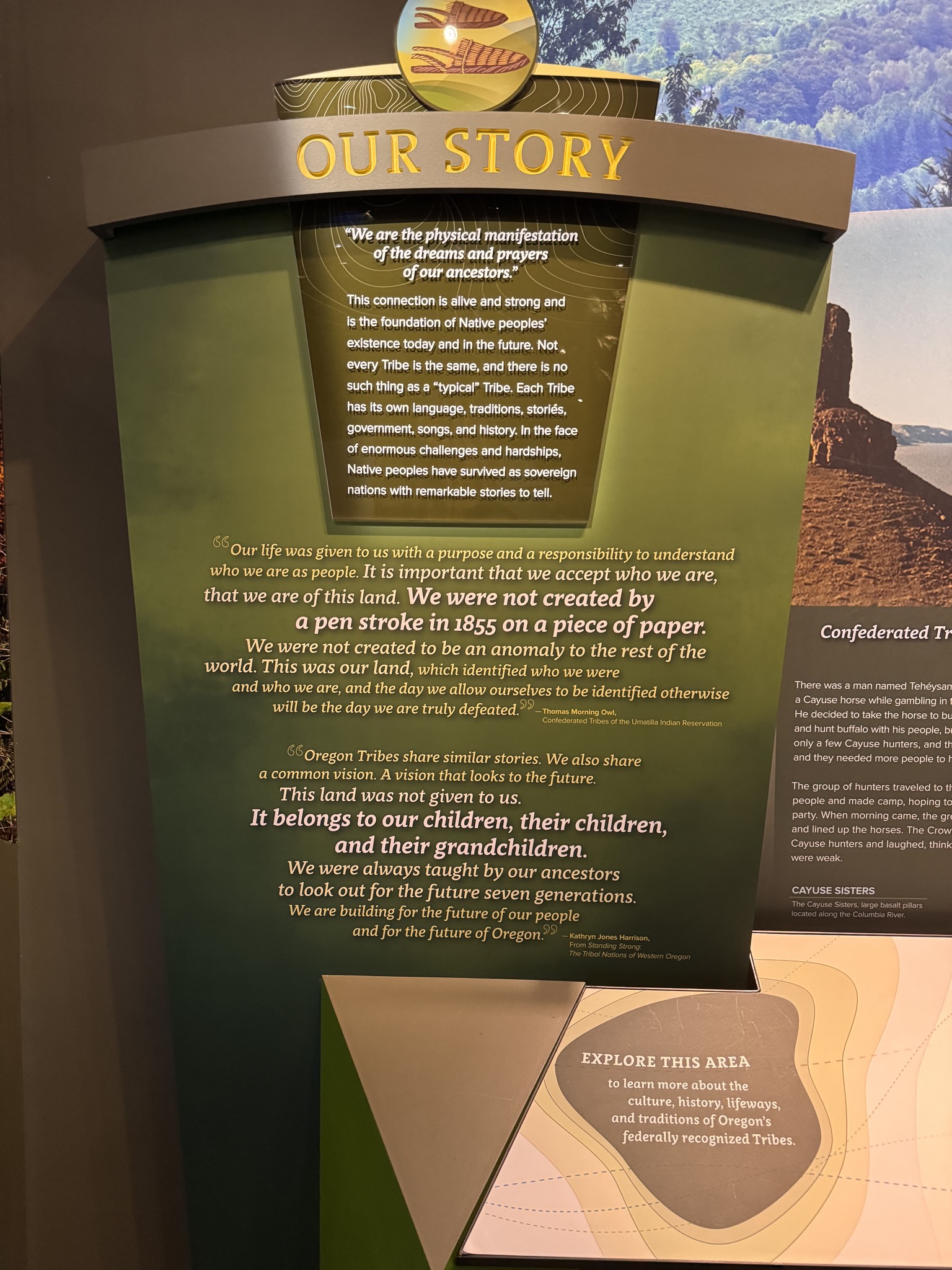
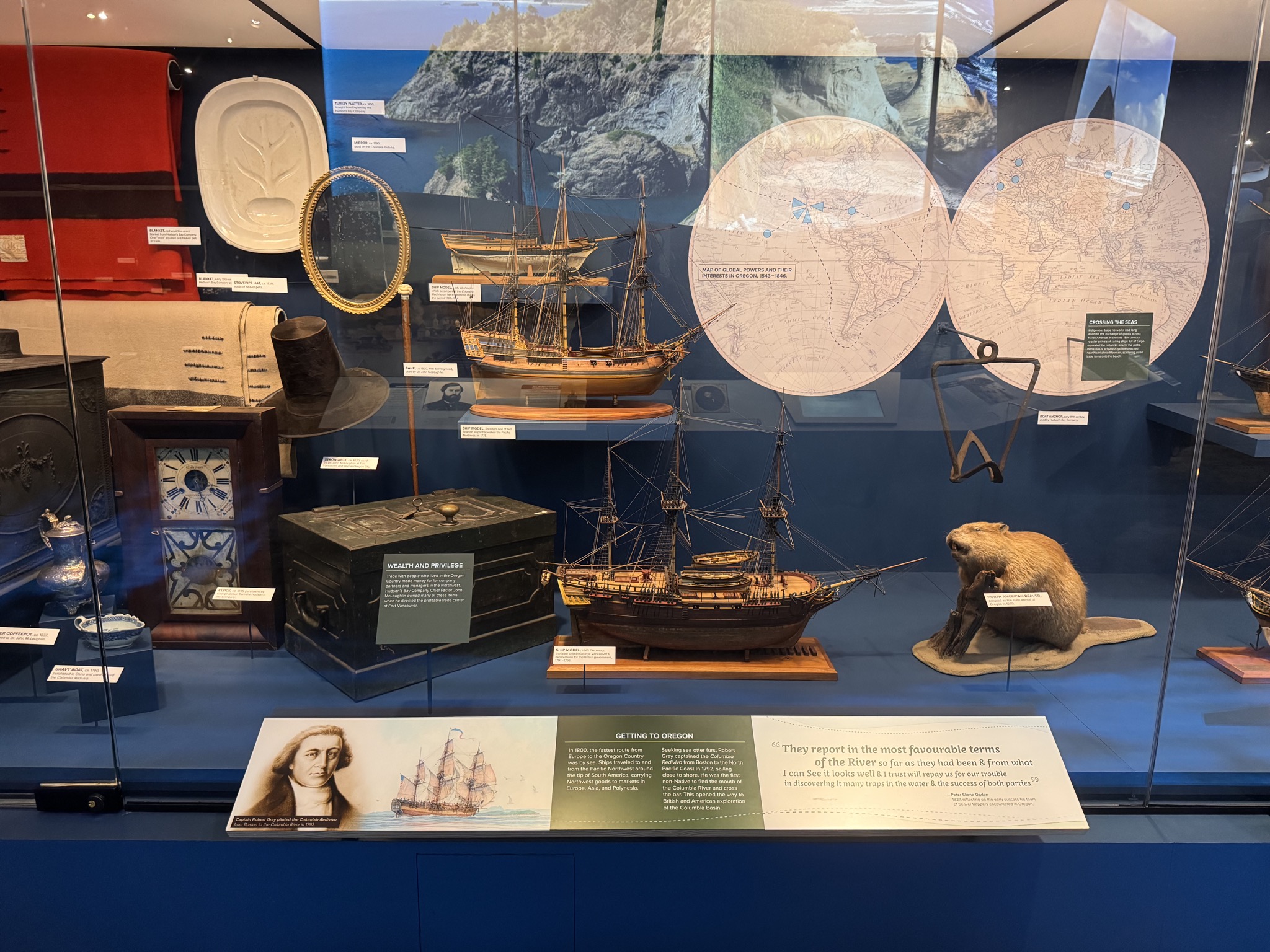
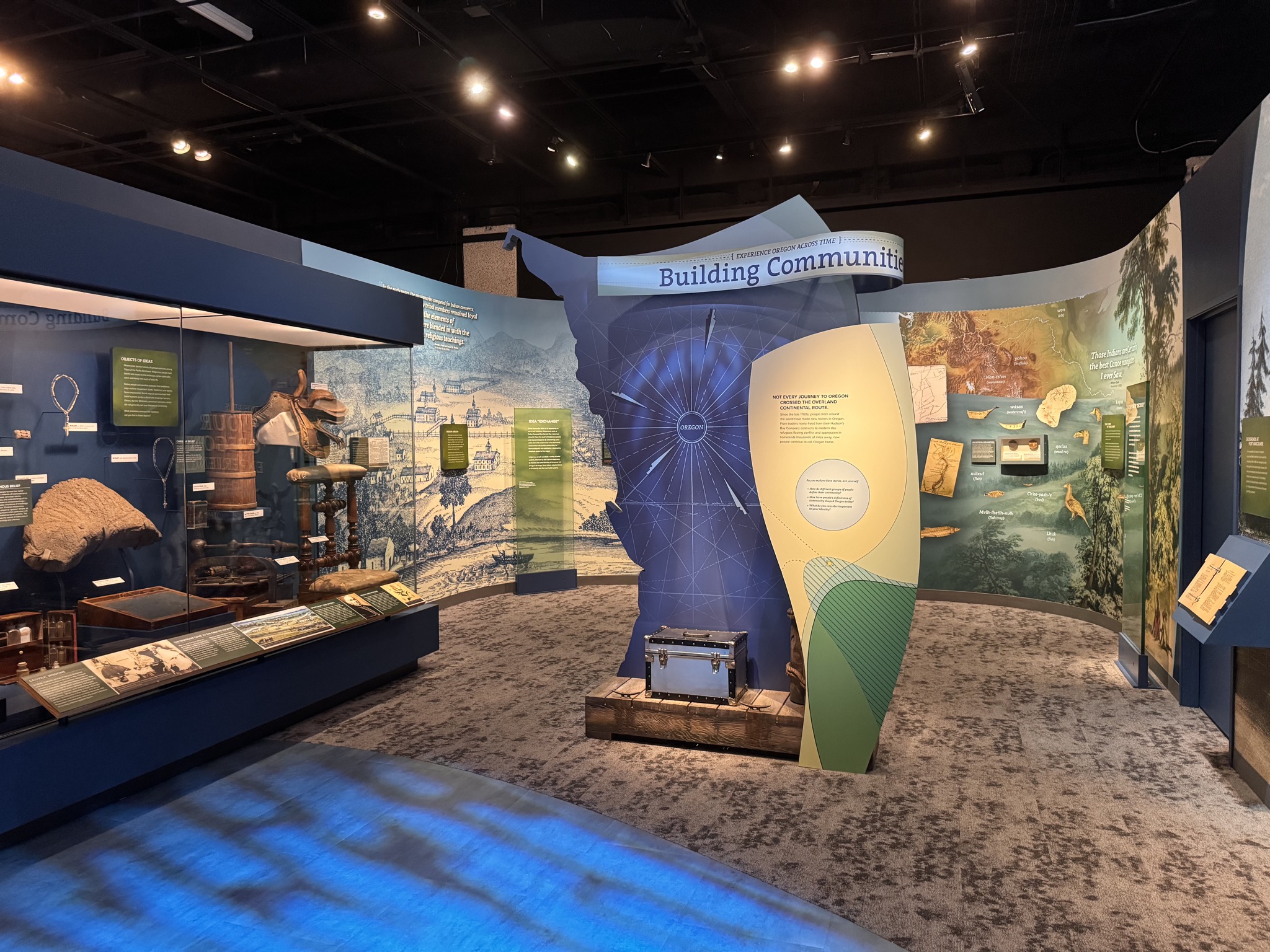
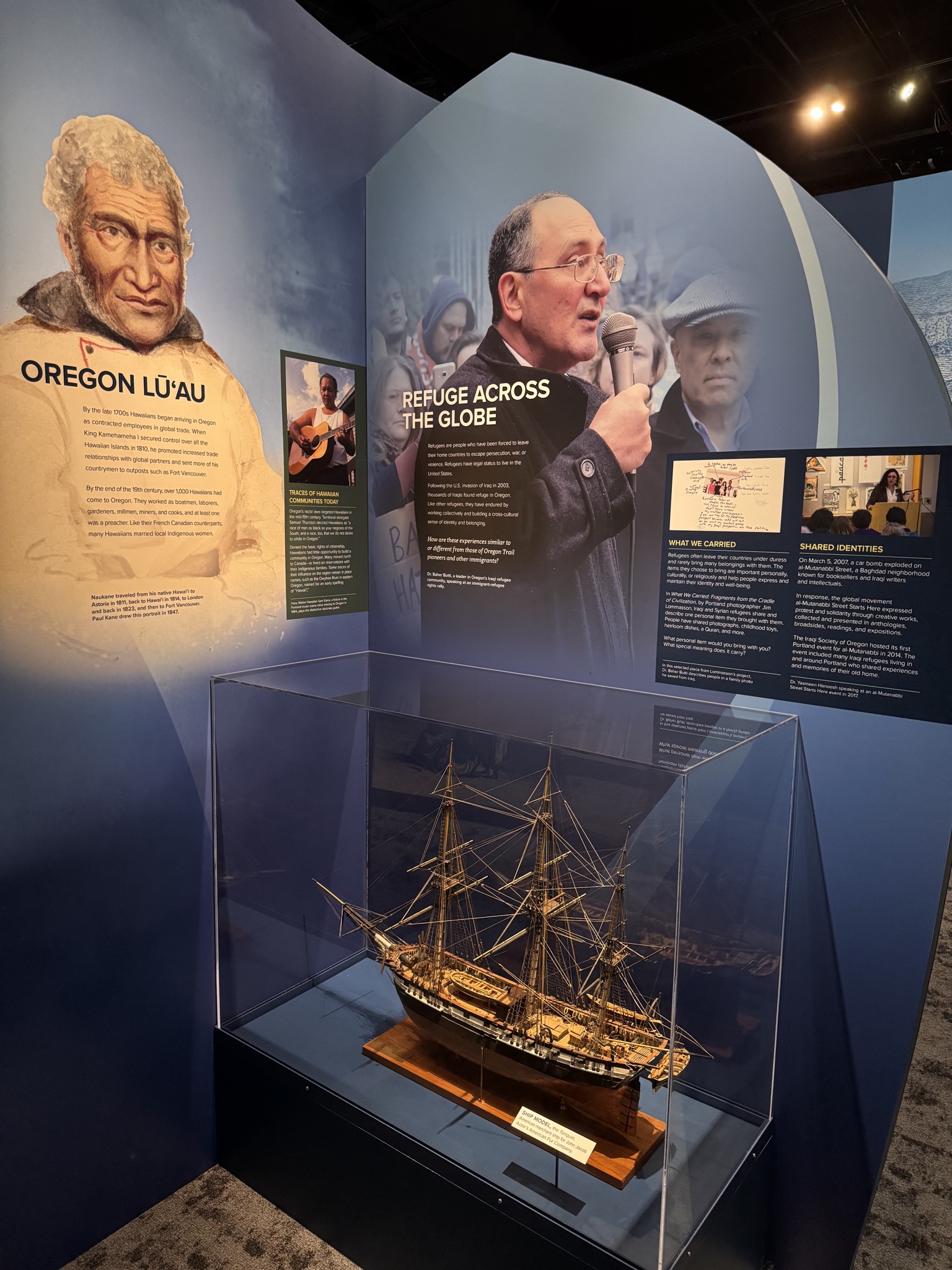
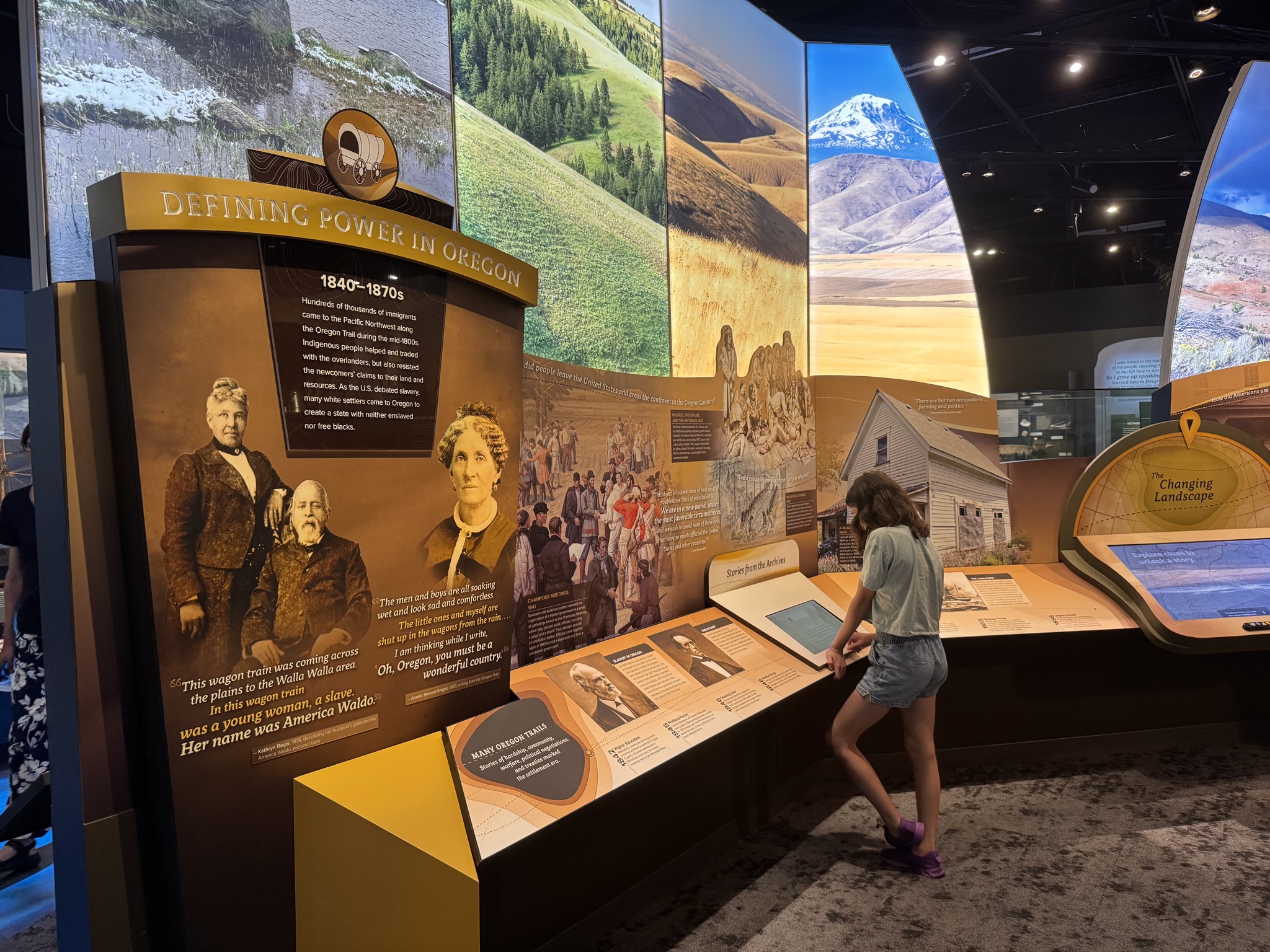
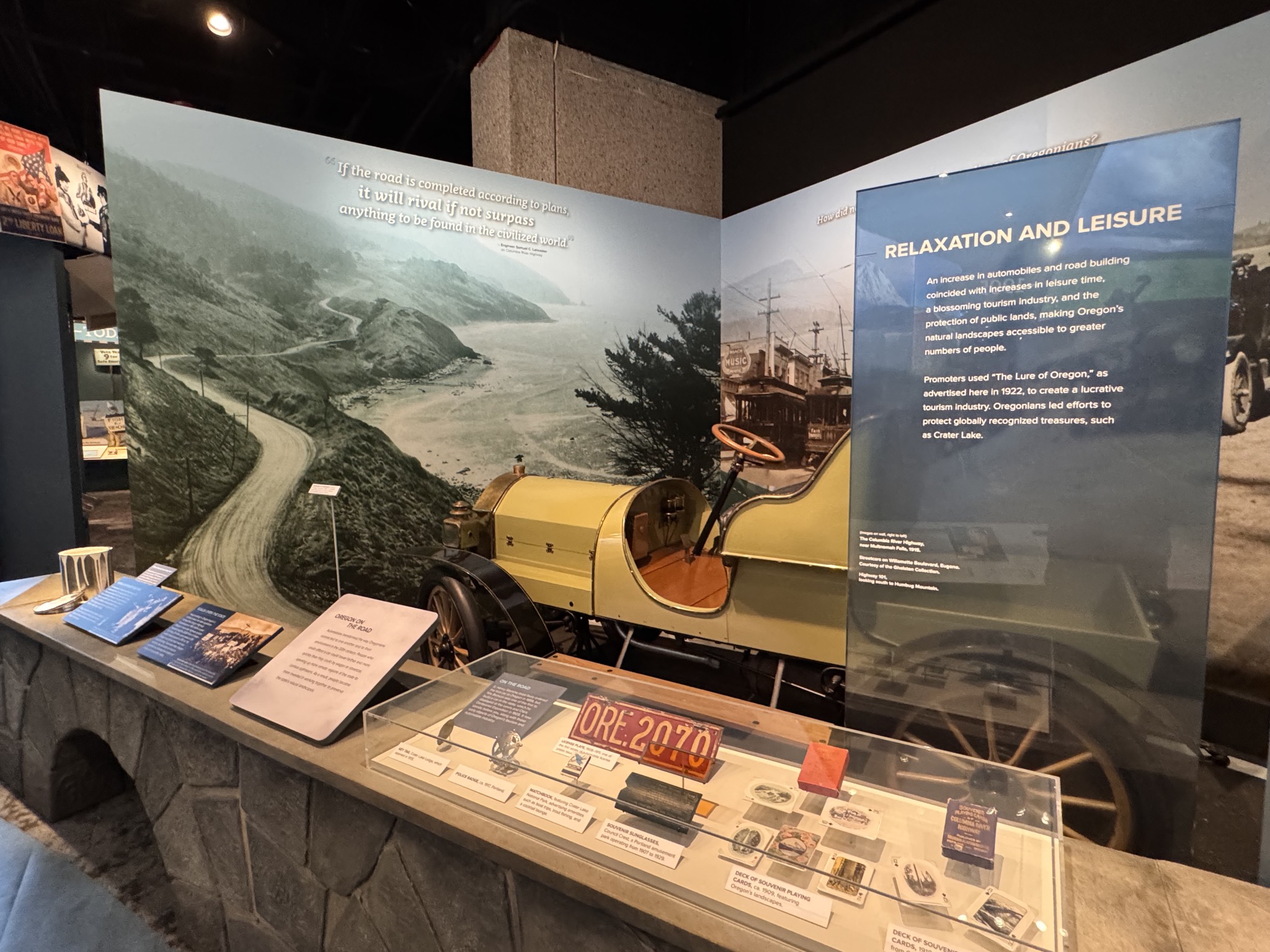
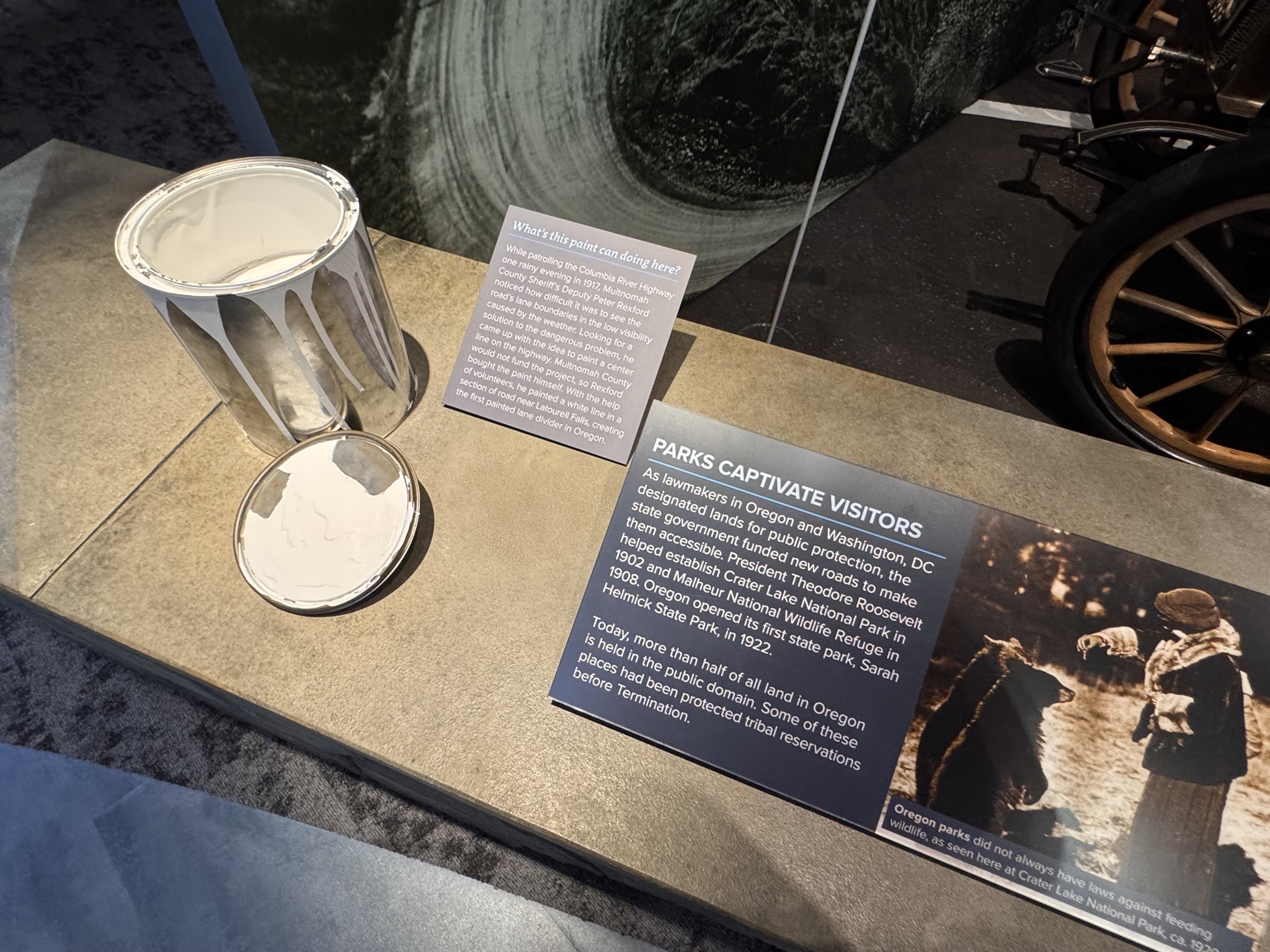
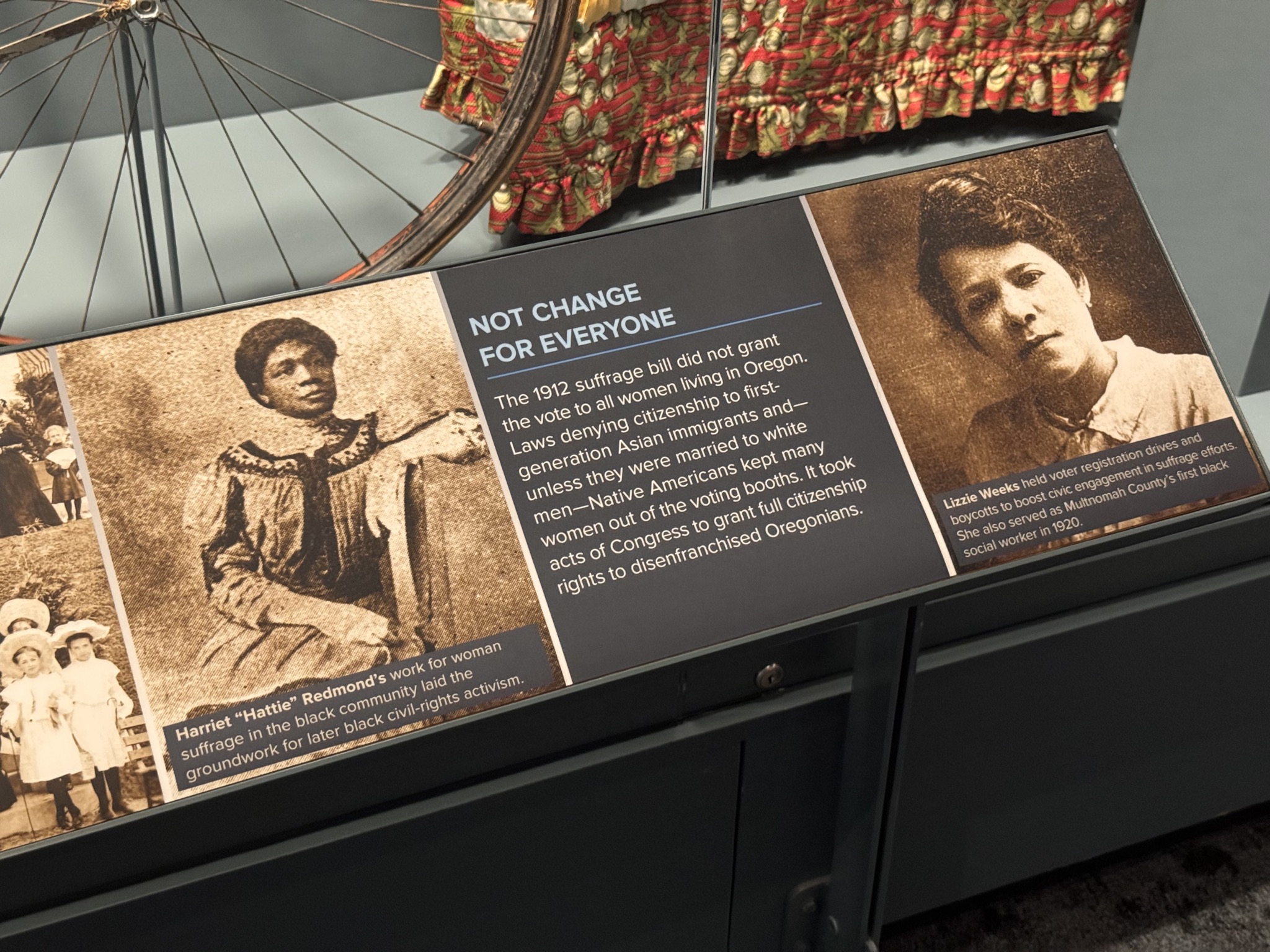
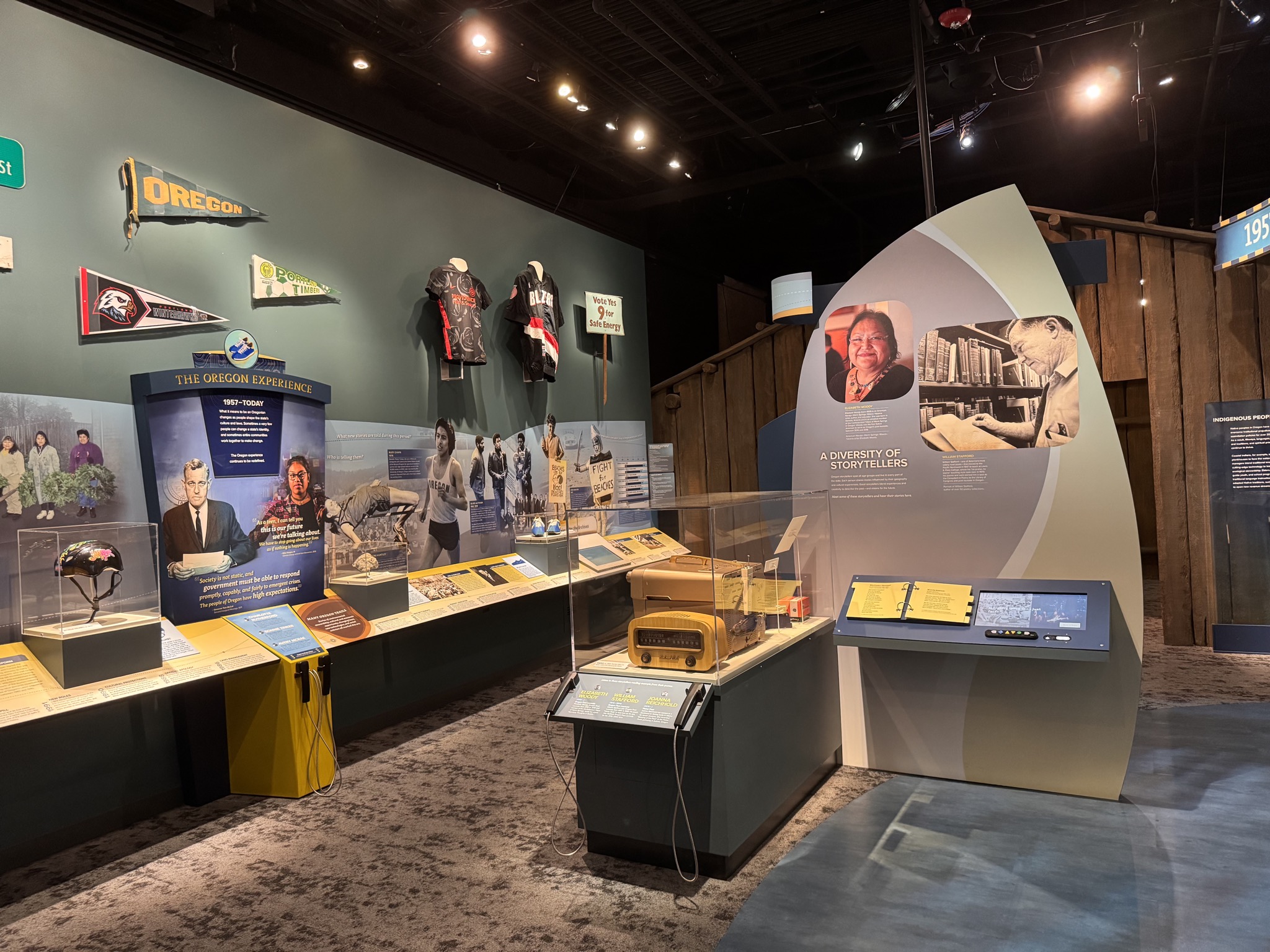
The photographs below are intended as documentation rather than exhibition photography. They have deliberately not been selected primarily because they are beautiful images. Instead, I have tried to show what a visitor actually encounters: entrances and transitions, cases and labels, objects in context, media installations, interactive stations, sightlines, seating, graphics, and the relationships among different parts of the exhibition.
For exhibition designers, developers, curators, and educators who may never have an opportunity to visit Portland, these photographs provide a reference for how another museum has approached the challenges of interpreting an entire state’s history. Some images show individual details; others step farther back so you can see scale, density, circulation, and the surrounding environment.
This isn’t intended as a review or critique of Experience Oregon. Think of it instead as a field notebook: a visual record of an exhibition that may offer ideas, precedents, comparisons, or questions for your own work.