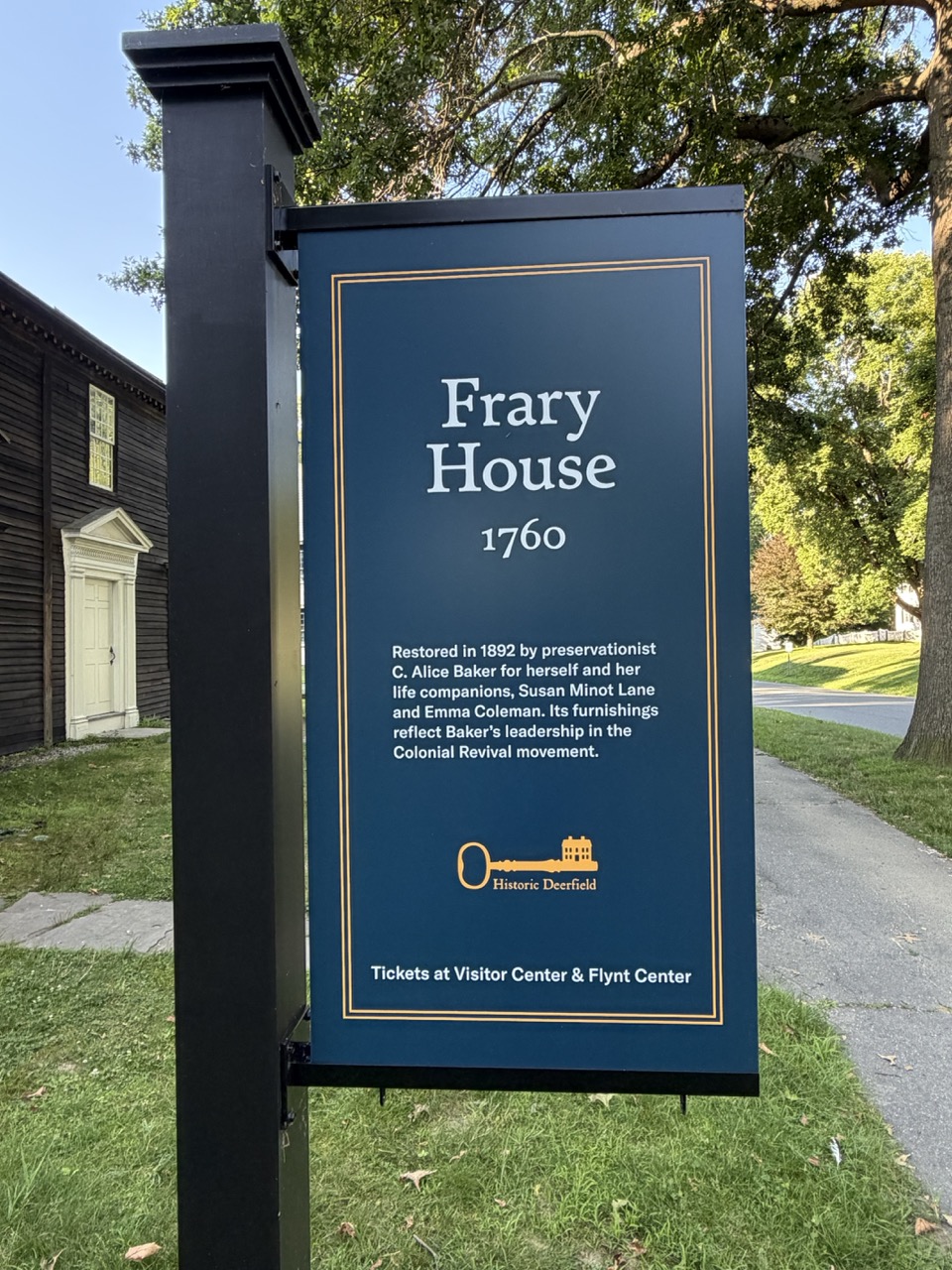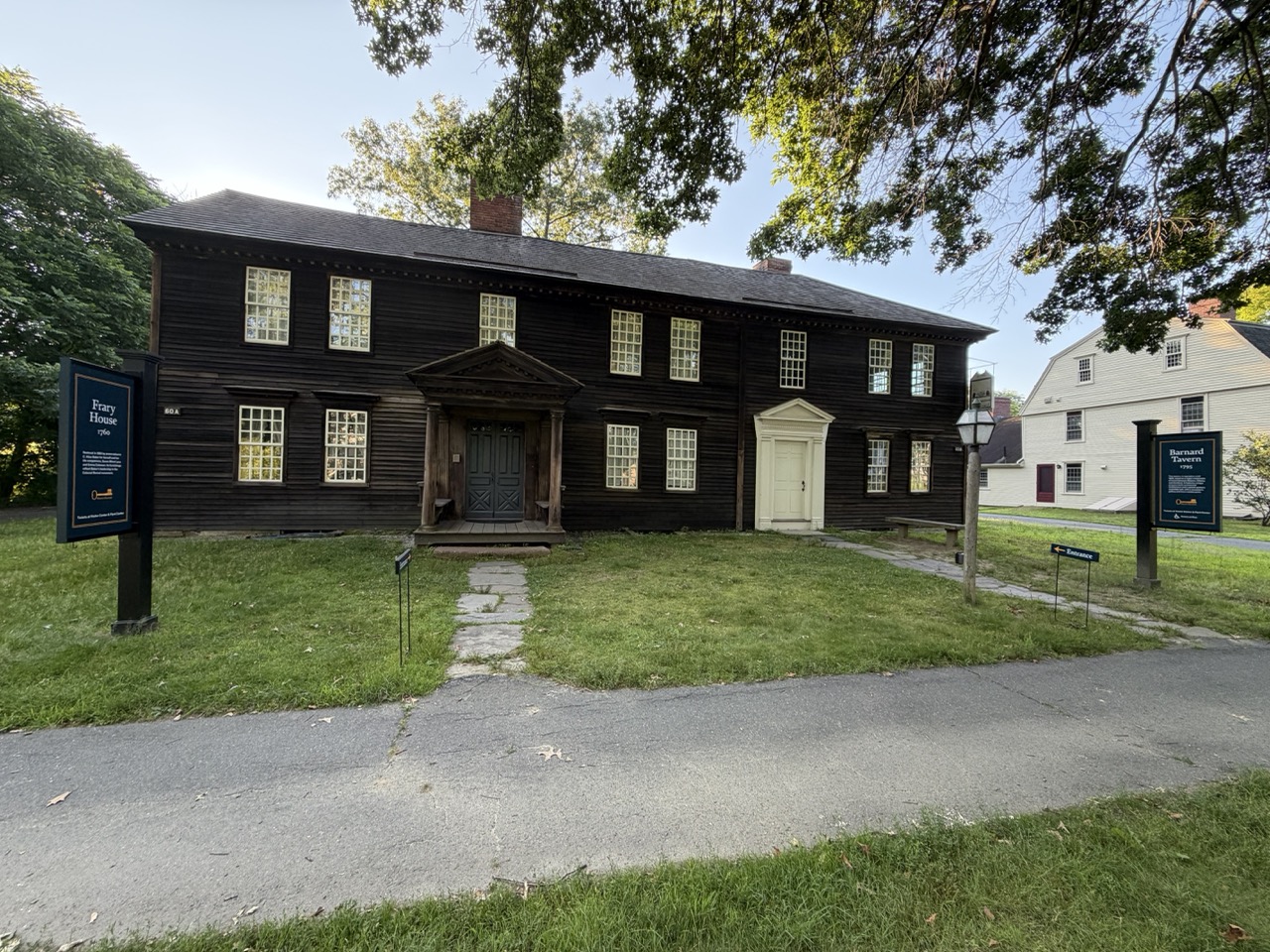
When we visit a historic house museum, we usually come to learn about the people who once lived there. But how often do we learn about the people who saved the house? The Frary House in Historic Deerfield, Massachusetts, tells the overlooked story of the women who preserved the places we visit.
Built about 1750, the Frary House could easily have been interpreted as another colonial home. Instead, Historic Deerfield tells a different story. The house is furnished as the Colonial Revival home of C. Alice Baker after she restored it in the 1890s, shifting visitors’ attention to a later chapter in the building’s history. That interpretive choice immediately caught my attention because it suggests that a historic house’s most significant story is not always its earliest one.
Baker purchased the Frary House in 1890 after learning that it was in danger of collapse. She later explained that she bought it “to rescue the home and to make a home for her mother.” At a time when Old Deerfield was struggling economically, her decision preserved more than a single building. It became part of a much larger effort that would help shape the future of the village.
The guide described Baker as one of America’s earliest female preservationists—a woman who owned property independently, invested in railroads, taught school, researched local history, collected antiques, and published books at a time when women are seldom remembered for participating so fully in public and economic life. Whether every claim of being “the first” can withstand historical scrutiny almost becomes beside the point. What matters is that Baker represents a much larger story that historic sites rarely tell.
The tour then expands from Baker to the larger community she helped shape. Rather than focusing only on one preservationist or one restored house, it explores how a remarkable network of women combined historic preservation, scholarship, the Arts and Crafts movement, education, and tourism to revitalize Old Deerfield. Visitors came by rail, and later by trolley and automobile, to experience the village’s history, purchase locally made arts and crafts, and enjoy what Historic Deerfield describes as the “romance of a frontier village.” Tourism generated employment for local craftspeople, boarding houses, hotels, and tearooms, demonstrating that preservation could also become an engine of economic renewal.
One observation from the guide particularly stayed with me: Old Deerfield largely exists because of these women. That is a remarkable idea. We often think preservationists save buildings. These women did something larger. They helped create the historic village itself—not by freezing it in time, but by combining preservation with scholarship, craftsmanship, education, and economic development to build a sustainable future for the community.
Baker herself understood preservation broadly. She restored architecture, but she also collected artifacts, documented local history, researched the lives of women captured during the 1704 Deerfield raid, and published her findings so that those stories would not disappear. Others preserved traditional crafts, artistic skills, and local knowledge. Together, they were preserving not just buildings, but memory, scholarship, craftsmanship, and community identity.
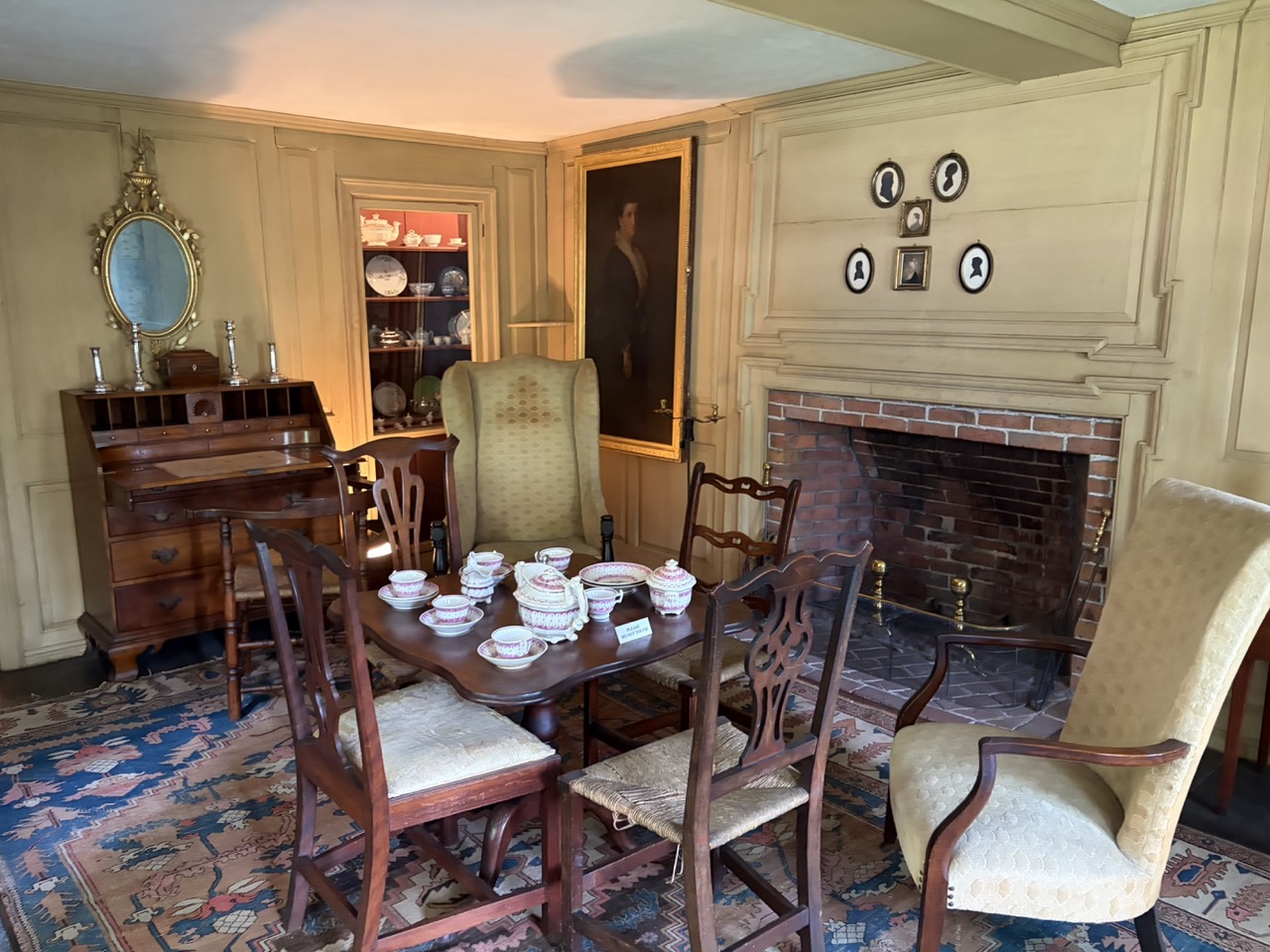
Listening to the tour, I found myself wondering why we hear so little about women like these. Many historic house museums carefully interpret the families who once occupied their rooms, yet devote comparatively little attention to the preservationists who ensured those rooms still exist. That omission is particularly striking because so many of America’s earliest preservation efforts were led by women. They organized fundraising campaigns, purchased endangered buildings, established historical societies, researched local history, furnished historic interiors, and persuaded communities that these places were worth saving. Without their work, many of the historic houses we visit today would simply be gone.
Perhaps that is the Frary House’s most important lesson. Historic houses are not significant only because of the people who first occupied them. Sometimes the defining chapter comes much later, when someone chooses to preserve the building and gives it a new purpose. Historic Deerfield recognizes that the story of preservation is itself history. By interpreting Baker’s restoration and the women who transformed Deerfield through preservation, scholarship, craftsmanship, and tourism, the Frary House reminds us that saving a place can become one of the most important events in its history.
The next time I visit a historic house museum, I suspect I’ll ask two questions instead of one. Who lived here? And who made sure this place survived so that we could visit it today?