Category Archives: Cultural diversity

Navigating New Federal Policies: What Executive Orders Mean for History Museums and Historic Sites

Museums are no strangers to navigating shifting policy landscapes, but recent executive orders issued by the White House signal significant changes that will affect funding, interpretation, and educational outreach. Whether you work in a history museum, a historic preservation organization, or a community-based historical society, understanding these policies is crucial for adapting to new challenges and opportunities.

Key Themes Across the Executive Orders

1. A Shift Toward Patriotic and Nationalist Narratives

Executive Orders 14190 (Ending Radical Indoctrination in K–12 Schooling) and 14189 (Celebrating America’s 250th Birthday) prioritize “patriotic education” and reinforce a government-endorsed interpretation of American history. This shift is exemplified by the reestablishment of the 1776 Commission and the creation of Task Force 250, which will oversee programming related to the 250th anniversary of American independence. “Patriotic education” is defined as “the history of America grounded in:

  • (i) an accurate, honest, unifying, inspiring, and ennobling characterization of America’s founding and foundational principles;
  • (ii) a clear examination of how the United States has admirably grown closer to its noble principles throughout its history;
  • (iii) the concept that commitment to America’s aspirations is beneficial and justified; and
  • (iv) the concept that celebration of America’s greatness and history is proper.”

2. The Elimination of Federal DEI and Environmental Justice Programs

Executive Order 14151 (Ending Radical and Wasteful DEI Programs and Preferencing) eliminates all federal support for diversity, equity, and inclusion (DEI) initiatives. This includes the termination of DEI-related grants, plans, contracts, programs, initiatives, training programs, offices, positions, and employment policies within federal agencies, “under whatever name they appear.” Museums that have benefited from federal DEI funding or programs may need to reassess their funding strategies and institutional policies.

3. Renaming and Monument Preservation

Executive Order 14172 (Restoring Names That Honor American Greatness) renames Denali back to Mount McKinley and designates the Gulf of Mexico as the Gulf of America. Additionally, the reinstatement of the National Garden of American Heroes and the protection of existing monuments signal a renewed emphasis on traditional historical figures. Museums may face increased scrutiny when interpreting contested histories, particularly around geographic names and public commemorations.

Continue reading

Join Today’s Museum People Call on Interpreting Christmas at Museums!

Are you ready to explore how the holiday season can transform your museum? Today at 12 pm Central Time (1 pm Eastern), the Illinois Association of Museums is hosting its monthly “Museum People Call”, and this month’s topic is Christmas at Museums and Historic Sites!

I’ll be joined by Ken Turino, my co-editor of the new AASLH book series Interpreting Christmas at Museums and Historic Sites, to discuss how your organization can leverage the holiday season to its fullest potential.

We’ll cover key topics to help you:

  • Leverage the holiday season to attract visitors and engage your community.
  • Increase financial stability through creative programming, gift shop sales, and end-of-year giving campaigns.
  • Enhance cultural sensitivity and inclusivity, ensuring your holiday interpretation is meaningful and welcoming to diverse audiences.

Whether your site has a long history of holiday programming or you’re just starting to explore the possibilities, this session will offer practical tips and inspiring ideas to align holiday traditions with your mission.

🎄 Join Us on Zoom 🎄
Click here to join the meeting
Meeting ID: 861 3328 4346

Let’s come together to make the holiday season brighter, more inclusive, and impactful for your museum and its visitors. We look forward to seeing you there!

PS. On Wednesday, December 25, the Gilded Age and Progressive Era podcast will release an interview about the Interpreting Christmas book with me, Ken, and Lenora Henson, formerly director of the Theodore Roosevelt Inaugural Historic Site in Buffalo, New York.

Beyond the Mill: Clarke County Historical Association’s Model for Modern Historical Programming

The Burwell-Morgan Mill in Berryville, Virginia, which hosts the Art in the Mill shows in fall and spring.

On a recent road trip through the Shenandoah Valley, we passed through the small but charming village of Millwood (south of Berryville, Virginia). With its historic church, a corner gas station turned into a post office, a hip country store, and an 18th-century stone grist mill, it feels like you’ve stepped back into mid-century America. The mill, dating back to the 1780s, ceased operations in 1943, but thankfully the Clarke County Historical Association (CCHA) stepped in to preserve this important piece of local history. They restored and reopened the mill as a museum, offering milling demonstrations that continue to connect the community with its past—a business that, while no longer economically viable, resonates deeply with those of us who value local landmarks.

Fast forward 80 years, and the CCHA not only continues to produce flour at the mill but has expanded its offerings in creative and impactful ways for a county with 15,000 residents. Today, their mission—”to help preserve the historic resources and records of Clarke County and to foster their use, understanding, and enjoyment through stewardship and education”—may sound familiar, but their approach is anything but ordinary. Their programming stands out as a model for how historical societies can evolve, attract diverse audiences, and ensure long-term sustainability. Here’s a preview of some of the exciting events and initiatives they have planned for this fall:

Continue reading

Decolonization in London Museums: A Firsthand Look at Progress and Challenges

During my recent visit to several London museums, I was struck by the growing emphasis on decolonization. As a museum professional, I’ve been following this movement for some time, but seeing these efforts firsthand inspired me to reflect on the challenges and progress being made. Some London museums are actively re-examining their collections and narratives, working to address the complex legacies of colonialism in tangible ways, and both Royal Collections and the National Trust have staff members specifically focused on this issue. But others have a long way to go.

If you’re not familiar with decolonization, it’s the process of rethinking and revising interpretations that have historically favored the perspective of a dominant power, such as an imperial empire over a colonized nation (like Great Britain and India). However, decolonization goes beyond the empire-colony dynamic, addressing any situation where one perspective is elevated due to power imbalances. For instance, terms like “prehistory” suggest a time without history, labeling settlers as “pioneers” overlooks the people who were already living in those areas, and describing conquering armies bringing “civilization” implies they were superior to the existing cultures. Words shape our perceptions and carry significant consequences, influencing relationships across race, gender, and other social divides. Decolonization helps us recognize and correct these biases, leading to more inclusive and accurate narratives.

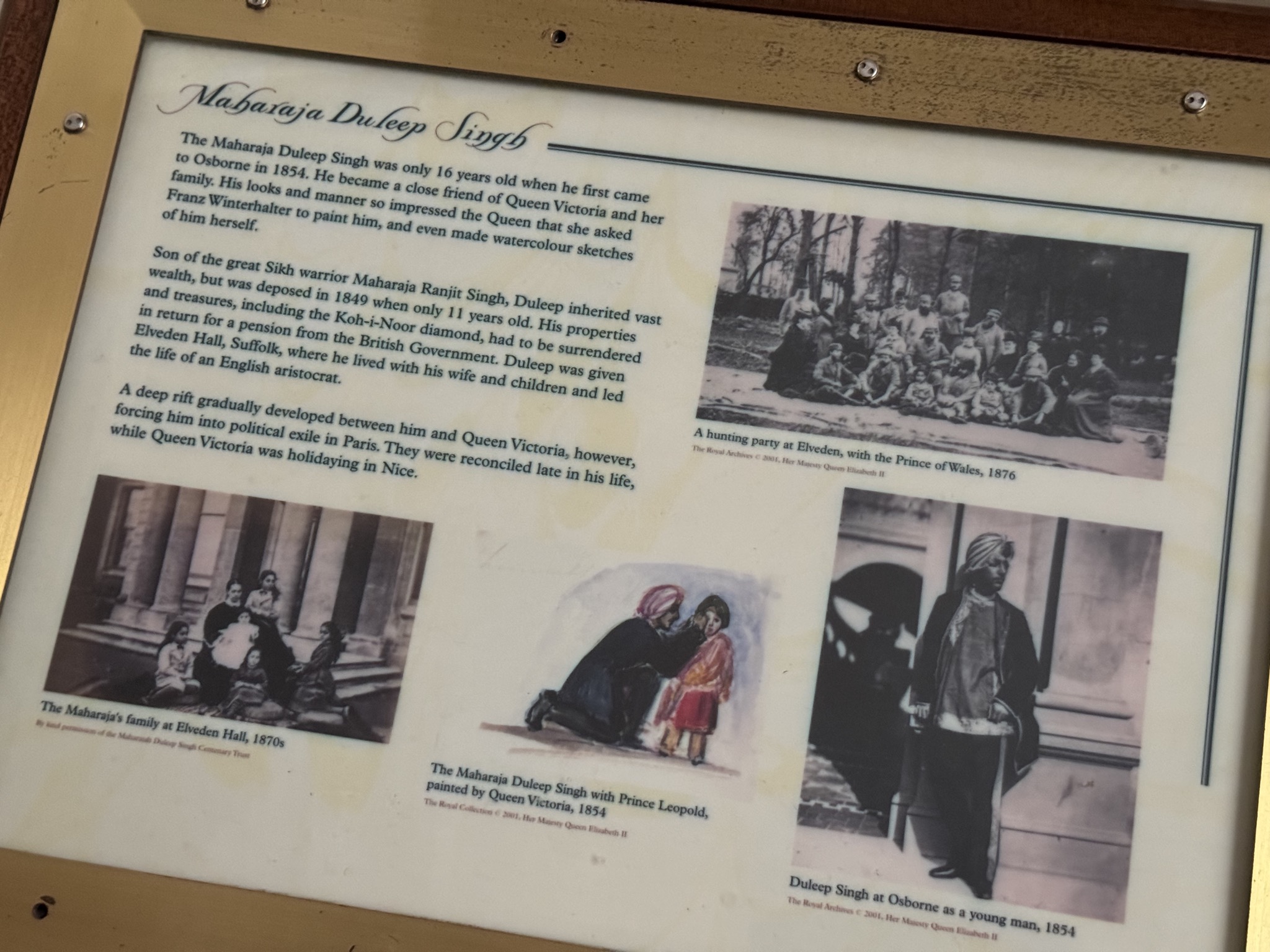
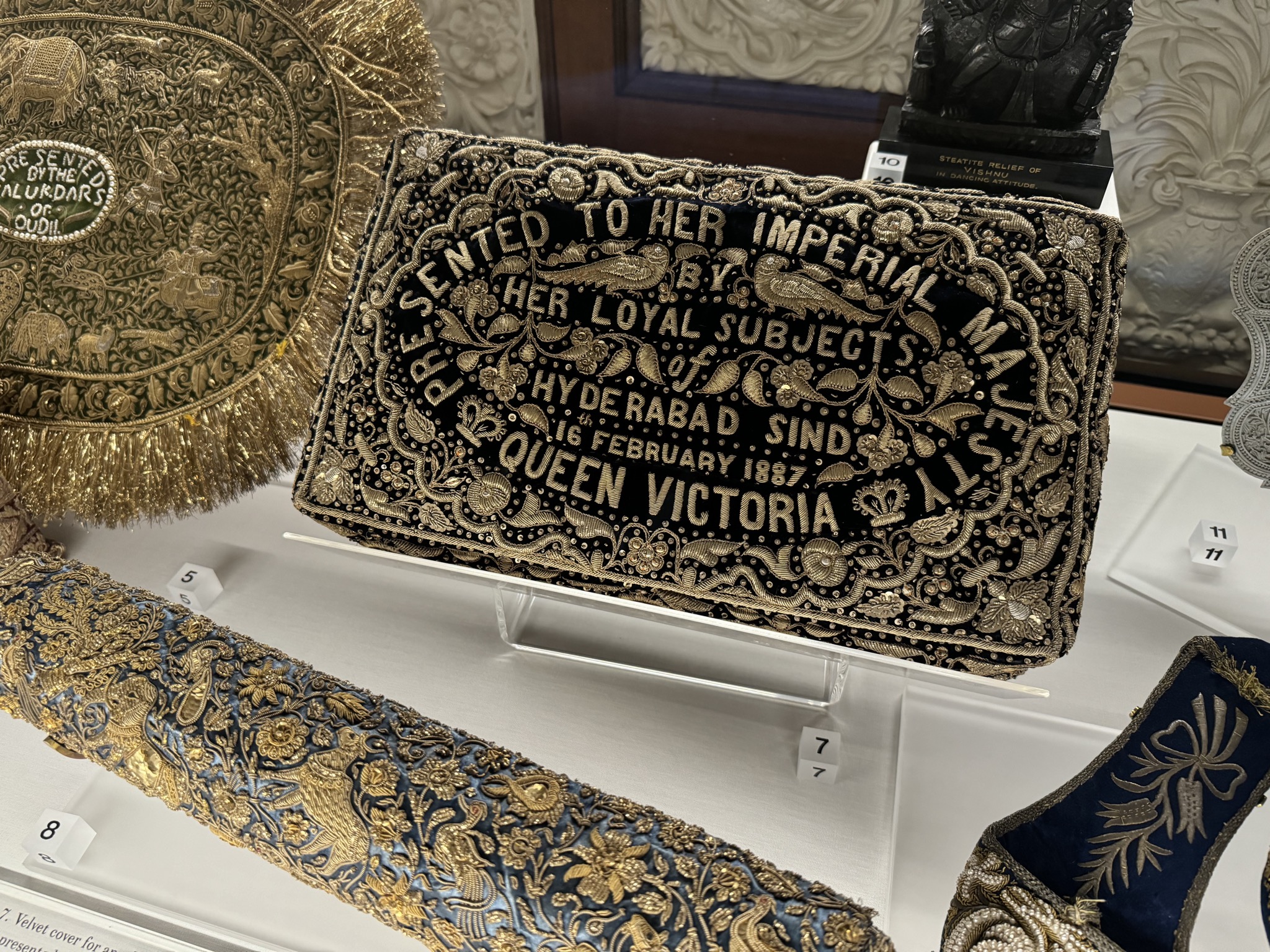
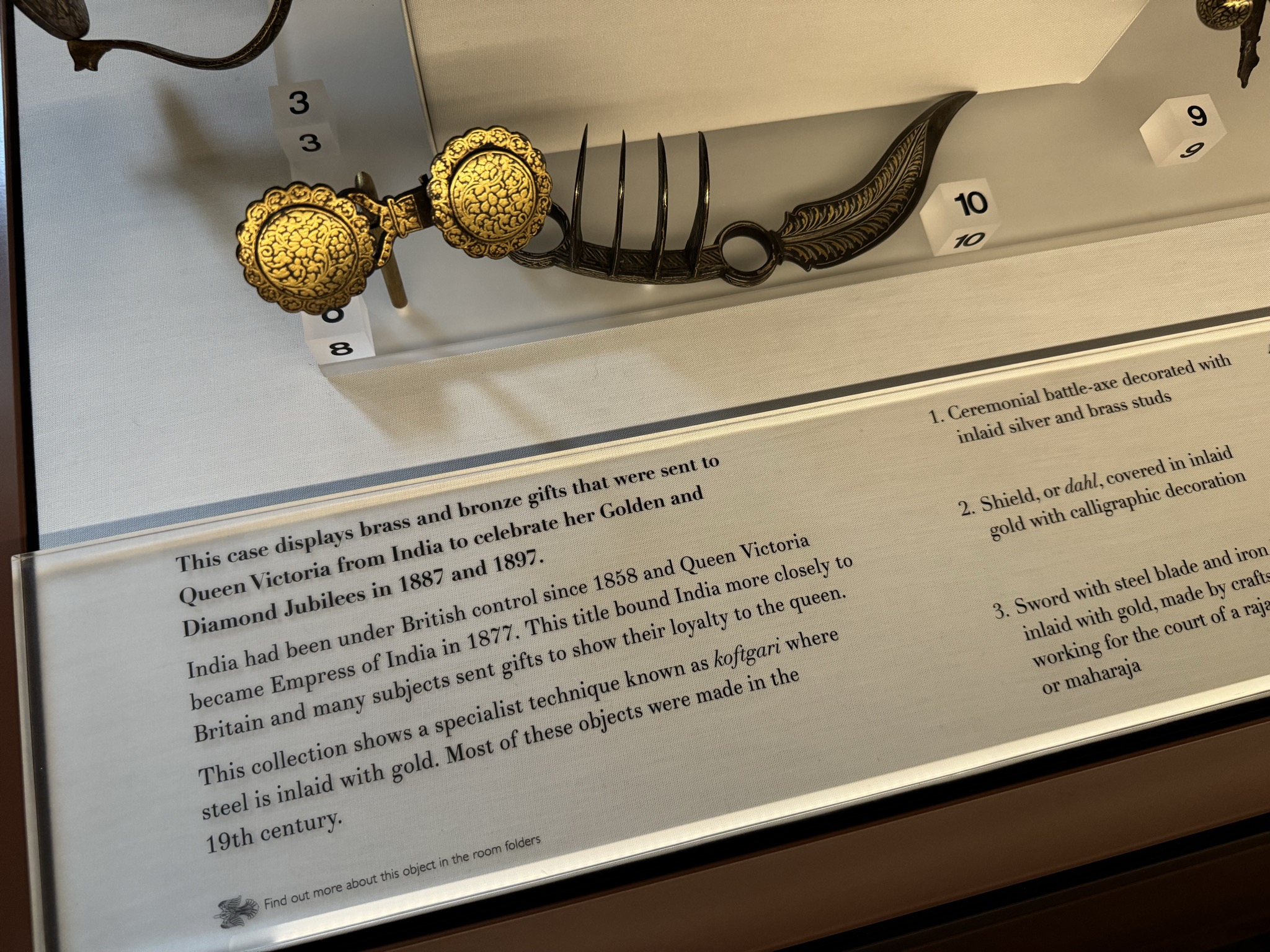
For an example of a museum waiting to undertake a re-examination of its exhibitions, consider Osborne House (operated by English Heritage), the country palace of Queen Victoria and Prince Albert. The displays in and around the Durbar Room discuss Britain’s relationship with India. The exhibitions include a panel about Maharaja Duleep Singh and that “his properties and treasures, including the Koh-i-Noor diamond, had to be surrendered in return for a pension from the British Government” and feature gifts sent from India to Queen Victoria to “show their loyalty to the queen.” The history is far more complex and this exhibition emphasizes only the British perspective and continues a mythology of India’s grateful subservience to the Queen.

1. Re-examining Collections

Many London museums are conducting in-depth reviews of their collections to identify items acquired during the colonial era. This process includes acknowledging the contexts in which objects were collected, often under unequal power dynamics. They are being more transparent about the provenance of key objects but contested ownership isn’t addressed publicly. Some examples:

Continue reading

Interpreting Christmas Debuts to Enthusiastic Response at AASLH Conference

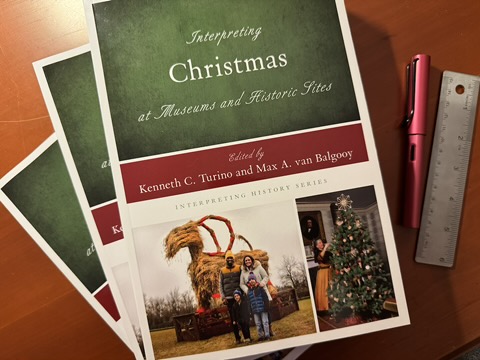
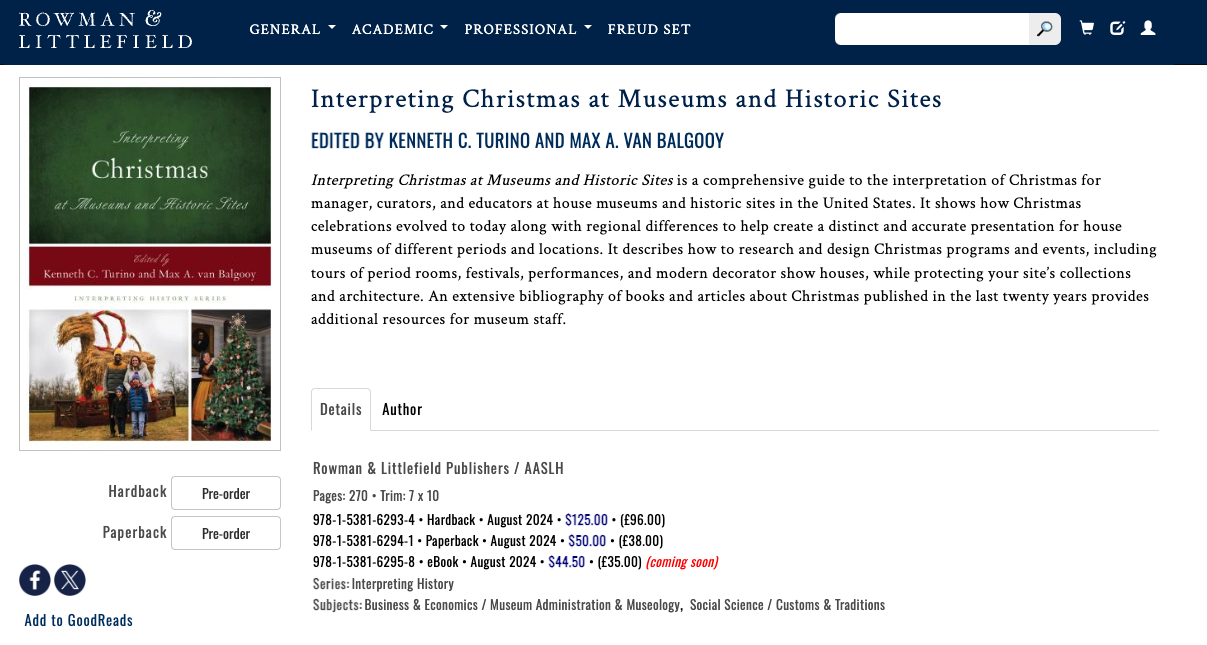
While I was traveling in England over the past few weeks, Interpreting Christmas at Museums and Historic Sites was released in print. The book made its debut at the American Association for State and Local History annual meeting in Alabama, where my co-editor, Ken Turino, was on hand to sign copies. We were thrilled to see the book sell out on the first day of the conference! It’s now listed on Amazon’s Hot New Releases for the “museum industry.” We are incredibly grateful for this positive reception. This project has been years in the making, and Ken and I (and the contributors!) are delighted to finally share this resource with you. A sneak peek at the table of contents and introduction is available.

If you missed out on purchasing a copy at the annual meeting or were unable to attend, you can order it online at Rowman.com or mail this order form. Use code RLFANDF30 at checkout to save 30%. This discount is available through September 2025. The book officially releases on September 20, so it should ship immediately when you order.

For those attending the New England Museum Association annual conference in Newport, Rhode Island, we’ll be presenting a panel discussion on Christmas on Thursday, November 7, from 11:00 am to 12:30 pm. Joining us will be Laurel A. Racine, Supervisory Historian and Program Manager for the National Park Service; Patricia West, recently retired Curator of Martin Van Buren National Historic Site and author of Domesticating History: The Political Origins of America’s House Museums; and David Rau, Curator of Visitor Engagement at the Florence Griswold Museum.

If you’ve had a chance to read Interpreting Christmas, we’d greatly appreciate a review on Amazon.com. Since history museums and historic sites are such a specialized field, your feedback can help others make more informed purchasing decisions.

Amazon’s Hot New Releases for the “museum industry for September 2024.

Christmas in July: Maximize Your Museum’s Holiday Potential

In an earlier post, I shared a sneak peek of our book, Interpreting Christmas at Museums and Historic Sites. Next week, Ken and I will provide a comprehensive overview during the upcoming AASLH webinar, Jingle All the Way: Maximizing Your Museum’s Holiday Potential.” This webinar draws from the book but is not an hour-long sales pitch. Instead, we’ll share key advice and ideas on leveraging holiday celebrations, researching the local history of Christmas, planning and hosting holiday events, expanding traditional programs, and enhancing cultural sensitivity and inclusivity. With so much to cover, we’ll be hitting the highlights. If you’re seeking inspiration for Christmas during these hot summer days, join us on July 23, 2024 at 3:00 pm Eastern. For more details and to register, visit here. Plus, you’ll receive a 30% discount code for the book upon registration.

With proofs in hand, the book is moving closer to reality with a publishing date in fall, but more likely later than earlier. It has 21 chapters, 40 images, and an extensive bibliography of nearly 175 books and articles packed into 270 pages, which is about 25% longer than my Interpreting African American History and Culture at Museums and Historic Sites that Rowman & Littlefield published ten years ago (btw, Rowman was recently acquired by Bloomsbury Publishing). It’s now available for pre-order at Rowman.com for $50 for paperback and a jaw-dropping $125 for hardcover (I don’t set the prices but a 30% discount code is available for webinar attendees).

Behind the Scenes of Indexing

Ken Turino, Sara Bhatia, and I spent nearly two months creating he index, despite the publisher allocating just two weeks. The delay was partly due to other commitments (I was closing out the semester and attending the Newport Summer School), but also because the scope of the book made it significantly more complex. As anticipated, there’s an abundance of content on gifts, trees, lights, ornaments, decorating, and a variety of Santas. Rather than list two dozen pages that mention “lights,” we added subheadings for candles and electric lights, as well as safety considerations, and included “see also” references to help readers find specific information more quickly. But geez, that was slow going.

My chapter, “I’m Dreaming of a Warm Christmas: Researching California (and Other Local Places)” was initially indexed by GPT-3.5, then corrected manually as seen in this example. GPT-4o is more accurate when trained for indexing, but every entry still needs to be confirmed.

We experimented with GPT to produce the index, and the results were mixed. While GPT can generate an initial index with proper nouns and some concepts correctly formatted with page numbers, about half of the entries are usually either missing or incorrect (see example above). Thus, manual review of the proofs is still necessary, but at least GPT provides a head start. If you are interested in learning more in using GPT for indexing, I’m happy to share what I learned.

The index eventually grew to 22 pages, which is longer than most chapters! Indexing required a meticulous review of every page, during which we discovered errors that had slipped past four proofreaders. Ugh. Should we consider these flaws a characteristic of an artisanal, handcrafted gift to the field?


A Sneak Peek at “Interpreting Christmas”

Ken Turino, Sara Bhatia, and I are currently compiling the index for our book Interpreting Christmas at Museums and Historic Sites, while the other authors are meticulously reviewing the proofs for any final corrections. But we are much more excited to announce that we have a colorful cover featuring images from Old World Wisconsin and Strawbery Banke, and that Rowman and Littlefield have made the 270-page book available for pre-orders at this link.

To get a start on the holidays, join us in July when we’ll be hosting a live AASLH webinar, “Jingle All the Way: Maximizing Your Museum’s Holiday Potential.” Drawing from some of the insights in the book, we’ll discuss how your historic house or history museum can leverage December’s holiday season to enhance community engagement.  Mark your calendar for July 23 at 3 p.m. Eastern and secure your spot by registering here for $45 ($25 for AASLH members).

For a preliminary glimpse inside Interpreting Christmas, I’m sharing the proofs for the table of contents and introduction. Just remember, they’re publisher’s proofs so they are subject to change!

On the Road: Hitting Triples with a Single Artwork

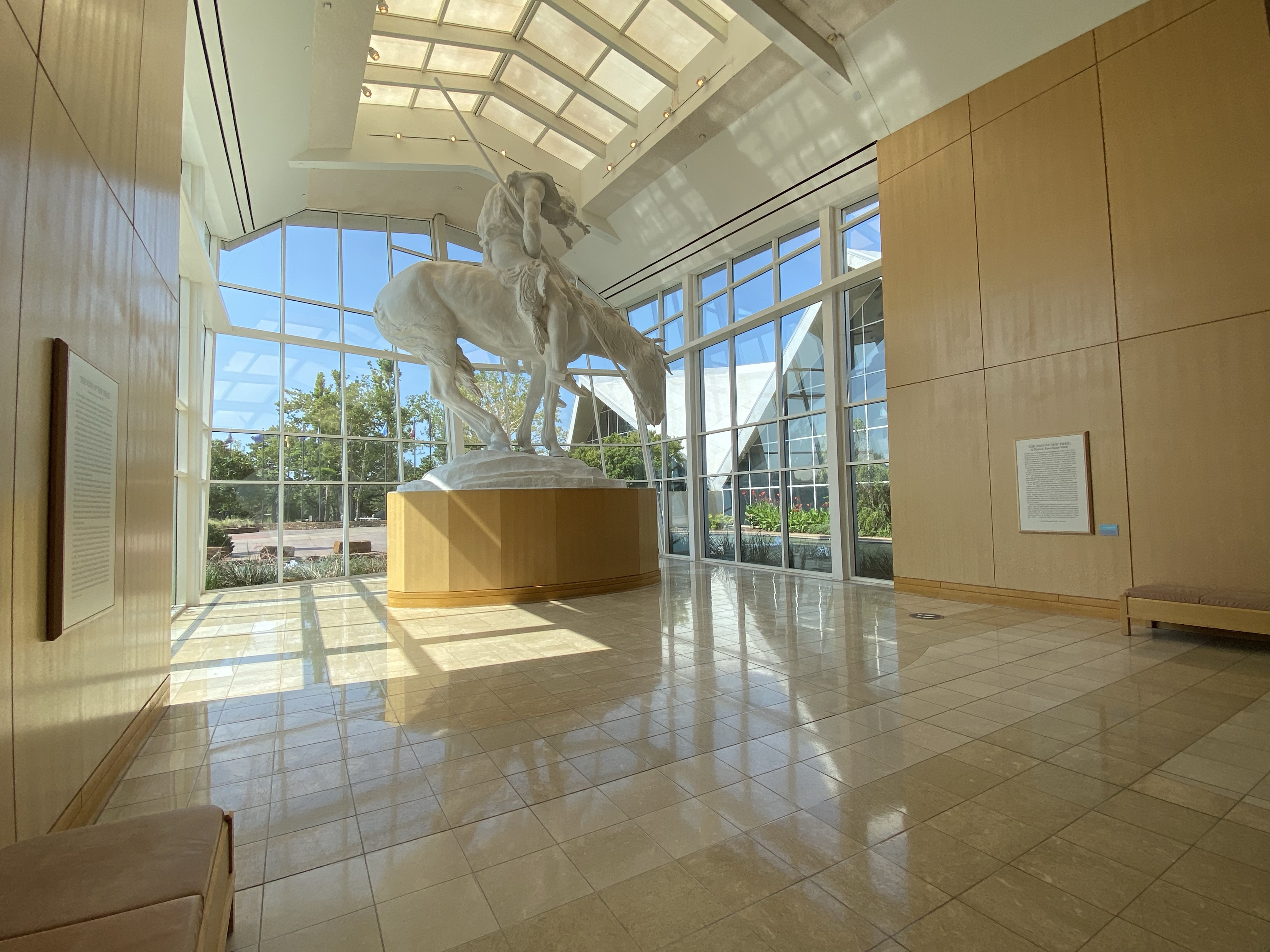
Entrance hall, National Cowboy and Western Heritage Museum, Oklahoma City.

At the National Cowboy and Western Heritage Museum in Oklahoma City, a monumental bright white sculpture of an Indian slouched on a horse fills the end of the entrance hall. James Earle Fraser created “The End of the Trail” for the 1915 Panama-Pacific International Exposition in San Francisco, earning him a Gold Medal. It also became a popular image that signaled the end of a free people.

The Museum acquired the plaster statue from Tulare County (California) Historical Society, where it sat outside in a city park deteriorating for nearly 50 years. Now the restored statue is the centerpiece of this large museum and they’ve used this one object to hit a triple with visitors, to borrow a phrase from baseball.

Along with a typical label describing the sculpture’s creation, acquisition, and significance, it includes a Native American View in a second label of equal length by Dr. R. David Edmunds, a Cherokee. He states that the sculpture represents the popular view of “a nineteenth century Indian warrior defeated and bound for oblivion—frozen in time. By the 1890s, Native Americans knew their trail had become steep and rocky, but they believed it would continue.” The label continues to discuss the challenges and opportunities faced by Native Americans in the 20th century and that “being Indian has never been cast in stone. Today, Native Americans proudly ride forward on a trail into the future.”

The use of labels to provide multiple perspectives is not uncommon in art museums, but I haven’t seen it used enough in history museums. They are ideal places to show that events, places, and eras are experienced differently by different people. It’s an easy way to enrich interpretation without the need to create entirely new exhibitions or special events on women, African Americans, or Native Americans.

Continue reading

On the Road: Small is Beautiful

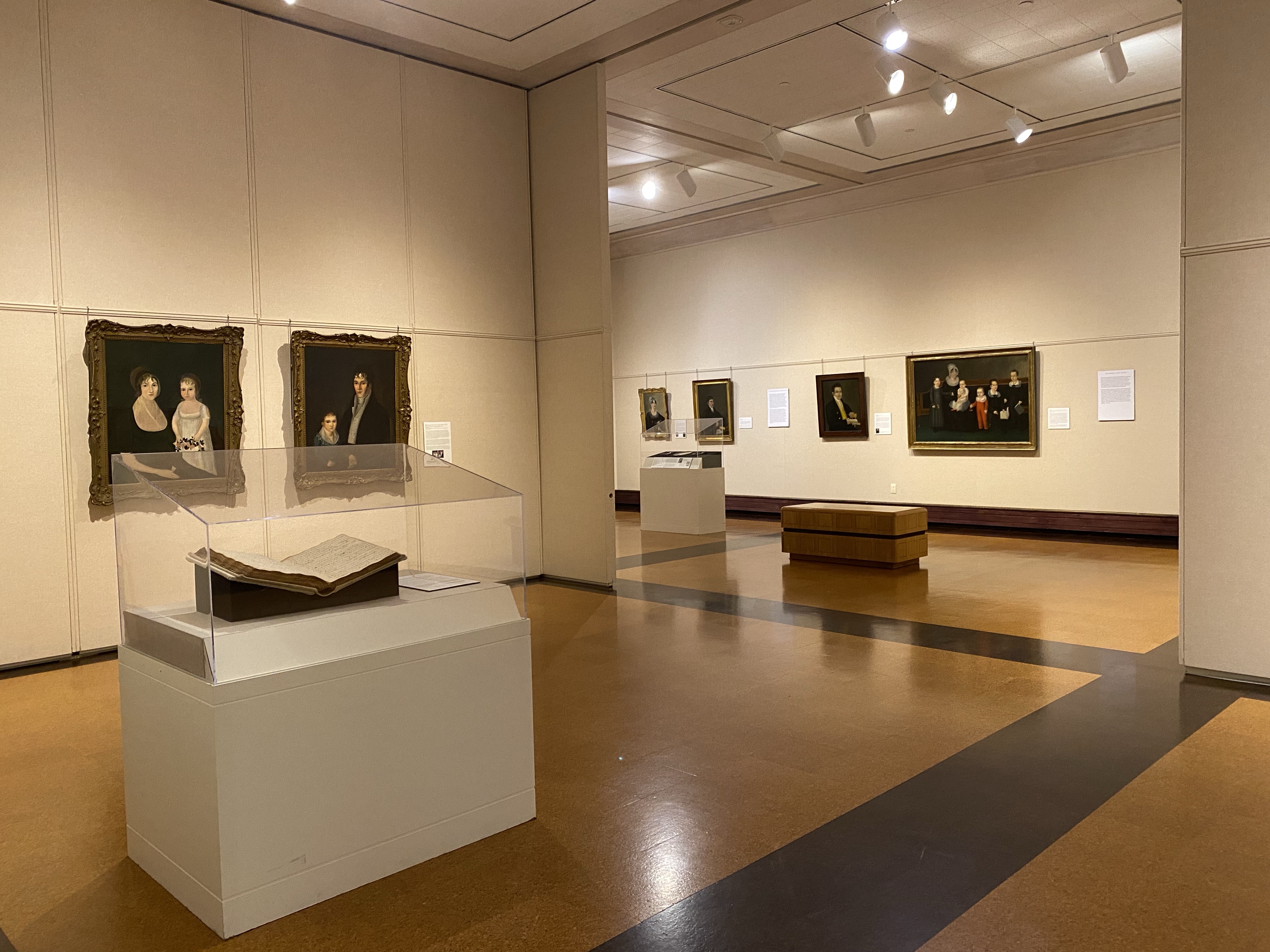
Washington County Museum of Fine Arts, Hagerstown, Maryland.

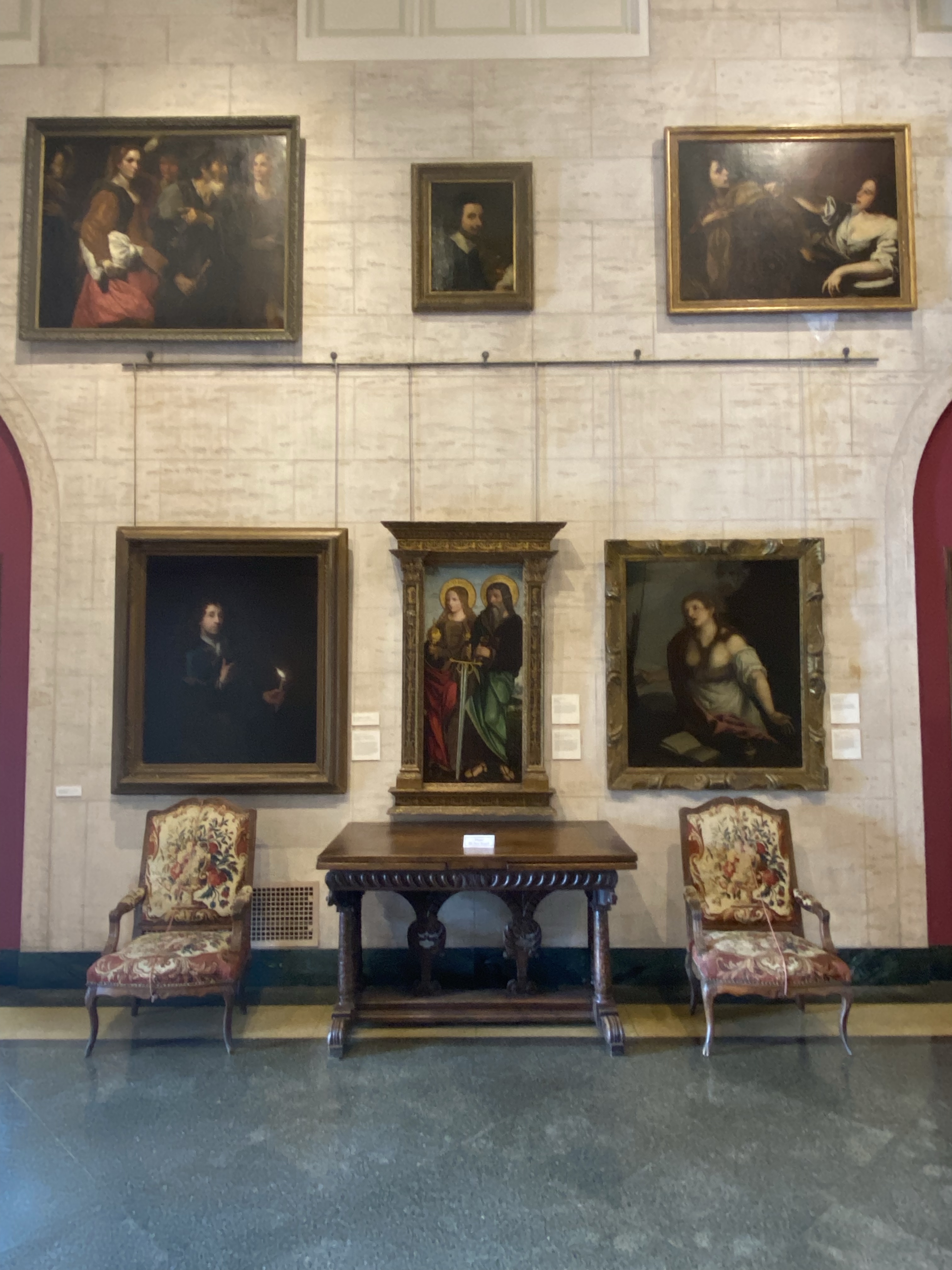
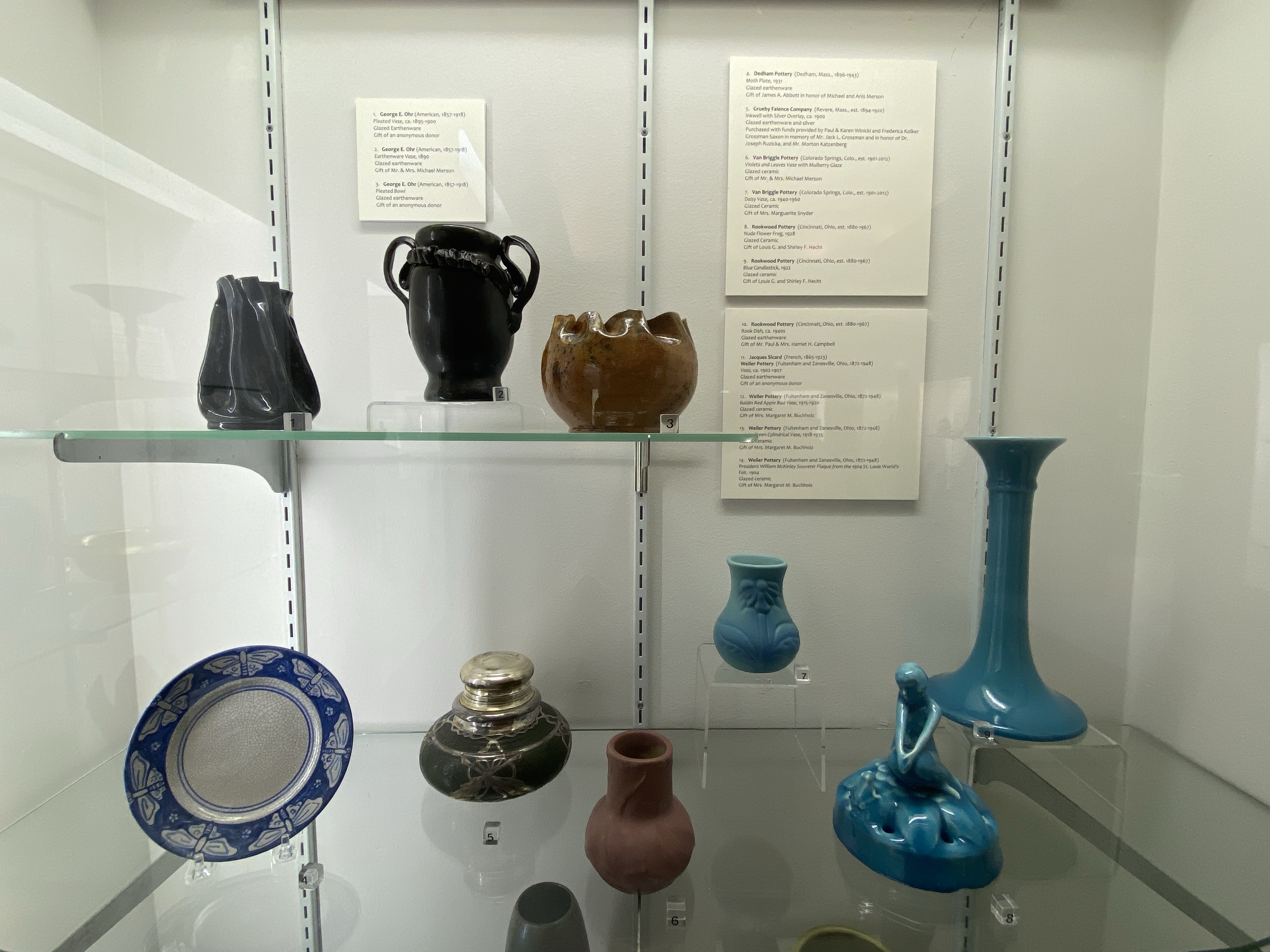
On my first day on the road, I made my first stop just after an hour in Hagerstown, Maryland to see the Washington County Museum of Fine Arts. Set in a county park near its historic downtown, it has a surprisingly fine collection of American and European art from 17th to 19th century. Exemplary portraits by the Peale family, bronze sculptures by Rodin, vases by Tiffany and Lalique, and pots by George Ohr are found among its collections of 7,000 objects–that’s small compared to most art museums. Along with displaying their collections, they also organize temporary exhibitions, such as one on Joshua Johnson (ca. 1763-1824) of Baltimore, the first professional African-American painter. Anna Brugh Singer and her husband William H. Singer, Jr. (heirs to a family fortune, not of sewing machine fame) established the museum in the 1931 after they had traveled the world.

More interesting, however, was my discussion with board president Roger Fairbourn and curator Daniel Fulco about the vision of the museum. It’s clear they don’t want to collect more to become another Metropolitan Museum of Art, but they do plan to grow. They are hosting more ambitious traveling exhibitions, such as the current one on 17th century Italian paintings. They are adding more facilities for education, but that’s in response to community interest. They are expanding their collections, but it is to diverse their American art by including under-represented stories and move further into the 20th century. They also recognize their primary audience is the surrounding four counties, not tourists. Their strengths are uncommon and a refreshing change from the usual bigger-is-better, get-more-tourists mentality that usually infests the minds of museums. This is a tough position to take because it goes against the usual metrics, in this case, smaller is better.

Another surprise: a board president who can explain the history of the museum, its vision for the future, and discuss the significance of the current exhibition. I happened to run into him accident, when he caught me taking photos outside and stopped to chat. When I expressed my interest in the history and management of the museum, he took me around to the side of the museum to explain the physical evolution of the building, then took me inside to talk about the exhibitions and their vision. While we were chatting, he noticed another visitor was puzzled by the Johnson exhibition, so he stopped to describe its significance and pointed out a painting that might interest her. And he didn’t do it by flaunting his position at the museum (he just introduced himself as Roger). What!? If anyone on your board of trustees can do this, you’re in luck. Most can’t.

Visiting these small art museums verifies that small history museums, which dominant the field, can be effective and worthy organizations. They just need to develop a vision that pursues impact on their audience rather than size of collections or attendance.

Black Lives Matter (Sort Of)

The “Silence is Not an Option” banner on the website of the Birmingham Civil Rights Institute links to their statement.

Across the country, history museums and historical societies have issued statements in response to the recent police killing of George Floyd and protests against racism—but it’s a mixed bag. I’ve examined more than fifty history organizations and found that while there are some common values in the field, there’s a wide disparity of thought.

Who is Concerned?

About twenty percent of the history organizations in this study made no statement but it is likely lower because statements were posted on websites, as news releases, sent as emails to members, or shared on Twitter or Facebook (and rarely on more than one channel), which makes it difficult to easily collect statements. Where you make a statement is just as important as what you say. Listing a “Statement from the CEO” in the “Press” section of a website is different from a banner on the home page is different from an email sent to a few hundred members is different from a single tweet.

“A Message from the Arizona Historical Society” on the News page of the Arizona Historical Society website.

Typically, the CEO or executive director issued the statement and very few included the board chair. Did the CEO take a personal risk to issue a statement? Are boards unwilling to get involved or unable to achieve consensus? Will current events force organizations to rethink their mission, vision, or values?

Without conducting interviews, it’s unclear why this pattern exists. It could be uncertainty about what to say, fear of offending donors or their community, a lack of consensus among staff and board, a policy on statements, or an effort to avoid conflict or current events. Nevertheless, the patterns are revealing and suggest that history organizations have a long way to go in their efforts to be a relevant and meaningful part of their entire community. I strongly encourage all history organizations who are making statements to include them on their websites—unless there’s an important reason to avoid it.

History organizations issued their statements as early as May 30 and most during the first week of June, about a week after George Floyd’s murder on May 25 and when the protests had spread nationally. These statements are more challenging to write and I know some went through extensive review processes to gain consensus and approval, which can take days to accomplish. I also sense that Floyd’s death was a tipping point for many organizations because African Americans had been senselessly killed for decades but rarely had historical societies responded. About half of the statements mentioned George Floyd by name and about a quarter also included Ahmaud Arbery and Breonna Taylor, so recent events seem to have been the greatest influence on these statements. About ten percent named other victims as far back as the beating of Rodney King in Los Angeles in 1991, but some looked back centuries to put recent events in historical context, such as the American Historical Association, Historic Germantown, Maine Preservation, and Minnesota Historical Society. I recommend that history organizations clearly connect their statements to their mission or vision to ensure this is not merely a token effort; connect your concerns to the history of the region or period you interpret because, well, you’re a history organization; and include individual names whenever possible to move from the abstract to the personal.

Continue reading