
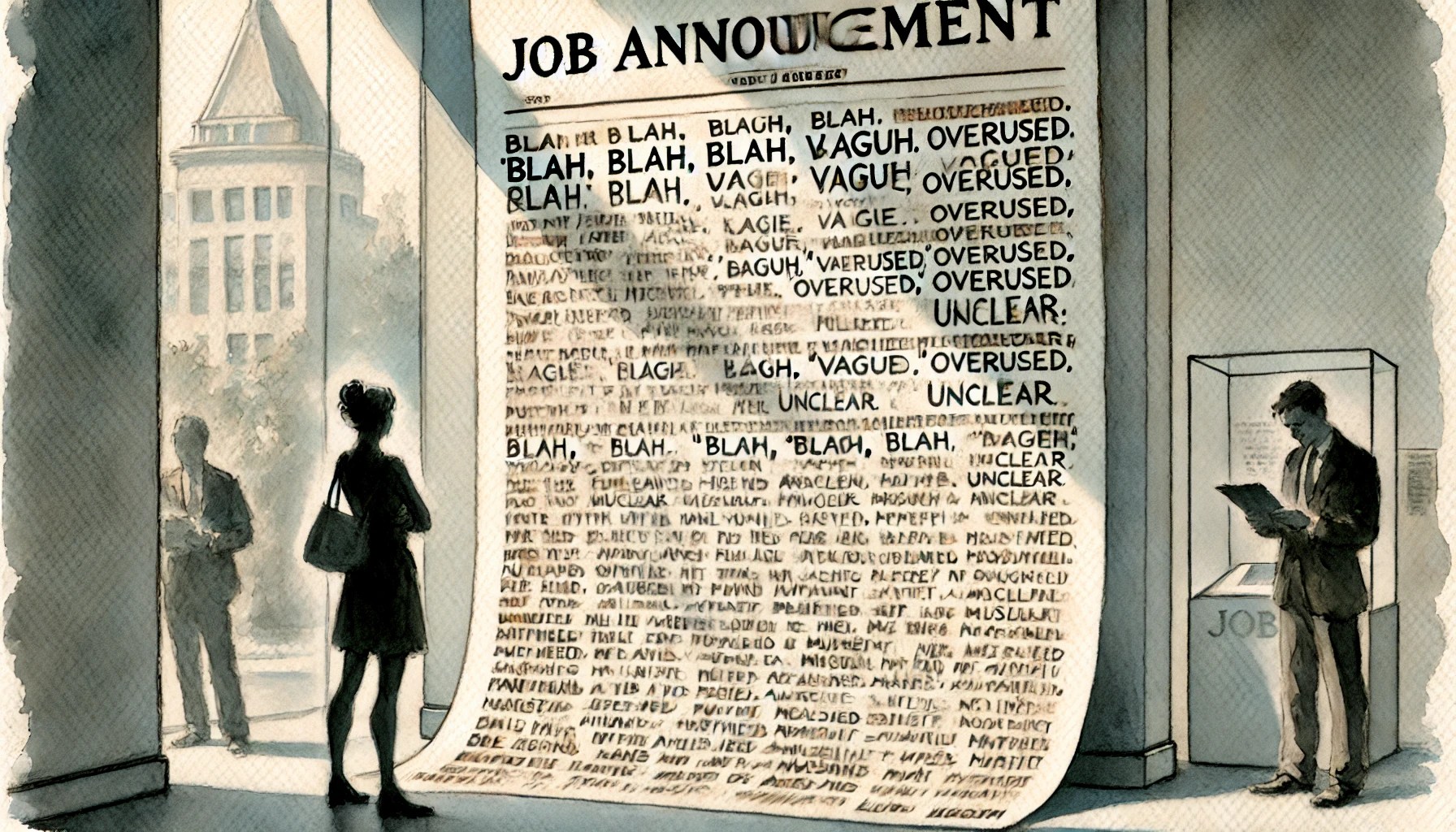
Recently, I came across a job announcement for a senior position at a museum that left me more frustrated than inspired. Despite the important role it advertised, the description was riddled with vague language, overused phrases, and an overwhelming list of responsibilities. If it weren’t for the letterhead, this could have been a job at nearly any museum in the country. Here’s what went wrong—and how we can do better:
1. Clear, Specific Language Beats Buzzwords
Phrases like “championing change management,” “leveraging opportunities,” or “fostering growth” sound impressive, but what do they actually mean? Without clarity, these terms are open to interpretation, leading to confusion or disagreements down the line. A good job description uses concrete language to convey expectations. For example, instead of “fostering growth,” specify what kind of growth: increasing visitor numbers? Expanding programming? Generating revenue?
2. Prioritize, Don’t Overwhelm
This particular job description listed a dozen “essential” duties and responsibilities, each with multiple sub-points. While comprehensive, such an exhaustive list signals a lack of prioritization. No one can excel at everything, and candidates may be deterred by the sheer scope of the expectations. Instead, focus on the top three to five priorities that are most critical to success in the role.
3. Avoid the Clichés
Words like “innovative,” “collaborative,” and “dynamic” have been overused to the point of meaninglessness. If these qualities are truly important, illustrate them with specifics. For example, instead of saying the role requires “innovation,” describe how the candidate will innovate—perhaps by creating digital-first exhibitions or experimenting with new visitor engagement methods.
4. Keep It Concise
At nearly three full pages, this job description buries the most compelling parts of the position under layers of generic text. Lengthy descriptions may give the impression that the museum isn’t sure what it needs or is trying to cast an impossibly wide net. A succinct job posting that captures the essence of the role is more likely to attract top candidates.
5. Reflect the Museum’s Unique Identity
A job description is an opportunity to communicate what makes your museum special. Unfortunately, this one could apply to nearly any institution, with little in the way of distinguishing characteristics. If liberty and civil discourse are central to your mission, that identity should permeate the job description in a meaningful way—not just as a tagline at the top.
Final Thoughts
Job descriptions are not just administrative documents—they are a reflection of your museum’s vision and priorities. To attract the right candidates, avoid the pitfalls of vagueness, bloat, and clichés. Instead, focus on clarity, specificity, and alignment with your museum’s unique mission.
What do you think? Have you ever seen a job description that truly inspired you to apply—or one that completely missed the mark? Let’s discuss in the comments.
 Engaging Places
Great points. Another might be that there’s a difference between a formal job description and a job advertisement. The first is more of an internal document – and can be shared with applicants upon request – while the second sets out priorities.
LikeLike