
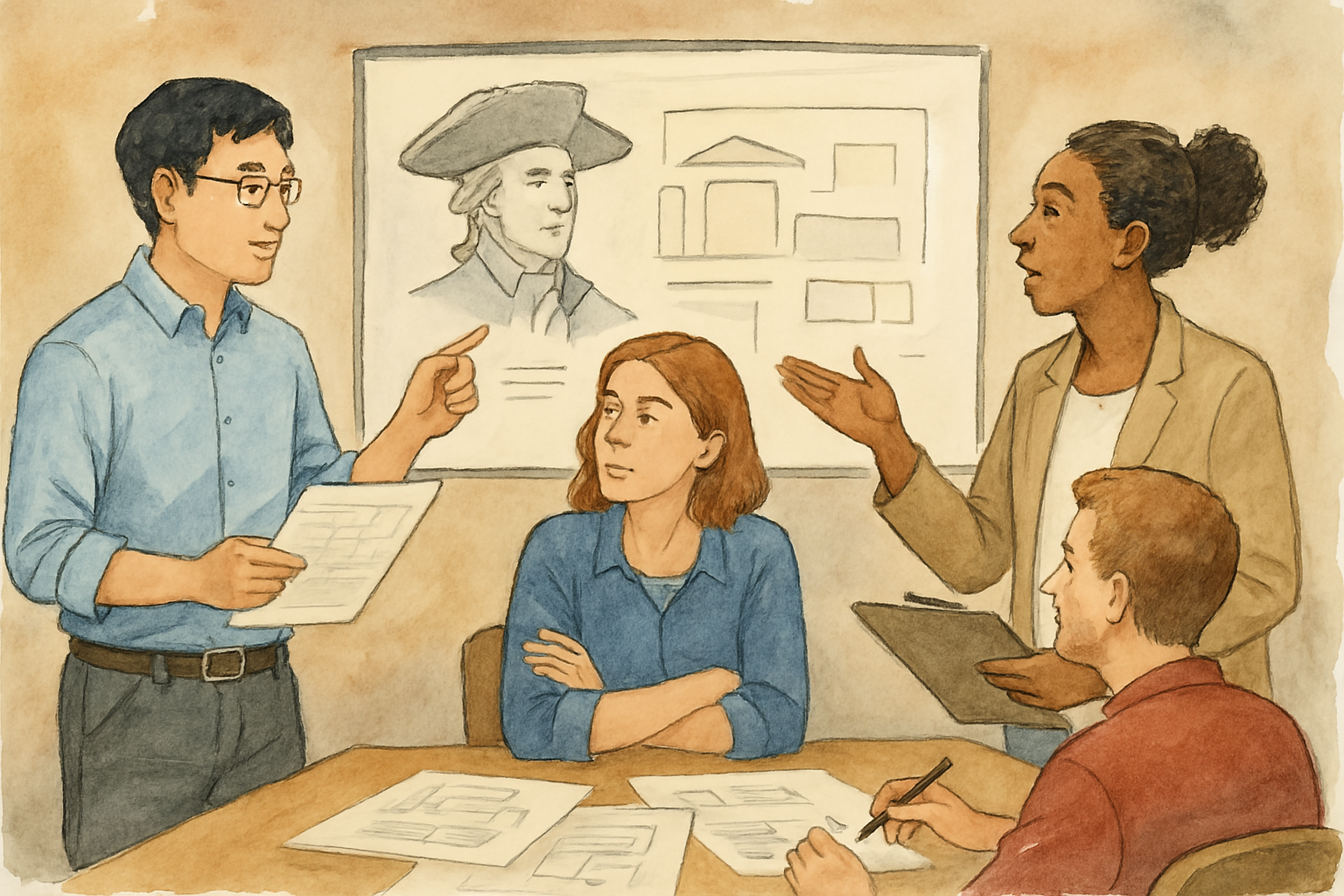
Last week, President Trump issued an executive order titled “Restoring Truth and Sanity to American History”. Aimed at federal cultural institutions—especially the Smithsonian—it calls for more patriotic presentations of American history, emphasizing unity, greatness, and optimism while discouraging exhibits that focus on racism, inequality, or gender identity.
Right now, the order applies only to federal museums. But what if it didn’t?
Let’s imagine the impact on non-federal museums and historic sites across the country—many of which have spent years expanding their stories to include previously marginalized voices and difficult truths.
What the Executive Order Says
The order encourages museums to promote “our extraordinary heritage” and to avoid what it calls “ideological indoctrination or divisive narratives.” It criticizes content that is “inherently racist, sexist, oppressive, or otherwise irredeemably flawed” and that “deepens societal divides and fosters a sense of national shame.” Instead, it wants museums to emphasize “American excellence” and the “progress America has made.”
While these directives may be aimed at the Smithsonian Institution, many worry they signal a broader trend—one that could influence funding, public opinion, and professional standards.
Site by Site: Imagined Impacts
George Washington’s Mount Vernon (Virginia)
Current approach: Includes honest depictions of slavery and Washington’s complicated legacy.
Potential impact: Decreased focus on the lives of enslaved people; Greater emphasis on Washington’s military victories and presidency; Shift toward a more heroic and simplified narrative
Thomas Jefferson’s Monticello (Virginia)
Current approach: Explores Jefferson’s ideals alongside his ownership of slaves and relationship with Sally Hemings.
Potential impact: Softening or removal of Hemings family story; Less focus on the contradictions in Jefferson’s values; Highlighting Jefferson as the “Genius of Liberty”
Lower East Side Tenement Museum (New York)
Current approach: Honest accounts of immigrant struggles, poverty, and discrimination.
Potential impact: Stories of injustice replaced with narratives of success and opportunity; Removal of exhibits discussing xenophobia or labor abuse; Promotion of the “American Dream” arc
Henry Ford’s Greenfield Village (Michigan)
Current approach: Celebrates American innovation while acknowledging Ford’s controversial views.
Potential impact: Elimination of references to antisemitism or union conflicts; Stronger focus on Ford as a genius inventor and builder of modern America
Fort Snelling (Minnesota)
Current approach: Includes Dakota history, Japanese American soldiers, and Black military history.
Potential impact: Reduced focus on Indigenous resistance and trauma; Greater emphasis on military service and patriotic themes
Susan B. Anthony House (Rochester, NY)
Current approach: Celebrates suffrage while exploring tensions around race and exclusion.
Potential impact: Shift toward a simplified “women won the vote” story; Possible removal of discussion around racial divisions in the movement
Japanese American National Museum (Los Angeles)
Current approach: Highlights incarceration during WWII and ongoing civil rights issues.
Potential impact: Framing incarceration as a mistake already resolved; Elevation of military service over protest and injustice
History Colorado (Denver)
Current approach: Tells inclusive stories of Native peoples, immigrants, and racial injustice.
Potential impact: Toning down exhibitions like the Sand Creek Massacre; Less focus on systemic problems, more emphasis on pioneer success and progress
What’s at Stake?
If extended beyond federal museums, this order could have a chilling effect on the field of public history. Institutions might self-censor to avoid controversy, skip hard conversations, or shy away from telling stories of Indigenous resistance, slavery, civil rights, and other crucial parts of the American story.
History isn’t always easy—but it’s essential. Museums and historic sites should help us learn, reflect, and grow—not just celebrate.
Join the Conversation
What do you think the role of museums should be? Should they inspire pride, prompt reflection, or both?
 Engaging Places
This will persist until and unless there is a truly bipartison discussion about what went wrong with Federal funding and the whole left leaning bias of the humanities. If you can’t find anyone with even half my level of experience in the trenches of museums – who’d be willing to represent a center right POV on a panel – I’d volunteer. If it never happens – the conflict will persist., Might anyway
LikeLike
Hi, Max, thanks for posting on these important issues.
In his pamphlet on authoritarianism, On Tyranny, historian Timothy Snyder proposes 20 responses, the first of which is Do not obey in advance. I am afraid that even if they do not receive a direct order from federal, state, or local authorities, museums and other cultural institutions will begin to second guess, lightly shade or modify their interpretive materials and exhibitions in order to comply with the general tenor of the executive order. I hope that museums will resist this tendency, despite pressure from their boards or funders, and will stick to telling the truth about US history, science, or whatever discipline, based on the latest research. If we do not do this we will descend into the world of 1984 where words are destroyed or mean the opposite of what they once did. No matter what the Trump administration says, do not redraw the maps in your museum to read Gulf of America where the Gulf of Mexico once was, or erase the border between Canada and the New England states. This is such a serious time, and we must stick together to resist. Best- Gretchen Jennings gretchenjennings934@gmail.com
LikeLike