

The National Gallery of Art in Washington, DC has quietly launched an ambitious reimagining of its original West Building, a structure completed in the early 1940s and long known for its grand architecture and displays of masterpieces. For generations, galleries have been organized by geography and time period, with paintings neatly arranged on walls in a format familiar—and comforting—to many visitors. But as expectations change and audiences diversify, the NGA is reconsidering what a national art museum can and should be in the 21st century.
Project Goals: From Comfort to Connection
The West Building Reimagining Project is driven by a compelling vision: to make visible the profound links between art and our shared humanity. The project seeks to move beyond static displays and conventional categorizations to create exhibitions that are more resonant, inviting, and engaging—especially for multi-generational families and first-time visitors. The team aims to evoke a broader range of responses, from curiosity to awe, while incorporating a wider variety of objects and histories than traditionally seen in the West Building.
Listening, Learning, and Prototyping
The project began in earnest in 2023 with a series of listening sessions involving both staff and visitors. One key insight quickly emerged: diversity—of objects, perspectives, and people—matters. Since then, the Gallery has taken a human-centered design approach, engaging more than 100 participants across departments and partnering with faculty from the Corcoran School of Art at George Washington University (including me!).
Subcommittees were formed in 2024 to tackle specific challenges, and in 2025 the focus has shifted to testing experimental display strategies. These prototypes will be refined throughout the year, with recommendations to the NGA’s president and CEO slated for 2026. The process is intentionally iterative, emphasizing learning and responsiveness over rigid outcomes.
A Workshop on the Social Role of Art
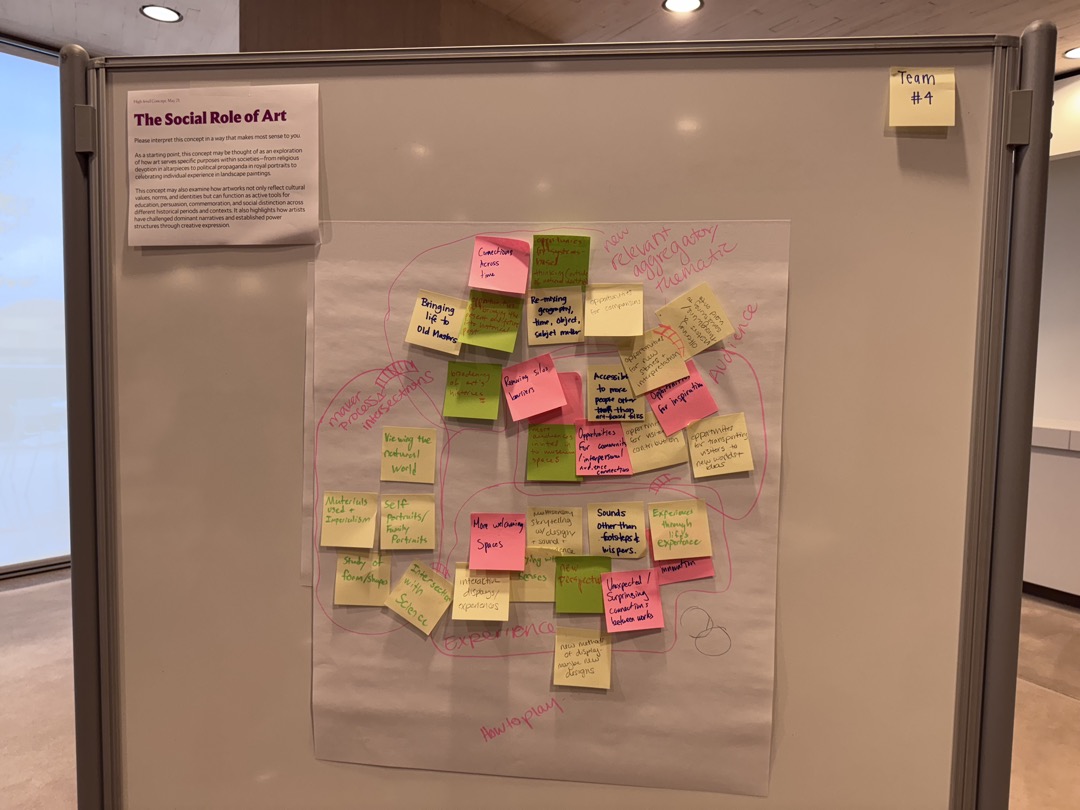
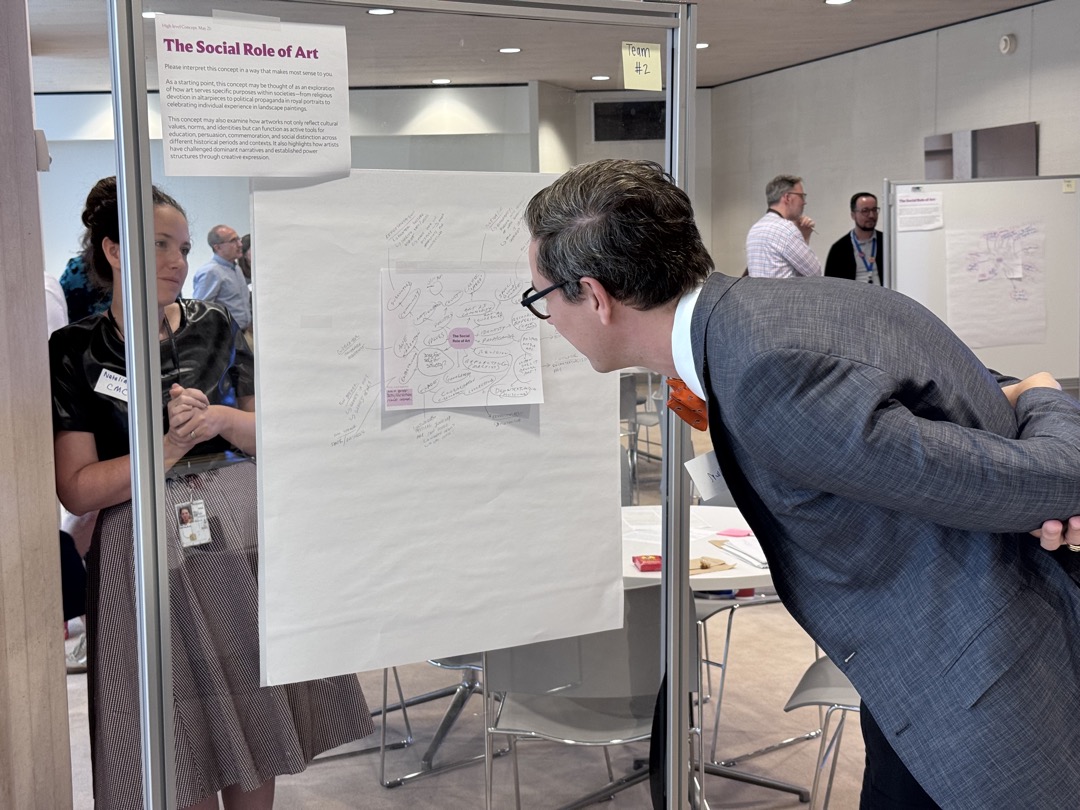
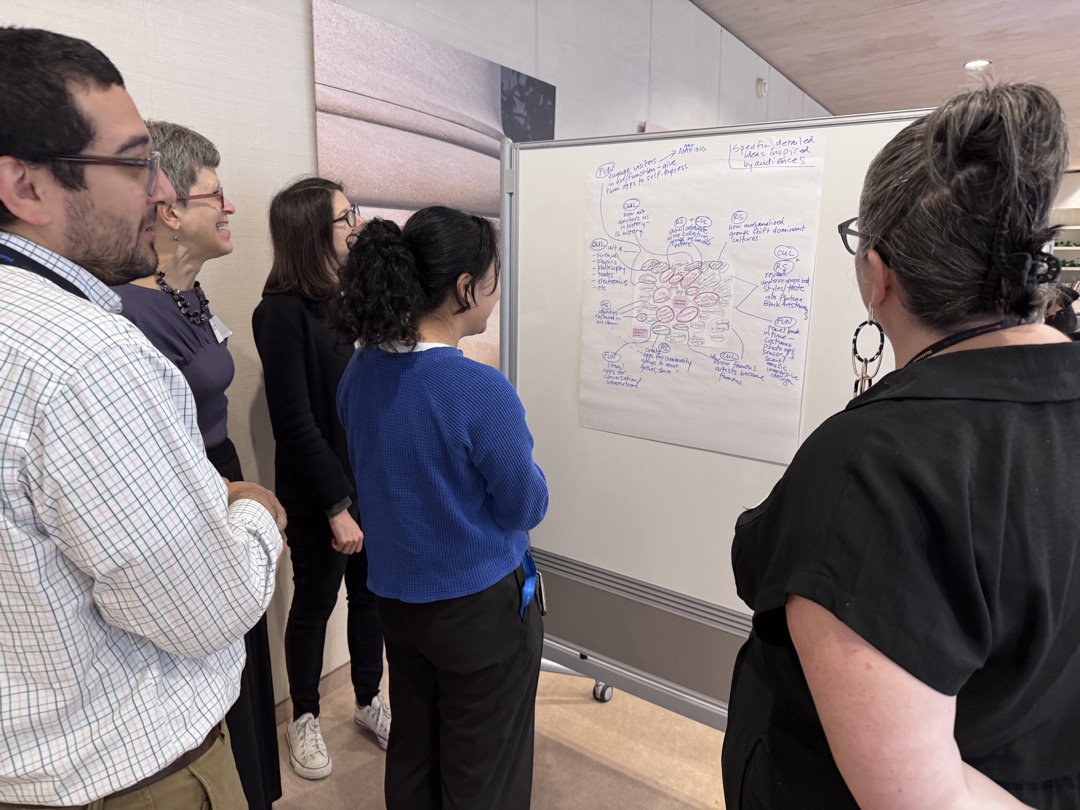
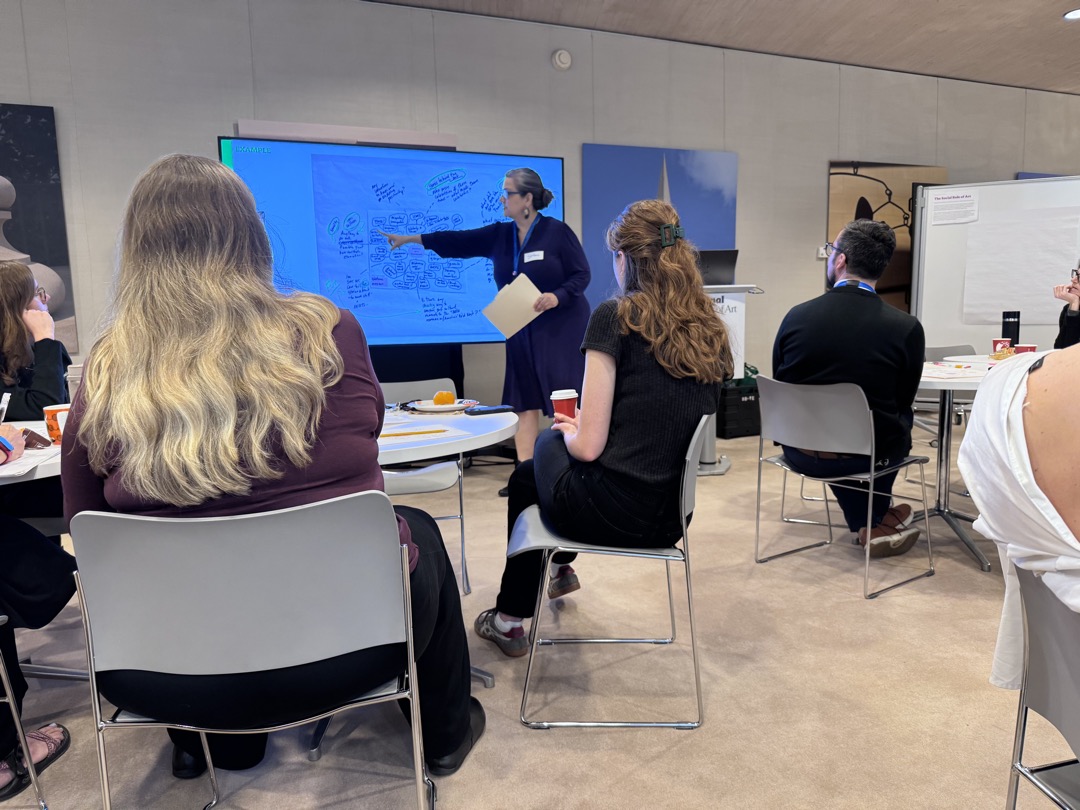
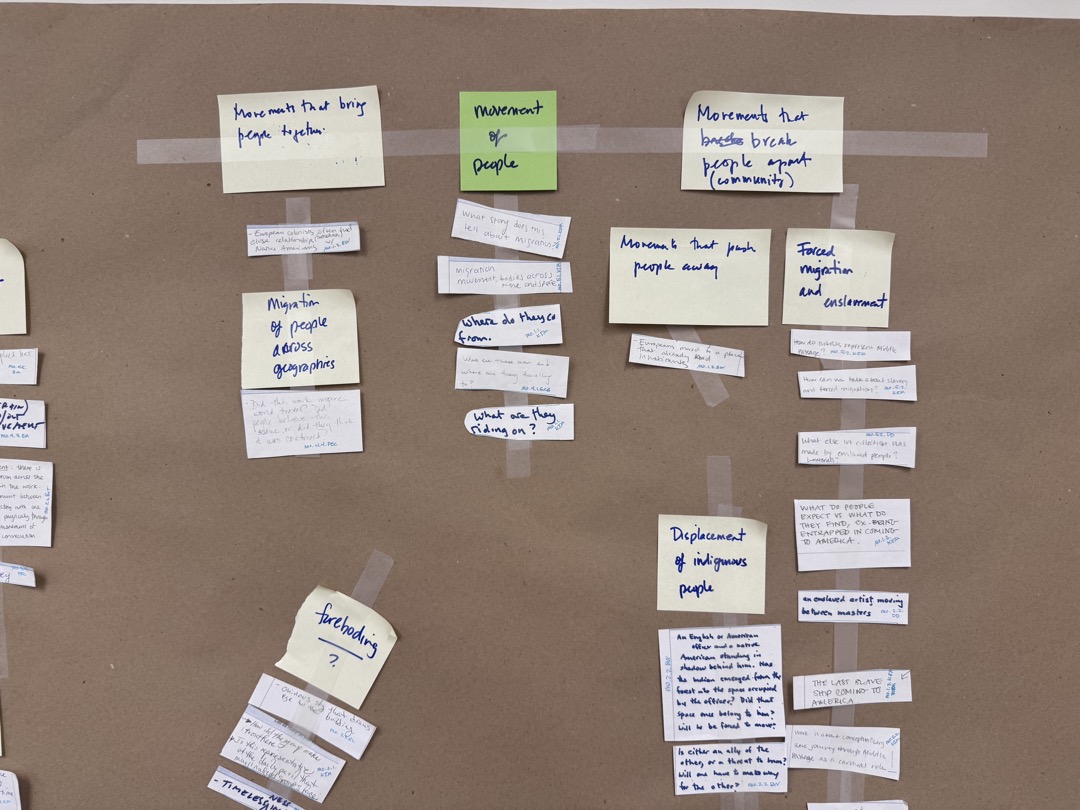
In May 2025, cross-disciplinary workshops explored four high-level interpretive concepts. In my session, we focused on “the social role of art.” Participants—25 in all—worked in small groups to brainstorm ideas, map concepts, and reflect on objects from a visitor perspective. Each group then restated the theme into their own words, translating abstract goals into practical strategies. It was a productive exercise that generated a wide range of possibilities, laying the foundation for further development.
A series of informal follow-up sessions brought together staff and facilitators to cluster the most promising ideas into interpretive stories. Importantly, this work represents a bottom-up approach to exhibition development—grounded in dialogue and exploration—rather than the top-down directives typical of many reinstallation projects.
A Project to Watch
While still in progress, the West Building Reimagining Project provides an intriguing case study in how a venerable institution can embrace innovation while honoring its legacy. It’s also a reminder that thoughtful, collaborative experimentation can open new doors—not just for interpretation, but for how museums define their role in a rapidly changing world.
Stay tuned: in a future post, I’ll share examples of the experimental displays currently being tested.
 Engaging Places