Author Archives: Max van Balgooy

Unknown's avatar

About Max van Balgooy

President of Engaging Places LLC, a design and strategy firm that connects people to historic places.

Put Your Organization to the Rorschach Test

This slideshow requires JavaScript.

If you’re finding that your organization is in a rut and you no longer feel as inspired about its work, it might be useful to look at it in a new way by creating a “word cloud” of key documents, such as a strategic plan, mission and vision statements, interpretive themes, or visitor evaluation.  A word cloud is a visual presentation of the most frequently used words, sized by frequency.  For example, if you use the word “history” ten times more than “preservation” in your strategic plan, “history” shows up much larger than “preservation” in the word cloud.  The word cloud allows you to look at your organization from a different perspective: words jump out at you and prompt questions about what’s being emphasized (and what’s not).

As examples, in the slide show above I’ve assembled word clouds from the first few paragraphs of the About section of the websites (which often includes the mission or vision statements) of the following historic sites:

I’ve used word clouds in strategic planning sessions to Continue reading

Google Expands its Access to Museums (but not yet Historic Sites)

Floor plan of the American Museum of National History displayed as a Google Map on a smartphone.

Google Maps recently expanded its capabilities of mapping indoor places (mostly  airports and shopping malls) by including two dozen museums in the United States (such as the Philadelphia Museum of Art, Indianapolis Museum, and the Smithsonia–the many museums that make up the Smithsonian Institution) and England (such as the British Museum, Victoria and Albert Museum, and the National Portrait Gallery).  Currently, this feature is only available on Android smartphones or tablets (that may seem limiting but nearly 2 million people have downloaded this app).  More museum maps are in the works but it doesn’t look like any historic sites are participating.  Consider how useful it would be to visitors at such places as Colonial Williamsburg, Gettysburg Battlefield, Sturbridge Village, the Huntington, and James Madison’s Montpelier.  If you’re interested in adding your site details to Google Maps, you can upload floor plans yourself or get help from Google.

In a similar vein, Google Street View just added 360-degree panoramic views of Yosemite and four other national parks in California.  And of course, these are nice complements to the Google Art Project.  It looks like Google is taking a much greater interest in museums along several paths, but historic sites currently seem to be left out of the mix.  I don’t think that’s intentional. I just think it’s a common oversight because most people don’t associate museums with historic sites.  Perhaps I’ll give them a call.

Thanks to John Durel for alerting me to this news item!

Boston MFA takes Flight with New American Wing

This slideshow requires JavaScript.

The Boston Museum of Fine Arts, one of the great public museums established just after the Civil War, has recently opened “Art of the Americas,” a new wing filled with its outstanding collections of American fine and decorative arts.  As some of you know, the Boston MFA underwent a controversial restructuring more than a decade ago, shifting from departments organized by media (e.g., paintings, ceramics, furniture) to geography (e.g., Europe, Asia, and America) and firing some longtime curators (including Jonathan Fairbanks, who created the American Decorative Arts and Sculpture department at the MFA).  I’m assuming one of the results of this restructuring is “Art of the Americas.”  This four-story exhibit consists of 53 galleries tracing the history of art from pre-Columbian to Modern periods for the continents of North and South America, so along with the expected Chippendale chairs and Copley portraits, there are Peruvian funerary urns and Acoma pots.  It’s so large that it took me nearly three hours just to cruise through it at a walking pace and I didn’t make it to the fourth floor, which explored the 20th century.

Unlike most art museums, the exhibit mixes Continue reading

Historic Sites Garner A Dozen+ Grants from IMLS

The Institute for Museum and Library Services recently announced the awards for the latest round of Museums for America grants, which include projects at more than a dozen historic places.  It’s always a quick way to see what’s happening around the country to get ideas as well as identify what projects are attractive to funders.  Congratulations to the recipients, especially our colleagues who are working with historic sites, including:

Kodiak Historical Society – Kodiak, AK
Award Amount: $52,706; Matching Amount: $52,810
Contact: Ms. Anjuli Grantham, Curator of Collections
(907) 486-5920; anjuli@baranovmuseum.org

The Kodiak Historical Society will complete design development for 2,800 square feet of exhibits at the Baranov Museum, located within the National Historic Landmark building known as the Russian-American Magazin. The project will foster the planning and design of Continue reading

IMLS Moves Deadline in Response to Comments from Museums

In a surprising move, the Institute of Museum and Library Services will be changing the application deadline for Museums for America and National Leadership Grants from January 15, although it won’t happen until 2014 at the earliest and the new deadline hasn’t been announced.  The 2013 deadline remains January 15.  According to Claudia French, Deputy Director for Museums, “We wholeheartedly support this suggestion and will change the deadline for FY2014. The time required for final approval of new grant guidelines through the Office of Management and Budget (OMB) will not allow us to alter the date for FY2013.”

This was a result of more than 100 comments received from the field as a result of a major restructuring of their grant programs.  IMLS did not reveal what other changes are under consideration or what concerns were reflected in the comments, however, they did affirm that, “In 2013, there will be no restrictions on the number of applications a museum may submit to MFA or NLG-Museums. . . .Museums submitting applications in more than one project category will compete with other museums in each category, not with themselves.”

Thanks to everyone who submitted comments on the proposed IMLS grant guidelines.  This has been one of the most controversial topics in the museum field that I encountered this year, so I’m happy to hear that museums and historic sites had some influence and that the IMLS was willing to accept public comments and provided an initial response so quickly.  A complete statement from IMLS is available on their blog.


Contemporary Visitor Center opens at French Historic Site

MuséoParc Alésia in Burgundy, France. The new orientation center is on the right and reconstructed sections of Roman fortifications are on the left.

On the site in Burgundy, France where Julius Caesar laid siege to Gallic leader Vercingetorix, architect Bernard Tschumi of New York created a circular concrete orientation center wrapped in a wood lattice on the site occupied by the Roman army.  (Although Napoleon II erected a 22 foot tall statue of Vercingetorix in 1865, he doesn’t seem to have caught on as a celebrity and no one names their kids after him.)  Called MuseoParc Alesia, the design of the interpretation center echoes the ringed fortifications built by Julius Caesar in 52 BC.  The building not only interprets the site through the exhibits inside but emphasizes views out onto the historic landscape via the windows and balconies that circle the building.  After watching a film about the battle, visitors exit the auditorium onto the tree-shaded roof terrace to enjoy a panoramic view so that, “vous vivez une expérience au cours de laquelle vous allez comprendre l’histoire de ce site, apprendre à regarder les signes dans le paysage mais aussi partager un lieu, un moment, un récit.”  And it includes an innovation for French museums:  a “toy library” for children ages 3 to 8 where they can learn while having fun (I think we call this a discovery room in the U. S.).  Strangely, the architect wanted the lobby to be empty.  I wonder if visitors will find this a confusing and sterile experience after encountering this dramatic building outside?  Seems to me to be a bit jarring, but I guess I’ll have to go to Burgundy to find out for myself.  A second circular museum built in the brick Gaul style will be located about a half mile away.

You’ll find a slide show of images at Architectural Record and initial reviews on Trip Advisor look promising.  Thanks to Barbara Campagna for alerting me to this new building!

Flexible Lobby Thanks to Furniture on Wheels

This slideshow requires JavaScript.

During a recent visit to the Abbe Museum in Bar Harbor, Maine, I spotted a clever way that allows them to easily remodel their lobby from a visitor reception area to an event space.  You don’t notice it at first because the furniture is so well designed and complements the appearance of the building.  The reception desk is busy selling tickets and greeting visitors, and next to it are panels explaining what to see and do.  But look below or behind, and you discover it’s not a panel but a moveable storage wall.  Clever!

AASLH Conference Offering Lots for Historic Sites

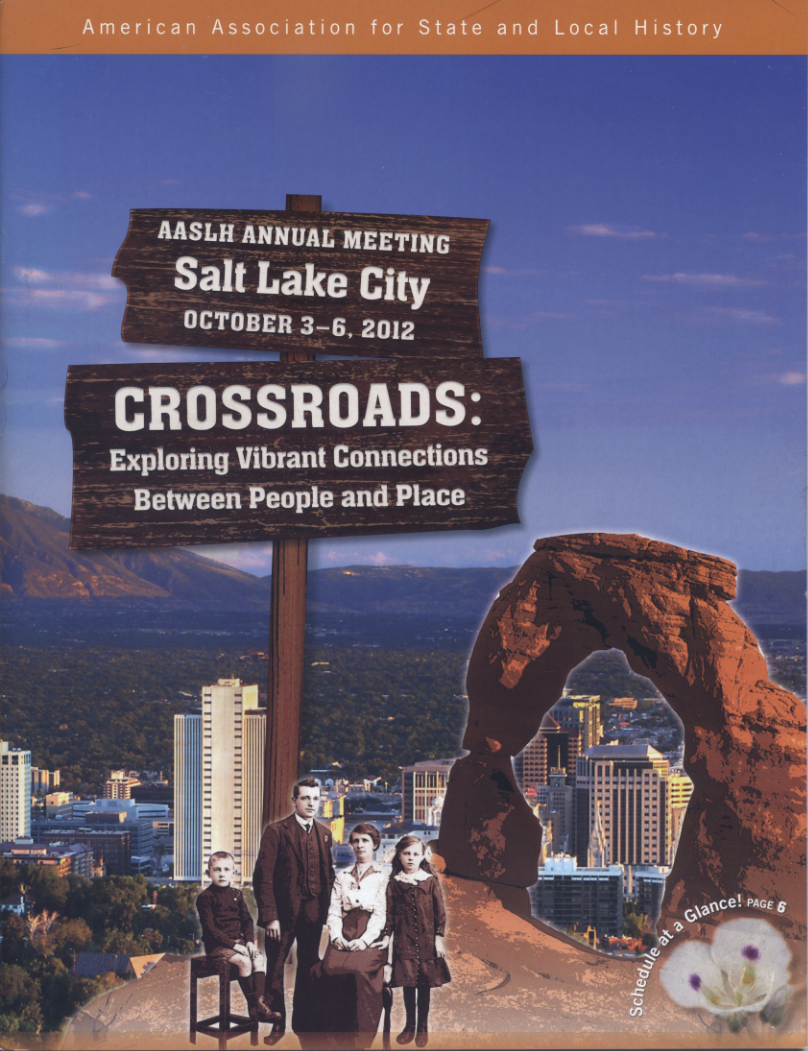
Preliminary program for the 2012 AASLH Annual Meeting in Salt Lake City.

The program for the annual meeting (aka conference) of the American Association for State and Local History just arrived in my mailbox.  Flipping through its pages, there are more than 70 educational sessions, many that focus specifically on historic sites and house museums including:

  • Twilight at Conner Prairie: The Creation, Betrayal, and Rescue of a Museum
  • Too Important to Fail: Historic House Museums Meet Communities’ Needs
  • Business Models and Earned Income for Historic Houses
  • Visitors to Religious Sites: The Whos and Whys
  • Historic Places as Museums: Crossroads of Expectations
  • Re-imagining Historic Sites: Three Roads to the Same Destination
  • Paranormal Policies (if your site hasn’t been contacted by paranormal researchers in pursuit of ghosts, your time will come)

In addition, most of the other sessions are helpful, depending on your needs and interests.  There are sessions on fixing poorly functioning Continue reading

Amelia Wong Joins Museum Studies Faculty at GWU

Amelia Wong, currently the US Holocaust Memorial Museum’s senior social media strategist, will be joining the fulltime faculty of the Museum Studies Program at George Washington University this fall as an assistant professor. Amelia holds a BA from UCLA in history and a PhD in American Studies from the University of Maryland, College Park. Amelia’s scholarship focuses on how museums, especially those concerned with democratization, can engage critically with technology for their goals. Her dissertation, “Museums, Social Media, and the Fog of Community,” reflects her research interests and
is the first book-length project about social media in American museums.

At the Holocaust Museum, the Twitter community has grown from 2000 to over 100,000 people under her direction. Amelia also developed and produced an ongoing Web series, “Curators’ Corner,” which gives the public, donors and others an inside look at the
museum’s collections via short multimedia presentations narrated by museum staff. During her first year at the museum, Amelia proposed, Continue reading

Comments on IMLS Revised Grant Guidelines Due Today

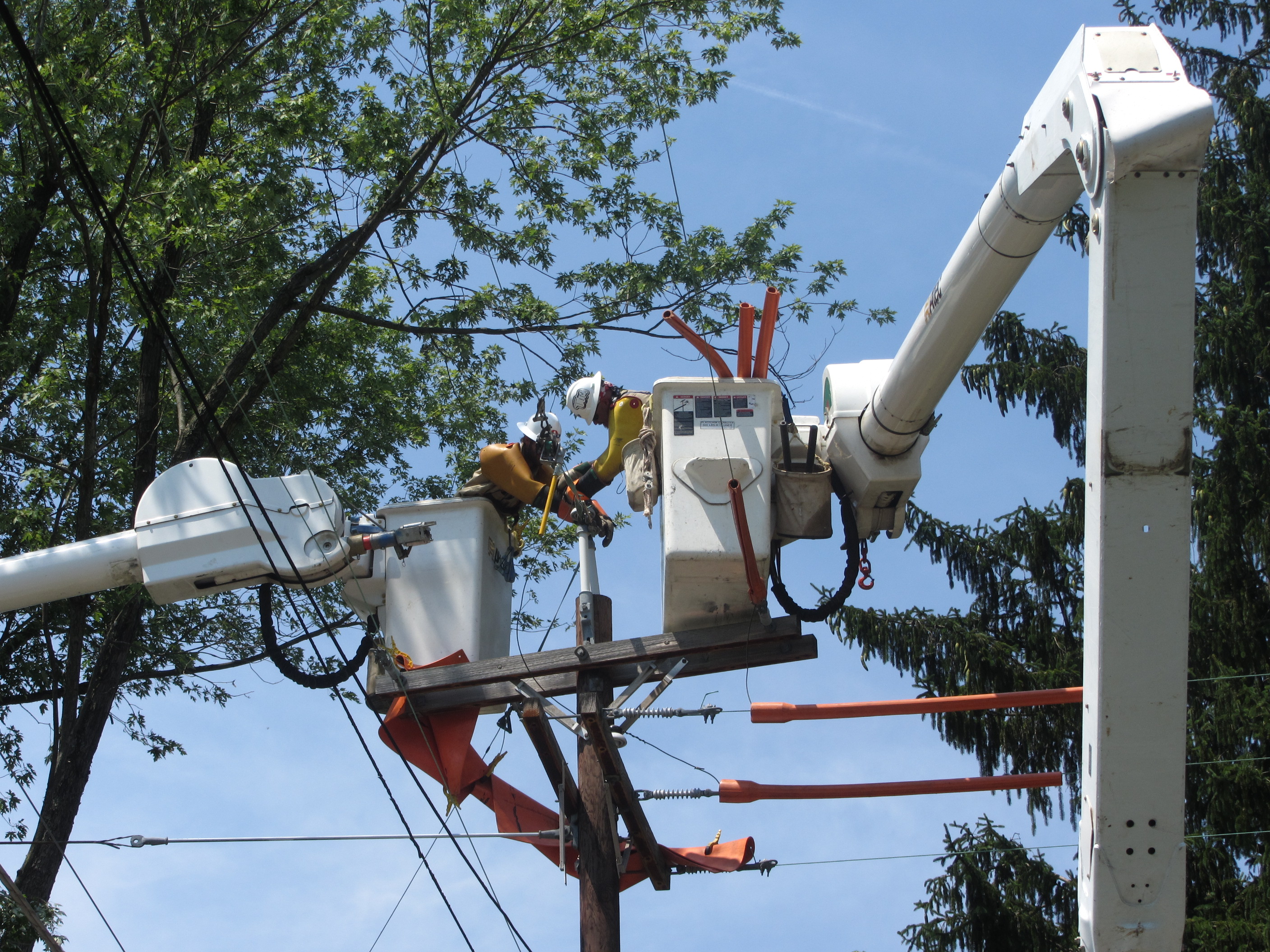
A crew from Alabama repairing downed power lines in Maryland near my office.

Electrical power was out in my part of the world for a couple days earlier this week due to the fierce thunderstorm that struck the Midwest and Mid-Atlantic on Friday.  Some parts are still without power and although I haven’t conducted a survey to see how the nearby historic sites fared, I have heard that one historic house museum in Virginia is facing about $30,000 of clean-up costs due to fallen trees and branches.

But power and Internet have been restored to my office, just in time to submit my comments to IMLS on their revised guidelines to their grant program.  Comments are due today to comments@imls.gov.  Here’s what I submitted:

Please accept these comments for the public record regarding the draft guidelines for the FY 2013 Museums for America and National Leadership Grants for Museums programs of the Institute of Museum and Library Services.

I appreciate the federal Continue reading