Category Archives: Community engagement

President Lincoln’s Cottage Tackles Immigration

This slideshow requires JavaScript.

President Lincoln’s Cottage, the presidential summer retreat just a few miles north of the US Capitol, recently opened an exhibit in their visitor education center the compares immigration issues in the 19th century to the present day.  Titled, “American by Belief,” the introductory label reads:

The United States of America is, and always has been, a nation of immigrants. Abraham Lincoln recognized immigrants as one of America’s greatest resources and its best hope for the future. He believed America, in return, owed immigrants the full realization of its founding promises and a fair chance to succeed.

Our world is different than Lincoln’s. But what continues to bring immigrants here would look familiar to him: an opportunity to rise higher, improve themselves, live safely under the rule of law, become citizens, and count themselves as American by right of belief.

This is a small temporary exhibit, perhaps 200 square feet at most, and primarily consists of panels featuring text and images (no historic objects).  In the center of the room is a map of the world made of pegs, which visitors can use to link places associated with them using colored rubber bands (this looks cool but I’m not sure Continue reading

AASLH Annual Meeting Provokes Historical Thinking

Tim Grove facilitating a lively conversation about historical thinking at the AASLH Annual Meeting in 2015.

Tim Grove facilitating a lively conversation about historical thinking at the AASLH Annual Meeting in 2015.

The annual meeting of the American Association for State and Local History always offers a good mix of educational sessions, social events, and opportunities to visit museums and historic sites around the country.  This year, Sam Wineburg, a Stanford University professor and author of Historical Thinking and Other Unnatural Acts (2001), prompted an ongoing discussion with his plenary address on the first day of the annual meeting.  Through his research on students and scholars, he showed that the analysis of historical documents is a sophisticated skill that isn’t apparent to most people (and I can confidently say this also applies to objects, buildings, and landscapes).  He went on to argue that teaching people to think historically isn’t about teaching history but making them better citizens.  John Dichtl, president of AASLH, discusses this further on the AASLH blog.

These ideas were pursued the next day at a packed session facilitated by Tim Grove of the National Air and Space Museum.  Using excerpts from Wineburg’s book, Tim encouraged a lively dialogue that allowed me to report out 15 Tweets, including:

  • Historical thinking: multiple perspectives; analysis of sources; context; and based on evidence.
  • Are we underestimating visitors if we don’t give them oppty to debate ideas & issues at museums/historic sites?
  • Debates always happen, but history gets flattened over time. Build multiple perspectives, uncertainty, & questions into exhibits.
  • Asking good provocative questions is a skill. Learn more at the Right Question Institute.
  • Challenge for marketing & communications staff about handling provocative topics in social media era.
  • Are museums & sites imposing their ideology on visitors? Have we become arrogant? Do we need to learn about visitor interests?

which resulted in 31 favorites and 20 retweets.  Just to be clear, these ideas didn’t come from me but from the persons gathered in the room.  I could have tweeted out many more but I couldn’t listen and type them out quickly at the same time.

If you weren’t able to attend, there’s next year in Detroit.  In the meantime, enjoy these snaps from the recent meeting in Louisville (and thanks to everyone at the Kentucky Historical Society for being such gracious hosts).

This slideshow requires JavaScript.

International Museum Management Conference Coming to US

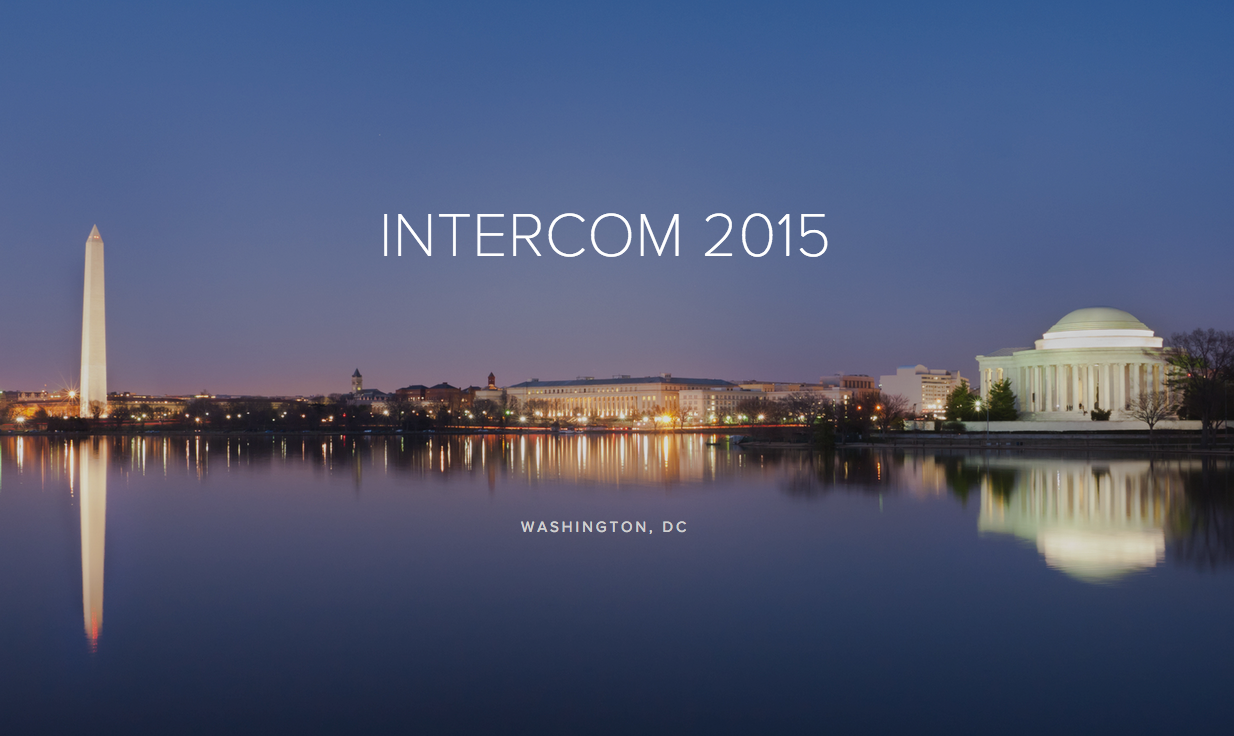
Screen Shot 2015-07-31 at 10.56.44 AM The International Committee of Museum Management (InterCom) of the the International Council of Museums (ICOM) with be holding its annual meeting in Washington, DC from October 28-31, 2015, the first time it has held its meeting in the United States. InterCom works toward the development of sound museum management throughout the world, including the managerial aspects of policy formulation, legislation, and resource management.  Registration is $350 ($150 for students) and early bird registration for $295 ends today (July 31).

This year’s conference focuses on three themes–The Sustainable Leader, The Enduring
Organization, and the Essential Museum–and plenary speakers include Lonnie Bunch, Founding Director, Smithsonian National Museum of African American History and CultureElaine Heumann Gurian, author and museum consultant; and Richard C. Harwood, Harwood Institute for Public Innovation. Sessions involve diverse topics from around the world and several caught my eye. I wonder what someone from Columbia has to say about museums as tourist attractions; how violence or civil unrest are affecting museums in Mexico, Denmark, and Minnesota (Minnesota??); or how the Research Center for Anatolian Civilizations in Turkey tackles the value of history and heritage in the contemporary world (how do you make thousands of years of history relevant?).

I’ll be there to expand my horizons and reporting out when I get a chance. It also looks like we’ll be having special tours of several museums in DC (it’s the behind-the-scenes experience at museums that lured me into this field) so that will be great fun. Hope to see you there!

“State of the First Amendment” Survey Results Released by Newseum

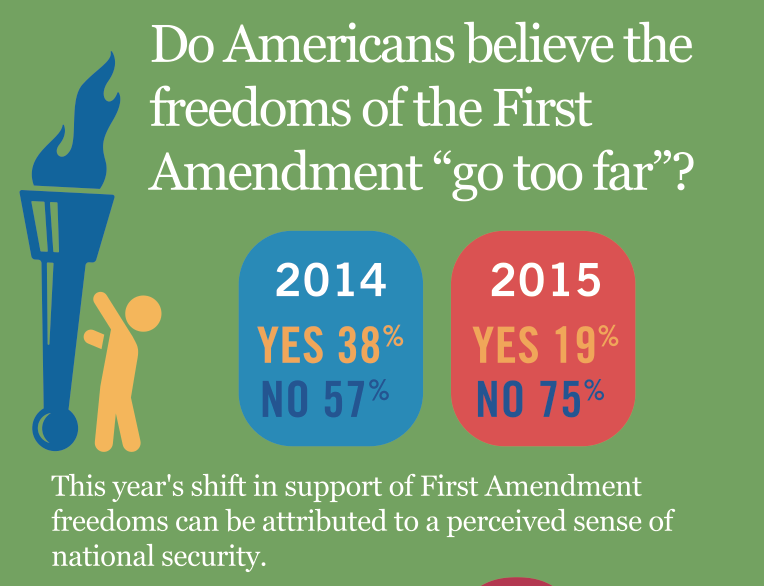
First Amendment 2015The State of the First Amendment survey, conducted each year since 1997 by the Newseum Institute’s First Amendment Center, tests Americans’ knowledge of their core freedoms and samples their opinions on First Amendment issues of the day.  The survey again found that most Americans are unable to name more than one or two of the five freedoms in the First Amendment —religion, speech, press, assembly and petition— and that one-third cannot name any of the five.  Looks like a great opportunity for history organizations!

The 2015 survey questions also covered topics including the use of Confederate flags Continue reading

Openluchtmuseum Requires Mental Gymnastics in Historical Interpretation

Telephone booth, 1933-1965.

Telephone booth, 1933-1965.

The Openluchtmuseum, or Open Air Museum, in Arnhem in the Netherlands is one of the oldest outdoor/living history museums in the world. Opened in 1918, it preserves traditional and folk cultures by collecting vernacular buildings, furnishing them to specific periods, and using them to demonstrate historic crafts and skills.  In the last decade, they’ve expanded these approaches by adding multimedia presentations along with interpreting the post-war period as part of an effort to create a national history museum interpreting the “Canon of the Netherlands” (the canon is a divergent idea worth investigating).  In this post, I’ll examine their interpretation of the post-war period and in a later post discuss various unusual exhibition techniques.

At first glance, the Open Air Museum seems to be comprised of distinct clusters of farm buildings from a distinct region and time, where you can wander through houses and barns and watch someone in costume making brooms or working a plow.  But the layering of history is complex and I found myself continually asking, “what time is it?” and “how are these things related?” to make sense of my visit.  There are lots of historical anomalies, such as a 1960s phone booth in front of a 1910s train depot, but perhaps they’re not anomalies if you mentally reinterpret the scene by finding the overlapping period, such as the 1930s.  These intellectual gymnastics don’t always work, but then again, the entire concept shaping the Open Air Museum allows for the artificial juxtaposition of historical places, times, and objects–which is what often happens in art museums and can also be bewildering (ever visit the Robert Lehman Gallery at the Met?)

The experience caused me to think hard about the role and purpose of interpretation Continue reading

Hangout with Historians to Discuss the Nation’s Report Card

NAEP History Scores 1994-2014Discuss strategies to improve history education in our schools with people coming at it from different perspectives on Tuesday, July 7 at 12 noon (Eastern) in a Google Hangout co-hosted by the National Assessment Governing Board and the American Historical Association.  It’s in response to the latest results of the Nation’s Report Card, which shows that many students lack a strong understanding of our nation’s history (as seen in the chart, scores have been flat for the past twenty years, and the conversation will explore ways that students can become more engaged and informed.  Hmm, can historic sites and house museums play a role?

Participants include

  • Jim Grossman, executive director of the American Historical Association
  • Chasidy White, history and geography teacher at Brookwood (Ala.) Middle School and member of the National Assessment Governing Board
  • Judith Gradwohl, MacMillan associate director for education and public engagement at the National Museum of American History
  • Libby O’Connell, chief historian at the History channel
  • Frank Valadez, executive director of the Chicago Metro History Education Center

and the conversation will be moderated by Jessica Brown, contributing writer at Education Week.

To register or for more information, visit Why History Matters at the National Assessment Governing Board.

So Many Possibilities for Historic Sites at AASLH Annual Meeting

AASLH Louisville 2015The American Association for State and Local History (AASLH) just delivered the preliminary program for its annual meeting, which will be held in Louisville, Kentucky from September 16-19, 2015.  Obviously, the conference is centered around history but there are several sessions, workshops, and field trips that focus on historic sites and house museums, including:

  • Heritage Tourism in the 21st Century with James Stevens of ConsultEcon Inc., who recently studied the heritage tourism sector in Philadelphia
  • Restoration and Reconstruction: Fulfilling the Possibilities of a 21st Century Museum, a discussion about the reinterpretation of the Woodrow Wilson Family Home in South Carolina (also reviewed in the recent issue of the Public Historian and the Journal of American History; not to be confused with the Woodrow Wilson Boyhood Home in Georgia)
  • Old House, New Diverse Stories, a brainstorming session led by Ken Turino of Historic New England
  • An Untapped Resource: How to Locate and Use Legal Cases at Historic Sites, a session to learn how to mine legal case files to find compelling narratives for exhibits and programs
  • Interpreting Religion at Historic Sites, a discussion on leveraging “historical truth when interpreting religion” led by the historian of the Navigators.
  • An afternoon tour of the exuberant Second Empire Culbertson Mansion and Farmington, the Federal-style home of Lucy and John Speed.
  • There may be bourbon at the breakfast for historic house museums when Dennis Walsh from Buffalo Trace Distillery discusses the preservation of this historic sites (and it’s pretty cool website, too)
  • An evening at Locust Grove, a National Historic Landmark, with costumed interpreters, live music, and a three-course buffet.
Sam Winburg

Sam Wineburg

With 65 sessions, there is much, much more happening and you’ll be torn about what to do.  There’s certainly enough to appeal to directors, curators, historians, educators, and preservationists.  I’m particularly eager to hear Sam Wineburg, professor of education and history at Stanford University and author of Historical Thinking and Other Unnatural Acts: Charting the Future of Teaching the Past (see “A History of Flawed Teaching“), and the follow-up discussion led by Tim Grove, chief of museum learning at the Smithsonian National Air and Space Museum.  Wineburg is currently developing new forms of assessment to measure historical understanding and undertaking a longitudinal study on the development of historical consciousness among adolescents in three communities.  But I don’t want to neglect the three other outstanding plenary speakers: Wendell Berry, James Klotter, Renee Shaw, and Carol Kammen.

I rarely ever skip the AASLH annual meeting and I plan to be there this year.  Registration is $250 if you jump in before July 24 and there’s the alternative online conference featuring six sessions.


What’s the Twack Record for Your Tweets?

Followers Dashboard from Twitter.

Followers Dashboard from Twitter.

The growth of social media has added new layers of complexity to the promotional efforts at museums and historic sites.  Along with mailing newsletters and event announcements and maintaining a website, we feel an increasing need to connect with our supporters through blogs, Twitter, Facebook, and LinkedIn.  But is all this work having any impact? How can I better use these tools to engage my audiences?

You may have noticed that I’ve been experimenting with Twitter this past year, adding a feed to the sidebar of my blog and sending out about three tweets each morning on news related to museums and historic sites using @maxvanbalgooy (@engagingplaces was already taken) and tagging them with #museum or #preservation.  It’s nice to see the number of Followers grow and merit a Favorite or Retweet occasionally (thanks Bob!), but what’s the impact?  You may find some answers in the Followers dashboard that Twitter recently launched.

The dashboard provides several analytical tools that not only highlights Continue reading

Historic House Museums a Special Focus for the Public Historian

Jane Addams Hull-House Museum by Brandon Bartoszek

Jane Addams Hull-House Museum by Brandon Bartoszek

The May 2015 issue of the Public Historian was just released and provides a dozen articles related to historic house museums.  Lisa Junkin Lopez, associate director of the Jane Addams Hull-House Museum and guest editor of this special issue, provides the criteria that helped her select the articles and her vision of historic house museums:

Though a number of sites have turned to revenue-generating activities like weddings and farmers’ markets to stay afloat, rigorous historical content has not necessarily been quashed in favor of parlor room cocktail hours and heirloom tomato beds. Many sites have recommitted to the project of excavating their own histories, digging deeper to find relevance with contemporary audiences and identifying new methods for engagement along the way.

The individual essays are case studies of various projects at historic house museums, but many question and even break the basic assumptions of museum practices and historic preservation standards.  This shift will need to be watched because Continue reading

If You Visit the Netherlands, Get a MuseumKaart

Museum KaartI’ve just returned from a week-long study trip to the Netherlands, a whirlwind visit that included nearly two dozen museums and historic sites, thanks to the MuseumKaart.  This card provides free (and sometimes discounted) admission at most museums in the Netherlands for a year.  It can be purchased at any participating museum for €55 and although it was a lot of money to pass over on my first day, I received it back quickly because admission fees range from €5 (Edam Museum) to €17.50 (Rijksmuseum).  As a museum geek, they definitely lost money with me. Even better, it’s good for a year, unlike the 1-3 day “I am Amsterdam” card, so there’s no rush.  The card not only saved me money, but encouraged me to see places I wouldn’t ordinarily visit, such as the Museum of Bags and Purses or the Willet-Holthuysen Museum.

My week in the Netherlands was provocative and I’ll be sharing some of the best and most interesting experiences in the coming weeks.  In general, museums and historic sites in the Netherlands seem to:

Continue reading