In this 3:25 video, teacher Joanna Hayes shares the value of history through images and the music of Coldplay. She presents it on the first day of her social studies class.

In this 3:25 video, teacher Joanna Hayes shares the value of history through images and the music of Coldplay. She presents it on the first day of her social studies class.
In this 5:17 video, author David McCullough shares the five most important ideas high school students should learn before graduating (and it’s not memorizing dates and quotations). This was recorded by CSPAN at the 2011 National Book Festival.
Last week I visited the Exploratorium in its new home on Pier 15 in San Francisco. If you haven’t veen there, it’ll seem like a science center but you’ll quickly discover it’s really a place about learning, especially through direct experiences with art, tinkering, and phenomena (yep, that’s how they describe it). It’s an incredibly active place (almost to the point of overwhelming) that seems to effectively engage its visitors, so I continually watch to see if any of their exhibits or ideas can be applied to historic sites or history museums. During my latest visit, I found two exhibits that with a mild tweak could be really be innovative for interpreting history.
1. Question Bridge: Black Males. This temporary exhibit is, “comprised of many individuals asking and answering questions about the experience of black men in modern America.” Inside the small dark room are Continue reading
The Institute of Oral History at the University of Texas at El Paso just produced a 2:49 video covering the 2014 annual conference of the National Council Public History in Monterey, California. Using video from the conference and Monterey along with interviews, it highlights the value of the conference. This was created by Karina Arroyo and Jesus Genaro Limon, who I believe are students at UTEP. Perhaps your site could create something like this for your events or conferences with the help of a local college or university.
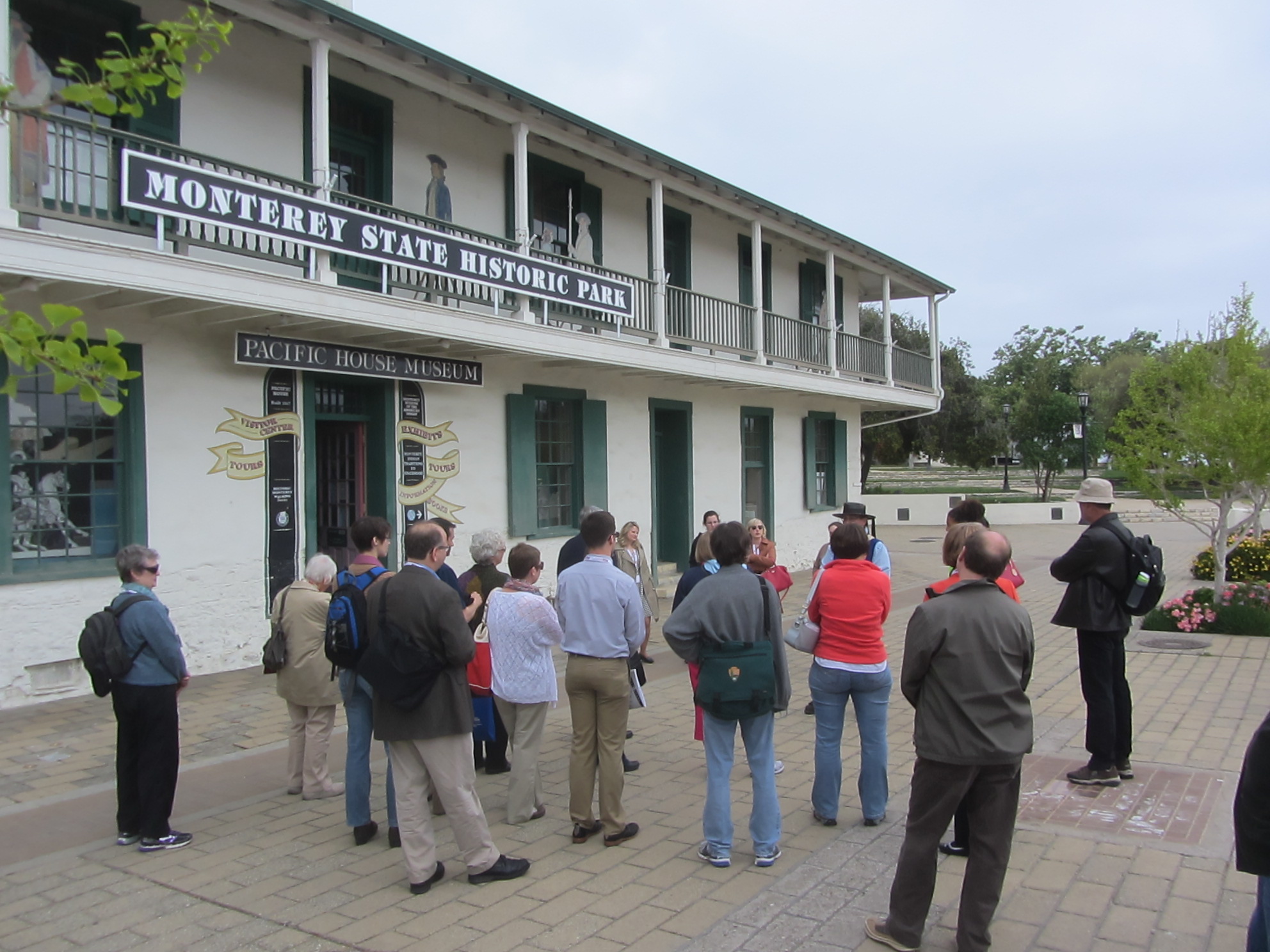
Walking tour of historic Monterey, California.
Heritage tourism is a growing industry that can improve community engagement, economic revitalization, and preservation advocacy. People want authentic and meaningful experiences—and are willing to pay for them. On May 13, 2014 from 12 noon to 1:30 pm Pacific Time, I’ll be presenting a webinar for the California Preservation Foundation exploring the benefits of heritage tourism and how it may (or may not) benefit your community or region. We will examine the latest research on the motivations and interests of tourists (they’re not all alike), how to identify or create destinations that will attract tourists, and how to build support and attract funding for a heritage tourism program. You’ll learn the overall elements of a heritage tourism program and leave with a list of the next steps to take in your community. Although much of the webinar will be focused on California, the principles and process for developing a heritage tourism program will be same for other places. Cost is $45 for CPF members ($60 for non-members) and advance registration is required.
It’s part of a three-part webinar series on economic development using historic preservation from the California Preservation Foundation. For those interested in continuing education credit, it’s available for AIA, AICP, and ASLA.
In this 5:29 video, students in the Youth Ambassador Program (YAP) discuss their visits to historic sites as inspiration for their music. Featured are the Nathan and Polly Johnson House in Connecticut and the Bucktown Village Store in Maryland.


The National Council on Public History held its annual conference in Monterey, California a couple weeks ago. More than 600 people attended from around the country plus ten countries, making it the largest stand-alone meeting (at times, NCPH will co-host a conference with another organization, such as AASLH). Monterey, of course, is a wonderful place to enjoy history and nature, especially if you’ve been enduring a long winter. This year’s theme was sustainability and a task force is developing a white paper, which is available for public comments.
I attended primarily to discuss the History Relevance Campaign and collect more comments and ideas on our goals and projects. I also participated in a couple sessions, a morning of speed networking (graduate students and new professionals rotate among several mid-career and seasoned pros), and ran into lots of friends and colleagues in the hall and on the street. NCPH is a mix of Continue reading
James Kendra, who has been teaching social studies at Kenowa Hills Middle School for the past nineteen years, explains his approach of a “content-free social studies classroom.” In this 12:35 video from TEDx Muskegon, he explains that social studies is the most important class students take in school but not when the emphasis is on facts and dates. “Students want to know why these events are happening,” Kendra says. “Historical events (if they were truly significant) would connect to events of today. We shouldn’t be telling students which events were important, but them discovering how past and present connect.” How would your tours or exhibits change if they were based on current events and then looked to the past for explanations and understanding?
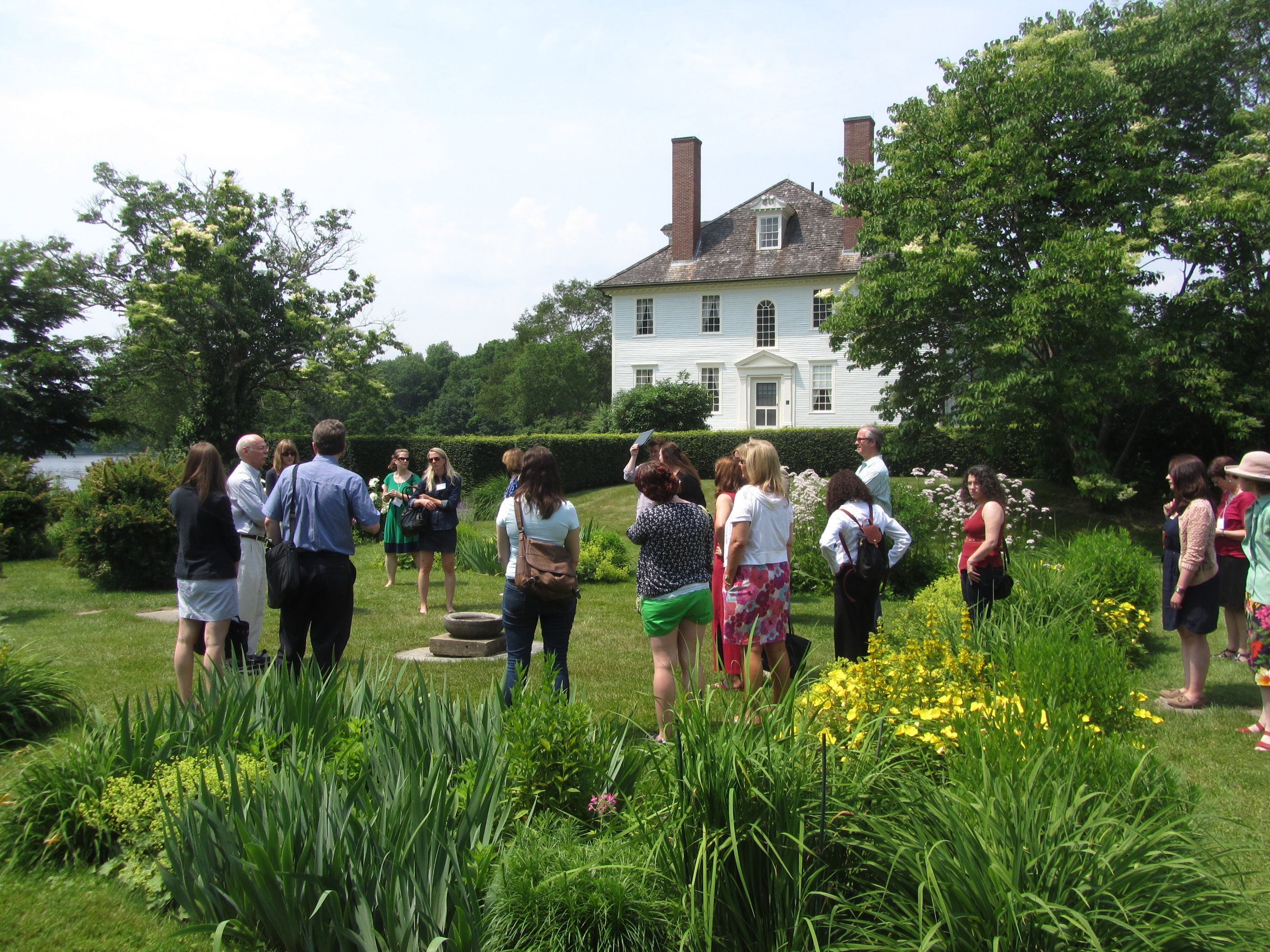
Program in New England Studies at Hamilton House, 2013.
Historic New England presents its Program in New England Studies, an intensive week-long exploration of New England from Monday, June 16 to Saturday, June 21, 2014. Now entering its second decade, the Program in New England Studies features lectures by noted curators and architectural historians, workshops, behind-the-scenes tours, and special access to historic house museums and collections. Last year I had a chance to talk with some of the participants and they said they were attracted by the chance to see the houses and collections, but found that they really loved the expert lectures.
This year, Historic New England launches a diversity scholarship to support a mid-career museum professional or graduate student. Applicants must represent a racial or ethnic minority group in the U.S. The scholarship covers the full registration fee of Continue reading
Tom Carroll explores “places that might change people’s perceptions of Los Angeles” in a series of thirteen short hip videos and demonstrate what is possible to create with just a handful of people. Carroll studied art at Occidental College and led tours at the Los Angeles State Historic Park and at the Los Angeles County Museum of Art. In creating these videos, he uses, “a lot of what I learned as a tour guide, speaking loudly and slowly, knowing when you are losing your audience.” Could you create a short video exploring an historic place in your community?
 Engaging Places