
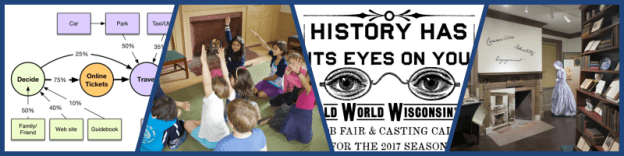
 This blog has been fairly sparse this past year because Ken Turino and I were editing and assembling two dozens essays for Reimagining Historic House Museums: New Approaches and Proven Solutions, an anthology to be published by Rowman and Littlefield as part of the AASLH series. I’m delighted to announce that it is now off my desk and in the hands of the publisher; we expect it will be released in fall 2019.
One of the biggest consequences of the under-resourced and over-stretched community of house museums is that it is difficult for them to share their successes with others—they just don’t have time. The field doesn’t learn about them except through publications, blog posts, or conference sessions—that’s one of the major reasons we assembled this anthology. There’s lots of good work happening in house museums but we’re simply not aware of it. Our hope is that this book is a good place to grab a hold of the current thinking about reinventing house museums so that they are more relevant, sustainable, diverse, inclusive, equitable, and accessible, hopefully broadening and deepening the current conversations in the field.
The book is a result of a 2014 conference, How are Historic House Museums Adapting for the Future? sponsored by the Historic House Museum Consortium of Washington, DC and the Virginia Association of Museums at Gunston Hall Plantation in Virginia. They invited to give presentations to the 120 participants and noticed that while historic site practitioners and their boards recognized that the world of historic houses has changed dramatically, they weren’t sure how to go about reimagining or reinventing themselves.
With the support of the American Association for State and Local History and local funders, we embarked on a series of workshops in subsequent years to lay out a “reinventing process” that has taken us to Missouri, New Hampshire, Vermont, Kansas, Pennsylvania, Wisconsin, and Illinois with more to come (Washington, DC in June; New York City in October). The one-day workshop, Reinventing the Historic House Museum includes an analysis of the most important opportunities and threats facing historic sites in America based on the latest Continue reading



 Because I have a successful consulting practice, friends and colleagues occasionally ask for guidance on starting their own business. Working for yourself is thrilling, which can be both joyous and scary. We can all imagine that running your own business is very different than being an employee, and that consulting is much more than being paid for your advice.
 I didn’t realize it at the time, but twenty years ago I began working with interpretive themes when I was refreshing the tours at the
  TED Talks has spawned the renewal of lectures as an engaging form of education (who would have guessed?) and many universities and organizations are regularly sharing lectures from their public programs, staff workshops, and student courses online with the public. They’re also a great resource for house museums and historic sites, who can use them for professional development and staff training, or to check out a potential speaker for a special event. They might even inspire museums to record their own events and share them online. Here are a couple programs that caught my eye:
  Engaging Places