Category Archives: Training

AASLH Meets in Salt Lake City

This slideshow requires JavaScript.

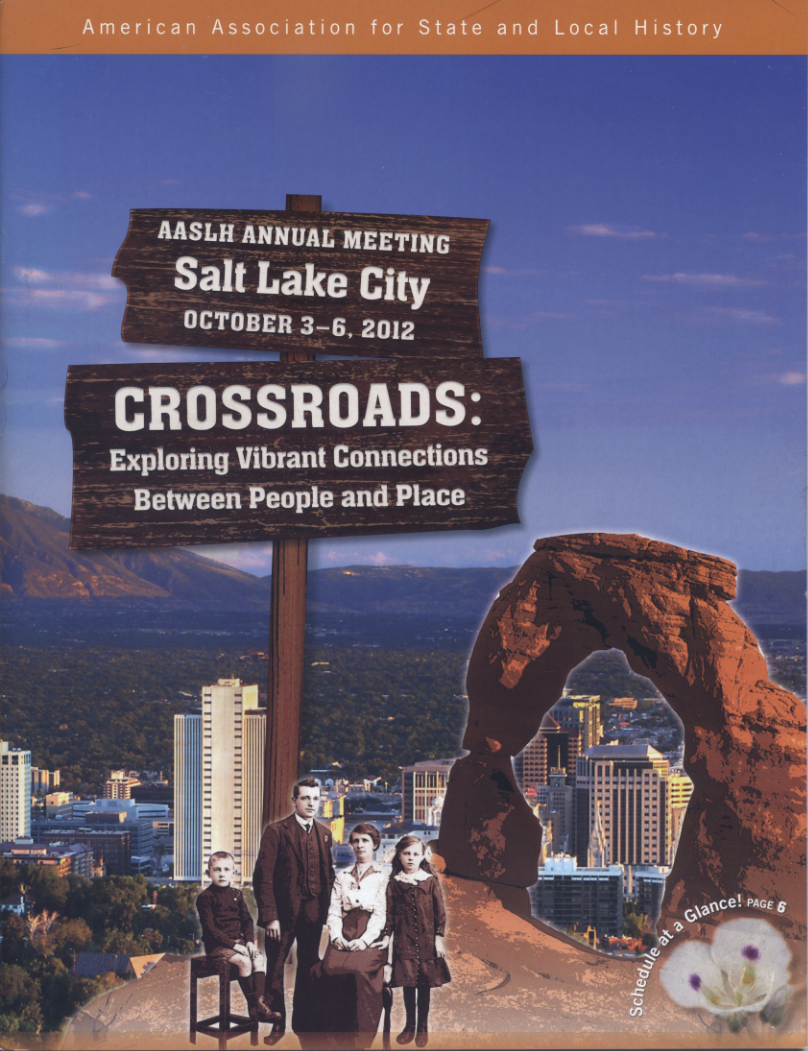
The American Association for State and Local History held its annual meeting in Salt Lake City, Utah last week, attracting about 600 staff, volunteers, and board members of history organizations around the country (and about 30 of them were from the Minnesota Historical Society).  Four days of educational sessions, workshops, speeches, and receptions kept everyone busy and thinking about improving our work as historians, educators, collections managers, curators, and directors of historical societies, museums, and historic sites.  I’ll provide more reports in the future, but for now, enjoy some pics from the meeting.

DC Historic House Museums host Biennial Symposium

This slideshow requires JavaScript.

Working in historic house museums often can often seem like an isolated job but not in the nation’s capital, where there is the Historic House Museum Consortium of Washington, DC, an active association of forty sites that mutually support and promote each other.  Every two years they also host a half-day symposium that attracts about one hundred museum guides, docents, and interpreters.  This year it was held on September 17 at the impressive George Washington Masonic Memorial in Alexandria, Virginia and I joined Dr. George McDaniel of Drayton Hall and Rebecca Martin of the National Archives to talk about various aspects of tours and the visitor experience:

  • George laid out that the visitor experience is much more than the tour and extends to the visitors’ planning, arrival, and departure. He emphasized the importance of little things, such as the directional signage, staff hospitality, and the condition of grounds and restrooms can have on visitors’ attitudes even before the tour starts
  • In “Before You Get Engaged:  Advice for Lovers of History and Historic Sites,” a light-hearted perspective on visitor engagement, I discussed three issues to consider before getting engaged with visitors:  don’t marry a stranger (know your audience), don’t share everything you know about a site on a tour (keep it mysterious), and let them know what you care about (keep your passion alive).
  • Becky closed the session with Continue reading

Schedule Change for ½ Day Workshop at AASLH Annual Meeting

“Connecting Visitors with Inspired Staff: Training Front-line Staff and Volunteers” will be on Wednesday, October 3, 2012, from 1:30-5 p.m. (not Saturday)

As history professionals, we believe that our sites are special places. Helping visitors
find a connection to these places is at the core of what we do—and is essential for our
long-term sustainability. Every year, visitor research and learning theory provide us with
more information about what the public wants from their visits to museums and historic
sites. Yet we often fail to translate this data into meaningful training that enables our
frontline staff to create excellent experiences for our guests. Instead, guided tours and
interpretive programs often take the form of mini lectures on the topics that interest
the front-line interpretive staff or docents. “Connecting Visitors with Inspired Staff:
Training Front-line Staff and Volunteers” will give participants an opportunity to Continue reading

Video Highlights Internships at Old Sturbridge Village

Smith College student interning at the dye pit at Old Sturbridge Village.

Smith College, a liberal arts college in Massachusetts, recently highlighted the internships of two students at Old Sturbridge Village in a well-produced online video.  Yup, they had these nice college students wearing 19th century clothes in 19th century buildings (with 21st century flies) cooking on an open fire, making cheese, and working in the dye pit to learn about life in the 19th century–and about museums.  Smith College provides the funding for the internships through their Praxis program, allowing students to explore careers they may not have considered otherwise.  Thanks to Sandy Lloyd for sharing this!

AASLH Workshops for Historic Sites

The American Association for State and Local History offers a wide range of educational workshops and professional training that is particularly helpful for staff and volunteers for work at historic sites and house museums–if you know where to look.  I’ve previously mentioned the sessions during its annual meeting but people often forget that it also has half-day and day-long workshops before and after the annual meeting to explore topics in depth.  What most people don’t know is that you can register for just these workshops; you don’t have to attend the annual meeting–a great advantage for local folks!

This year, AASLH is offering 14 workshops, including:

AASLH Conference Offering Lots for Historic Sites

Preliminary program for the 2012 AASLH Annual Meeting in Salt Lake City.

The program for the annual meeting (aka conference) of the American Association for State and Local History just arrived in my mailbox.  Flipping through its pages, there are more than 70 educational sessions, many that focus specifically on historic sites and house museums including:

  • Twilight at Conner Prairie: The Creation, Betrayal, and Rescue of a Museum
  • Too Important to Fail: Historic House Museums Meet Communities’ Needs
  • Business Models and Earned Income for Historic Houses
  • Visitors to Religious Sites: The Whos and Whys
  • Historic Places as Museums: Crossroads of Expectations
  • Re-imagining Historic Sites: Three Roads to the Same Destination
  • Paranormal Policies (if your site hasn’t been contacted by paranormal researchers in pursuit of ghosts, your time will come)

In addition, most of the other sessions are helpful, depending on your needs and interests.  There are sessions on fixing poorly functioning Continue reading

Amelia Wong Joins Museum Studies Faculty at GWU

Amelia Wong, currently the US Holocaust Memorial Museum’s senior social media strategist, will be joining the fulltime faculty of the Museum Studies Program at George Washington University this fall as an assistant professor. Amelia holds a BA from UCLA in history and a PhD in American Studies from the University of Maryland, College Park. Amelia’s scholarship focuses on how museums, especially those concerned with democratization, can engage critically with technology for their goals. Her dissertation, “Museums, Social Media, and the Fog of Community,” reflects her research interests and
is the first book-length project about social media in American museums.

At the Holocaust Museum, the Twitter community has grown from 2000 to over 100,000 people under her direction. Amelia also developed and produced an ongoing Web series, “Curators’ Corner,” which gives the public, donors and others an inside look at the
museum’s collections via short multimedia presentations narrated by museum staff. During her first year at the museum, Amelia proposed, Continue reading

Interpreting African American History if You’re NOT African American

Session on Interpreting African American history and culture, AASLH annual meeting, 2012

Last September, I had the privilege of moderating a session on interpreting African American history at historic sites in a room filled with some of the smartest people in the field during the annual meeting of the American Association for State and Local History.  The panelists–George McDaniel, Pam Green, David Young, and Tanya Bowers–gave outstanding opening remarks but even more engaging was the discussion that followed with the audience.  Because African American history can be a sensitive topic and to demonstrate a way to confront these issues among a group of strangers, I used a technique drawn from Great Tours (page 117).  Each person in the audience was given a 3×5 card and was asked to anonymously complete the sentence, “I would feel more comfortable talking about African American culture and history if…”  Among the responses I received were: Continue reading

Historic House Management Workshop in DC Reveals National Issues

This slideshow requires JavaScript.

For two days last week, about two dozen people gathered in Washington, DC for AASLH’s annual Historic House Management Workshop.  George McDaniel and I have been co-teaching this workshop for more than a decade around the country and while all the classes are fun and interesting, the one we recently completed was unusual because it was held in two incredibly significant historic houses designed by two of America’s pioneering architects.  Special thanks go to AIA Legacy for hosting the meeting at the Octagon and the White House Historical Association for hosting the meeting at Decatur House.  The workshop usually attracts a diverse group of participants but this one especially so with a mix of curators, educators, conservators, directors, boardmembers, college professors, and consultants–it would have been great to conduct a charrette with them!

Each year we ask the participants to identify one issue they’d like to address in the workshop and Continue reading

Attending WebWise in Baltimore?

Max van Balgooy

I’ll be attending WebWise in Baltimore next week and posting a series of blogs about the presentations in the weeks to follow.  These sessions are typically packed with ideas and projects, offering cutting-edge approaches and solutions for the work at historic sites and history organizations (and other museums).  If you’re attending, I’d love to meet you and hear about what you’re doing.  Living part of my life in the blogosphere, I have unusual relationships:  people will know me through my blog but I often have no idea who they are, so please introduce yourself and let’s talk during a break (IMLS always keeps the troops at WebWise well stocked with coffee, tea, and snacks!).  In case you don’t know what I look like, I’ve included my picture for identification and I usually sit off to the side so I can get up to take photos of the sessions without disturbing others.