
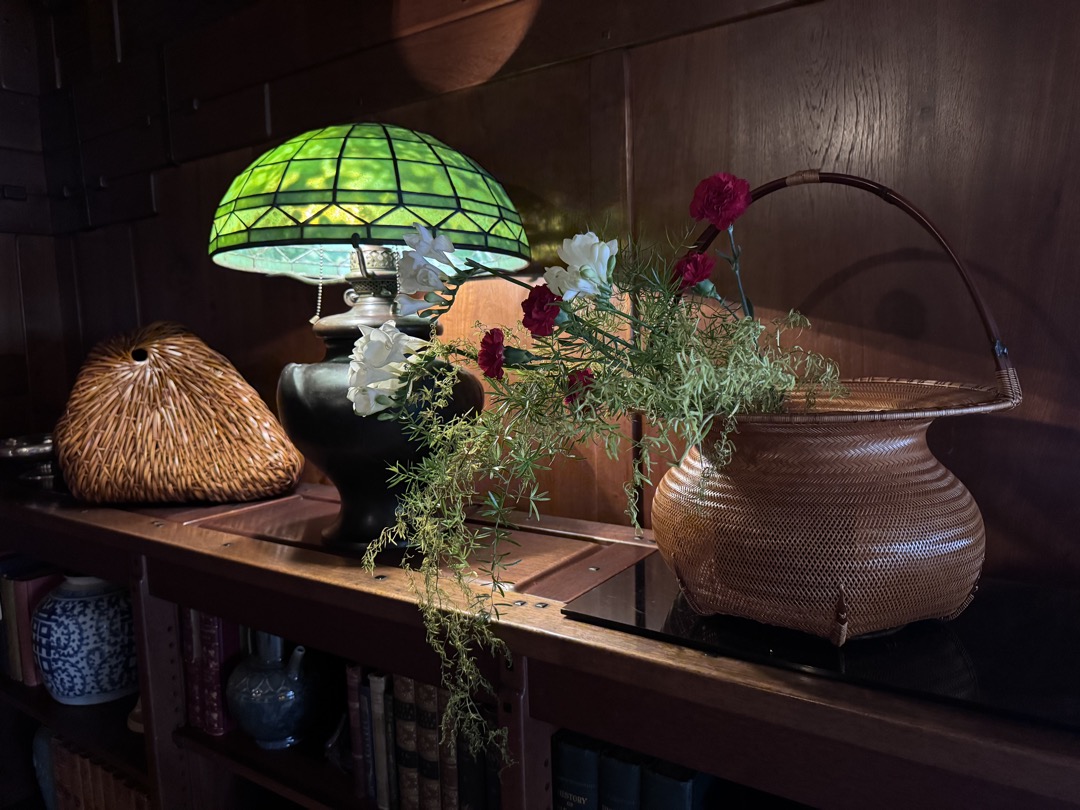
A growing number of historic house museums are experimenting with contemporary art exhibitions to attract new—and especially younger—audiences. The logic is understandable: align with what feels current and visible, generate social media buzz, and compensate for the decline of traditional media coverage. But too often, these exhibitions feel short-lived and disconnected. The site becomes little more than a stage set, and the art—however compelling on its own—lands like what urban planners used to call “plop art.” It could be placed anywhere, anytime, with little meaningful connection to the place.
That’s why a recent visit to the Gamble House in California was so refreshing.
I had the chance to see From Strand to Sculpture, a temporary exhibition of contemporary Japanese bamboo basketry (February 5–April 12, 2026). The Gamble House, of course, is a textbook example—arguably a masterpiece—of the Arts and Crafts movement by Greene and Greene. Completed in 1908 as the winter home of the Gamble family of Cincinnati, the house is defined by its extraordinary attention to materials, craftsmanship, and the integration of architecture and decorative arts.
Developed by director of collections & interpretation Jennifer Trotoux, the exhibition features more than 28 works created primarily in the last 20 years. While labeled as baskets, many are sculptural—complex, dynamic forms made of woven bamboo. On loan from the collections of the Thoma Foundation and Kelly and Steven McLeod, they are distributed throughout the house rather than confined to a single room. The idea for the exhibition came from director of communications & operations Sheryl Scott, who saw promotional material about another exhibition featuring baskets from Thoma’s collection and immediately felt they would be a good fit for the Gamble House.
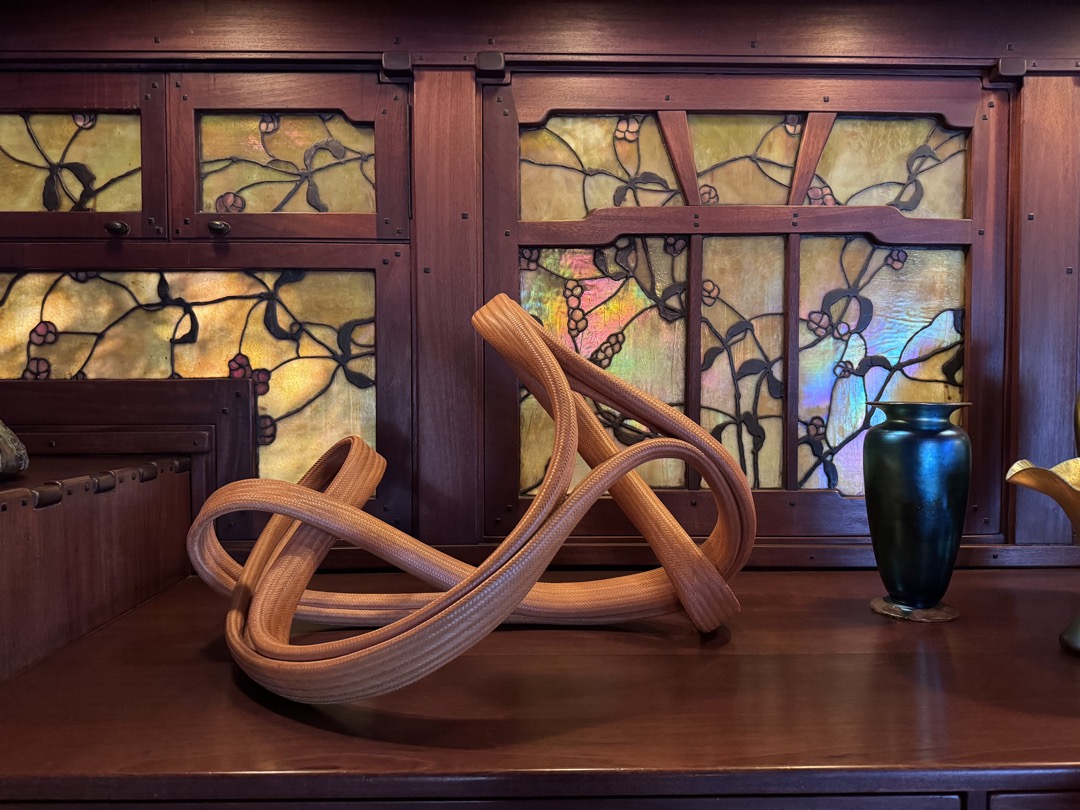
What makes this exhibition work is not simply aesthetic compatibility—though the warm browns of the bamboo harmonize beautifully with the teak, maple, oak, cedar, and mahogany of the interiors. More importantly, it aligns conceptually. Both the Gamble House and these contemporary works are grounded in a deep respect for craftsmanship, materiality, and the creation of beautiful, functional forms.
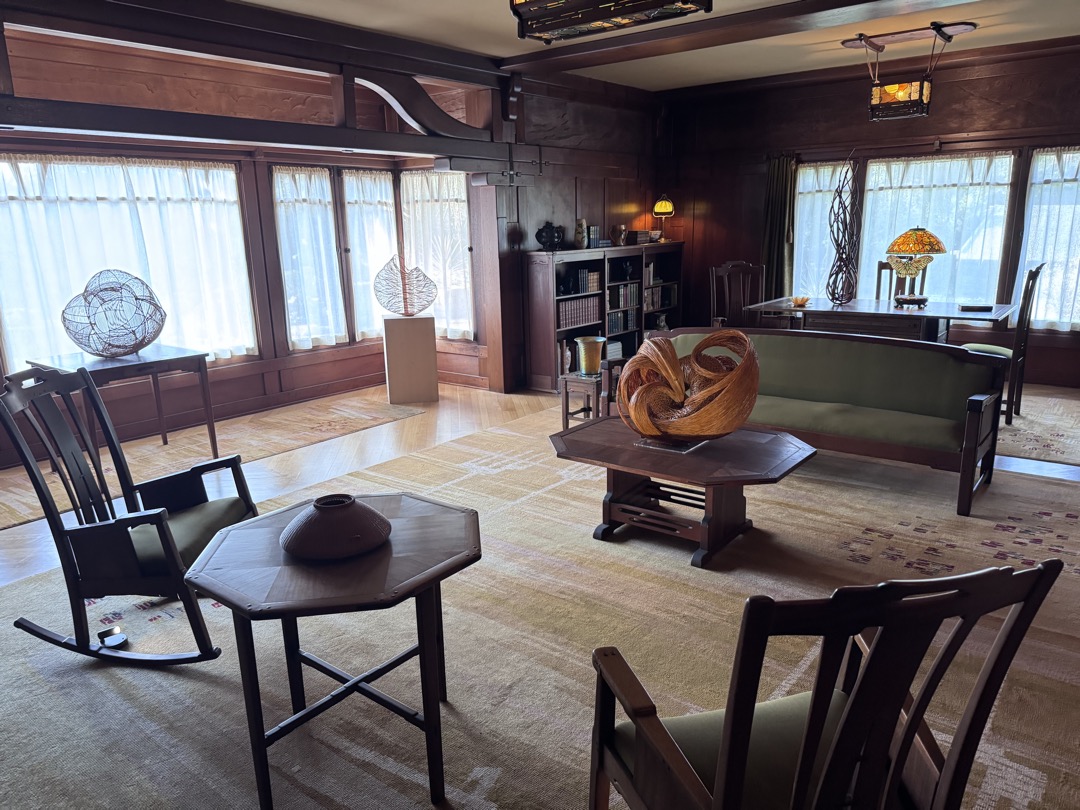
The result is subtle but powerful. In some rooms, I didn’t even immediately register the presence of the baskets. In the living room, there are eight; in a bedroom, five. I may have consciously noticed one or two at first. That level of integration is rare—and telling. The exhibition doesn’t compete with the house; it reveals new ways of seeing it.
The programming reinforces this alignment. The museum has offered in-depth tours with an art historian specializing in East Asian art, along with workshops on ikebana, sake, and weaving. These are not add-ons; they extend the interpretive framework and deepen the visitor experience.
The broader lesson here is straightforward but often overlooked: contemporary art in historic sites only works when it advances the site’s mission rather than competing with it. The risk, otherwise, is dilution—of both the art and the place.
For museum leaders, this raises a useful set of questions. What is the conceptual bridge between the historic site and the contemporary work? Does the exhibition illuminate core themes—craft, design, labor, identity, place—or does it simply occupy space? And are we willing to be selective enough to say no when that connection isn’t there?
Not all contemporary art is up to that task. But when curators and educators find the right alignment, as they have at the Gamble House, the results can be transformative—bringing new perspectives to old places without losing what makes them meaningful in the first place.
 Engaging Places