
A couple of weeks ago, Engaging Places spent two days at Rancho Los Cerritos in California as part of an interpretation and visitor experience assessment. Before I even reached the house, something caught my attention—and it’s stayed with me since.
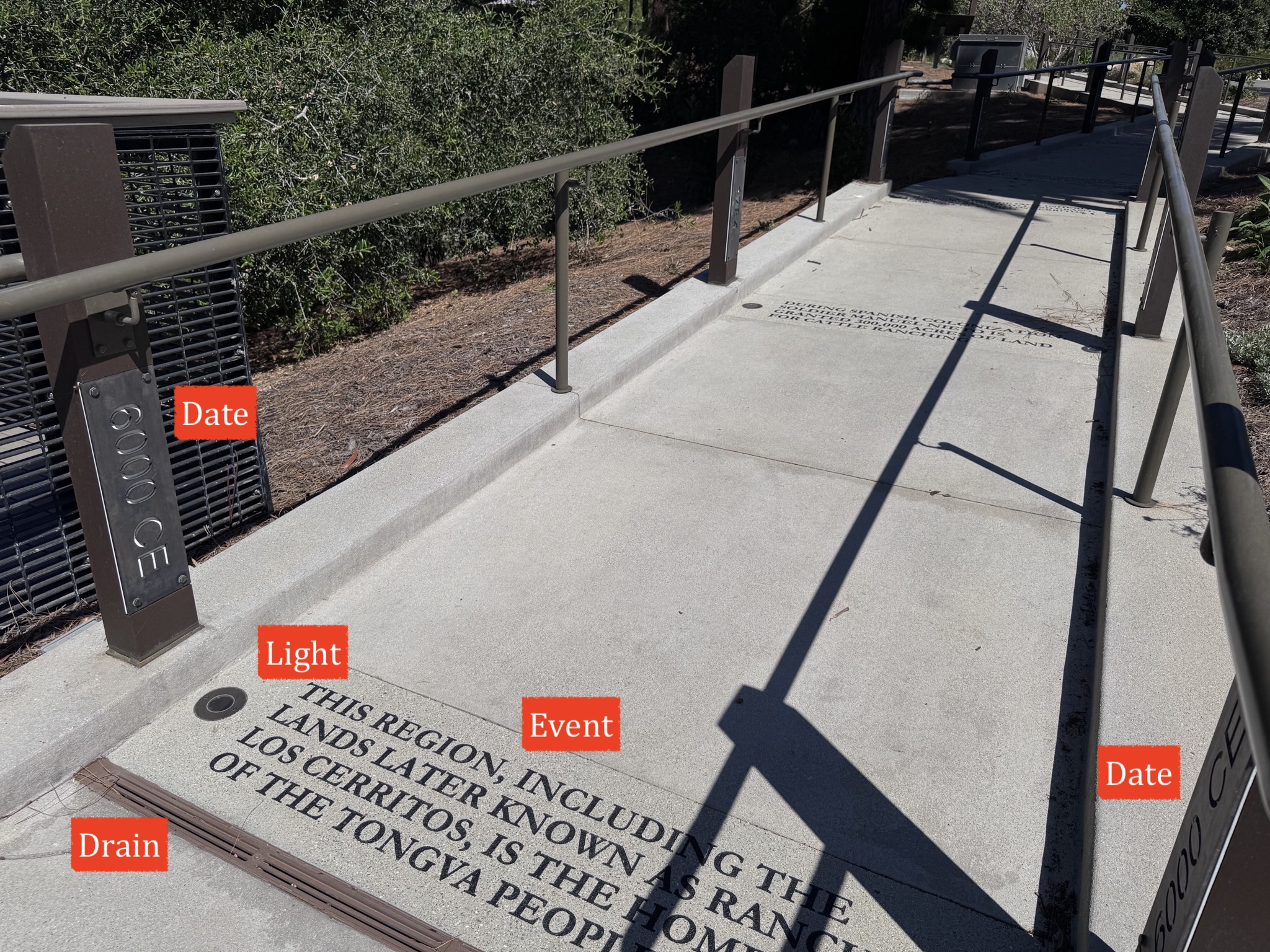
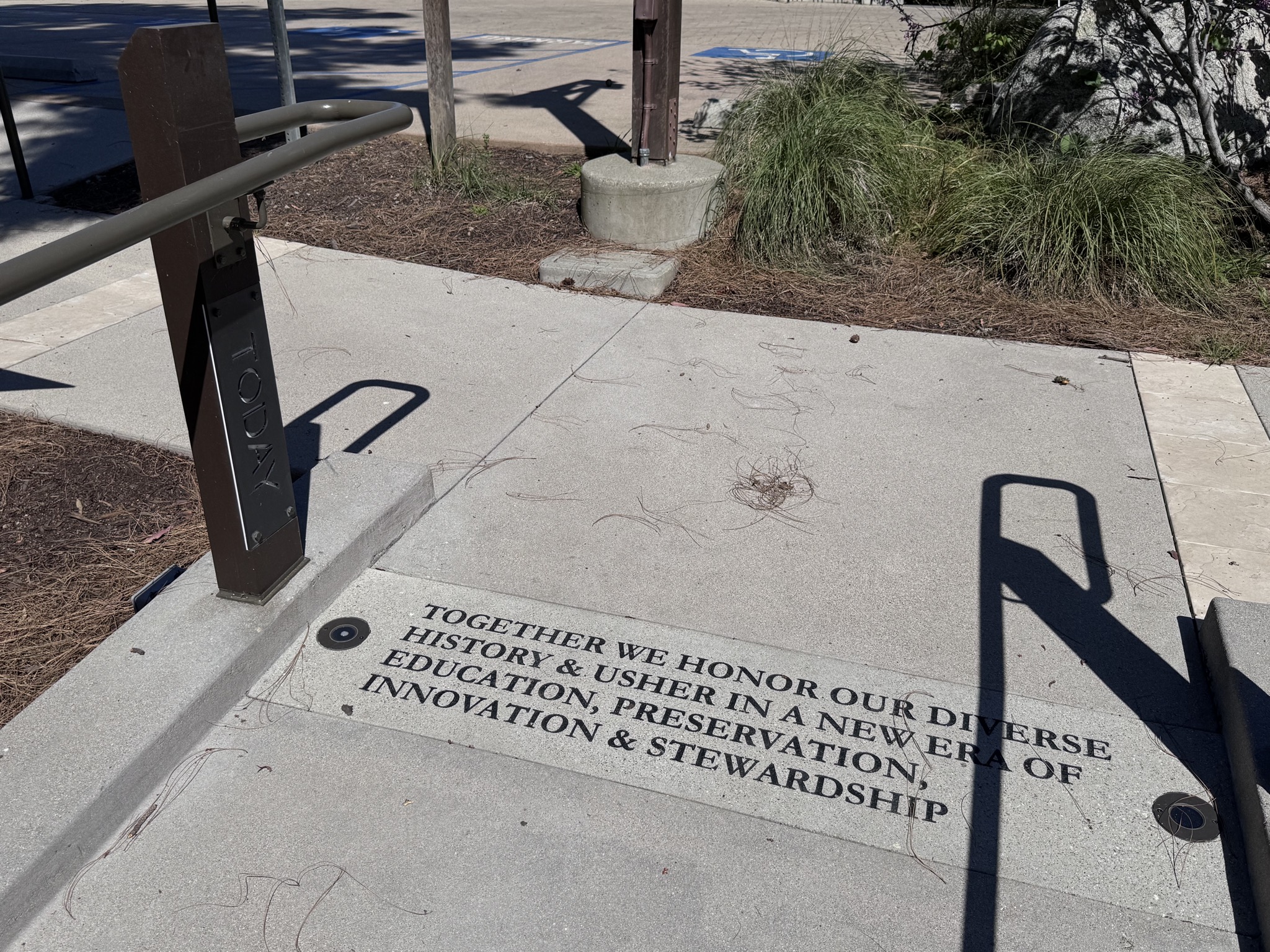
Walking in from the parking lot, I encountered a pathway that integrates a timeline from past to present. It was developed as part of a stormwater and groundwater reclamation project designed by Studio One Eleven, but what struck me wasn’t just the infrastructure—it was the interpretive opportunity. The walkway quietly does something many historic sites struggle to achieve: it begins interpretation before the visitor even arrives.
I’ve long been interested in how entrance sequences can frame a visitor’s experience, and this is a particularly effective example. As you move along the path, you’re also moving through time. Each step becomes a kind of measurement—an embodied sense of duration and change. It’s intuitive, familiar, and requires almost no instruction. In a matter of moments, visitors gain a basic orientation to the site’s history and significance.
What makes this work is its restraint. The timeline doesn’t attempt to teach history in a comprehensive sense. Instead, it highlights key moments—those watershed points that signal change over time. That distinction is important. Timelines are not interpretive endpoints; they are entry points. They prepare visitors for what comes next.
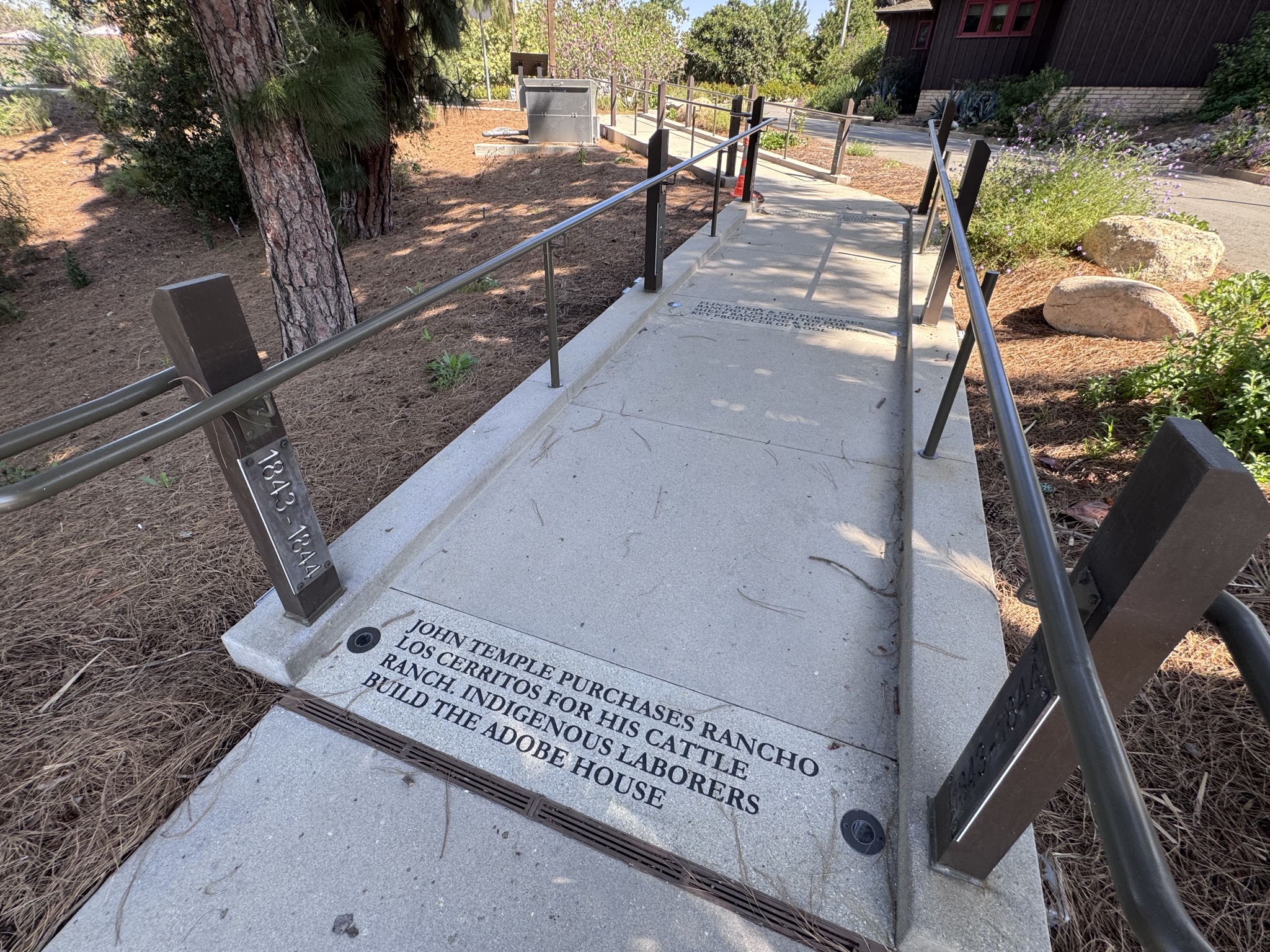
This also means discipline is required. It’s tempting to load timelines with context, especially national or global events, but that often dilutes their effectiveness. At Rancho Los Cerritos, the strength of the approach lies in keeping the focus on the site itself. Broader context can—and should—be layered in later through tours, exhibitions, or digital media. At the entrance, clarity matters more than completeness.
There’s also an interesting tension here. Infrastructure projects are often treated as separate from interpretation, handled by different teams with different priorities. But this walkway suggests what’s possible when those domains overlap. A stormwater project becomes an interpretive device. Sustainability meets storytelling. That’s not always easy to achieve, and it raises questions about coordination, authorship, and long-term maintenance. But the payoff is clear: interpretation becomes embedded in the physical experience of the site.
So what can we take from this? First, the entrance matters more than we often acknowledge. It sets expectations, establishes tone, and begins meaning-making. Second, simple interpretive devices—when thoughtfully executed—can be remarkably effective. And finally, there may be untapped opportunities to align capital projects with interpretive goals, especially as museums and historic sites invest in sustainability and infrastructure.
In short, before visitors even reach the front door, Rancho Los Cerritos is already telling its story. And that’s a lesson worth carrying forward.
 Engaging Places