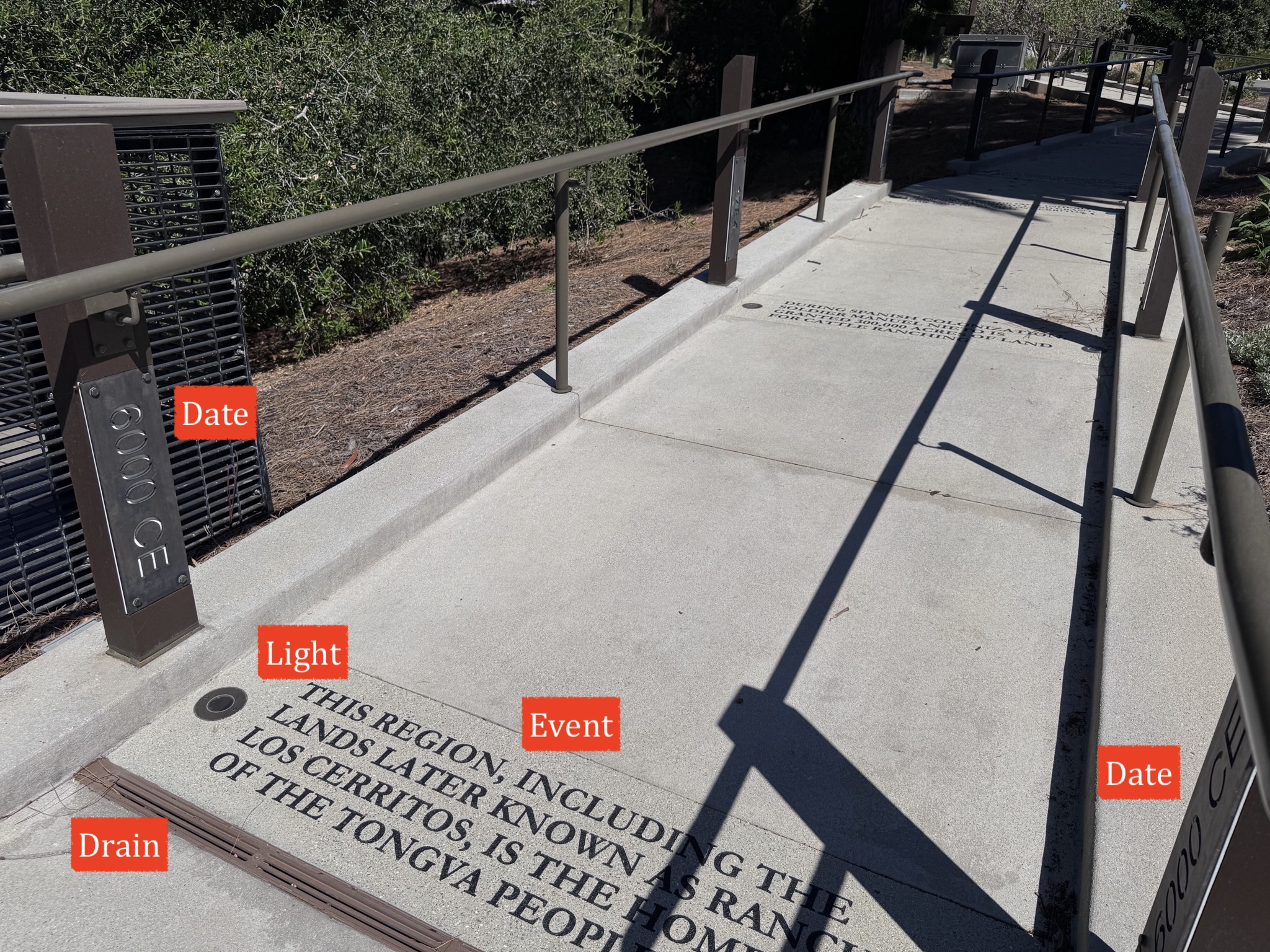
A breakdown of the key elements in the timeline walkway at Rancho Los Cerritos in Long Beach.
A couple of weeks ago, Engaging Places spent two days at Rancho Los Cerritos in California as part of an interpretation and visitor experience assessment. Before I even reached the house, something caught my attention—and it’s stayed with me since.
Walking in from the parking lot, I encountered a pathway that integrates a timeline from past to present. It was developed as part of a stormwater and groundwater reclamation project designed by Studio One Eleven, but what struck me wasn’t just the infrastructure—it was the interpretive opportunity. The walkway quietly does something many historic sites struggle to achieve: it begins interpretation before the visitor even arrives.
I’ve long been interested in how entrance sequences can frame a visitor’s experience, and this is a particularly effective example. As you move along the path, you’re also moving through time. Each step becomes a kind of measurement—an embodied sense of duration and change. It’s intuitive, familiar, and requires almost no instruction. In a matter of moments, visitors gain a basic orientation to the site’s history and significance.
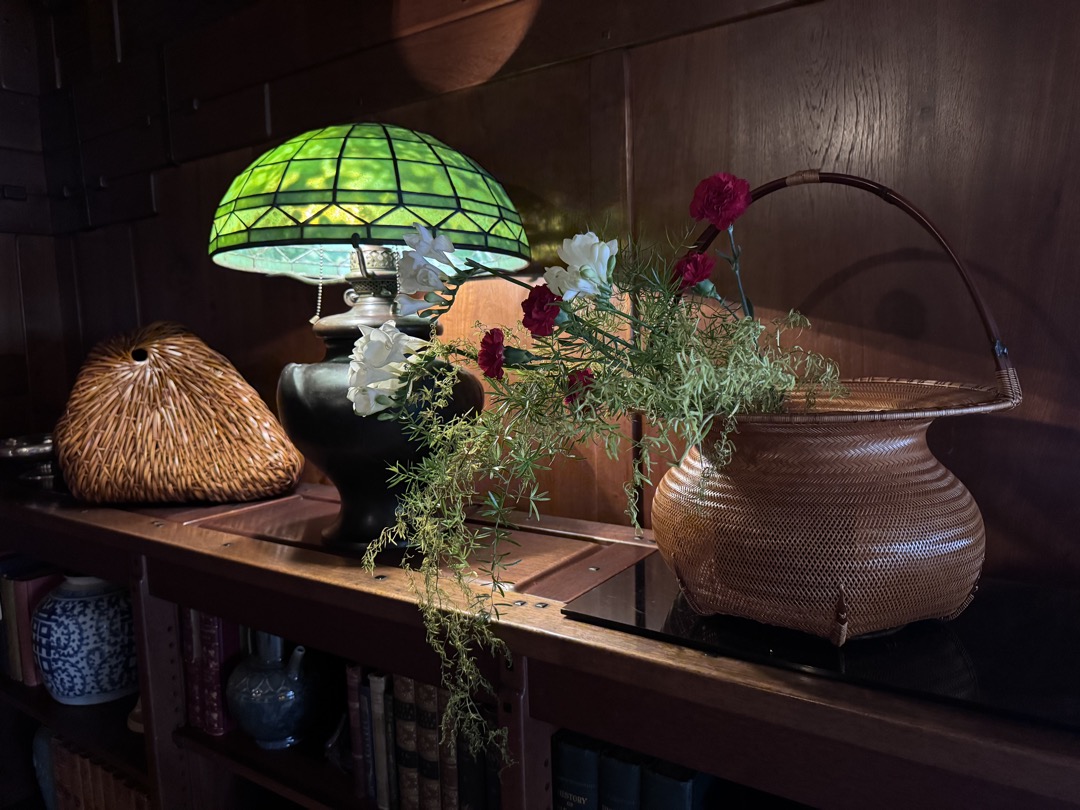
Japanese baskets from 20 years ago feel at home in a house that’s a century older.
A growing number of historic house museums are experimenting with contemporary art exhibitions to attract new—and especially younger—audiences. The logic is understandable: align with what feels current and visible, generate social media buzz, and compensate for the decline of traditional media coverage. But too often, these exhibitions feel short-lived and disconnected. The site becomes little more than a stage set, and the art—however compelling on its own—lands like what urban planners used to call “plop art.” It could be placed anywhere, anytime, with little meaningful connection to the place.
That’s why a recent visit to the Gamble House in California was so refreshing.
I had the chance to see From Strand to Sculpture, a temporary exhibition of contemporary Japanese bamboo basketry (February 5–April 12, 2026). The Gamble House, of course, is a textbook example—arguably a masterpiece—of the Arts and Crafts movement by Greene and Greene. Completed in 1908 as the winter home of the Gamble family of Cincinnati, the house is defined by its extraordinary attention to materials, craftsmanship, and the integration of architecture and decorative arts.
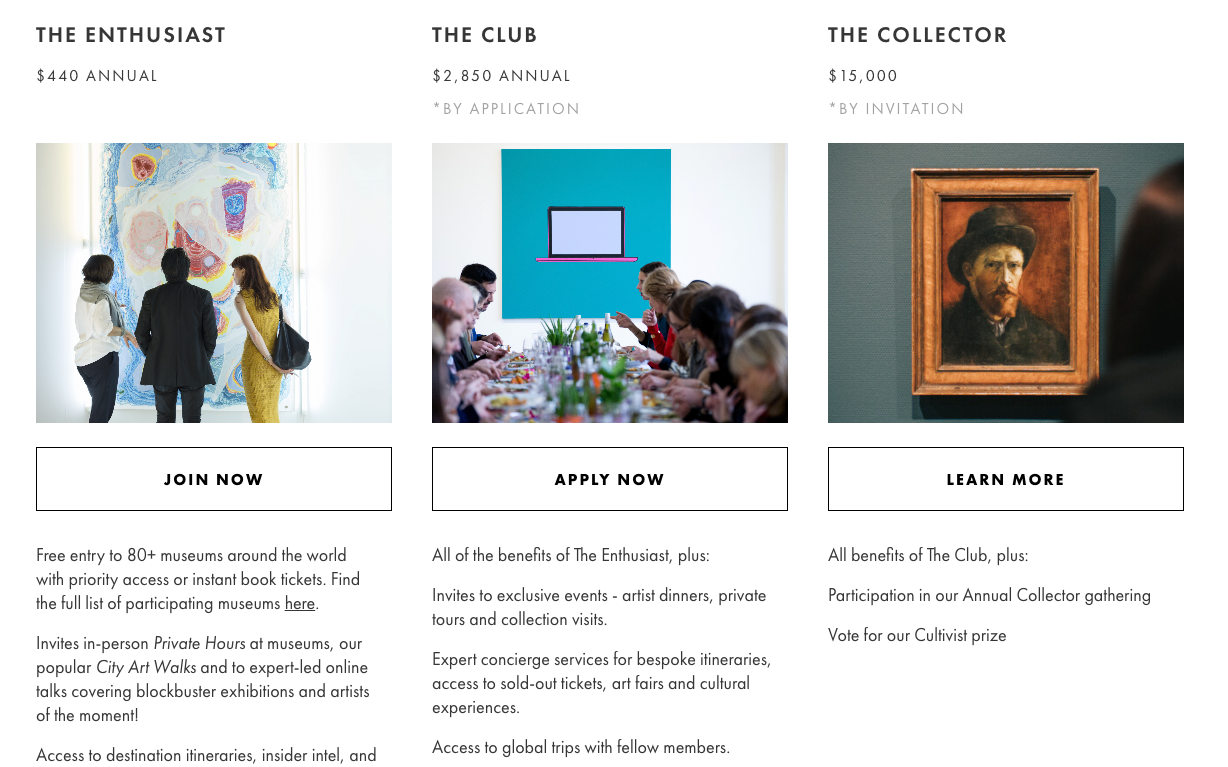
Membership levels for The Cultivist start at $440 per year and by invitation, you can join at the $15,000 level.
A few weeks ago I came across The Cultivist, a private membership program that promises art lovers “insider access” to the global art world. The club offers members free or priority admission to dozens of museums, invitations to special events, tailored trips to art fairs and biennials, and behind-the-scenes experiences with artists, collectors, and curators.
At first glance, I was skeptical. Is this simply the commodification of art and culture for wealthy travelers?
Perhaps. But it’s also worth taking a closer look, because The Cultivist reveals something important about how cultural tourists and heritage travelers—especially affluent ones—may want to experience museums and historic sites.
The organization was founded by Marlies Verhoeven and Daisy Peat, both of whom previously worked at Sotheby’s developing VIP loyalty programs for collectors. Their backgrounds are not in museums, curatorial practice, art history, or education. Instead, they specialize in relationship marketing, high-net-worth client services, and luxury experiences. That background explains the business model perfectly.
The Cultivist is not a museum membership program in the traditional sense. It is closer to a global concierge service for the art world. Members pay an annual fee starting at $440 to access a network of museums, exhibitions, artists’ studios, and art fairs, combined with customized travel and social events. Participating US museums include the Museum of Fine Arts Boston, Art Institute of Chicago, Museum of Modern Art, Jewish Museum NY, and the Huntington Library. In effect, the organization packages the art world into a kind of cultural lifestyle club.
From one perspective, this can feel uncomfortable. Museums have historically framed themselves as institutions devoted to public education, access, and engagement that contribute to society. A private club that sells privileged access to museums risks reinforcing the perception that the arts are primarily a playground for wealthy insiders. But before dismissing the model entirely, it’s worth asking why a service like this exists—and why it appears to be successful.
AASLH has released Understanding the Public History Workforce, a major new study examining who works in history organizations and how they experience their jobs. Read on its own, it offers important insights into burnout, compensation, inclusion, and professional climate. But its full significance becomes clearer when placed alongside two earlier field-wide studies: the National Museum Salary Survey (AAM, 2017) and the National Census of History Organizations(AASLH, 2022).
Together, these three efforts give us something rare in the cultural sector: a layered dataset. The Census tells us the size and structure of the history organization field. The Salary Survey establishes a compensation range for the museum field as a whole. The new Workforce Report adds the human experience dimension in history organizations. They don’t align perfectly, but sufficiently to make some findings and recommendations for history museums, historical societies, preservation organizations, and historic sites.
Start With Scale and Structure
The 2022 Census identified 21,588 history organizations in the United States —more than all other museum types combined. History organizations are ubiquitous, present in nearly every community. The Census also emphasizes the field’s distinctive “hybrid” character: it’s often a partnership between government agencies and nonprofit organizations.
This structure matters. A field composed largely of small, community-based institutions operating within hybrid public–nonprofit governance systems will behave differently than corporate sectors or centralized public systems. Authority is diffuse. Revenue is mixed (appropriations, philanthropy, earned income). Asset accumulation is limited. Management is complex.
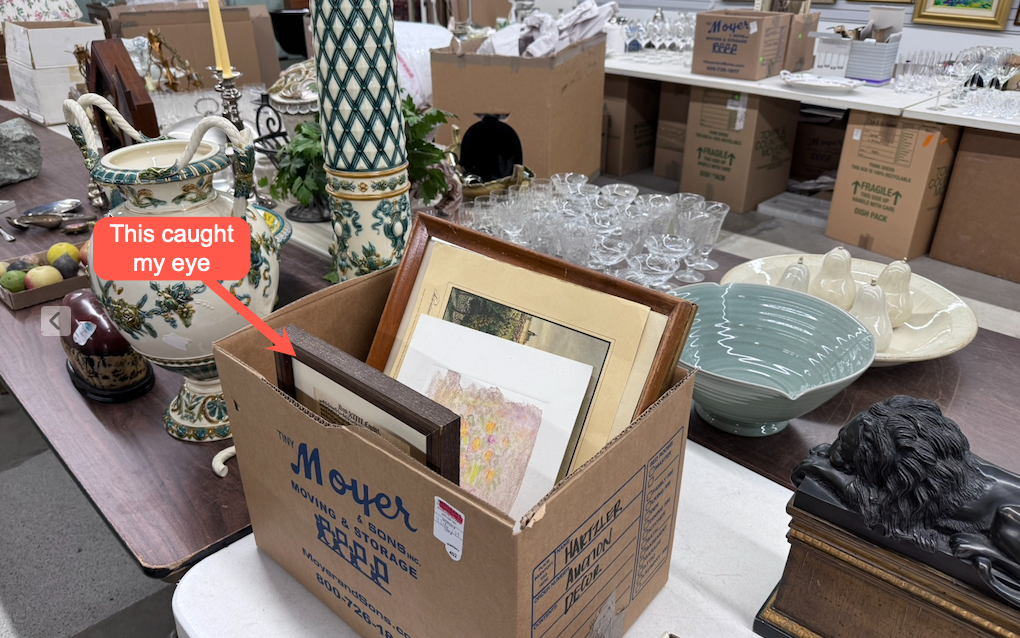
It was a brown cardboard box at a local auction filled with framed prints and miscellaneous ephemera. The sort of lot you bid on partly out of curiosity and partly because, if you’re lucky, you might discover something interesting. I did—it was a framed page from a 500-year-old German book.
As a historian, I enjoy reading. But more than that, I love books as objects. Their design, typography, and material presence give me tremendous joy. I got the bug in college in a federal work-study position in the rare books and special collections department of the library, where I learned how much evidence a single page can hold: paper quality, typeface, layout, illustration style, and wear patterns can all reveal a story before you even understand the words.
This page immediately caught my attention.
The typeface was Gothic, clearly German, probably around 1500. But the illustrations were strange. Instead of familiar late-medieval imagery (saints, cities, plants, kings) one woodcut showed a man lying in bed while another pressed a knife to his neck. Another showed a dining table with people seated around a severed head on a platter. Huh?
It was unmistakably early printed material, but not religious, political, or medical.
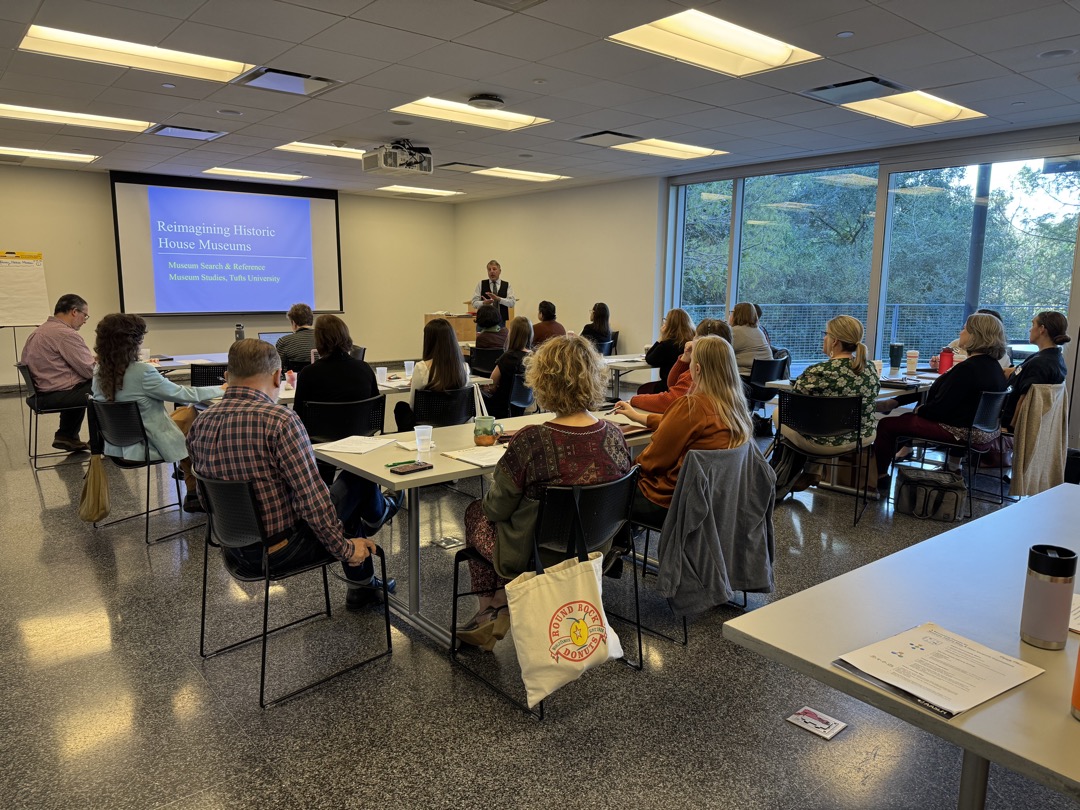
Ken Turino introducing the Reimagining House Museum workshop at Bayou Bend, Houston, 2025.
In July, Ken Turino and I will be leading the one-day Reimagining the Historic House Museum workshop on Friday, July 10, 2026, at Belle Meade Historic Site & Winery in Nashville, Tennessee. It’s designed specifically for people working at house museums and historic sites who are wrestling with familiar questions: How do we refresh our programs? Attract new audiences? And build a more sustainable future without losing what makes our site special? Registration is $225 for AASLH members and $350 for nonmembers.
The day combines current social and economic research with practical tools drawn from nonprofit management and business strategy. Participants conduct a holistic assessment of public programs, explore examples of sites that are successfully reinventing themselves, and take part in a facilitated brainstorming session that puts new ideas into practice using a real house museum as a case study.
Most students search for internships by looking for a museum. Instead they should be looking for a mentor.
In the Museum Studies Program at George Washington University, I advise about 40 students every year, which includes a required internship. Students are excited to get into the field, so they want to obtain their internship as quickly as possible. However, in the process, they often overlook the most important aspect.
An internship doesn’t train you — a supervisor does. And in today’s museum workforce, those are no longer automatically the same thing. Many organizations, especially small historical societies and local museums, operate with very lean staffing and competing demands. A capable staff member may be handling exhibits, collections, programs, and fundraising at the same time. That doesn’t make them unprofessional. But it may mean they lack the time, structure, or disciplinary depth to train a graduate-level emerging professional.
You can have a legitimate museum and still receive a volunteer experience instead of a professional one. The difference is supervision.
Reframe the Goal
The internship is not just a graduation requirement. It is your first professional apprenticeship—a chance to build competencies and networks, not just accumulate hours. Focus on what you need to learn and how it supports your career goals. Think of it as work experience with training wheels. Consider how this step leads to the next one.
One of the most important roles museums play is sharing scholarship with the public—and it’s also one of the hardest. We are often asked to interpret complex events that unfolded over decades and involved many people, and in the process we rely on shorthand that makes sense to other scholars but not always to our visitors. Words like contextualize, agency, material culture, or periodization can quickly create distance rather than connection. Too often, we respond by simply “simplifying” academic work, when what we really need is something more ambitious: a distinct, rigorous form of interpretation designed specifically for public audiences.
In “How to Do Public Writing,” Jeffrey R. Wilson—director of the Harvard Law School Writing Center—offers a timely corrective: public writing is not scholarship “lite,” but a different craft altogether, one that requires clarity, narrative discipline, and deep respect for audience. Wilson is also the editor-in-chief of the new open-access journal Public Humanities, published by Cambridge University Press, and is currently developing a special museum issue—making his insights especially relevant for those of us working in museums and historic sites.
Wilson defines public writing as scholarship for people outside the academy—what he memorably calls “the folks we grew up with.” His premise is simple but urgent: as humanities education has declined and public trust in expertise has eroded, the responsibility for interpretation has shifted. Museums, libraries, and cultural organizations are now among the primary places where people learn how to make meaning from history, culture, and evidence. In this sense, public writing and museum interpretation are performing the same civic function.
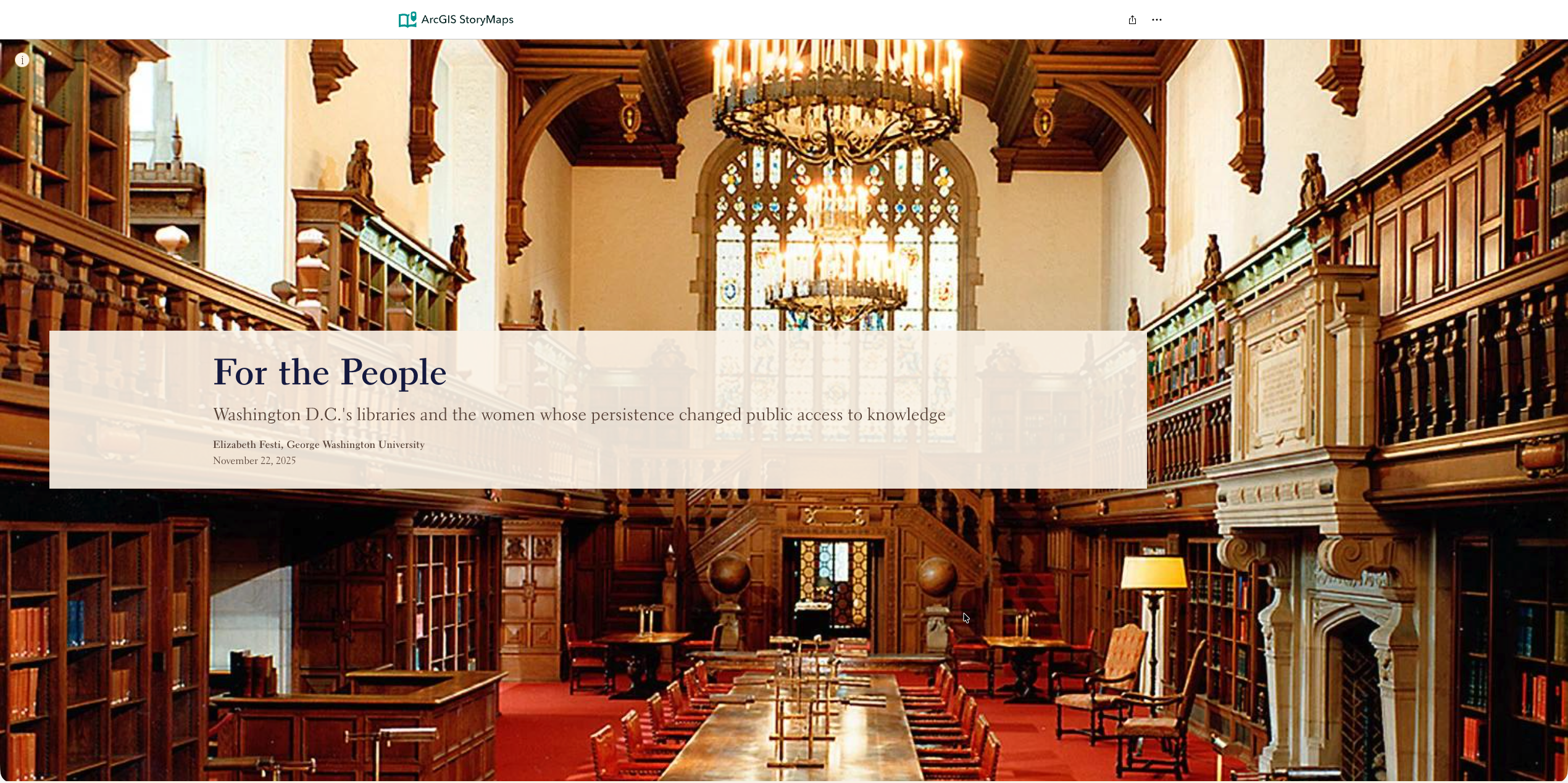
Digital tools do not automatically produce meaningful interpretation. What they can do—when used with discipline—is force clarity about audience, theme, and purpose. This is why I have begun using ESRI ArcGIS StoryMaps as a core interpretive platform in my graduate course CMST6307: Interpretation of Historic Sites at George Washington University.
This fall, students were commissioned—within a realistic professional scenario—to create StoryMaps interpreting the history of women in Washington, DC. Each project connected five or six historic sites through a coherent theme, tailored to a specific public audience. The results demonstrate how StoryMaps can function not as digital scrapbooks, but as public-facing interpretive products grounded in professional standards.
I’m incredibly proud of what they accomplished, but this isn’t a showcase of student work for its own sake. It’s a case study in how digital storytelling platforms can support the interpretation of historic sites and house museums.
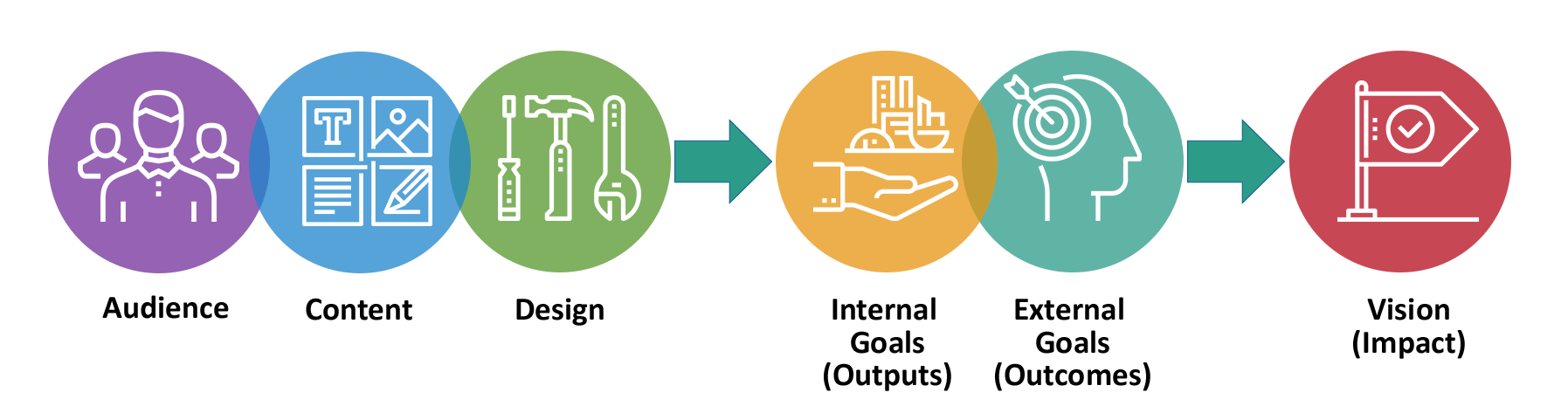
Interpretive framework used in my interpretation course (and with my clients).
A Professional Product, Not a Classroom Exercise
The assignment was framed as a hypothetical consulting project for the White House Historical Association. Students were told: “The StoryMap should connect 5–6 historic sites through a coherent theme, tailored to a specific audience. It should demonstrate professional standards in historical research, interpretive writing, and digital design.”
From the beginning, the emphasis was not on technology, but on interpretation. Each student had to demonstrate the integration of three core elements: audience, content, and design.
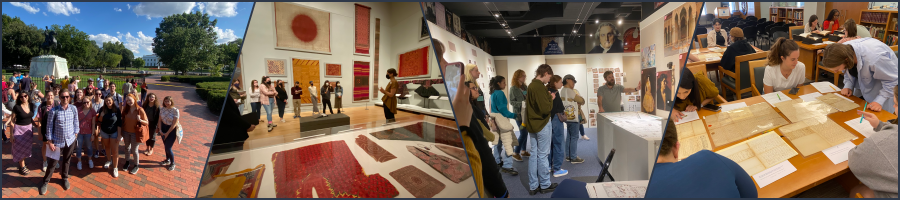
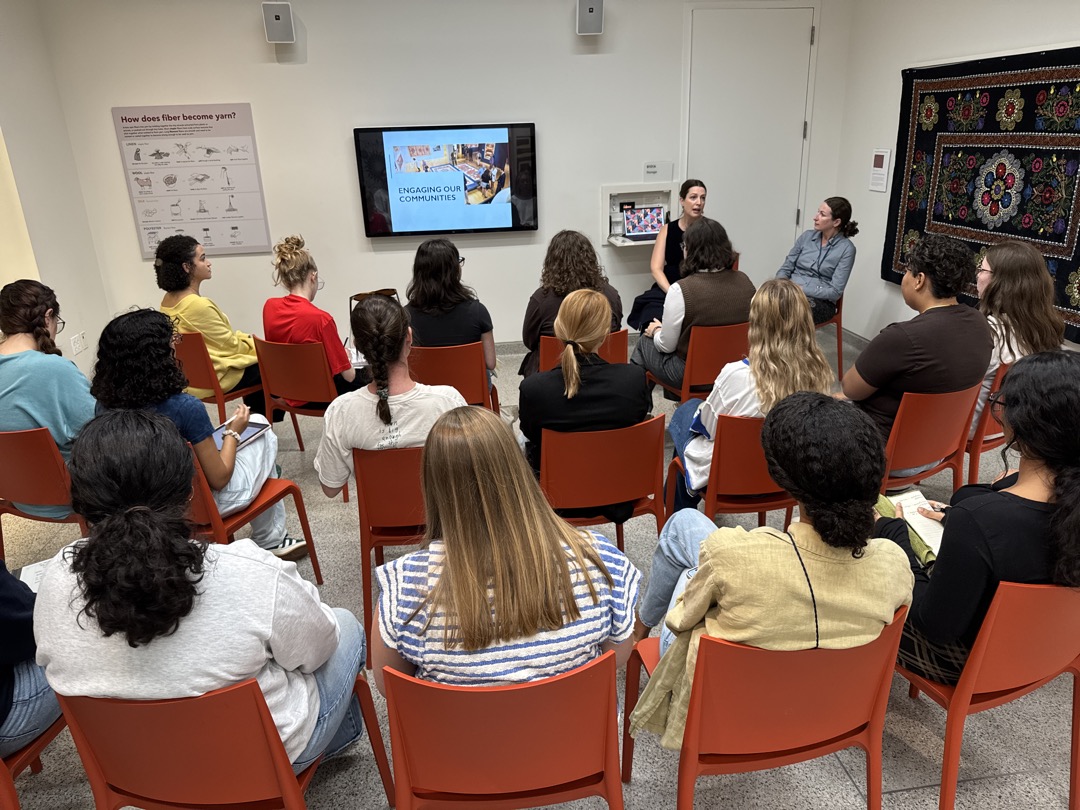
Learning about the vision and resources of the GW Museum.
End-of-semester reflections often confirm what instructors suspect but rarely see so clearly. Read together, the reflections from my course CMST 6703: Museums and Community Engagement at George Washington University offer a useful window into how emerging museum professionals are learning to connect the theory of community engagement with its day-to-day practice. For museum leaders and practitioners, the themes echo many of the field’s ongoing debates about values, capacity, and impact.
One of the strongest patterns was a shift in how students understand community engagement. Early in the semester, many approached engagement as something measurable through attendance, participation counts, or one-off programs. By the end, their reflections show a more nuanced understanding: engagement as a relational practice grounded in mission, trust, reciprocity, and long-term stewardship. This mirrors core engagement theory, which emphasizes relationships over transactions and positions engagement as an ongoing organizational practice rather than a discrete activity.
Students also demonstrated increasing comfort applying theoretical frameworks to real institutional contexts. They reflected on analyzing museums through mission, governance, resources, and capacity—recognizing that engagement strategies cannot be separated from how an organization actually functions. The shared GW Museum case study, while initially frustrating, became a practical laboratory for testing theory against reality. Students noted that working within a single, constrained case forced them to confront tradeoffs, power dynamics, and feasibility—key elements often glossed over in more idealized engagement models.


 Engaging Places