
Category Archives: 250th Commemoration

When “Accuracy” Means Ideology: A Closer Look at the Heritage Foundation’s Historic Sites Guide

The Heritage Foundation’s new The Heritage Guide to Historic Sites: Rediscovering America’s Heritage promises to help Americans find “accurate” and “unbiased” history at presidential homes and national landmarks. Presented as a travel and education tool for the nation’s 250th anniversary, the site grades historic places from A to C for “accuracy” and “ideological bias.”

At first glance, it looks like a public service. But a closer look reveals that even when Heritage cites “evidence,” its historical reasoning exposes deep methodological and ideological flaws.
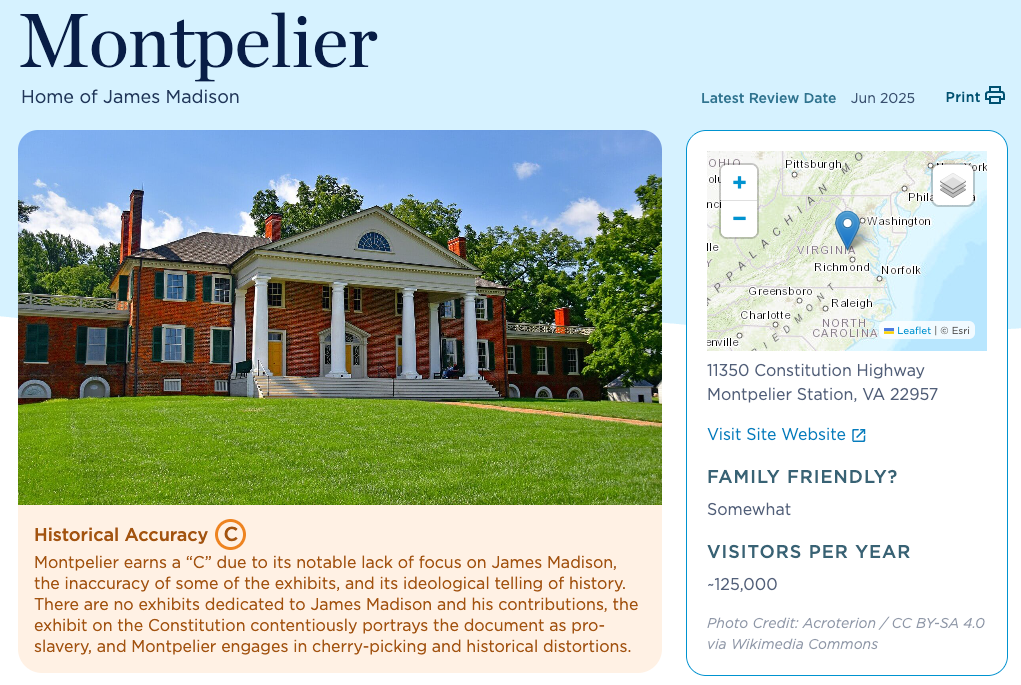
The Appearance of Evidence

The Heritage Foundation awards James Madison’s Montpelier in Virginia a C for historical accuracy, claiming the site shows a “notable lack of focus on James Madison” and that:

Continue reading

Carrying the American Revolution in a Name

“My name is my identity and must not be lost,” declared abolitionist and suffragist Lucy Stone. Her words remind us that names are more than just labels. They tell stories, carry history, and hold cultural significance. They shape how we see ourselves and how others see us. The act of naming—whether giving, changing, or choosing a name—can express individuality, family ties, culture, faith, or resistance. Moreover, it is a deeply personal act, yet also public. A name declares: this is who I am.

As the United States marks the 250th anniversary of its Revolution, historic house museums have a unique opportunity to reflect on the women of their sites—especially those interpreting the nineteenth century. How were their names connected to individuals of the founding era? How important was it for women to assert ties to that legacy?

For women in the nineteenth century, marriage customarily submerged female identity under a husband’s surname. Often, that is where the trail seems to end. Yet some women found ways to hold onto their maiden or ancestral names—an intentional act of memory-keeping that linked them to Revolutionary roots and preserved family history across generations.

Doing History Through Names

Continue reading