Category Archives: Collections

Montpelier Archaeologists Discover James Madison’s Threshing Machine

This slideshow requires JavaScript.

The rich red clay at Montpelier, the Virginia home of the Father of the Constitution has given up more secrets: the remnants of James Madison’s barn and threshing machine, and evidence that Dolley’s son destroyed both in an attempt to remove the machine from Montpelier before the new owner took possession.

As archaeologists excavated the field slave quarters this summer, they found perplexing evidence they had to research and decipher. First, they found bits of iron that appeared to be pieces of machinery, which indicated that the building was used to house farming equipment. Then, in the soil layers below the iron pieces, they found a trench, which proved to be the outline of a 16-foot x 16-foot building. The trench also contained a set of postholes that held more iron pieces. “The iron and postholes in the trench tell us that the building was modified to allow a piece of machinery to be mounted inside the building,” said Dr. Matthew Reeves, Montpelier director of archaeology and landscape restoration.

More digging revealed bits of bone and ceramics, which indicate that Continue reading

Los Angeles to Host International Conference on Care and Interpretation of Collections in Historic Houses

Los Angeles is hosting a four-day international conference on the care and interpretation of collections in historic house museums on November 6-9, 2012 called, The Artifact, its Context, and their Narrative: Multidisciplinary Conservation in Historic House Museums.  A half dozen organizations are sponsoring and hosting the conference, including ICOM-DEMHIST (the international committee for historic house museums), three ICOM conservation working groups, the Getty Conservation Institute, Getty Research Institute, the University of Southern California’s School of Architecture/Heritage Conservation Program, and the Gamble House.  Historic sites encounter some of the most challenging preservation issues in the museum field because it is often impossible to maintain environmental conditions that are ideal for the collections, building, and visitors.  Indeed, some leaders in the field have wondered whether historic sites should be even considered museums because it establishes such an impossible standard.

The four-day conference consists of two days of site visits (such as the Gamble House, Huntington Library, Eames House, and Will Rogers Ranch) and two days of presentations and lectures.  Sarah Staniforth (National Trust UK) and Linda Young (Deakin University) will be providing broad overview presentations on the challenges and opportunities facing collections in historic sites, but most of the presentations are Continue reading

Frank Lloyd Wright’s Archives Transferred from his Homes to NYC

Taliesen, Spring Green, Wisconsin, 1932. Drawing by Frank Lloyd Wright.

The Frank Lloyd Wright Foundation, which owns and operates Taliesen and Taliesen West–the homes and studios last used by Frank Lloyd Wright–has transferred its architectural archives of papers, drawings, and models to the Avery Architectural & Fine Arts Library at Columbia University and the Museum of Modern Art in New York City.  The collection includes more than 23,000 architectural drawings, about 40 large-scale, architectural models, some 44,000 photographs, 600 manuscripts and more than 300,000 pieces of office and personal correspondence. “The Frank Lloyd Wright Foundation takes seriously its responsibility to serve the public good by ensuring the best possible conservation, accessibility, and impact of one of the most important and meaningful archives in the world,” said Sean Malone, CEO of the Frank Lloyd Wright Foundation. “Given the individual strengths, resources and abilities of the Foundation, MoMA and Columbia, it became clear that this collaborative stewardship is far and away the best way to guarantee the deepest impact, the highest level of conservation and the best public access.”

The decision to transfer the collections couldn’t have been easy for the Foundation–it’s a significant part of their identity with tremendous historical and cultural value.  Admitting you can’t care for a collection is difficult–but organizations should regularly ask themselves if they’re the only ones to do this work and if someone else can do it better.  It’s especially tough at historic sites and house museums–they typically have the most complex collections management issues of any museum. Not only are they caring for Continue reading

Boston MFA takes Flight with New American Wing

This slideshow requires JavaScript.

The Boston Museum of Fine Arts, one of the great public museums established just after the Civil War, has recently opened “Art of the Americas,” a new wing filled with its outstanding collections of American fine and decorative arts.  As some of you know, the Boston MFA underwent a controversial restructuring more than a decade ago, shifting from departments organized by media (e.g., paintings, ceramics, furniture) to geography (e.g., Europe, Asia, and America) and firing some longtime curators (including Jonathan Fairbanks, who created the American Decorative Arts and Sculpture department at the MFA).  I’m assuming one of the results of this restructuring is “Art of the Americas.”  This four-story exhibit consists of 53 galleries tracing the history of art from pre-Columbian to Modern periods for the continents of North and South America, so along with the expected Chippendale chairs and Copley portraits, there are Peruvian funerary urns and Acoma pots.  It’s so large that it took me nearly three hours just to cruise through it at a walking pace and I didn’t make it to the fourth floor, which explored the 20th century.

Unlike most art museums, the exhibit mixes Continue reading

Historic Sites Garner A Dozen+ Grants from IMLS

The Institute for Museum and Library Services recently announced the awards for the latest round of Museums for America grants, which include projects at more than a dozen historic places.  It’s always a quick way to see what’s happening around the country to get ideas as well as identify what projects are attractive to funders.  Congratulations to the recipients, especially our colleagues who are working with historic sites, including:

Kodiak Historical Society – Kodiak, AK
Award Amount: $52,706; Matching Amount: $52,810
Contact: Ms. Anjuli Grantham, Curator of Collections
(907) 486-5920; anjuli@baranovmuseum.org

The Kodiak Historical Society will complete design development for 2,800 square feet of exhibits at the Baranov Museum, located within the National Historic Landmark building known as the Russian-American Magazin. The project will foster the planning and design of Continue reading

IMLS Moves Deadline in Response to Comments from Museums

In a surprising move, the Institute of Museum and Library Services will be changing the application deadline for Museums for America and National Leadership Grants from January 15, although it won’t happen until 2014 at the earliest and the new deadline hasn’t been announced.  The 2013 deadline remains January 15.  According to Claudia French, Deputy Director for Museums, “We wholeheartedly support this suggestion and will change the deadline for FY2014. The time required for final approval of new grant guidelines through the Office of Management and Budget (OMB) will not allow us to alter the date for FY2013.”

This was a result of more than 100 comments received from the field as a result of a major restructuring of their grant programs.  IMLS did not reveal what other changes are under consideration or what concerns were reflected in the comments, however, they did affirm that, “In 2013, there will be no restrictions on the number of applications a museum may submit to MFA or NLG-Museums. . . .Museums submitting applications in more than one project category will compete with other museums in each category, not with themselves.”

Thanks to everyone who submitted comments on the proposed IMLS grant guidelines.  This has been one of the most controversial topics in the museum field that I encountered this year, so I’m happy to hear that museums and historic sites had some influence and that the IMLS was willing to accept public comments and provided an initial response so quickly.  A complete statement from IMLS is available on their blog.


Comments on IMLS Revised Grant Guidelines Due Today

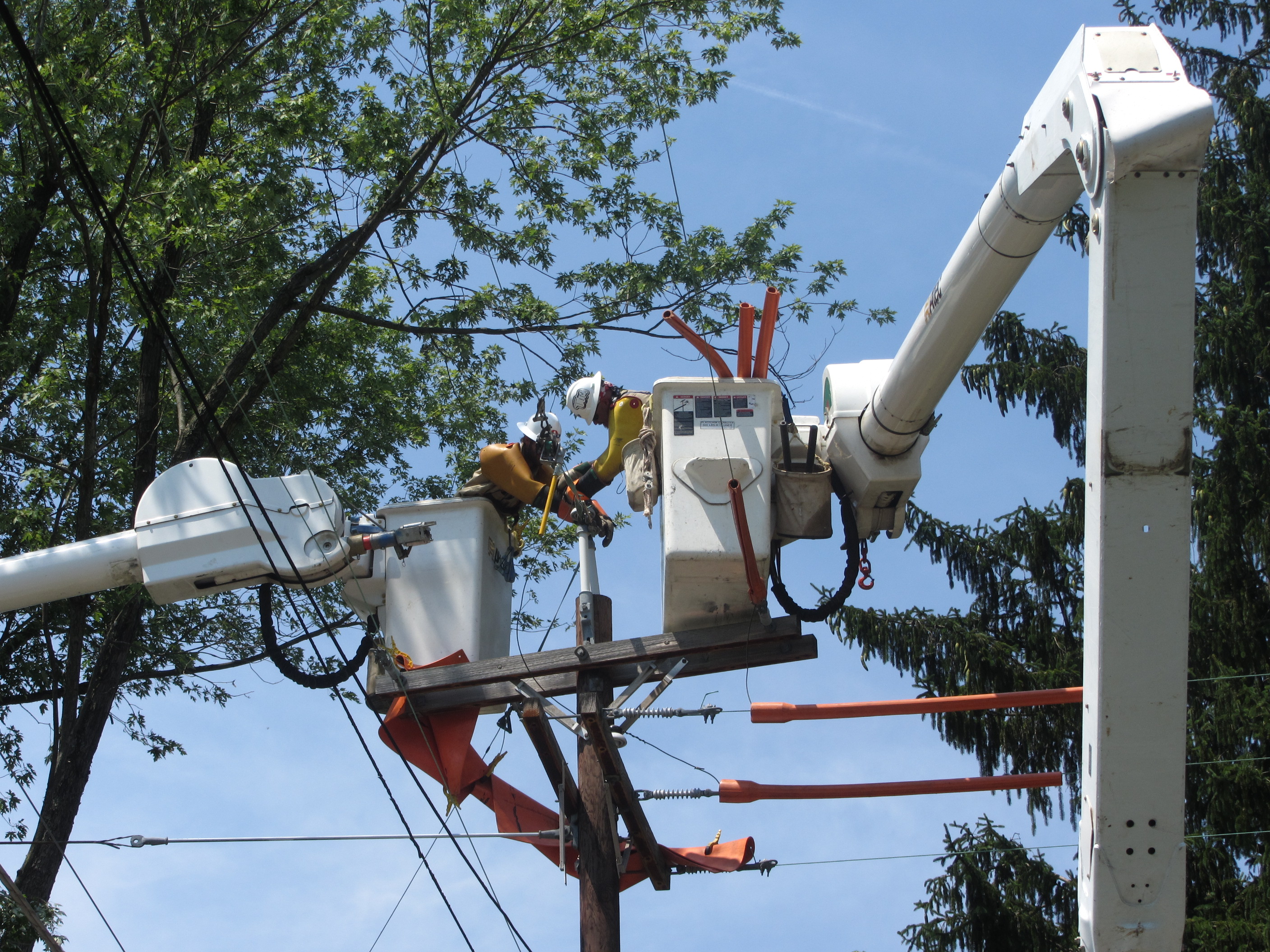
A crew from Alabama repairing downed power lines in Maryland near my office.

Electrical power was out in my part of the world for a couple days earlier this week due to the fierce thunderstorm that struck the Midwest and Mid-Atlantic on Friday.  Some parts are still without power and although I haven’t conducted a survey to see how the nearby historic sites fared, I have heard that one historic house museum in Virginia is facing about $30,000 of clean-up costs due to fallen trees and branches.

But power and Internet have been restored to my office, just in time to submit my comments to IMLS on their revised guidelines to their grant program.  Comments are due today to comments@imls.gov.  Here’s what I submitted:

Please accept these comments for the public record regarding the draft guidelines for the FY 2013 Museums for America and National Leadership Grants for Museums programs of the Institute of Museum and Library Services.

I appreciate the federal Continue reading

IMLS’ Revised Grant Guidelines Need Revision

In May, the Institute of Museum and Library Services (IMLS)–the national agency devoted to museums and libraries–released a new set of proposed guidelines that would significantly revise their grant programs for museums (and that includes historic sites, historical societies, house museums, and preservation organizations).  Initially, these changes were proposed to go into effect without comment from the field, but fortunately enough museums spoke up that director Susan Hildreth changed her mind and announced she would welcome comments–but the comment period ends on Friday, July 6, 2012.

According to IMLS, the guidelines affect the Museums for America and National Leadership Grants for Museums programs, however, the impact is much larger because these programs are proposed to consume two other grant programs: Conservation Project Support and 21st Century Museum Professionals.  Claudia French, deputy director for museums, proposed the changes so that the grant programs would align better with the IMLS strategic plan and make it easier for grantees and IMLS staff.

Here are the major changes that caught my eye:

1.  One deadline to rule them all:  January 15.  Currently, the deadlines for Continue reading

Earthquake in Northern Italy destroys Historic Sites

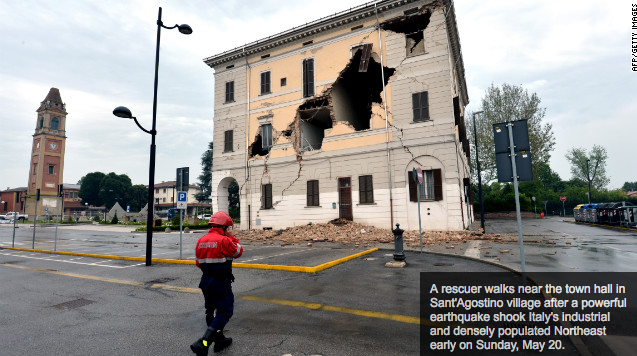
The Town Hall in Sant’Agostino, Italy, damaged by Sunday’s earthquake.

On Sunday morning, the area near Bologna in northern Italy was struck by a major earthquake with aftershocks occurring today.  Damage to historic buildings is significant and about seven people have died.  Information is still coming in but the latest on CNN (with many photos) is:

Northern Italy was shaken by an aftershock Monday morning, a day after a magnitude-6.0 quake killed at least seven people and left thousands of survivors huddling in tents or cars overnight. Continue reading

A Collections Loan that Would Prompt a Career Change

The Farm by Joan Miro (1921-2).

The National Gallery of Art in Washington, DC, holds “The Farm,” one of Joan Miro’s masterpieces and its provenance makes for a great story as told by Jim Conaway in “Getting the Picture” in the May 2012 issue of Washingtonian.  Here’s a glimpse into its complex history when the painting was owned by Ernest Hemingway and slated for an exhibition loan:

Alcohol–and his own vituperation–was catching up to Hemingway by 1959, when, then on his fourth and final wife, Mary, he agreed to loan “The Farm” to the Museum of Modern Art.  Hemingway was nervous about exposing the painting to the hostilities stirred by Fidel Castro’s revolution while trying to get it out of the country [Cuba].  He insisted that the museum insure “The Farm” and send an emissary to squire it back to New York, but no company would issue such a policy.

Hemingway finally agreed to let the museum’s emissary, David Vance, take the painting, but he ran into roadblocks:  Continue reading