
Category Archives: Community engagement

Recap of Historic House Museum Symposium at Gunston Hall

This slideshow requires JavaScript.

On Saturday, the Historic House Museum Consortium of Washington DC hosted an all-day symposium on “how are historic house museums adapting to the future?” at Gunston Hall in Virginia.  The sold-out symposium featured three speakers, a tour of Gunston Hall, and lots of time to chat with colleagues during breaks and over lunch.   The cost?  A mere $15, truly a bargain.  The symposium not only attracted professionals from Virginia, Maryland, and DC, but as far away as Connecticut!

I opened the symposium by discussing Michael Porter’s “Five Forces” as a way of identifying opportunities and threats to help historic sites prepare and adapt.  If you’re not familiar with the Five Forces, it’s a framework for identifying those issues that have the biggest impact on your operations.  This is a much more useful alternative to SWOT, which may be a good outline for summarizing an analysis, but it’s not a helpful way to analyze a situation.  If you’d like to get an introduction to the Five Forces and how it applies to historic sites, take look at my presentation (warning: it’s an 18 Mb pdf).  Even better was the discussion that followed, which explored a wide range of ideas from the growing role of photography to changing demographics to the interpretation of African American history.

Jana Shafogoj at Morven Park discussed how the current emphasis on STEM has allowed their site to Continue reading

Video: Luminous Hall

The Centenary of the University of Western Australia was celebrated with “Luminous Hall” on February 8, 2013, a 20-minute performance created by Illuminart.   Luminous Hall is a “narrative architectural projection” on the exterior of the historic Winthrop Hall that combines mapped projection with music, stories, and drama interpreting the history of the university and local community. Moving beyond son et lumier, the form engages the viewer in history in an extraordinary way.  Other examples using Norwood Town Hall and a Night Mural Picnic are available.

Video: The Leopold Museum

A hip video by Philipp Kaindl promoting the Leopold Museum in Vienna, which houses the world’s largest collection of paintings by Egon Schiele.  The video is not just about the collections but also the activities and people in and around the museum and told without any words.  Can any of these ideas be applied to historic sites or history museums?

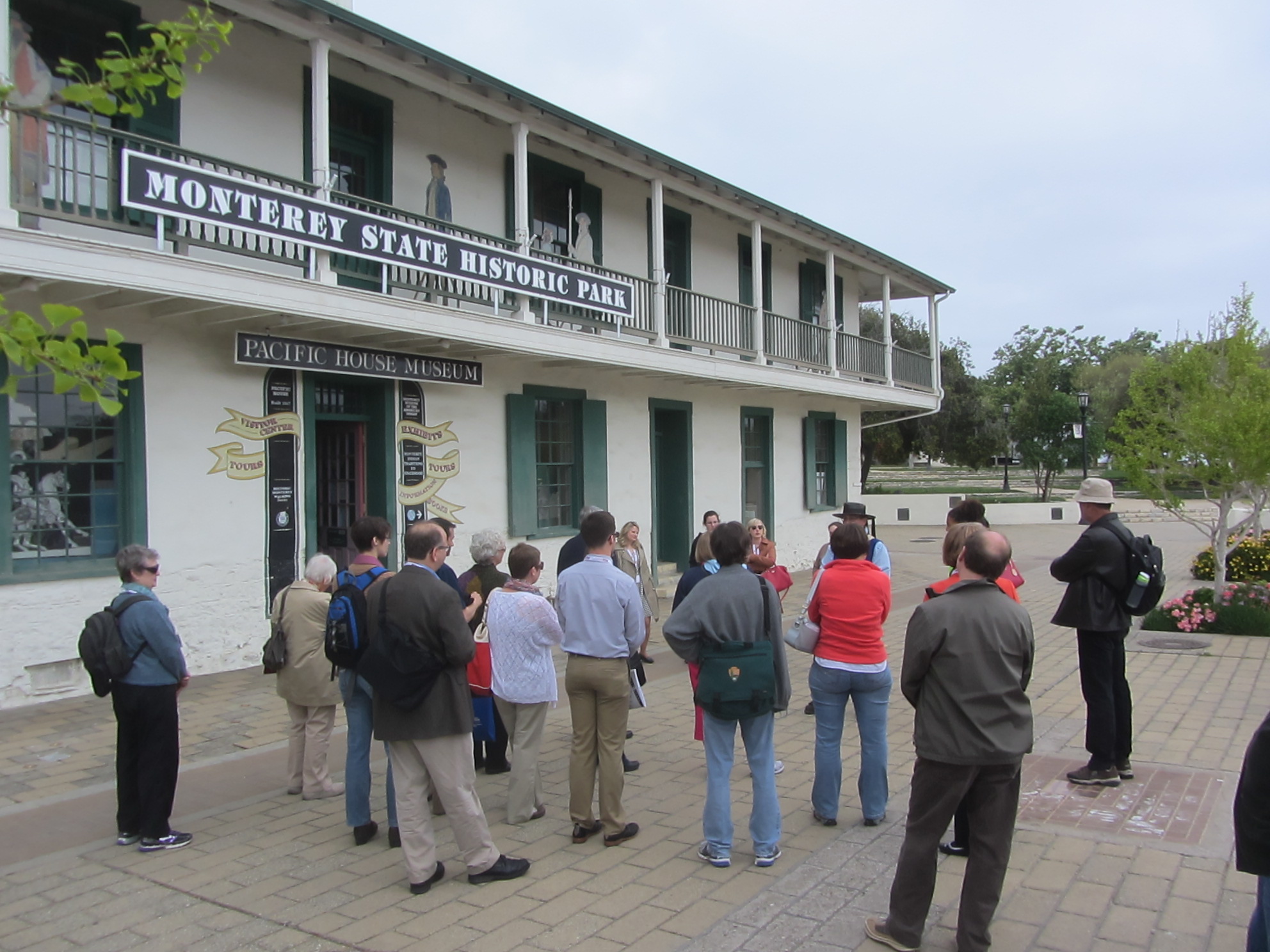
Exploring History and Historic Sites in Monterey in March 2014

Historic downtown Monterey with the Cooper-Molera Adobe in the background.

Historic downtown Monterey with the Cooper-Molera Adobe in the background.

The National Council on Public History will hold its annual conference in Monterey, California from March 19-22, 2014.  It will be the first time I’ve attended a NCPH conference and I’m thrilled–the schedule is packed with a variety of sessions that will appeal to those who are working on the cutting edge of historic sites and house museums, including:

  • Educational sessions on co-created exhibits, tribal partnerships, preserving LGBT sites, interpreting slavery, the history of museums, stewardship of archaeological sites, cultural landscapes, and the sustainability of museums. 
  • THATCamp NCPH” is an afternoon learning laboratory on digital projects that Continue reading

Are Historic House Museums Adapting for the Future?

Gunston Hall, Lorton, Virginia.

Gunston Hall, Lorton, Virginia.

In March, the Historic House Museum Consortium of Washington, DC will be examining how historic house museums are adapting to the future at its annual Historic House Museum Symposium.  Presented alongside the 2014 Virginia Association of Museums conference, the symposium will feature three speakers, a boxed lunch, and a special tour of Gunston Hall on Saturday, March 15, 2014 from 9 am to 3 pm at George Mason’s Gunston Hall in Lorton, Virginia.  Registration is limited and is $15 per person.

Speakers include Continue reading

Relevance of History Discussed at AHA Session

This slideshow requires JavaScript.

Last Friday, January 3, about 65 people braved the winter cold of Washington, DC (okay, compared to Midwest right now, it’s balmy) to participate in a discussion on the relevance of history to Americans.  Leading the discussion with me were Tim Grove of the Smithsonian Institution and Cathy Gorn and Kim Fortney of National History Day.

It was an exciting mix of participants.  The room was not only filled with historians who were attending the American Historical Association conference, but also people who work at history organizations in the DC region.  These various perspectives sparked a Continue reading

Cleaning Out My Cabinet of Curious Stories

Like all good museologists, I have a small cabinet of curiosities where I collect things of wonder, inspiration, and imagination.  Mine is virtual and sits in Evernote.  It’s time for a year-end clean-up, so here are a few that didn’t develop into full blog posts but even in their unrefined state, seem sufficiently interesting to share:

Google Maps Historical Society 2013

Google is continually looking for ways to get information to us as quickly and easily as possible. The last couple years it’s been creating quick descriptions of places using five keywords–but I’m not sure how they’re derived. A recent search for “historical society near Maryland” in Google Maps associated the American Historical Association with “symbol” and the Historical Society of Washington DC with “celebrities.” Who doesn’t like attention like that? The most surprising, though, is the description of the DAR National Headquarters with Continue reading

A Campaign to Make History Relevant to Americans

American flag with puzzle piece missingIn the last year I’ve become part of an group to find ways to make history more meaningful and relevant to Americans.  The History Relevance Campaign, for lack of a better name, is an informal grassroots effort made up of public historians, preservationists, educators, historic site managers, and museum leaders who are creating a national, broad-based strategy to assert the relevance of history.

Just to clarify, the History Relevance Campaign is not connected to any one history organization. From its start in early 2013, the group has strived to be as inclusive as possible.  Secondly, it is not a lobbying group.  Its main audience is the general public, not elected officials and public policy makers.  Thirdly, its intent is to show that history skills are just as important as Continue reading

Building Membership Relies on Research

Curate Your Own Membership at the Whitney Museum of American Art

Curate Your Own Membership at the Whitney Museum of American Art

The November/December 2013 issue of Museum, the magazine of the American Alliance of Museums, includes two helpful articles on membership, which is typically the fundamental fundraising program for historic sites.

In “Join the Club,” Daniel Grant describes several museums that have successfully broken the traditional “give more/get more” membership structure.  The Whitney Museum of American Art nows offers a Curate Your Own Membership program, which includes Continue reading

AAM and NAI Announce Awards, but Few are Historic Sites

Walking Cinema of Gloucester HarborWalk

Walking Cinema of Gloucester HarborWalk

The American Alliance of Museums and the National Association for Interpretation announced their annual winners in various categories, from label writing to exhibits to publications to programs.  You’ll want to look at the entire list for inspiration, but I especially want to congratulate those people and organizations whose worked focused on historic sites, houses, and places (that’s the point of this blog).

The Media and Technology Professional Network of AAM presented Muse Awards for digital media to: Continue reading