Category Archives: Governance and management

Vision Statement: Encyclopedia Edition

The Encyclopedia of Local History will issue its third edition in 2017.

The Encyclopedia of Local History will issue its third edition in 2017.

Carol Kammen and Amy Wilson are preparing the third edition of the Encyclopedia of Local History for publication in early 2017 and invited me to update my entry on “Historic House Museums in the 21st Century” as well as contribute a couple new entries, including “Vision Statement.”  Businesses and nonprofit organizations have been adopting vision and mission statements for the past two decades but drafting this encyclopedia entry gave me a chance to step back to look at its evolving history and see where they might be headed.  Here’s what I submitted (and remember, while books have been written about this topic, I have to condense it into a short summary):

Vision Statement. A vision statement describes a business’ or non-profit organization’s long-term major goal or desired end state and directs the planning, implementation, and evaluation of its programs and activities. There are many definitions for vision statements, some that conflict with each other, but the consensus is that they describe an ambitious but achievable long-term goal (10-30 years ahead, beyond the term of the current board or tenure of the executive director); that the statement is clear, compelling, and short (about 25-50 words); and yet is sufficiently vague and abstract to be unaffected by typical economic cycles or social fads.

An often-cited example of a vision statement is found in John F. Kennedy’s address to Congress in 1961 on urgent national needs: Continue reading

Values of History: Encyclopedia Edition

The Encyclopedia of Local History will issue its third edition in 2017.

The Encyclopedia of Local History will issue its third edition in 2017.

Carol Kammen and Amy Wilson are preparing the third edition of the Encyclopedia of Local History for publication in early 2017 and invited me to update my entry on “Historic House Museums in the 21st Century” as well as contribute a couple new entries, including “Values of History.”  Businesses and nonprofit organizations have been adopting values along with mission and vision statements for the past two decades but drafting this encyclopedia entry gave me a chance to step back to look at its evolving history as well as include the work of the History Relevance Campaign.  Here’s what I submitted (and remember, while books have been written about this topic, I have to condense it into a short summary):

Values of History. Values are beliefs shared by an individual or a community about what is important or valuable. Although values and ethics are terms used interchangeably at times, ethics are the action and manifestation of values. In addition to a mission and vision, some history organizations have adopted a statement of values or a code of ethics to clarify their identity and guide decisions. For example, Society for Historical Archaeology includes in its code of ethics that members “shall not sell, buy, trade, or barter items from archaeological contexts,” an action based in part from their belief that “historical and underwater cultural resources” are a “valued resource for knowledge exchange.” The importance of values was underscored nearly a generation ago in Museums for a New Century (1984): “An effective museum leader—whether scholar or M.B.A. or both—must first understand, believe in, and speak for the values of the institution.”

A common challenge for state and local history organizations is explaining Continue reading

Mission Statements: Encyclopedia Edition

The Encyclopedia of Local History will issue its third edition in 2017.

The Encyclopedia of Local History will issue its third edition in 2017.

Carol Kammen and Amy Wilson are preparing the third edition of the Encyclopedia of Local History for publication in early 2017 and invited me to update my entry on “Historic House Museums in the 21st Century” as well as contribute a couple new entries, including “Mission Statement.”  I’ve long been familiar with mission statements (who isn’t nowadays) but drafting this encyclopedia entry gave me a chance to step back to look at its evolving history as well as a today’s context to see what’s happening.  Here’s what I submitted (and remember, while books have been written about this topic, I have to condense it into a short summary):

Mission Statement. A mission statement describes the purpose of an organization and directs the planning, implementation, and evaluation of its programs and activities. These statements can vary as seen in these two historic sites that are adjacent to each other in Hartford, Connecticut:

  • Mark Twain House and Museum: to foster an appreciation of the legacy of Mark Twain as one of our nation’s defining cultural figures, and to demonstrate the continuing relevance of his work, life, and times.
  • Harriet Beecher Stowe Center: to preserve and interpret Stowe’s Hartford home and the Center’s historic collections, promote vibrant discussion of her life and work, and inspire commitment to social justice and positive change.

Had Twain or Stowe heard the term “mission statement” in their lifetimes, they probably would have regarded it as Continue reading

How a Kitchen Timer Makes Me More Productive

My work has always involved a lot of writing, whether it’s historical research, a grant application, a project proposal, a newsletter article, or a report to the board. But writing is hard work, especially if it has to be a good product, which means several revisions.  I’m rereading On Writing Well (the 30th Anniversary Edition–yikes! have that many years passed) and William Zinnser reminds us that, “the professional writer [that’s nearly anyone in our business] must establish a daily schedule and stick to it.”  Over the years, I’ve kept track of the habits of prolific writers and they seem to write in the mornings, which is the schedule I’ve adopted.  Nevertheless, I’m still challenged by “sticking to it.”

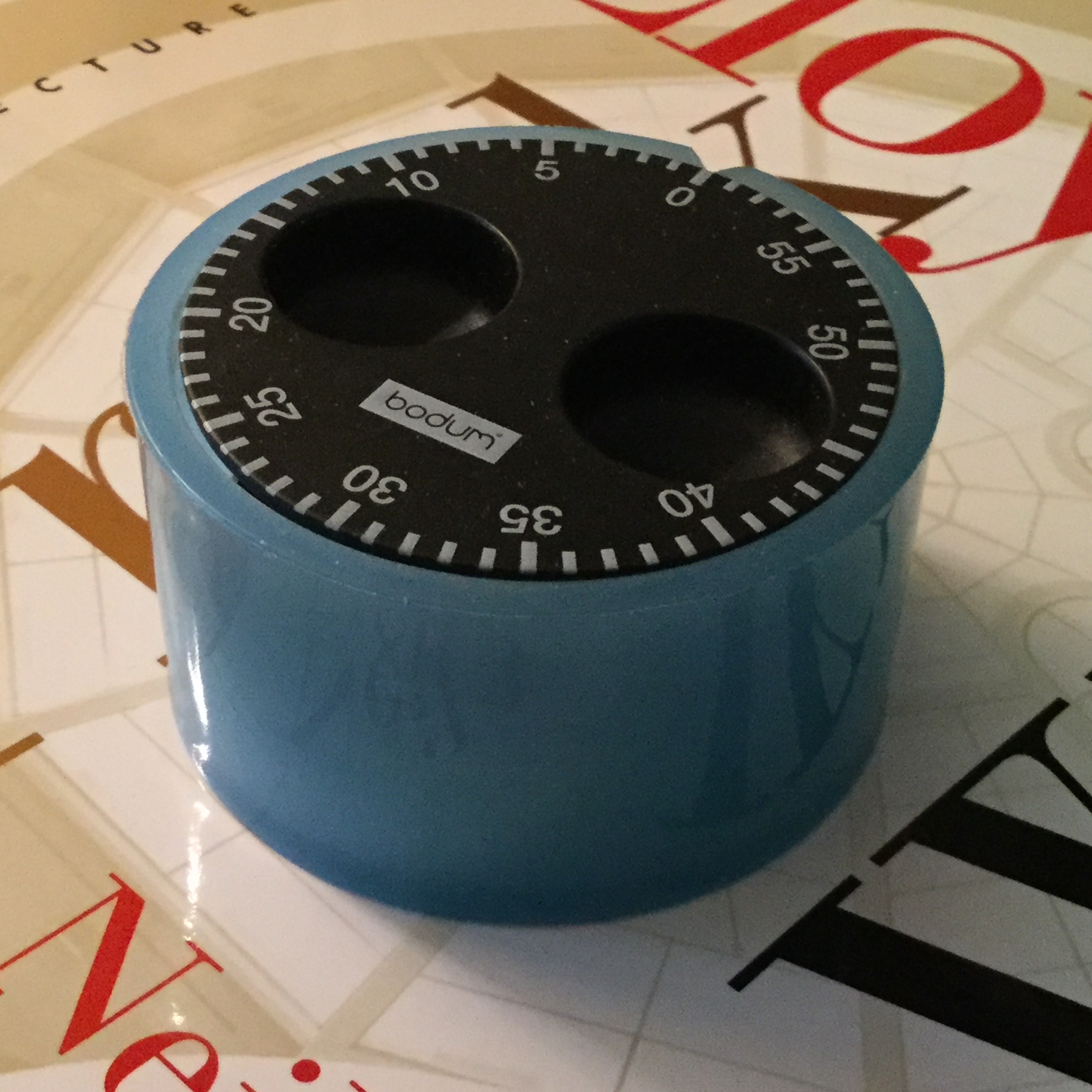
The kitchen timer that's on my office desk.

The kitchen timer that’s on my office desk.

To my rescue came the Pomodoro Technique developed by Francesco Cirillo, a time-management method that relies on an ordinary kitchen timer (which are sometimes designed to look like a tomato or pomodoro in Italian).  Set the timer for 25 minutes and while the clock is ticking, stay focused on your work. When the time is up, take a five-minute break and then return for another 25-minute session. It’s designed so that the sessions are short enough to encourage you to stay at the task at hand (“I can write for 25 minutes!”) while including routine breaks to be sure you don’t burn out (and really get discouraged).  It’s been the primary way that I stay productive and thought it might be useful for others who are also trying to stay disciplined.

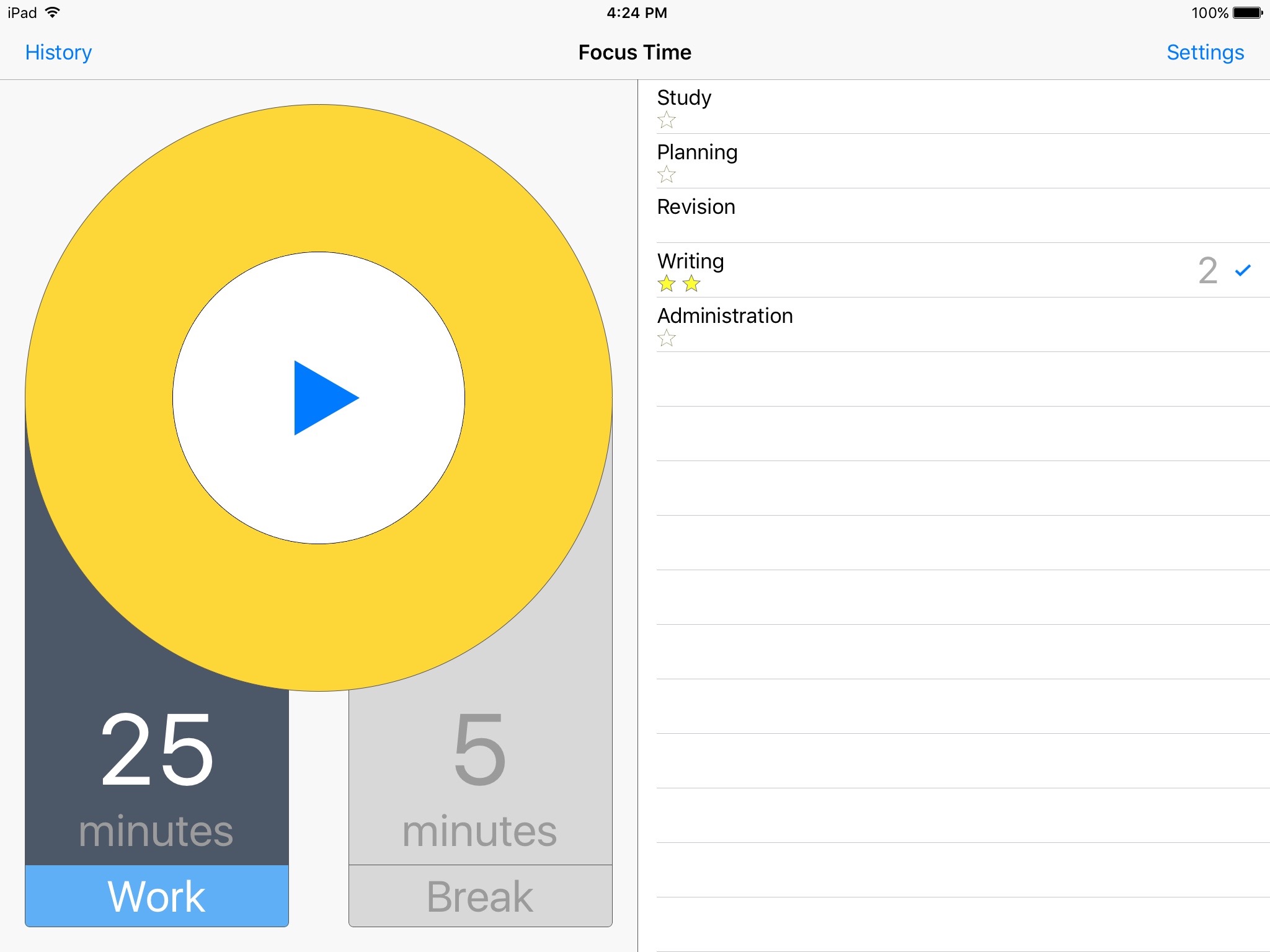
Focus Time app for OS and iOS.

Focus Time app for OS and iOS.

And while the kitchen timer is still on my office desk, I now use Focus Time, an app on my iPad, because it allows me to categorize my work as well as provide a timer that’s visual, not just auditory (plus I can choose the sounds for the ticking and ending). This year I’m also expanding my writing toolbox by using Evernote and a Fujitsu ScanSnap iX500 along with Scrivener, all unusual tools that take time to learn but once mastered, can be immensely helpful.  I’ll share my experiences in future posts.

Video: Non-Profit? Most Museum Visitors Don’t Know

In this 1:51 video, Colleen Dilenschneider of Know Your Own Bone explains that nearly 60 percent of Americans don’t know that history museums operate as non-profit organizations.  It doesn’t get much better for those who visit history museums—53 percent are unaware.  That may be alarming because we often distinguish ourselves by our non-profit status.  Dilenschneider, on the other hand, suggests reframing the issue:

Our key differentiator is not our tax status, but that our dedication to making a difference is embedded in the very structure of how we operate. There’s a thought that we need to run “more like for-profit companies” (and in some ways we do, but the blanket directive is an ignorant miss). But look around. For-profit companies are actually trying to be more like us in the sense that they want audiences to know that they stand for something that makes the world a better place.

The video is a quick overview but you’ll find more details in “Nonprofit Recognition: What Matters More to Visitors Than Your Tax Status“.

Data source: National Awareness, Attitudes and Usage Study, a partnership project of IMPACTS Research and the Monterey Bay Aquarium.

Video: Keep the Smartphone, Ditch Bad Management

In this 3:42 video, Jennifer Deal, a senior research scientist at the Center for Creative Leadership in San Diego, California, discusses recent studies that suggest that staying connected to work after hours isn’t the problem, but how organizations respect their people’s time. According to her research,

We found that although a majority of our participants were connected to work for 13.5 or more hours a day, five days a week, and for about five hours total on weekends, they didn’t resent their smartphones. Instead, 60 percent said they appreciated the increased flexibility: Many explained they didn’t mind the additional hours connected with work, if that meant their work time was flexible and they could better fulfill their personal obligations. What did they resent? Having to stay connected because of bad management practices that tied their hands, forcing them to spend business hours waiting instead of working.

She provides some suggestions for improving meetings and office practices, but you’ll find more in “Stop Wasting Your Employees’ Time” at Strategy + Business.

Historic House Workshops for the New Year

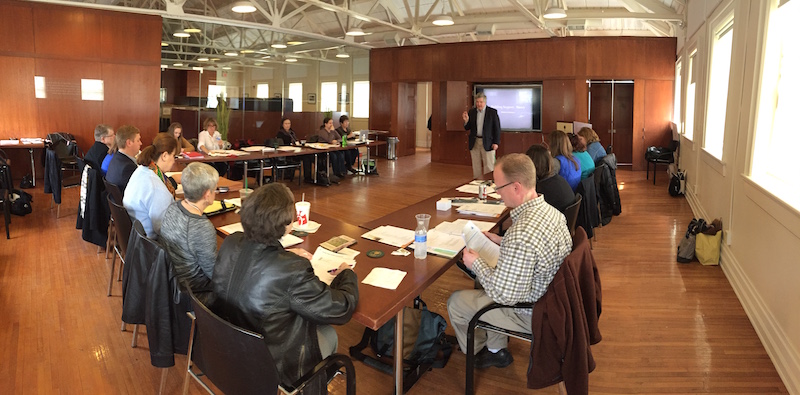
Historic House Museum Workshop, Charleston, South Carolina, 2015

Historic House Museum Workshop, Charleston, South Carolina, 2015

If want some time to plan and evaluate what’s happening at your historic site or house museum, one of the best ways is through a workshop. Of course, a long weekend of reflection in the Rockies or Virgin Islands might be more relaxing, but a workshop with colleagues discussing the potential solutions to the challenges facing historic sites will be more effective.

AASLH is offering two workshops this year just for house museums and historic sites, and I’ll be part of both of them:

April 4: Reinventing the Historic House Museum at the Campbell House in St. Louis, Missouri

This one-day symposium is designed to offer current thinking, practical information, and solutions to the challenges facing historic sites. The historic house museum in America is not dead nor are most of them dying. The field, however, needs to take time to reflect and renew as the world around our historic sites continues to change. The symposium will include presentations, discussion, a boxed lunch, historic site visit, and a brainstorming workshop at the historic house museum to try out the new ideas proposed during the symposium. Workshop led by Ken Turino (Historic New England) and Max van Balgooy (Engaging Places). (There may be a second Reinventing workshop offered this year.)

April 28: Historic House Museum Issues and Operations at Brucemore in Cedar Rapids, Iowa

Why are historic houses necessary to their communities? How are historic house museums unique? This workshop focuses on the special needs, management, and interpretation of historic houses. With a focus on historic house museums, topics covered include collections care, types of research appropriate for historic house museums, exhibition development, interpretive tours, volunteers, and building and landscape maintenance. Workshop led by George McDaniel (Drayton Hall) and Max van Balgooy (Engaging Places).

Can’t attend these workshops but are still looking for a shot in the arm? Join one of the quarterly Historic House Calls. Every call explores a different topic with an expert, and they’ve previously discussed deaccessioning, tours, interpreting race, and environmental sustainability.

AASLH has nearly two dozens way to sharpen your skills with some of your smartest colleagues in the history field and you’ll find a continually updated list on their calendar of events.

Creating a 21st Century House Museum in San Francisco

Haas-Lilienthal House, San Francisco.

Haas-Lilienthal House, San Francisco. Courtesy of San Francisco Heritage.

Over the past two years, I’ve been working with San Francisco Heritage to explore how the Haas-Lilienthal House, the 1887 Queen Anne house it owns and operates in the Pacific Heights neighborhood, can engage the public and advance its citywide mission in ways that are both environmentally and financially sustainable.

Just as the Haas-Lilienthal House was rocked by a tremendous earthquake in 1906, so are historic sites today, although in a different manner. The economic downturn that began in 2008 threatens many preservation organizations, house museums, and historic sites, even those that have large endowments and attendance. But the change is bigger than the latest economic recession. Surveys over the past thirty years by the National Endowment for the Arts show that visitation rates at historic sites have fallen from 37 percent in 1982 to 25 percent in 2008, and that rate of decline has only accelerated in the last decade. The Haas-Lilienthal House is experiencing a long and steady decline in attendance—it’s fallen by more than 50 percent over the past thirty years. Historic sites not alone, however: concerts, dance performances, craft fairs, and sporting events have all seen similar declines in attendance.

As a result, many historic preservation organizations around the country are questioning the value of owning historic property. Guided tours and public programs do not generate sufficient revenue to properly maintain historic sites, so unloading them seems to be the only solution. But there are also significant disadvantages.

When a preservation organization owns an historic building, it instantly conveys credibility. (Would you trust a surgeon who has never held a scalpel?) Secondly, by owning and caring for an historic property, Continue reading

Unconference in DC Poised to Transform Museums


Openlab is convening an unconference, talks, and a planning workshop in Washington, DC on December 1-2 to “to accelerate the speed and impact of transformational change in the GLAM (gallery, library, archive, and museum) sector” in order to “to increase and disseminate knowledge; to encourage civic dialogue and engagement; and to support individuals in their right to access and participate in culture.”  The brain child of Michael Peter Edson of the Smithsonian, much of OpenLab’s work seems to be focused on using digital technologies to solve age-old questions, such as “what needs to change in galleries, libraries, archives, and museums?” and “what is missing in the current funding and support landscape for GLAMs and the humanities?”  It’s all a bit nebulous and unclear, but that’s the core nature of an unconference. Nevertheless, it’s one of many concurrent efforts to increase the impact of museums in society (and yes, we’re still in the fragmented stage).

The first day on December 1 (today) is the unconference and a series of Ignite talks from 2-7 pm in Arlington, Virginia that’s free and open to the public.  The second day, however, Continue reading

Designing Donor Recognition at Historic Sites

Plaque recognizing James Baxter, donor of the Portland Public Library, 1888.

Plaque recognizing James Baxter, donor of land and building of the Portland (Maine) Public Library, as well as the architect F. H. Fassett, 1888.

Major donors or supporters of a historic site are often recognized with a panel or plaque. Most traditional is a panel listing names of donors, often distinguished by the size of their gift, but it can often appear to be more like a somber memorial than a sincere and thoughtful appreciation. That’s the major reason for avoiding off-the-shelf recognition systems of wall plaques and engraved bricks, which have become so common they’ve lost their punch. For historic sites, this is especially important because they should be integrated and complementary to its design and significance, not merely plopped into place as an afterthought.

Donor recognition is typically installed near an entrance (either interior or exterior) so it can be readily seen by visitors on a wall, floor, or freestanding panel; made of durable materials that resist vandalism and years of cleaning; and can be easily corrected or updated in the future. Careful planning and consideration of alternatives will reveal methods that are most appropriate for your organization.

The Secretary of the Interior’s Standards for the Treatment of Historic Properties can guide decisions about Continue reading