Category Archives: Historic preservation

Sneak Peak at Clara Barton’s Office and Warehouse

This slideshow requires JavaScript.

On April 18, I enjoyed a sneak peak of the restoration underway at Clara Barton’s Civil War-era office and warehouse on 7th Street in downtown Washington, DC–where she worked and lived before founding the American Red Cross in 1881.  The historic site opens to the public as a museum in fall 2014.

From the street, you’d never imagine that this was a nationally significant historic site.  It’s a simple three-story brick building surrounded by restaurants, towering condos and offices, popular museums, and a major sports arena.  Indeed, it was overlooked by those who were searching for it because it didn’t fit their image of a warehouse.  Its historical significance was forgotten for most of the century until 1997, when a nightwatchman hired to keep vagrants out of the vacant building noticed a document jutting out from the ceiling.  It turned out to be part of a cache of artifacts belonging to Clara Barton that had been stored in the Continue reading

The Emergency Response Wheel has Turned into a Mobile App

This slideshow requires JavaScript.

Long known as the authoritative resource for salvaging artifacts after a disaster, the Emergency Response and Salvage (ERS) Wheel has been used by historic sites, museums, libraries, and archives around the world.  In partnership with the National Center for Preservation Technology and Training, Heritage Preservation has turned the Wheel into a mobile application, providing invaluable guidance accessible to anyone who is in need of practical advice for saving collections in the first 48 hours after disaster strikes.

ERS app provides the same reliable content found in the original Wheel. The app outlines critical stages of disaster response and provides practical salvage tips for nine types of collections, from photographs to natural history specimens. ERS can help users protect precious collections and significant records, access reliable information instantly, and save damaged objects.

The “ERS: Emergency Response and Salvage” app is available free for Continue reading

Video: Connecting the Threads

https://vimeo.com/57448478

This 38:00 freshly produced documentary follows the transformation of an historic clothing factory in Lebanon, NH into an art center.  Directed by Ken Turino of Historic New England and produced in collaboration with AVA Gallery and Community Access Television of Upper Valley, it features interviews, oral histories, and historic images.

New England’s History and Architecture Explored in June

Program in New England StudiesHistoric New England presents the tenth annual Program in New England Studies (PINES), an intensive learning experience with lectures by curators and architectural historians, workshops, and behind-the-scenes tours of Historic New England’s properties and collections, as well as of other museums and private homes in the region.  This year’s program begins on June 17 with Cary Carson on the 17th century in the Boardman House and ends on June 22 with Richard Nylander and Nancy Carlisle on the Colonial Revival at Beauport.

PINES examines New England history and material culture from the seventeenth century through the Colonial Revival, and delves into building design and technology, and the wide-ranging lifestyles illustrated by the historic sites on the itinerary.  Highlights include private tours of Historic New England properties in Greater Boston; Essex County, Massachusetts; Portsmouth, New Hampshire; South Berwick, Maine; and Woodstock, Connecticut; workshops in furniture, ceramics, and textiles at Historic New England’s facility in Haverhill, Massachusetts; and a private tour of Continue reading

WebWise Conference Coming Up in Early March

WebWise 2012: Project demonstrations

WebWise 2012: Project demonstrations

WebWise, the annual conference hosted by the Institute of Museum and Library Services, will be held in Baltimore on March 6-8, 2013. This year’s conference is co-sponsored by the Roy Rosensweig Center for History and the New Media and is being organized and presented in a very different manner.  In advance, participants (anyone, actually) voted on the proposed workshop topics and then the conference organizers recruit speakers to fill the slots. For the project demonstrations, the participants will be divided into three groups and then rotate through three different sets of presentations. In addition, there will be a series of three-minute lightning talks over lunch, facilitated project/partnership incubator groups, and one-on-one speed consulting sessions. Indeed, there’s only one plenary session scheduled for the entire conference–Audrey Watters of Hack Education–as a keynote on the last day.

I’ve attended as many WebWise Conferences as possible because the content has been outstanding and I often come away with new approaches and strategies, even from the sessions that are far outside my field. This year’s reformatting seems intriguing, but much of the content remains a mystery so Continue reading

IMHO: Seismic Shifts Predicted in Historic Preservation

SeismographUnlike the environmental movement, which has many national organizations devoted to its many and varied causes, historic preservation has just a handful. When something happens at one or two of them, it can significantly shape what’s happening at the state and local level.  This year promises seismic shifts because of transitions occurring at three national organizations:  Preservation Action, the National Conference of State Historic Preservation Officers, and the National Trust for Historic Preservation.

The National Trust for Historic Preservation has been undergoing tremendous transformation since 2009, when Dick Moe’s long 17-year tenure as president ended. Stephanie Meeks, a former executive with the Nature Conservancy, took the helm and introduced a new strategic plan that narrowed its work by closing most of its regional offices, cutting Preservation magazine from six to four issues a year, closing its Save America’s Treasures office, reorganizing the National Main Street Center as a wholly-owned subsidiary, and cutting its ties with state and local preservation organizations. The plan (sometimes called Preservation 10X) also prompted a turnover of much of the staff through reorganizations and layoffs and put in place a new management team, most of whom are outside the field of history or preservation, suggesting a major retreat from its leadership position in historic preservation.

This year the focus at the National Trust seems to be on raising cash to survive. The last fiscal year ended Continue reading

Historic Homeowners Get Special Behind-the-Scenes Access

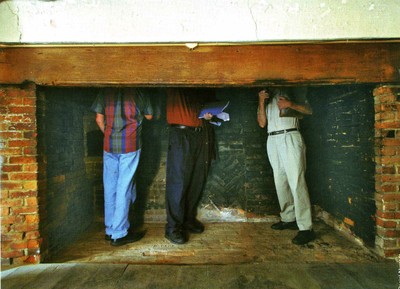
Getting a closer look at the chimney in the 17th century Boardman House in Massachusetts.

Getting a closer look at the chimney in the 17th century Boardman House in Massachusetts.

This month Historic New England launched, “Insight on Site: Inside the Old House” to give historic homeowners an opportunity to go behind the scenes with staff and learn how to date building materials and identify architectural styles.

Insight on Site takes visitors into parts of Historic New England properties rarely seen by the public, such as the Modern house located adjacent to the newly acquired Eustis Estate in Milton, Massachusetts; a caretaker’s residence at the seventeenth-century Browne House in Watertown, Massachusetts; and the newly reacquired Jewett Eastman House in South Berwick, Maine. Free and exclusively for Historic Homeowner members, the series of four Insight on Site programs runs from January 12 to Continue reading