
Category Archives: Objects

Pushing the Period Room Beyond the Period at Hunter House

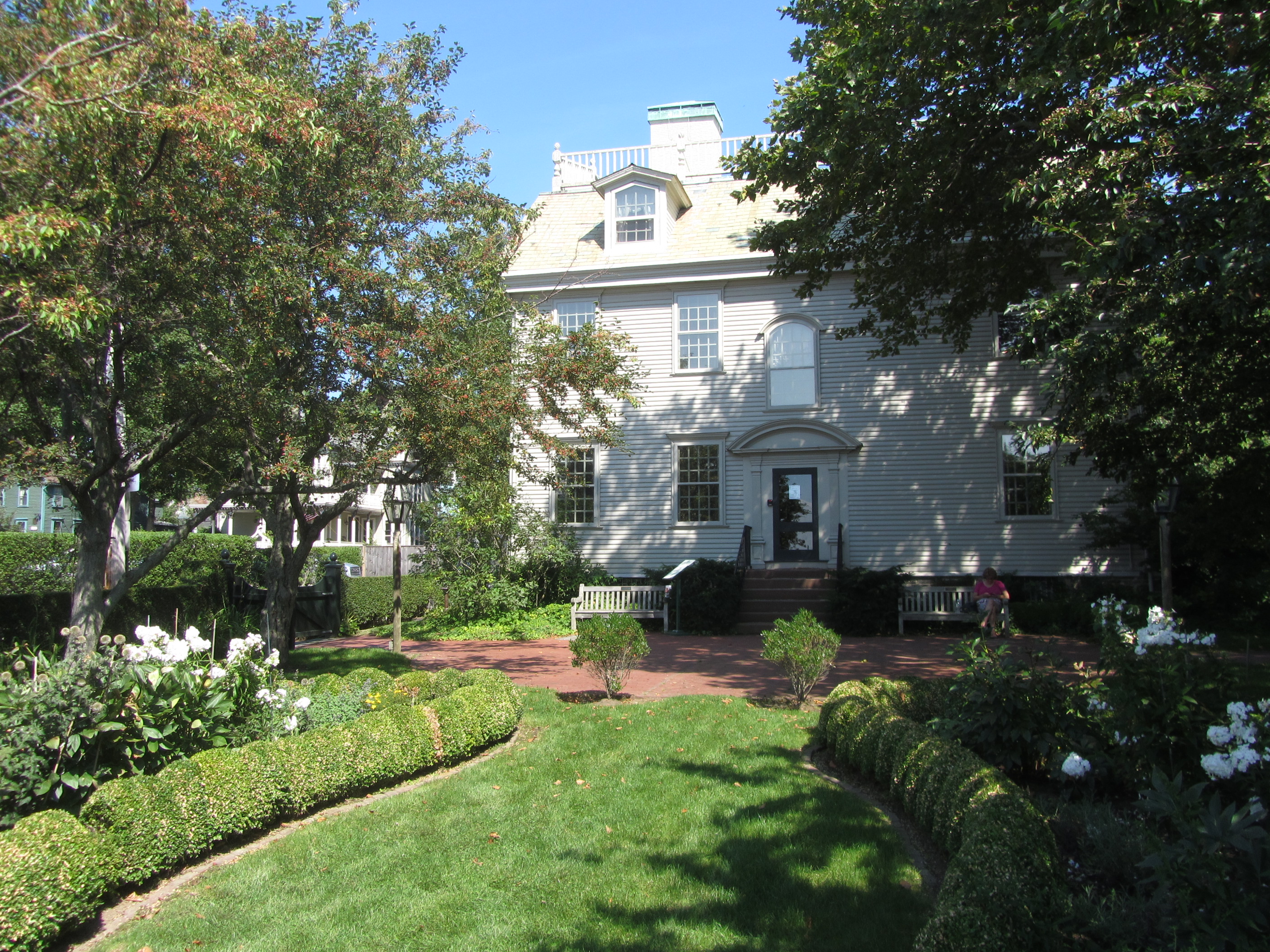
Hunter House, Newport, Rhode Island.

Hunter House, Newport, Rhode Island.

Last week I was in Newport, Rhode Island (no, I wasn’t traveling with the President; I was conducting a marketing assessment for an historic site) and visited Hunter House, the historic house that prompted the formation of the Preservation Society of Newport County.  Today the Society is best known for its Gilded Age Mansions (or Cottages depending on your point of view).  Hunter House has a beautiful view of the harbor but it’s off the beaten path and focused on colonial history, which doesn’t attract the crowds who make the pilgrimage to The Breakers and other grand estates along Bellevue Avenue.

The lower profile gives Hunter House the opportunity to try a different approach to period rooms, one that I find much more successful from an interpretive perspective.  Although visitors often believe that period rooms show how people actually lived, curators know they are exhibits created to evoke an era.  While they may contain authentic furnishings, they are often displayed or arranged in inauthentic ways for aesthetics, safety, security, or lack of sufficient knowledge.  Period rooms are also victims of tradition and nostalgia–how many times have you seen Continue reading

Video: National Museum of American Illustration

This 10:00 video introduces the collection, artists, and setting for the National Museum of American Illustration in Newport, Rhode Island.  It’s narrated by Judy and Lawrence Cutler, the husband and wife team that own and operate the museum; Whoopi Goldberg (yes, the comedian and actor); and Joanna Maxfield Parrish, granddaughter of Maxfield Parrish.  This appears to be a 2009 production by Daybreak Productions.

Video: Art Splash at the Philadelphia Museum of Art

Jill Frechie produced this 2:00 video explaining Art Splash, a summer program for families at the Philadelphia Museum of Art.  Emily Schreiner, associate curator of education, explains some of the 300 programs offered during the ten week period, which features a different object each week.  Three hundred programs in ten weeks? I’m exhausted just thinking about it.

Video: Museum of Water at Somerset House

This is a 2:38 amateur video documenting the “Museum of Water,” an unusual “live artwork” by Amy Sharrocks at the historic Somerset House, a new arts and culture center in London.

A melted snowman. Droplets from a baby’s bath. Sacred draughts from an Indian river. Just some of the items donated to London’s newest museum. In the atmospheric underground spaces of Somerset House, Amy Sharrocks invites you to consider our relationship with the most precious liquid the world has to offer.

Can the Exploratorium Help Us Explore History?

Last week I visited the Exploratorium in its new home on Pier 15 in San Francisco. If you haven’t veen there, it’ll seem like a science center but you’ll quickly discover it’s really a place about learning, especially through direct experiences with art, tinkering, and phenomena (yep, that’s how they describe it).  It’s an incredibly active place (almost to the point of overwhelming) that seems to effectively engage its visitors, so I continually watch to see if any of their exhibits or ideas can be applied to historic sites or history museums.  During my latest visit, I found two exhibits that with a mild tweak could be really be innovative for interpreting history.

This slideshow requires JavaScript.

1.  Question Bridge:  Black Males.  This temporary exhibit is, “comprised of many individuals asking and answering questions about the experience of black men in modern America.”  Inside the small dark room are Continue reading

The Emergency Response Wheel has Turned into a Mobile App

This slideshow requires JavaScript.

Long known as the authoritative resource for salvaging artifacts after a disaster, the Emergency Response and Salvage (ERS) Wheel has been used by historic sites, museums, libraries, and archives around the world.  In partnership with the National Center for Preservation Technology and Training, Heritage Preservation has turned the Wheel into a mobile application, providing invaluable guidance accessible to anyone who is in need of practical advice for saving collections in the first 48 hours after disaster strikes.

ERS app provides the same reliable content found in the original Wheel. The app outlines critical stages of disaster response and provides practical salvage tips for nine types of collections, from photographs to natural history specimens. ERS can help users protect precious collections and significant records, access reliable information instantly, and save damaged objects.

The “ERS: Emergency Response and Salvage” app is available free for Continue reading

Video: Smithsonian Museum of African American History and Culture

This short feature by BET includes an interview with director Lonnie Bunch, highlights of artifacts, and a computer-generated fly-through of the new Smithsonian Museum of African American History and Culture.  In honor of African American history month, I’ll be sharing other related videos on Fridays.

Montpelier Archaeologists Discover James Madison’s Threshing Machine

This slideshow requires JavaScript.

The rich red clay at Montpelier, the Virginia home of the Father of the Constitution has given up more secrets: the remnants of James Madison’s barn and threshing machine, and evidence that Dolley’s son destroyed both in an attempt to remove the machine from Montpelier before the new owner took possession.

As archaeologists excavated the field slave quarters this summer, they found perplexing evidence they had to research and decipher. First, they found bits of iron that appeared to be pieces of machinery, which indicated that the building was used to house farming equipment. Then, in the soil layers below the iron pieces, they found a trench, which proved to be the outline of a 16-foot x 16-foot building. The trench also contained a set of postholes that held more iron pieces. “The iron and postholes in the trench tell us that the building was modified to allow a piece of machinery to be mounted inside the building,” said Dr. Matthew Reeves, Montpelier director of archaeology and landscape restoration.

More digging revealed bits of bone and ceramics, which indicate that Continue reading

Los Angeles to Host International Conference on Care and Interpretation of Collections in Historic Houses

Los Angeles is hosting a four-day international conference on the care and interpretation of collections in historic house museums on November 6-9, 2012 called, The Artifact, its Context, and their Narrative: Multidisciplinary Conservation in Historic House Museums.  A half dozen organizations are sponsoring and hosting the conference, including ICOM-DEMHIST (the international committee for historic house museums), three ICOM conservation working groups, the Getty Conservation Institute, Getty Research Institute, the University of Southern California’s School of Architecture/Heritage Conservation Program, and the Gamble House.  Historic sites encounter some of the most challenging preservation issues in the museum field because it is often impossible to maintain environmental conditions that are ideal for the collections, building, and visitors.  Indeed, some leaders in the field have wondered whether historic sites should be even considered museums because it establishes such an impossible standard.

The four-day conference consists of two days of site visits (such as the Gamble House, Huntington Library, Eames House, and Will Rogers Ranch) and two days of presentations and lectures.  Sarah Staniforth (National Trust UK) and Linda Young (Deakin University) will be providing broad overview presentations on the challenges and opportunities facing collections in historic sites, but most of the presentations are Continue reading